智能家居机器人

Search documents
家用电器产业亮点:从2026CES看智能家居机器人产品趋势
Xin Lang Cai Jing· 2026-01-13 06:33
Group 1 - The 2026 CES showcased significant advancements in smart home cleaning robots, with a focus on AI technology transitioning from concept to reality, featuring around 4,300 exhibitors, including 942 from China, representing 22% of total participants [1] - Major trends in vacuum robots include larger rollers, stronger suction, and enhanced object recognition technology, leading to improved cleaning efficiency and reduced operational costs [2] - The lawn mowing robot segment is seeing upgrades in large area cutting, obstacle navigation, and edge cutting capabilities, with strong competition from companies like Ninebot, which launched nine new products at CES 2026 [3] Group 2 - Pool cleaning robots are evolving similarly to vacuum and lawn mowing robots, with AI integration enhancing navigation and obstacle avoidance features, and companies like Ecovacs and MOVA entering the market with differentiated products [4] - Investment outlook is positive for vacuum robots due to technological advancements that enhance cleaning effectiveness, efficiency, and operational cost reduction, while lawn mowing robots are expected to gain market traction through significant upgrades [4] - Chinese companies are leading the smart home cleaning robot market, with a focus on product upgrades driven by technology, highlighting growth potential for companies like Ninebot, Roborock, and Ecovacs [4]

行业研究|专题报告|家用电器:产业亮点:从2026CES看智能家居机器人产品趋势
Changjiang Securities· 2026-01-13 05:11
Investment Rating - The investment rating for the home appliance industry is "Positive" and maintained [11] Core Insights - The 2026 CES highlighted advancements in smart home cleaning robots, with Chinese companies leading the upgrade of products. The focus remains on enhancing cleaning effectiveness, efficiency, range, and operational costs [2][9][64] - The report emphasizes the technological upgrades in various segments: - For vacuum robots, improvements include larger rollers and stronger suction, enhancing cleaning efficiency and reducing operational costs [6][20] - For lawn mowers, upgrades focus on large area cutting, obstacle avoidance, and edge cutting capabilities, with Ninebot launching nine new products at CES 2026 [7][45] - For pool robots, the integration of AI and navigation features is becoming more prevalent, with companies like Yuan Ding and Xing Mai innovating in this space [8][53] Summary by Sections Vacuum Robots - The evolution of vacuum robots is centered on cleaning effectiveness, efficiency, range, and operational costs. Notable products include the G-Rover from Roborock, which features a unique leg structure allowing it to navigate stairs and complex environments [20][25] - Other brands like Ecovacs and Dreame are also enhancing their products with longer rollers and improved cleaning technologies, significantly increasing cleaning efficiency [29][34] Lawn Mowers - The lawn mower segment is seeing significant technological advancements, particularly in large area cutting and obstacle avoidance. Ninebot's new product lineup includes models designed for various terrains and cutting needs [7][46] - The report notes that the European market is experiencing explosive growth, while the U.S. market is slower due to various factors [7][45] Pool Robots - The development of pool robots is aligning with the more mature cleaning robot segments, incorporating advanced AI and navigation technologies. Companies are introducing features like self-cleaning bases and enhanced obstacle avoidance [53][59] - Yuan Ding's Scuba V3 Ultra and Xing Mai's Beatbot AquaSense X are examples of innovative products that enhance cleaning efficiency and user experience [55][57] Investment Recommendations - The report expresses optimism regarding the growth potential of companies like Ninebot, Roborock, and Ecovacs, driven by technological advancements and market penetration opportunities [9][64]


深圳又冲出一个IPO!“大疆教父”李泽湘加持,90后哈工大学霸带队
创业邦· 2025-12-30 04:03
Core Viewpoint - The article highlights the successful IPO of Woan Robotics, marking it as the first publicly listed company in the "AI embodied home robot" sector, with a fundraising scale of approximately 1.8 billion HKD and a current market valuation of around 14.8 billion RMB [2][4]. Company Overview - Woan Robotics was founded in 2015 by two Harbin Institute of Technology alumni, Li Zhichen and Pan Yang, focusing on developing smart home robot products tailored for specific household scenarios [4][6]. - The company has achieved significant growth, increasing its revenue from 275 million RMB to 610 million RMB within three years, and holds a 11.9% market share, ranking first globally in the sector [4][15]. Financing History - Prior to its IPO, Woan Robotics completed eight rounds of financing, raising approximately 391 million RMB, with its post-investment valuation soaring from 20 million RMB at the angel round to 4.0475 billion RMB after the C round, a growth of over 200 times [4][5]. Product Strategy - The company positions itself as a provider of "AI embodied home robot systems," with a product line that includes enhanced execution robots and perception and decision-making systems, covering seven categories and over 47 standardized product units [15][17]. - Woan Robotics focuses on low-cost, non-invasive solutions to address specific pain points in home life, with average prices for its products being significantly lower than traditional smart home solutions [17][18]. Market Performance - The company has established a strong presence in the Japanese market, contributing 67.7% of its revenue in the first half of 2025, and has replicated its success in European and North American markets [18][20]. - The global market for AI embodied home robots is projected to grow from 2.2 billion RMB in 2022 to 59 billion RMB by 2024, indicating a rapidly expanding sector [24]. Financial Growth - Woan Robotics has demonstrated high growth, with a compound annual growth rate of 49% in revenue from 2022 to 2024, and has achieved profitability in the first half of 2025 with a net profit of 27.9 million RMB [20][21]. Future Developments - The company plans to invest approximately 66.5% of its IPO proceeds into R&D, focusing on advanced technologies such as robot positioning, AI vision, and humanoid robot technology, aiming to transition from single-point automation to overall autonomy [30].


扫地机器人鼻祖iRobot申请破产 中国企业接盘
Di Yi Cai Jing· 2025-12-15 15:21
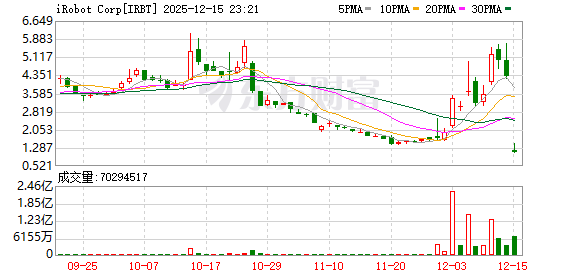
Core Viewpoint - iRobot has filed for bankruptcy and entered into a restructuring support agreement with its major creditor, Shenzhen SJC Robot Co., Ltd, which aims to acquire iRobot through a court-supervised process, marking the end of an era for the pioneer of robotic vacuum cleaners [2][3] Group 1: Company Overview - iRobot, known for its Roomba vacuum, has seen a decline in its market position, with its revenue dropping significantly and facing increased competition from Chinese brands [5][6] - The company has accumulated over $350 million in debt to Shenzhen SJC, which has become its largest creditor [5] - iRobot's financial struggles are evident, with a 26.47% year-over-year revenue decline to $375 million for the first three quarters of 2025, and a net loss that increased by 90% to $130 million [6] Group 2: Acquisition and Restructuring - The acquisition by Shenzhen SJC is expected to help iRobot reduce its debt and maintain operations while continuing product development [3][4] - If the court approves the acquisition, iRobot will become a wholly-owned subsidiary of Shenzhen SJC and will be delisted from stock exchanges, with existing shareholders losing their equity [3][4] - The restructuring aims to combine iRobot's innovation and design with Shenzhen SJC's manufacturing capabilities, preparing for the next era of smart home robotics [3] Group 3: Market Dynamics - The acquisition could allow Shenzhen SJC to transition from an OEM to a self-branded company, potentially increasing profit margins compared to its current business model [4][7] - iRobot's market share in North America is still significant, holding approximately 20%-30% of the robotic vacuum market, but it has recently fallen out of the top five global brands [4][6] - The rise of Chinese brands in the robotic vacuum market has intensified competition, with local manufacturers leveraging strong supply chain and innovation capabilities [7]
扫地机器人鼻祖破产
第一财经· 2025-12-15 14:13
Core Viewpoint - iRobot, once the largest robotic vacuum cleaner company, has filed for bankruptcy and is set to be acquired by Chinese manufacturer Shenzhen Sanchuan Robotics, marking a significant shift in the global market landscape for robotic vacuums [3][4]. Group 1: Company Overview - iRobot has entered into a restructuring support agreement with its creditor Shenzhen Sanchuan Robotics, which will acquire iRobot through a court-supervised process expected to be completed by February 2026 [3][4]. - The acquisition will result in iRobot becoming a wholly-owned subsidiary of Sanchuan and will no longer be listed on any stock exchange, with existing shareholders losing their equity [5]. Group 2: Financial Performance - iRobot's financial situation has deteriorated, with a 26.47% year-over-year revenue decline to $375 million for the first three quarters of 2025, and a net loss that increased by 90% to $130 million [9]. - As of September 27, 2025, iRobot's cash and cash equivalents were $24.8 million, a significant drop from $134 million at the end of 2024, with negative cash flow from operations of $104 million [10]. Group 3: Market Dynamics - The acquisition is seen as a strategic move for Sanchuan to transition from an OEM to a self-branded company, potentially reshaping the competitive landscape in the U.S. and global robotic vacuum markets [6][8]. - iRobot's market share in North America has declined to approximately 20%-30%, with Chinese brands now dominating the global market, as evidenced by IDC's report showing iRobot falling out of the top five global brands for the first time [6][8]. Group 4: Industry Trends - The rise of Chinese brands in the robotic vacuum sector has intensified competition, with Sanchuan's production capacity expected to exceed 8.5 million units in 2025 [8]. - Industry experts suggest that the integration of iRobot's brand and resources could allow Sanchuan to enhance its competitive edge and profitability in the self-branded market [6][10].