自主品牌转型

Search documents
女性个护市场再添凉意 丝宝护理估值一年缩水28%
Xin Lang Cai Jing· 2025-12-26 15:41
Core Viewpoint - The acquisition of Sibao Care by Haoyue Care has seen a significant price reduction from 360 million yuan to 260 million yuan due to changes in market conditions and the actual operating status of the target company [1][2] Company Summary - Haoyue Care primarily generates revenue from OEM business, with over 70% of its revenue coming from baby hygiene products. However, the global aging population is putting pressure on the overall market size for baby hygiene products, prompting manufacturers to shift towards emerging sectors such as adult incontinence products and pet hygiene products [1] - The company has been launching multiple proprietary brands in response to market changes [1] Industry Summary - The female personal care market is relatively stable but highly competitive, with numerous domestic and international brands. Haoyue Care plans to enter this field through the acquisition of established brands [2] - Sibao Care owns well-known brands such as "Jieting," "Quanyinai," and "Meiyuejian," with "Jieting" being a pioneer domestic sanitary napkin brand established in 1997 [2] - The significant reduction in transaction price indicates that Sibao Care's operating conditions may not be optimistic. Industry leader Baiya Co., which focuses on female personal care products, has also seen a slowdown in growth this year [2] - Domestic personal care manufacturers are increasingly seeking multi-category layouts and attempting to transition from OEM to proprietary brands, leading to a noticeable overlap in business among manufacturers [2]

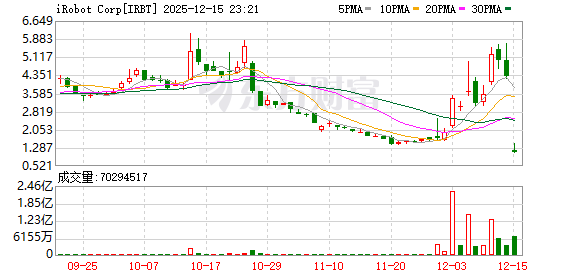
扫地机器人鼻祖iRobot申请破产 中国企业接盘
Di Yi Cai Jing· 2025-12-15 15:21
Core Viewpoint - iRobot has filed for bankruptcy and entered into a restructuring support agreement with its major creditor, Shenzhen SJC Robot Co., Ltd, which aims to acquire iRobot through a court-supervised process, marking the end of an era for the pioneer of robotic vacuum cleaners [2][3] Group 1: Company Overview - iRobot, known for its Roomba vacuum, has seen a decline in its market position, with its revenue dropping significantly and facing increased competition from Chinese brands [5][6] - The company has accumulated over $350 million in debt to Shenzhen SJC, which has become its largest creditor [5] - iRobot's financial struggles are evident, with a 26.47% year-over-year revenue decline to $375 million for the first three quarters of 2025, and a net loss that increased by 90% to $130 million [6] Group 2: Acquisition and Restructuring - The acquisition by Shenzhen SJC is expected to help iRobot reduce its debt and maintain operations while continuing product development [3][4] - If the court approves the acquisition, iRobot will become a wholly-owned subsidiary of Shenzhen SJC and will be delisted from stock exchanges, with existing shareholders losing their equity [3][4] - The restructuring aims to combine iRobot's innovation and design with Shenzhen SJC's manufacturing capabilities, preparing for the next era of smart home robotics [3] Group 3: Market Dynamics - The acquisition could allow Shenzhen SJC to transition from an OEM to a self-branded company, potentially increasing profit margins compared to its current business model [4][7] - iRobot's market share in North America is still significant, holding approximately 20%-30% of the robotic vacuum market, but it has recently fallen out of the top five global brands [4][6] - The rise of Chinese brands in the robotic vacuum market has intensified competition, with local manufacturers leveraging strong supply chain and innovation capabilities [7]


哈尔斯星芒杯产品直播断货 持续发力自主品牌转型
Zheng Quan Shi Bao Wang· 2025-07-14 02:16
Group 1 - The core viewpoint of the articles highlights the strategic shift of the company from being a traditional OEM to an independent brand operator, exemplified by the launch of the "Luzhuo Co-branded" NEW STAR cup series [1][2] - The company has maintained its position as the global leader in cup and kettle sales for several consecutive years, with products sold in over 80 countries and regions [1] - The company has established a strong reputation in the industry by initially providing production services for well-known international brands such as Stanley and Yeti, and has since expanded its portfolio to include four major brands: HAERS, SIGG, SANTECO, and NONOO [1] Group 2 - The introduction of the "brand friend" collaboration model allows the company to leverage peak artist popularity for quick market impact while minimizing long-term binding risks, particularly effective in the fast-moving consumer goods category [2] - The rapid sell-out of the "Luzhuo Co-branded" blue cup during the live broadcast led to urgent production increases, indicating strong consumer demand and the potential for developing derivative products [2] - The domestic cup and kettle market is undergoing significant transformation, with products evolving from traditional durable goods to fast-moving, fashionable, collectible items that symbolize lifestyle, driven by consumer demand for emotional value [2]

离开追觅的日子
雷峰网· 2025-03-03 12:03
Core Viewpoint - The article discusses the strategic maneuvers and leadership dynamics within the company Chasing, highlighting its aggressive talent acquisition strategy and the impact of key executives on its growth trajectory. Group 1: Talent Acquisition Strategy - Chasing initiated a "finger severing plan" to weaken competitors by aggressively recruiting their key personnel, forming a "headhunting team" of 300 to execute this strategy [2][41]. - The company successfully poached 19 core R&D personnel from a competitor within three months, significantly disrupting the competitor's product launch plans [2][41]. - This strategy reflects a broader competitive approach where Chasing aims to outpace rivals by acquiring talent and time [48]. Group 2: Leadership and Growth - The departure of key executives like Wang Shengle did not hinder Chasing's growth, as the company reported a 200% increase in its proprietary brand business despite leadership changes [3][4]. - Wang Shengle's contributions were initially underestimated, but he played a crucial role in scaling the company from its early stages to a significant player in the market [4][5]. - The company experienced rapid growth, with revenue surging by 329.66% and net profit increasing by 455.86% in 2020, alongside a successful B+ round financing [22]. Group 3: Executive Dynamics - The article highlights the contrasting leadership styles of founder Yu Hao and Wang Shengle, with Yu favoring a diversified strategy while Wang preferred a focus on innovation and quality [80]. - The internal dynamics led to tensions, particularly regarding management approaches and the distribution of equity, which contributed to executive departures [68][72]. - The frequent turnover of high-level executives, including the recent exits of key figures like Guo Ranjie and Wu Peng, reflects ongoing challenges in maintaining a cohesive leadership team [101][84]. Group 4: Market Position and Strategy - Chasing has established a strong market presence, achieving a 41.2% share in the high-end market segment by mid-2024, a 22.2% increase from the previous year [106]. - The company employs a localized strategy, adapting products to meet regional consumer preferences, which has enhanced its competitive edge in international markets [106]. - Chasing's commitment to innovation is evident in its development of advanced technologies, such as the bionic dual mechanical foot system, which has positioned it favorably in the global market [106].