服装纺织业

Search documents
专家共读报告丨李志坚:传统产业“永不落幕”,是经济基本盘
Nan Fang Du Shi Bao· 2026-01-26 04:16
Core Viewpoint - The Guangdong government emphasizes the construction of a stronger modern industrial system and the development of robust traditional industry clusters that are "never-ending" [2] Group 1: Traditional Industries - Traditional industries in Guangdong, such as electronics, home appliances, furniture, clothing, and food, form the economic foundation [5] - These industries are characterized by complete supply chains, responsive market reach, and significant employment capacity [5] Group 2: Challenges and Future Directions - Current challenges for these industries are not merely about overcapacity but involve their positioning within the global value chain [6] - The future competitiveness of these industries should derive from deep understanding of demand, integration of technology, and collaborative efficiency across the supply chain [6] - For example, the home appliance industry should focus on providing smart home solutions rather than just manufacturing appliances [6] Group 3: Pathways to Transformation - The report highlights "intelligent, green, and integrated" approaches as pathways for transformation [7] - Intelligent transformation involves connecting data across design, production, supply chain, and sales through industrial internet platforms [7] - Green transformation is becoming a competitive advantage, addressing both international trade carbon barriers and domestic consumer preferences for eco-friendly products [7] - Integrated transformation blurs the lines between manufacturing and services, allowing products to serve as platforms for services and cultural experiences [7] Group 4: Ecosystem for Industry Clusters - The "never-ending" industry clusters represent a symbiotic ecosystem that requires addressing practical obstacles such as directing innovation resources effectively and ensuring funding reaches small and medium enterprises [8] - Leading enterprises must take responsibility for driving upgrades among supporting companies through technology standards and shared orders [8] - The role of industry associations is crucial in collective technology development, brand building, and maintaining industry order [8] - The upgrade of traditional industries is a gradual process that respects industry laws and captures market signals, relying on continuous improvements in technology, organization, and talent [8]


*ST步森:拟聘请张敏担任公司董事会秘书
Mei Ri Jing Ji Xin Wen· 2025-12-09 09:53
Group 1 - The company *ST Bosen announced the resignation of Mr. Qian Dong as the secretary of the board due to personal reasons, and he will no longer hold any positions within the company or its subsidiaries [1] - Ms. Zhang Min is proposed to be appointed as the new secretary of the board and also as the financial director, with her term starting from the date of the board's approval until the current board's term ends [1] - For the first half of 2025, *ST Bosen's revenue composition is 93.27% from the textile and apparel industry and 6.73% from retail [1] Group 2 - The current market capitalization of *ST Bosen is 1.5 billion yuan [2]

*ST步森:11月28日召开董事会会议
Mei Ri Jing Ji Xin Wen· 2025-11-28 12:48
Group 1 - The company *ST Bosen (SZ 002569) announced on November 28 that its seventh fifth board meeting was held via communication, where it reviewed the proposal to cancel the supervisory board and amend the company's articles of association and its attachments [1] - For the first half of 2025, *ST Bosen's revenue composition was 93.27% from the apparel and textile industry and 6.73% from the retail industry [1] - As of the report, *ST Bosen's market capitalization is 1.6 billion yuan [1]
美联储降息对中国的三重机遇与双向冲击
Sou Hu Cai Jing· 2025-09-20 00:54
Group 1 - The potential interest rate cut by the Federal Reserve in September 2025 is a key external factor influencing the Chinese economy, with a 92% probability of a rate cut reflected in the U.S. interest rate futures market [1] - The U.S. labor market shows signs of weakness, with a 0.8 percentage point decline in GDP growth from the first to the second quarter, and the core PCE price index year-on-year growth falling to 2.3%, creating room for the Fed to ease monetary policy [1] Group 2 - The narrowing of the China-U.S. 10-year government bond yield spread from 2.1 percentage points in 2023 to 0.3 percentage points is a significant positive development, potentially allowing for a 150 basis point reduction in China's reserve requirement ratio [3] - The aviation and real estate sectors are expected to benefit first, with the former holding $38.7 billion in dollar-denominated debt and the latter having approximately $52.6 billion in outstanding dollar debt, alleviating financial cost pressures from exchange rate fluctuations [3] Group 3 - Over the past 12 months, northbound capital has net flowed into the A-share market by 243 billion yuan, with the consumer electronics, new energy vehicles, and high-end equipment manufacturing sectors accounting for 62% of this inflow [3] - In the MSCI China index, stocks with foreign ownership exceeding 5% have an average valuation below the central value of the past five years by 23%, indicating potential for value reassessment during the Fed's rate cut cycle [3] Group 4 - The CFETS RMB exchange rate index, if it rises to the 101-103 range, could reduce the average procurement cost of basic imported goods by 6.3%, significantly impacting strategic materials like iron ore and crude oil [4] - The apparel and textile sectors may face pressure, with a 1% appreciation in the RMB potentially eroding profit margins by 4.7%, affecting over 120,000 export enterprises [4] Group 5 - The manufacturing PMI has remained above the threshold for four consecutive months, with the new export orders index rising to 51.6, indicating effective structural adjustments [4] - The recent 9.2% increase in the global commodity price index may offset some benefits from alleviating input deflationary pressures [4]

沉默只会让恶霸大胆,中国力挺印度对美强硬,莫迪敢于亮剑吗?
Sou Hu Cai Jing· 2025-08-23 06:50
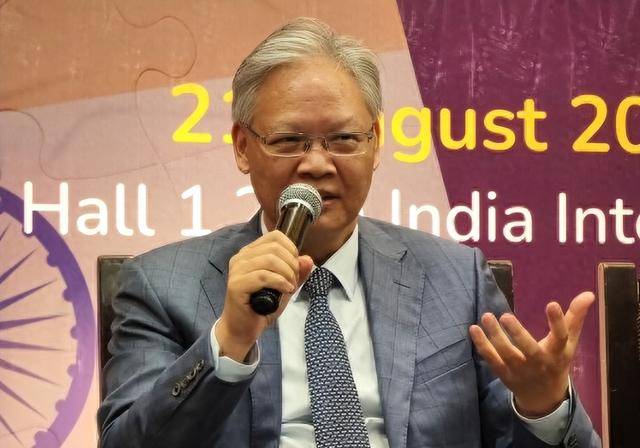
Group 1 - The Chinese ambassador to India criticized the high tariffs imposed by the US on Indian goods, labeling the US as a "bully" and expressing China's support for India [1][3][5] - The US has threatened to impose an additional 25% tariff on Indian goods, raising the total tariff to 50%, which has significant implications for India's exports [1][5] - The textile, pharmaceutical, and processed food industries are the most affected, with an estimated 48 billion USD in exports from India to the US in 2024, and over 12 million jobs at risk due to the tariffs [3][5][7] Group 2 - The impact of the tariff threat is expected to lead to a loss of at least 8 million jobs in India, with small and medium enterprises being the hardest hit [5][7][9] - The Indian stock market has seen a dramatic decline, dropping from the most favored Asian market to the top position for fund manager sell-offs, with a 1.2% drop in the past two weeks [7][17] - The Indian government is cautiously responding to the US tariffs, with plans for tax reforms aimed at stimulating domestic demand, which could contribute 0.35-0.45 percentage points to GDP growth by FY2027 [13][17] Group 3 - The diamond, textile, and chemical industries are particularly vulnerable, with micro and small enterprises making up a significant portion of these sectors [9] - The bilateral trade between China and India has exceeded 75 billion USD in 2025, reflecting a 10% year-on-year growth, indicating a potential for strengthened economic ties despite external pressures [15] - The future of labor-intensive industries in India will largely depend on the government's strategic decisions in response to the ongoing trade tensions [17]
*ST步森:8月4日召开董事会会议
Mei Ri Jing Ji Xin Wen· 2025-08-04 12:31
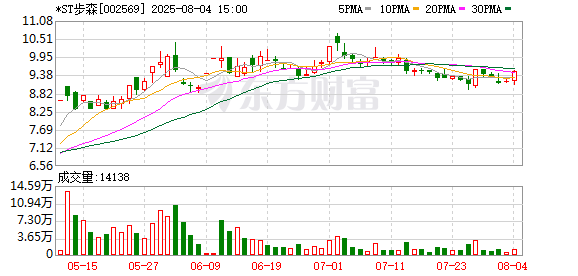
Group 1 - The company *ST Bosen (SZ 002569) announced the convening of its seventh board meeting for 2025 on August 4, 2025, to discuss a proposal for borrowing from Baoji Fangwei Tongchuang Enterprise Management Partnership (Limited Partnership) and related transactions [2] - For the year 2024, the company's revenue composition is as follows: 89.48% from the apparel and textile industry, 6.66% from retail, 3.85% from information services, and 0.01% from other businesses [2]