
未提及具体行业

Search documents
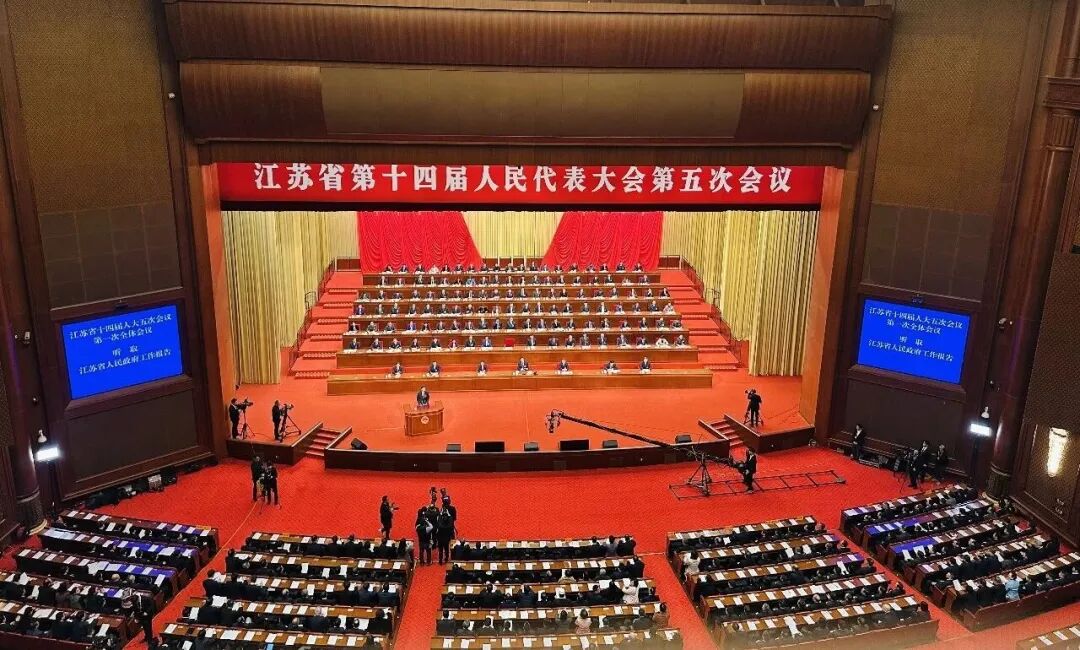
2026年江苏将推进综治中心规范化建设和信访工作法治化
Xin Lang Cai Jing· 2026-02-04 12:21
Core Viewpoint - The report from Jiangsu Province emphasizes the achievements during the "14th Five-Year Plan" and outlines key priorities for the "15th Five-Year Plan," focusing on high-quality development and social stability through legal measures and governance improvements [1][5]. Economic Performance - During the "14th Five-Year Plan," Jiangsu's GDP reached 14.2 trillion yuan, with an average annual growth of 5.7%, and a per capita GDP of 167,000 yuan [3][7]. - The province's general public budget revenue reached a trillion yuan level, with over a trillion yuan in new tax reductions [3][7]. - The manufacturing sector contributed 33.5% to the GDP, while the service sector accounted for 54% [3][7]. - In 2025, Jiangsu's GDP grew by 5.3%, maintaining the highest growth in the country, with industrial output and service revenue increasing by 6.5% and 7% respectively [3][7]. Strategic Focus for 2026 - The report outlines the need to implement the "Five Musts" and "Two Better Coordinations" from the central government, focusing on stability and quality improvement [4][8]. - Key tasks include expanding domestic demand, optimizing supply, and ensuring employment and market stability [4][8]. - The report emphasizes the importance of major strategic tasks, reforms, projects, and platforms to ensure a strong start for the "15th Five-Year Plan" [4][8]. Governance and Safety Measures - Jiangsu will implement new policies to optimize the business environment, enhancing service platforms and ensuring quick access to benefits for businesses and citizens [4][8]. - The report highlights the need to improve public safety governance through digital and professional enhancements, and to strengthen emergency response capabilities [4][8]. - It also stresses the importance of social security measures, including the prevention of telecom fraud and the establishment of a comprehensive public safety cooperation forum in 2026 [4][8].

超越北上广深,苏州登顶A股IPO第一城!2025年A股各省市IPO情况一览
Sou Hu Cai Jing· 2026-01-19 15:43
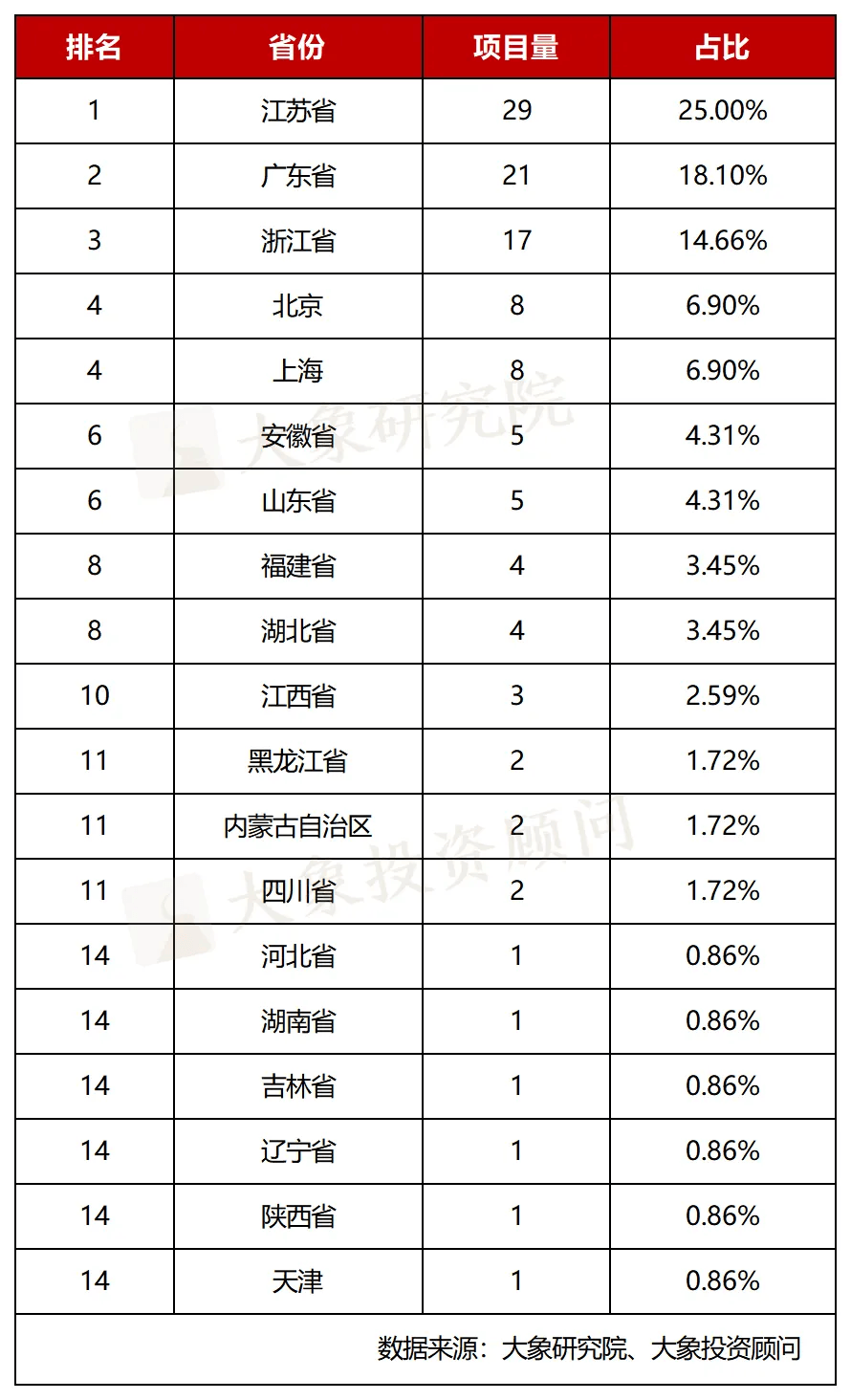
Core Insights - In 2025, the A-share market saw a total of 116 new IPOs, marking a 16% increase from the previous year, which had 100 IPOs [1][15] Provincial Distribution of IPOs - Among the 116 new listings, the distribution by board is as follows: 33 on the ChiNext, 23 on the Shanghai Main Board, 19 on the Sci-Tech Innovation Board, 15 on the Shenzhen Main Board, and 26 on the Beijing Stock Exchange [2] - The top three provinces for IPOs are Jiangsu (29), Guangdong (21), and Zhejiang (17), collectively accounting for 57.76% of the total new listings [3][4] - Suzhou emerged as the leading city for IPOs with 12 new listings, surpassing major cities like Beijing, Shanghai, Shenzhen, and Guangzhou [6] Fundraising Amounts - The total amount raised by the 116 new IPOs reached approximately 1317.71 billion yuan [9] - The provinces with the highest fundraising amounts are: 1. Fujian: 224.47 billion yuan (17.03%) 2. Jiangsu: 209.00 billion yuan (15.86%) 3. Beijing: 199.08 billion yuan (15.11%) [11][10] Market Capitalization - The total market capitalization of the 116 new IPOs is approximately 2.34 trillion yuan [12] - The leading provinces by market capitalization are: 1. Beijing: 566.27 billion yuan (24.19%) 2. Guangdong: 353.62 billion yuan (15.11%) 3. Fujian: 309.93 billion yuan (13.24%) [13][14] Conclusion - The 2025 A-share market reflects a steady increase in new listings, highlighting regional concentration and structural differentiation, with Jiangsu, Guangdong, and Zhejiang dominating the IPO landscape, showcasing the economic vitality and industrial upgrading in these regions [15]
调查:德国经济复苏乏力 企业信心持续低迷
Zhong Guo Xin Wen Wang· 2025-11-06 17:04
Economic Outlook - The DIHK's economic survey indicates that despite government reforms, there are no signs of recovery in the German economy, with business confidence remaining low [1] - The survey, covering approximately 23,000 companies, predicts stagnation for 2023 and only a slight growth of 0.7% in 2024, which is significantly lower than most economists' forecasts [1] - The German economy is expected to experience two consecutive years of recession, with a slight growth anticipated in 2025 and a potential growth rate exceeding 1% in 2026 [1] Business Investment Sentiment - The DIHK economic climate index has decreased by 1 point to 93.8, indicating a persistently pessimistic outlook [1] - Only 15% of surveyed companies expect economic conditions to improve in the next 12 months, while a quarter anticipate worsening conditions [1] - Investment intentions remain low, with only one-fifth of companies planning to increase investments and one-third intending to cut back on investments [1] Labor Market Conditions - The labor market is facing challenges, with only 10% of companies planning to hire more employees, while 25% are considering layoffs [2] - A significant 56% of companies identify labor costs as a major operational risk, influenced by rising social insurance contributions and recent minimum wage increases [2] - The DIHK CEO emphasizes the need for the government to accelerate efforts to reduce burdens on businesses to restore confidence [2]
证监会:不断优化可持续披露制度
Zhong Guo Zheng Quan Bao· 2025-10-16 20:11
Core Viewpoint - The China Securities Regulatory Commission (CSRC) is committed to supporting and guiding listed companies in enhancing the quality of sustainable disclosures, in line with the new "National Nine Articles" requirements [1][3]. Group 1: Disclosure Improvement - The disclosure rate of sustainable reports among listed companies has increased, with 1,869 companies disclosing their 2024 sustainable reports, resulting in an overall disclosure rate of 34.7%, a rise of approximately 10 percentage points compared to the previous two years [1][2]. - 99.3% of the companies that disclosed reports included quantitative indicators, with over 80% of these companies reporting more than 25 indicators [2]. - 62.1% of companies disclosed climate-related risks and opportunities, while 65.9% reported greenhouse gas emissions, showing a significant increase from 57.5% in the previous year [2]. Group 2: Governance and Focus - 67.3% of the companies that disclosed reports have established governance structures, and 63.9% disclosed strategic information, with 44.0% setting and disclosing quantitative sustainability-related goals [2]. - The introduction of guidelines has helped companies focus their sustainable disclosures, reducing confusion and lowering the cost of learning from domestic and international standards [2]. Group 3: Regulatory Framework - The CSRC plans to continue improving the disclosure system by guiding stock exchanges based on disclosure guidelines and adapting to corporate needs, with a focus on policy evaluation after mandatory disclosures begin next year [3][4]. - Approximately 400 companies are required to disclose under the mandatory guidelines, which cover over half of the market's total market capitalization [3]. - The CSRC encourages voluntary disclosures from companies not in the mandatory category, promoting a balanced approach to sustainability reporting [3][4].
IMF下调今年全球经济增长预期至2.8%
Zhong Guo Xin Wen Wang· 2025-04-22 19:21
Group 1 - The International Monetary Fund (IMF) has revised down its global economic growth forecast for 2025 to 2.8%, a decrease of 0.5 percentage points from the prediction made in January this year [1] - For 2026, the global economy is expected to grow by 3%, which is 0.3 percentage points lower than the January forecast [1] - Developed economies are projected to grow by 1.4% this year and 1.5% next year, while emerging markets and developing economies are expected to grow by 3.7% this year and 3.9% next year [1] Group 2 - The report indicates that the trade tensions and adjustments in financial markets are leading to increased downside risks for the economic outlook [1] - The escalation of trade wars and uncertainty in trade policies may further weaken both short-term and long-term growth prospects [1] - The IMF has noted that the overall inflation rate is expected to decline slightly below the January forecast, with inflation rates projected to be 4.3% in 2025 and 3.6% in 2026 [2] Group 3 - The IMF emphasizes the need for countries to constructively work towards creating a stable and predictable trade environment, promoting international cooperation, and addressing domestic policy gaps and structural imbalances [2]