
未提及具体产品

Search documents
2026年江苏将推进综治中心规范化建设和信访工作法治化
Xin Lang Cai Jing· 2026-02-04 12:21
Core Viewpoint - The report from Jiangsu Province emphasizes the achievements during the "14th Five-Year Plan" and outlines key priorities for the "15th Five-Year Plan," focusing on high-quality development and social stability through legal measures and governance improvements [1][5]. Economic Performance - During the "14th Five-Year Plan," Jiangsu's GDP reached 14.2 trillion yuan, with an average annual growth of 5.7%, and a per capita GDP of 167,000 yuan [3][7]. - The province's general public budget revenue reached a trillion yuan level, with over a trillion yuan in new tax reductions [3][7]. - The manufacturing sector contributed 33.5% to the GDP, while the service sector accounted for 54% [3][7]. - In 2025, Jiangsu's GDP grew by 5.3%, maintaining the highest growth in the country, with industrial output and service revenue increasing by 6.5% and 7% respectively [3][7]. Strategic Focus for 2026 - The report outlines the need to implement the "Five Musts" and "Two Better Coordinations" from the central government, focusing on stability and quality improvement [4][8]. - Key tasks include expanding domestic demand, optimizing supply, and ensuring employment and market stability [4][8]. - The report emphasizes the importance of major strategic tasks, reforms, projects, and platforms to ensure a strong start for the "15th Five-Year Plan" [4][8]. Governance and Safety Measures - Jiangsu will implement new policies to optimize the business environment, enhancing service platforms and ensuring quick access to benefits for businesses and citizens [4][8]. - The report highlights the need to improve public safety governance through digital and professional enhancements, and to strengthen emergency response capabilities [4][8]. - It also stresses the importance of social security measures, including the prevention of telecom fraud and the establishment of a comprehensive public safety cooperation forum in 2026 [4][8].

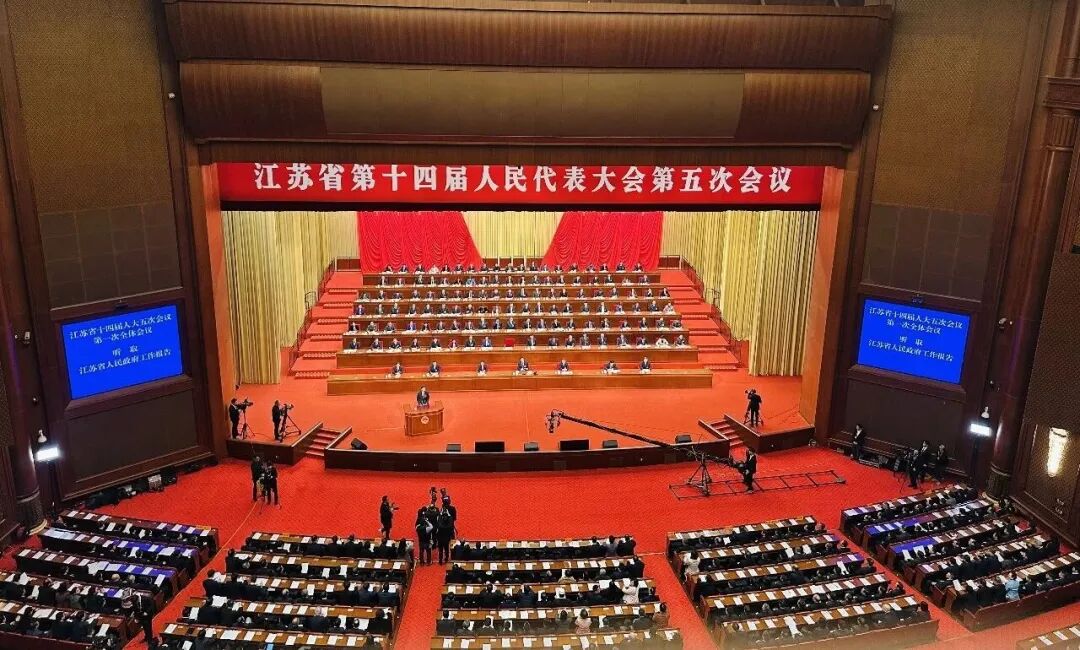
湖北:加速重构发展模式和增长动力 努力塑造更多依靠创新驱动、更多发挥先发优势的引领型发展
Shang Hai Zheng Quan Bao· 2026-01-27 18:36
Core Viewpoint - Hubei Province aims for a GDP growth of approximately 5.5% by 2025 and 2026, focusing on a green transformation and innovation-driven development to enhance its economic strength and competitiveness [1][2]. Economic Growth Targets - Hubei's GDP is projected to grow by 5.5% in both 2025 and 2026, with a consumer price increase of around 2% in 2026 [1]. - The government emphasizes a dual focus on supply and demand to stabilize economic growth through increased consumption, effective investment, and export stability [1][2]. Development Strategies - The province plans to cultivate new consumption growth points such as the primary economy, exhibition economy, and silver economy, while enhancing project planning and construction to support economic growth [2]. - Hubei will promote over 12,200 projects worth over 100 billion yuan to drive high-quality development through effective investment [2]. Innovation and Industry Upgrades - Hubei aims to accelerate the transformation of traditional industries like automotive while developing emerging sectors such as integrated circuits, aerospace, and biomedicine [3]. - The province will focus on future industries including low-altitude economy, green smart ships, and quantum technology, aiming to create world-class enterprises and industrial clusters [3]. Collaborative Development - Hubei will enhance cooperation with countries involved in the Belt and Road Initiative and RCEP members to boost trade and explore new trade forms like cross-border e-commerce [2]. - The integration of technological, industrial, and financial innovations is a priority to reshape the modern technology finance system and improve collaborative innovation frameworks [2][3].
全国第一所!网安大学来了,就在武汉
Chang Jiang Ri Bao· 2026-01-05 08:22
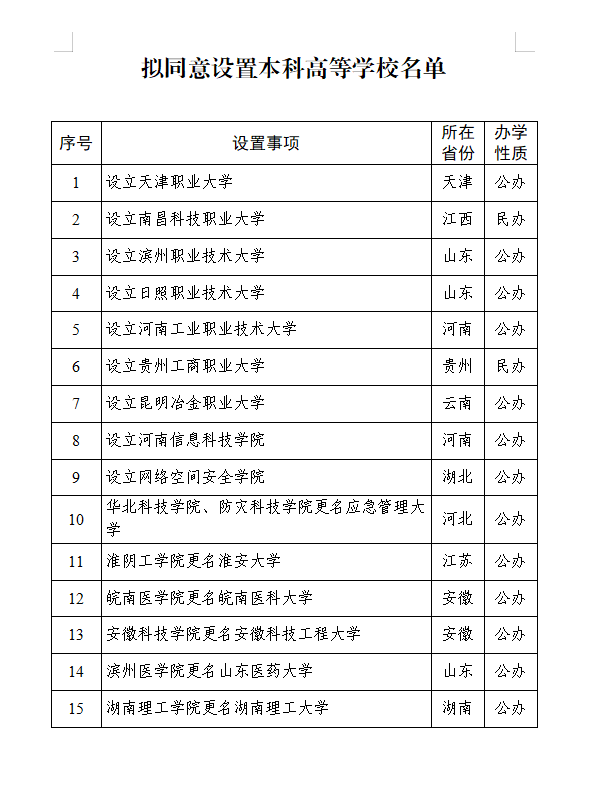
Core Viewpoint - The Ministry of Education has announced the proposed establishment of 15 new higher education institutions, including the Cybersecurity College, aimed at enhancing the country's cybersecurity talent pool and supporting national strategic goals [1][4]. Group 1: New Institutions - The proposed institutions include both public and private universities, with notable mentions such as Tianjin Vocational University (public), Nanchang University of Science and Technology (private), and the Cybersecurity College located in Hubei [2][4]. - The Cybersecurity College is positioned as the first higher education institution in China dedicated to cybersecurity, focusing on cultivating high-end talent in this critical field [5][6]. Group 2: Strategic Importance - The establishment of the Cybersecurity College is a response to the increasing demand for cybersecurity professionals due to rapid advancements in technologies like artificial intelligence and quantum technology [6]. - The college aims to bridge the gap in core technology research and development, addressing the current talent shortage in the cybersecurity sector, which is projected to reach a shortfall of 3.27 million professionals by 2027 [7]. Group 3: Educational Approach - The college will adopt an innovative application-oriented educational model, emphasizing deep integration of industry and education, and fostering collaboration between government, industry, and academia [7][15]. - Initial academic offerings will include programs in cutting-edge fields such as autonomous driving security, artificial intelligence security, software engineering security, and data science security [14]. Group 4: Infrastructure and Resources - The college will utilize the National Cybersecurity Talent and Innovation Base, which hosts over 200 cybersecurity companies, providing a rich ecosystem for practical learning and industry collaboration [13]. - Advanced facilities such as a password engineering laboratory and a cybersecurity protection and operation laboratory have already been established to support the educational mission [16].
广西出台方案培育先进制造业集群
Ren Min Ri Bao· 2025-12-19 19:51
Core Viewpoint - Guangxi Zhuang Autonomous Region is implementing an action plan to cultivate advanced manufacturing clusters, aiming to establish a comprehensive system that includes national and regional clusters by 2027 [1][2]. Group 1: Key Tasks - The plan outlines five key tasks: building a collaborative innovation network, accelerating the integration of intelligence and green development, strengthening high-quality enterprises within clusters, creating a favorable industrial development ecosystem, and enhancing governance modernization [1]. - By 2027, the goal is to establish one national-level advanced manufacturing cluster and twenty regional-level advanced manufacturing clusters [1]. Group 2: Collaborative Innovation Network - Guangxi will focus on creating a collaborative innovation network led by enterprises, developing technology innovation and industrial development roadmaps for each cluster [1]. - High-level collaborative innovation platforms will be constructed, supporting leading enterprises in participating in major national and regional innovation platform projects [1]. - The plan includes promoting the application of innovative technologies and developing new industries through technology innovation service institutions and industry chain extension projects [1]. Group 3: Intelligent and Green Development - The region will promote the intelligent and digital upgrade of clusters, implementing the "Artificial Intelligence + Manufacturing" initiative to create application scenarios and high-quality industrial data sets [2]. - There will be a focus on green and low-carbon transformation, establishing circular coupling industries and promoting green development in common industry segments [2]. - The plan encourages the integration of "manufacturing + services," promoting service-oriented manufacturing models and guiding cluster enterprises to provide extended services such as R&D design and diagnostic testing [2].
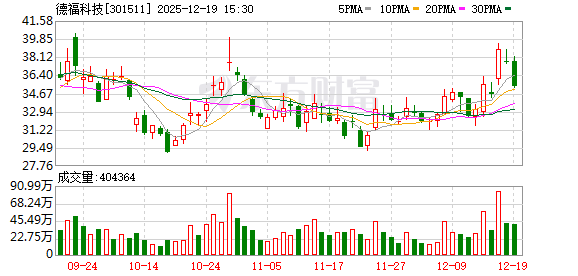
德福科技:公司的产品广泛应用于新能源汽车等领域
Zheng Quan Ri Bao· 2025-12-19 08:16
Group 1 - The company, Defu Technology, has indicated that its products are widely used in various sectors including new energy vehicles, drones, robotics, energy storage systems, automotive electronics, AI servers, and 5G base stations [2]
A股分析师前瞻:策略观点分歧大,跨年攻势已开启VS股指短期扰动多
Xuan Gu Bao· 2025-12-14 14:52
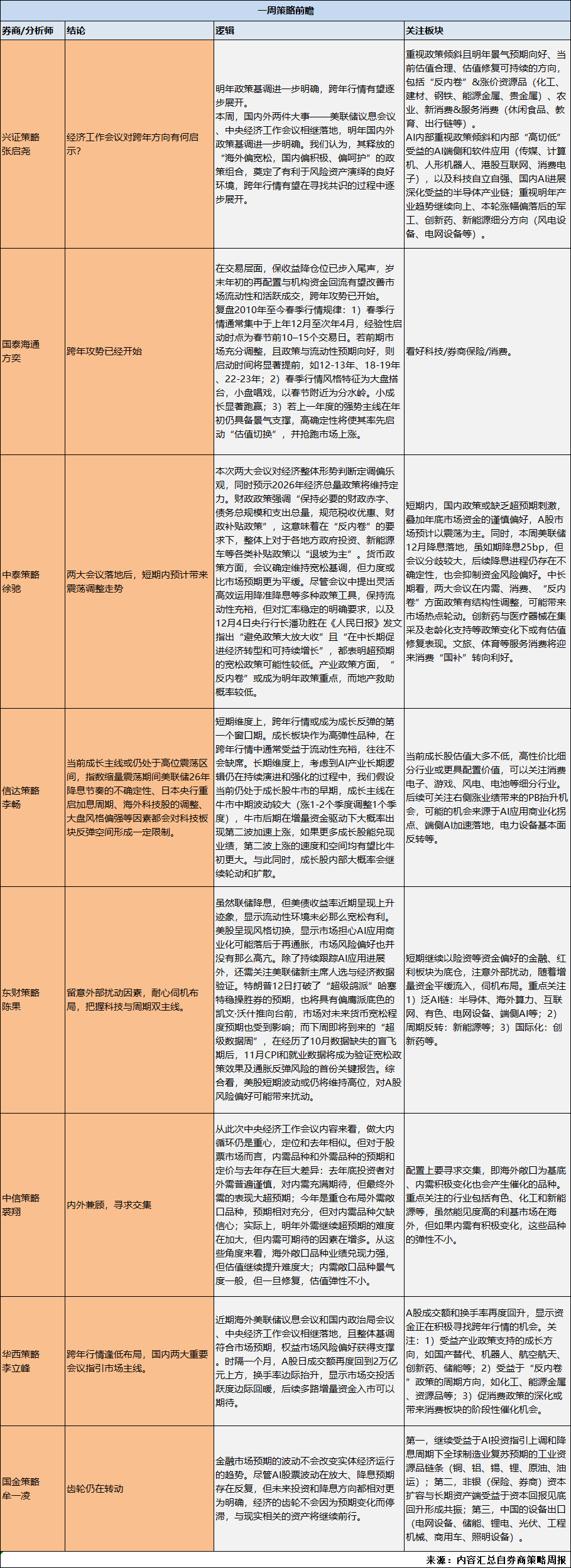
Group 1 - The core viewpoint of the article indicates a divergence in strategies among brokerages, with some anticipating a year-end rally while others expect short-term market fluctuations [1][2] - The central economic work conference and the Federal Reserve's meeting have set a clearer policy tone for the upcoming year, suggesting a favorable environment for risk assets [1][3] - The market is expected to see improved liquidity and active trading as institutional funds return for year-end reallocation [1][3] Group 2 - Short-term predictions suggest a lack of unexpected domestic policy stimuli, leading to a primarily volatile A-share market [2][3] - Attention is drawn to external factors that may affect market sentiment, particularly the upcoming "super data week" which will provide critical reports on CPI and employment [2][3] - The article highlights the importance of sectors such as technology and cyclical industries for potential investment opportunities [2][3] Group 3 - Various brokerage strategies emphasize the significance of policy direction and market conditions, with a focus on sectors benefiting from policy support, such as chemicals, energy, and new consumption [3][4] - The article notes that the current market environment is conducive to a potential spring rally, with historical patterns suggesting a favorable timeframe for such movements [3][4] - The emphasis on domestic demand and structural adjustments in policies indicates a cautious but optimistic outlook for the market [4][5]
针对“行业第一”滥用、“大字吸睛小字免责”营销乱象,市场监管总局出手了
Jing Ji Guan Cha Bao· 2025-12-12 10:12
Core Viewpoint - The State Administration for Market Regulation (SAMR) has initiated a public consultation on the "Advertising Citation Content Enforcement Guidelines (Draft for Comments)" to address issues such as the misuse of third-party reports and misleading advertising practices in the industry [1][2]. Group 1: Purpose and Scope of the Guidelines - The guidelines aim to enhance the effectiveness of enforcement regarding advertising citation content and to standardize the regulatory framework for advertising citations [3]. - Advertising citation content refers to data, statistics, survey results, excerpts, and quotes from third parties that relate to the advertised products or services [3][4]. Group 2: Responsibilities and Requirements - Advertisers are responsible for the authenticity, accuracy, and legality of all advertising content, including citation content, and must bear the burden of proof [5]. - The guidelines stipulate that data cited in advertisements must be obtained through valid experimental or measurement methods, and the institutions providing such data must possess the necessary qualifications [5][6]. Group 3: Transparency and Clarity - Advertisements must clearly indicate the source of citation content, including the names of institutions or authors, and any applicable conditions or limitations regarding the cited data [7][9]. - The guidelines require that any claims regarding sales, market share, or other factual information must be truthful, complete, and accurate [10][11]. Group 4: Enforcement and Compliance - The SAMR will take action against advertisements that use fabricated or unverifiable data, fail to disclose sources, or mislead consumers through exaggerated claims [12][18]. - Advertisers must ensure that any self-claimed data used in advertisements complies with the established guidelines and does not mislead consumers [14][16].
中金 | 金融周期底部的结构性行情:向外而生
中金点睛· 2025-11-25 23:39
Core Viewpoint - The article discusses the structural rise of the Japanese stock market during the "lost two decades" post-1990, emphasizing that despite overall economic stagnation, there were significant structural changes and investment opportunities within the market [3][4]. Group 1: Structural Market Changes - Japan experienced a structural rise in its stock market driven by economic transformation, including increased overseas exposure, high-tech leadership, and improved corporate governance [3][4]. - The "new economy" sectors, excluding the "old economy" sectors heavily exposed to real estate and deflation, showed a strong upward trend post-1990, particularly in industries such as industrial, technology, communication, and even consumer sectors [3][12]. - The Nikkei index recorded negative returns overall, but the "new economy" index achieved an annualized compound return of 7.3%, outperforming other Asian countries and aligning closely with global averages excluding the U.S. [12][14]. Group 2: Overseas Exposure - Japan's export growth continued post-1990, with the export-to-GDP ratio rising from 10% in the early 1990s to 20% before the global financial crisis, with industrial goods and capital equipment making up a significant portion [24][26]. - Outward Direct Investment (ODI) increased significantly, from 0.3% of GDP in 1993 to 2.2% in 2008, with manufacturing being the primary focus, particularly in high-end sectors [26][29]. - The increase in ODI led to a rise in overseas production and sales, with overseas branches contributing over 30% to the revenue of Japanese manufacturing firms [31][32]. Group 3: High-Tech Leadership - Japan maintained a strong position in high-tech sectors despite domestic economic stagnation, with high-tech product exports consistently accounting for over 85% of total exports since the 1990s [42][44]. - R&D investment as a percentage of GDP rose from 2.5% to over 3%, surpassing the OECD average, indicating a commitment to innovation and technological advancement [42][44]. - Labor productivity in manufacturing increased by 50% during the "lost decade," reflecting the positive impact of high-tech industries on overall economic performance [51][53]. Group 4: Corporate Governance Improvements - Post-1990, Japan's corporate governance underwent significant changes, with an increase in foreign investor participation leading to a focus on profitability and shareholder returns [60][62]. - Reforms in corporate governance included lowering litigation costs for minority shareholders, aligning management compensation with company performance, and allowing stock buybacks, which improved shareholder value [63][67]. - The financial health of "new economy" sectors improved significantly, with return on equity (ROE) surpassing that of "old economy" sectors, indicating a shift towards more sustainable and profitable business practices [69][70]. Group 5: Stable Capital Inflows - Stable capital inflows, particularly from long-term and overseas investors, provided essential support for the structural rise of the Japanese stock market [74][76]. - The proportion of overseas funds in the Japanese stock market increased significantly post-bubble, contributing to improved corporate governance and performance [76][80]. - Long-term funds, especially from insurance and pension sectors, remained stable, while domestic retail investor participation declined, highlighting a shift in market dynamics [74][79].

香港擘画“金融科技2030”新蓝图
Ren Min Ri Bao· 2025-11-24 22:57
Core Insights - Hong Kong is entering the "FinTech 3.0 era," integrating technology into daily life to create a resilient and impactful financial ecosystem [1] - The Hong Kong Monetary Authority (HKMA) has announced the "FinTech 2030" strategy, focusing on four key areas: new data and payment infrastructure, AI applications, business and technology resilience, and financial tokenization [2] - The government aims to encourage innovation in the financial sector by relaxing restrictions and exploring tokenization in traditional finance [3] Group 1: FinTech Development Strategy - The "FinTech 2030" strategy includes over 40 specific projects aimed at establishing Hong Kong as a robust international FinTech hub [2] - Hong Kong ranks third globally and first in Asia in the Global Financial Centers Index, with over 1,200 FinTech companies, a 10% increase from last year [2] - The total revenue of Hong Kong's FinTech industry is expected to exceed $600 billion by 2032 [2] Group 2: Government Initiatives - The Hong Kong government is implementing measures to promote technological innovation in finance, including the use of regulatory sandboxes [3] - Approximately 75% of financial institutions in Hong Kong are currently using or trialing generative AI, with plans to increase this to over 87% in the next 3 to 5 years [3] - The government is also focusing on seamless cross-border payment integration between Hong Kong and mainland China [3] Group 3: Virtual Assets and Market Development - The Hong Kong Securities and Futures Commission plans to introduce guidelines to enhance the virtual asset market, allowing licensed platforms to connect with global liquidity [4] - Measures will include enabling regulated virtual asset trading platforms to share global order books with affiliated overseas platforms [4] Group 4: Collaboration with Mainland China - The Hong Kong government is collaborating with Shenzhen to create a global FinTech center, focusing on digital finance, green finance, and inclusive finance [6] - This partnership aims to leverage Hong Kong's FinTech advantages and Shenzhen's industrial finance strengths to enhance cooperation [6] - The collaboration is expected to promote high-quality development of FinTech in the Guangdong-Hong Kong-Macao Greater Bay Area [6]
年均增速超过15%,进博会溢出效应指数发布
Zheng Quan Shi Bao· 2025-11-08 14:14
Core Insights - The 8th China International Import Expo (CIIE) is being held in Shanghai from November 5 to 10, showcasing its role as a significant driver for industrial upgrades and global trade [1][2] Group 1: Spillover Effect Index - The national spillover effect index for 2024 is projected to reach 67.04, a year-on-year increase of 2.23%, with an average annual growth rate of 15.54% [1] - Shanghai's spillover effect index stands at 66.56, with an average annual growth rate of 16.90% [1] - The Hongqiao International Central Business District (CBD) has a spillover effect index of 82.75, reflecting a year-on-year increase of 6.2% and an impressive average annual growth rate of 50.45% [1] Group 2: Investment Landscape - Despite a noticeable decline in investment promotion compared to 2023, the overseas investment index is 4.5 times that of 2018 [2] - China remains one of the top three preferred investment destinations globally, with 59,000 new foreign-funded enterprises established [2] - The report suggests a shift in export-oriented thinking and enhancing the business environment to strengthen trade resilience [2] Group 3: Shanghai's Role - Shanghai has emerged as a global launchpad for new products, with a transaction intention index of 2.42, reflecting a year-on-year growth of 17.16% [4] - The city has hosted over 3,000 product launch events annually since the first CIIE in 2018, with a significant number of new stores opening each year [5] - The high-end industry in Shanghai is experiencing robust growth, with the "industrial transformation" index increasing by 16.61% [5] Group 4: Hongqiao CBD Development - The Hongqiao CBD's exhibition economy index reached 22.08, marking a year-on-year increase of 16.70% [5] - The area has attracted over 7,000 digital enterprises, with technology service companies making up 21.4% of the total [5] - The report emphasizes the importance of digital empowerment and service optimization to address challenges in international procurement [6]