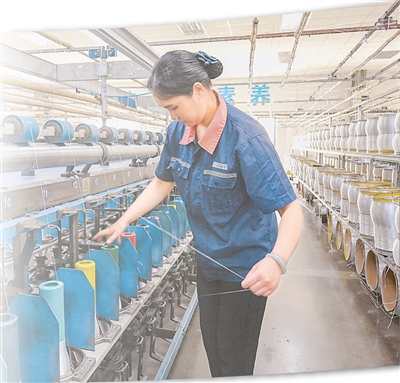
毛织

Search documents
“时尚潮·东莞造”!纺织服装行业两大盛会在广东东莞启幕
Zhong Guo Jing Ji Wang· 2025-11-19 07:47
Core Insights - The 2025 World Apparel Conference and the 22nd China (Dalang) Woolen Products Trade Fair are being held in Dongguan, focusing on the theme "Fashion Transformation, Diverse Coexistence" to explore new paths for the global fashion industry's integrated development [1][2] Group 1: Industry Trends - The textile and apparel industry is undergoing profound changes, with new technologies like artificial intelligence reshaping industry logic and creating new opportunities through emerging markets and personalized demands [2] - The Chinese apparel industry is adopting a path driven by technology for high-end development, data for digital empowerment, culture for brand leadership, green transformation for low carbonization, and global integration for collaborative growth [2] Group 2: Event Highlights - The 22nd China (Dalang) Woolen Products Trade Fair features a "Fashion Trend · Dongguan Made" theme, with a structure of "1 main venue + 6 sub-venues + 7 satellite exhibition halls," showcasing the achievements of the Dalang woolen industry and providing a platform for industry exchange [2] - Approximately 2,000 exhibitors are participating, with four major display areas for machinery, clothing, yarn, and comprehensive support, highlighting the vibrant textile industry [2] Group 3: Local Government Initiatives - Dongguan's government is implementing policies to support the textile industry, including a reward of up to 1 million yuan for companies undergoing digital transformation [1][4] - The total annual transaction volume of the entire woolen industry chain in Dalang exceeds 70 billion yuan, with aspirations to reach a trillion-level industrial cluster [4]
第22届“织交会”盛大开幕,科技、文化、贸易共舞,绘就毛织产业新画卷
2 1 Shi Ji Jing Ji Bao Dao· 2025-11-18 06:07
Core Insights - The 22nd China (Dalong) Woolen Products Trade Fair, themed "Fashion Trend · Made in Dongguan," aims to enhance the brand influence of Dalong's woolen industry and expand domestic and international markets [1][2] Industry Overview - Dalong has transformed into a global benchmark for the woolen industry, achieving an annual transaction volume exceeding 700 billion yuan, with aspirations to reach a trillion-level industrial cluster [3] - The woolen industry in Dalong has developed a complete closed loop from yarn to brand, producing over 3,000 new yarn products annually, and accounting for one-fifth of the world's sweaters [3] Event Highlights - The trade fair features approximately 2,000 exhibitors across 300 booths, showcasing advanced equipment, fashionable clothing, and diverse yarns, creating a vibrant atmosphere for collaboration [1] - A significant agreement was signed between the China Textile Industry Federation and the Dalong government to host the 10th China Textile Intangible Cultural Heritage Conference, marking a step forward in preserving textile heritage [2] - The establishment of a technical trade measures research base in Dalong will support local enterprises in navigating international trade barriers [2] Future Prospects - The event serves as a platform for trend releases, business matchmaking, and innovation displays, reflecting Dalong's strength in the woolen industry [3] - The local government is committed to supporting the intelligent transformation of woolen enterprises, aiming to enhance core competitiveness and contribute to the development of China's textile industry [3]
AI+毛衣设计、非遗新品齐上阵,东莞大朗织交会下周开幕
Nan Fang Du Shi Bao· 2025-11-11 12:09
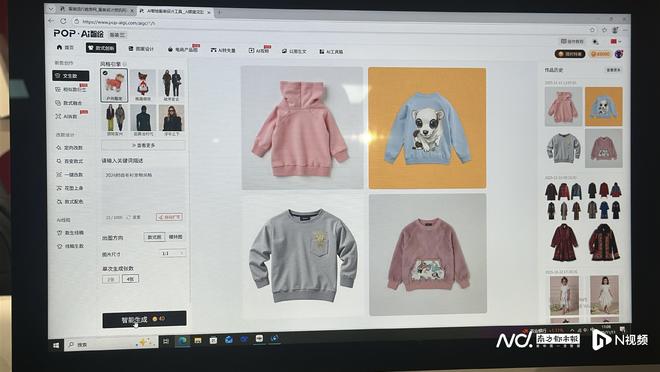
Core Insights - The 22nd Dalang "Weaving Fair" will open on November 17 in Dongguan, themed "Fashion Trend, Made in Dongguan" with one main venue, six sub-venues, and seven satellite exhibition halls [1][2] - AI design models will be a highlight of the fair, enabling personalized sweater designs in a short time through the POP·AI intelligent drawing platform [1][4] - The fair will also feature a cultural show of intangible heritage and a pet fashion show, showcasing the integration of technology and culture in the knitting industry [2][5] AI Design Model - The AI design model, developed by the Dalang Knitting Committee and Shejie Technology Group, aims to simplify the front-end design of knitted garments, enhancing efficiency to meet the demands of the "fast response" era [2][4] - The platform has a database of over 2 million design images, allowing for quick generation of new styles based on user input [2][4] Exhibitors and Products - Local companies will showcase new knitted garments and equipment, with Guangdong Impressionist Clothing Co., Ltd. presenting over a hundred products, including heritage series items [5][6] - The company has introduced new Chinese-style clothing made from Song brocade, a national intangible cultural heritage, which is handwoven from 100% silk and features unique dyeing techniques [6][8] - Dongguan Zhongxing Machinery Technology Co., Ltd. will highlight its multifunctional seamless knitting machine, capable of producing a complete sweater from a single yarn in just one hour, emphasizing ease of operation and cost-effectiveness [8][10]

宝藏小城何以创造“全球第一”?(“十四五”,我们见证这些“第一”⑩)
Ren Min Ri Bao Hai Wai Ban· 2025-08-19 22:55
Core Insights - The article highlights the emergence of small cities in China as global manufacturing hubs, showcasing their ability to leverage local advantages and meet international market demands. Group 1: Industry Overview - Jiangxi Province's Shangyou County hosts 195 fiberglass enterprises, generating over 15 billion yuan in sales last year, with products exported globally [2] - Jinzhong City in Shanxi Province, known as the "Capital of Glassware," produces 262,500 tons of glassware annually, exporting to over 80 countries [4] - Hunan's Linxiang is a key production area for fishing floats, supplying 80% of the national demand [6] Group 2: Notable Manufacturing Hubs - Xuchang in Henan Province is the world's largest wig distribution center, with over 4,100 wig companies and an annual export value of approximately 20 billion yuan [9] - Danyang in Jiangsu Province is the largest lens production base globally, producing over 400 million pairs of lenses annually, accounting for about 50% of global output [10][17] - Cixi in Zhejiang Province produces around 60% of the world's small home appliances, with several product categories leading in global output [10][17] Group 3: Economic Impact and Employment - The small city of Shaodong in Hunan has a booming lighter industry, achieving an output value of 14.8 billion yuan last year, with exports reaching 375 million USD [12] - Caoxian in Shandong Province has over 2,000 Hanfu enterprises, employing around 100,000 people, driven by the rising demand for traditional clothing [14] - The oral care and personal care industry in Hangji Town, Jiangsu, generates over 13 billion yuan annually, showcasing the economic potential of small towns [14] Group 4: Competitive Strategies - The article emphasizes the importance of market segmentation and digital transformation in enhancing competitiveness among small city industries [13] - Digitalization in Dawang has led to the production of over 900 million sweaters annually, with a significant portion of global supply originating from this small town [13] - The integration of local resources and global market needs has been crucial for the growth of these small city industries, allowing them to establish complete supply chains [10][11] Group 5: Global Influence - Small cities in China are reshaping the global industrial landscape, with their products influencing international pricing and standards [15] - The growth of these industries not only boosts local economies but also contributes to a more balanced urban-rural development [14][15]