
民生消费品

Search documents
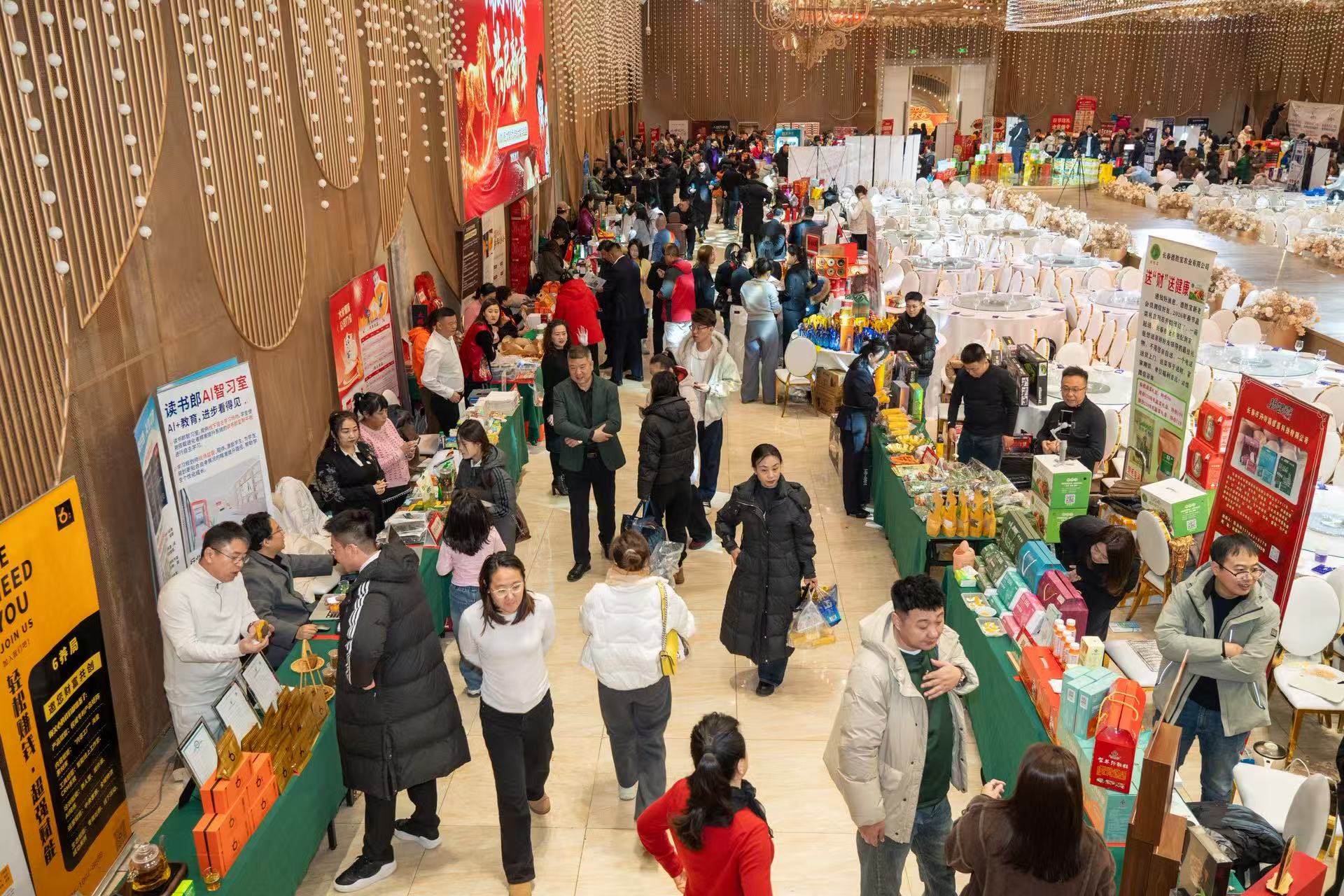
赋能民营经济 助力青年创业!吉林百家中小微企业千人年货大集启幕
Xin Lang Cai Jing· 2026-01-17 13:35
Core Insights - The event "Jilin Gathering Good Goods - Jilin's Annual Fair for Small and Micro Enterprises" aims to empower small businesses and promote local economic development through a multi-faceted platform [1][3]. Group 1: Event Overview - The event is organized by the Jilin Provincial Federation of Industry and Commerce and Yuxiaofei Guochao Agriculture, featuring participation from a thousand entrepreneurs and a hundred brands [1]. - It includes a morning exhibition of products and an afternoon entrepreneur annual meeting, focusing on agricultural products, cultural creative products, and consumer goods [1][3]. Group 2: Economic Development Focus - The event addresses the challenges faced by small and micro enterprises in Jilin, such as narrow sales channels and weak branding, by creating direct sales pathways [3]. - It aims to ensure that high-quality local products reach households directly, thereby injecting real momentum into the private economy [3]. Group 3: Youth Empowerment Initiatives - A notable highlight is the inclusion of a section dedicated to empowering university students in entrepreneurship, reflecting the social responsibility of the organizers [4]. - The event provides free exhibition spaces, product design support, market channel connections, and policy consultation for university entrepreneurial teams [4]. Group 4: Future Plans - The Jilin Provincial Federation of Industry and Commerce plans to continue developing this event into a regular platform for empowerment and a long-term incubator for student entrepreneurship [6]. - The collaboration aims to enhance the quality and efficiency of "Jilin brand" industries and support the growth of small and micro enterprises and young entrepreneurs [6].


前10个月上海市进出口增长5.2%,连续7个月实现双增
Xin Jing Bao· 2025-11-17 06:00
Core Insights - Shanghai's import and export activities have shown robust growth in the first ten months of the year, with a total of 3.71 trillion yuan, marking a year-on-year increase of 5.2%, surpassing the national average growth rate by 1.6 percentage points [1] - Exports reached 1.64 trillion yuan, growing by 10.5%, while imports totaled 2.07 trillion yuan, with a growth of 1.3% [1] Group 1: Trade Performance - Shanghai has experienced continuous growth in both imports and exports for seven consecutive months since April [1] - In October alone, the total import and export value was 367.98 billion yuan, reflecting a growth of 3.1%, with exports at 161.53 billion yuan (up 3.5%) and imports at 206.45 billion yuan (up 2.8%) [1] Group 2: Market Diversification - Shanghai has actively expanded its market reach, with significant trade volumes to emerging markets: ASEAN (530.31 billion yuan, up 12.6%), the Middle East (133.36 billion yuan, up 19.7%), and Africa (122.22 billion yuan, up 26.8%) [1] - Trade with major BRICS countries also showed positive growth, with exports and imports to Brazil and India reaching 92.35 billion yuan (up 7.8%) and 81.34 billion yuan (up 31.6%), respectively [1] Group 3: Product Export Trends - The "new three samples" products from Shanghai saw cumulative exports of 131.43 billion yuan, increasing by 11.7%, with a strong growth momentum in the last six months [2] - Notably, green shipping equipment exports surged by 115%, with liquid cargo ship exports amounting to 27.46 billion yuan [2] - Labor-intensive products also maintained stable growth, with exports totaling 164.57 billion yuan, reflecting a 2.9% increase [2] Group 4: Import Dynamics - The import of metal ores and unrefined copper and copper products reached 177.41 billion yuan and 50.67 billion yuan, growing by 8.6% and 17.2%, respectively [2] - High-tech product imports showed significant growth, with semiconductor manufacturing equipment, computers and components, and aircraft and parts increasing by 29.6%, 18.3%, 92.4%, and 41.5%, respectively [2] - Consumer goods imports also performed well, with dairy products, fresh and dried fruits, and beef increasing by 16.2%, 15.3%, and 10.8%, indicating a gradual release of domestic consumption vitality [2]