气象监测

Search documents
“北斗+AI”技术破解“云中雨”监测难题
Zhong Guo Xin Wen Wang· 2025-12-22 10:30
Core Insights - The integration of Beidou navigation and AI technology has successfully addressed the challenge of monitoring "cloud rain" through the development of a GNSS occultation observation device for accurate rainfall prediction [1][2] Group 1: Technology Innovations - The technology features three core innovations: 1. A mixed time-frequency distribution method for GNSS signal interference detection, improving interference signal frequency estimation accuracy by 25.6% [2] 2. An improved synchronous perturbation random approximation method for atmospheric parameter solving, enhancing the precision of precipitable water vapor (PWV) inversion by 65.0% [2] 3. A dual-stage attention mixed learning model for multivariable time series forecasting, achieving an industry-leading 87.6% true positive rate and a minimum false alarm rate of 8.5% for short-term severe convective rainfall warnings [2] Group 2: Applications and Impact - The technology has been deployed in over 50 units in critical areas such as the Yangtze River flood control section and the Huai River flood discharge area, providing precise decision-making support for flood dispatch and personnel relocation [2] - In the renewable energy sector, the technology offers high-precision meteorological data for photovoltaic and wind power plants, enhancing operational maintenance and power forecasting efficiency [2] - The research team has established multiple intellectual property rights and aims to improve the true positive rate to over 95% by 2026 [2]
【宝鸡】秦岭国家大气本底站一期项目建成
Shan Xi Ri Bao· 2025-12-08 22:43
Core Viewpoint - The Qinling National Atmospheric Background Station has entered the testing phase, which is crucial for monitoring greenhouse gases and understanding climate change [1] Group 1: Project Overview - The Qinling National Atmospheric Background Station is the only planned regional atmospheric background station in the Qinling area, located at an altitude of 2,655 meters in Taibai County [1] - The station's establishment is significant for improving the national meteorological observation network and enhancing regional climate research accuracy [1] Group 2: Operational Challenges - Recently, the station faced operational risks due to a snowstorm, which threatened the stability of its instruments [1] - A temporary team was formed by meteorological workers from Baoji City and Taibai County to ensure the equipment's normal operation, involving a five-hour trek in knee-deep snow to perform repairs [1] Group 3: Project Phases - The construction of the Qinling National Atmospheric Background Station is planned in two phases, with the first phase already completed and operational, while the second phase is under construction and expected to be fully operational by the end of 2027 [1]
我国碳减排承诺取得实效!中国气象局:人为碳排放增速低于全球
2 1 Shi Ji Jing Ji Bao Dao· 2025-12-03 06:17
Core Insights - The report indicates that China's anthropogenic carbon emissions are projected to increase by approximately 0.6% in 2024 compared to 2023, which is a significant reduction in growth rate compared to the 0.8% global increase, demonstrating China's commitment to carbon reduction is yielding tangible results [1] Group 1: Greenhouse Gas Monitoring - The China Meteorological Administration (CMA) has established a national atmospheric background greenhouse gas observation network, which includes one WMO global background station, seven regional background stations, eleven trial background stations, and over 120 greenhouse gas observation stations [1] - The CMA's greenhouse gas observation methods, standards, and processes are aligned with international practices, ensuring data quality and international comparability [1][3] Group 2: Atmospheric Background Station Data - The Wariwan National Atmospheric Background Station, the only station in China included in the WMO Global Atmospheric Observation Program (GAW), reported that the annual average concentration of carbon dioxide in 2024 reached 424.9 ppm, an increase of 3.5 ppm from 2023, which is consistent with the global average [2] - Methane and nitrous oxide annual average concentrations were recorded at 2003 ppb and 338.4 ppb, respectively, slightly above global averages [2] Group 3: Future Developments - The CMA aims to enhance its capabilities in greenhouse gas monitoring, assessment, measurement standards, and carbon source-sink accounting, with plans to optimize the observation station network and improve high-precision atmospheric greenhouse gas monitoring and dynamic analysis [3]

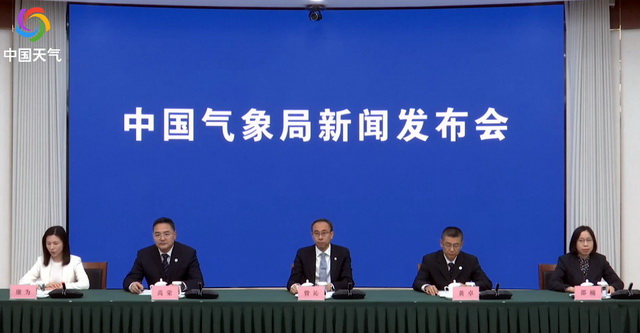
中国气象局:我国积极履行碳减排承诺已取得实际成效
Di Yi Cai Jing· 2025-12-03 04:48
Core Insights - The global near-surface concentrations of the three main greenhouse gases continue to rise, with China's carbon emissions projected to increase by approximately 0.6% in 2024 compared to 2023, which is a significant reduction from the previous year's growth rate of 0.8% [1][2] - The China Meteorological Administration (CMA) released the "China Greenhouse Gas Bulletin (2024)", marking the 14th consecutive year of monitoring greenhouse gas emissions in China [1][3] Group 1: Greenhouse Gas Emissions - In 2024, the average concentration of carbon dioxide (CO2) reached 423.9 ppm, an increase of 3.5 ppm from 2023, marking the largest annual increase since modern observations began in 1957 [1][2] - Methane and nitrous oxide concentrations were recorded at 1942 ppb and 338 ppb, respectively, indicating a continuing upward trend in greenhouse gas levels globally [1][2] Group 2: China's Monitoring Efforts - The CMA has established a national atmospheric greenhouse gas observation network, which includes one WMO global baseline station, seven regional baseline stations, and over 120 greenhouse gas observation stations [3][5] - The Wali Guan National Atmospheric Baseline Station is the only station in China included in the WMO Global Atmosphere Watch program, providing critical data for the WMO Global Greenhouse Gas Bulletin [3][5] Group 3: Future Directions - The CMA aims to enhance its capabilities in greenhouse gas monitoring, assessment, and carbon source-sink accounting, with plans to optimize the observation network and improve high-precision monitoring and dynamic analysis [6]