污染治理

Search documents
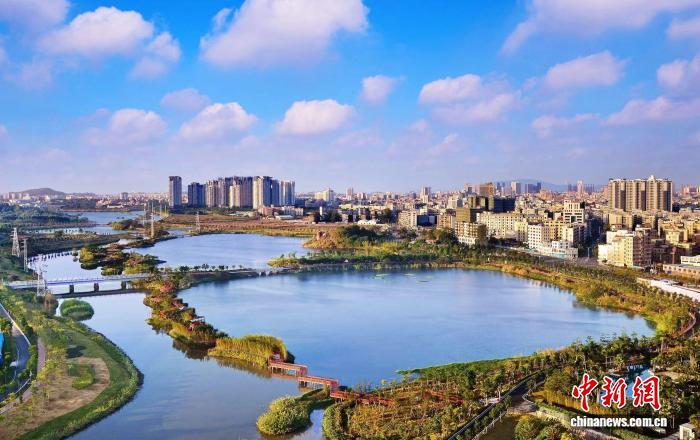
广州增绿减排,昔日烂泥坑蝶变生态明珠
Zhong Guo Xin Wen Wang· 2026-02-21 03:07
Core Viewpoint - The Guangdong Huadu Lake National Wetland Park has transformed from a heavily polluted area due to cement production into a model of ecological protection, scientific education, and cultural heritage, showcasing effective pollution reduction and carbon neutrality efforts in Guangzhou [1][3][4]. Group 1: Historical Context - The Huadu Lake area was once the core of the cement industry in Huadu District, with major factories producing 600,000 tons of cement annually in the 1990s [3]. - The closure of cement plants and inadequate sewage infrastructure led to severe environmental degradation, turning the area into a "city scar" with deteriorating water quality [3]. Group 2: Pollution Control Measures - The local government implemented a systematic approach to wetland restoration, focusing on pollution control through the elimination of heavy polluting industries and comprehensive measures like rainwater and sewage separation [3]. - Significant improvements were made to the water quality of the Xin Street River and Huadu Lake, with 60,000 square meters of wetland restoration completed [3]. Group 3: Ecological Enhancements - The park features a theme of "Water City Coexistence," integrating various ecological functions, including health water belts and green corridors, while preserving the original landscape [4]. - The park has created habitats for birds and introduced 43 new vascular plant species and 58 wild vertebrate species, including rare protected species [4]. Group 4: Carbon Neutrality Efforts - The wetland area has reached a 56.9% wetland rate, with an annual carbon fixation of 1,296.59 tons, equivalent to a reduction of approximately 3,000 tons of carbon emissions [4]. - The park has been included in the national botanical garden system as a model for translocation protection [4]. Group 5: Future Implications - The transformation of Huadu Lake serves as a valuable experience for the restoration of industrial sites and the construction of ecological corridors in densely populated urban areas [4]. - The park is expected to continue providing ecological benefits and promote harmonious coexistence between humans and nature [4].

燃料技术股价上涨6.35%,交易活跃度提升
Xin Lang Cai Jing· 2026-02-17 20:42
Group 1 - The stock price of Fuel Technology (FTEK.OQ) increased by 6.35% to $1.34 on February 17, 2026, driven by active trading and a significant price movement despite the overall slight decline in the pollution control sector [1] - The stock's trading volume reached $316,000 with a volume ratio of 1.54, indicating heightened trading activity, and the stock showed a price range of 9.52% during the day [1] - The company operates in pollution control solutions and has a negative price-to-earnings ratio (TTM) of -13.40, indicating ongoing losses, but a price-to-book ratio of 1.02 suggests it is close to its net asset value [2] Group 2 - The stock had previously experienced consecutive declines, with a 5-day drop of 4.29% and a 20-day drop of 12.99%, suggesting that the rebound on February 17 may include a factor of oversold recovery [3] - The stock price broke above the 5-day moving average with increased volume, indicating participation from short-term investors [3]
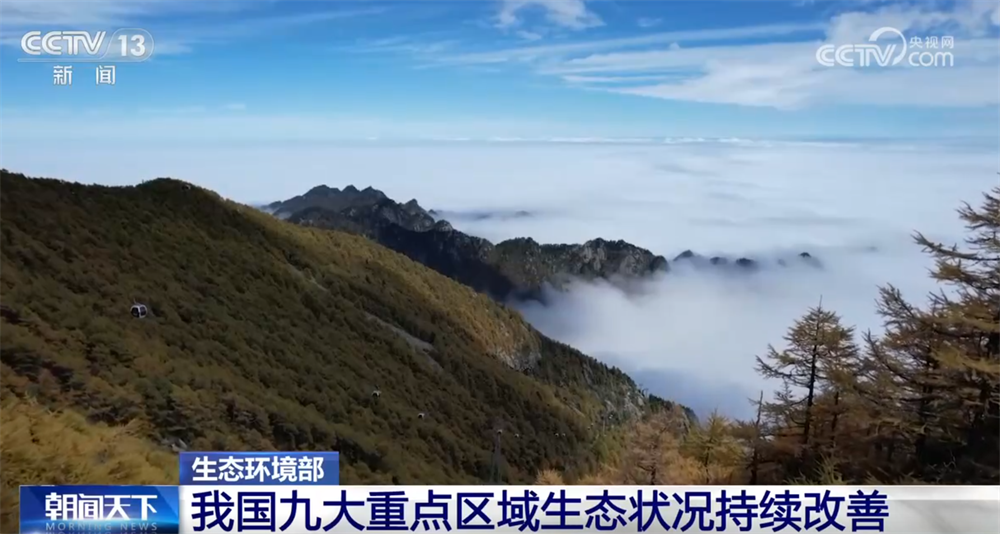
亮眼数据绘就2025年生态环保“美丽画卷” 以“含绿量”提升发展“含金量”
Yang Shi Wang· 2026-01-29 04:13
Core Insights - The ecological status assessment report highlights significant improvements in key regions of China, indicating effective ecological protection and restoration efforts [1][3] Group 1: Ecological Improvements - The Yellow River basin has established a governance system that promotes collaboration between central and local authorities, leading to improved ecosystem quality and a vegetation "green line" extending approximately 300 kilometers to the northwest [3] - The ecological quality of the Yangtze River Economic Belt's tributaries is improving year by year, with a notable recovery trend in over 50% of the important ecological spaces in the Qinling region [3] - Desertification in typical areas has decreased, with a 12.9% reduction in sandification in the Yellow River "bent" region [3] Group 2: Air Quality Enhancements - The average PM2.5 concentration across 339 cities is 28.0 micrograms per cubic meter, a year-on-year decrease of 4.4%, while PM10 concentration is 48 micrograms per cubic meter, down 2.0% [5] - The proportion of days with good air quality, excluding days with abnormal dust levels, is 89.3%, an increase of 1.9 percentage points year-on-year [7] - In the Beijing-Tianjin-Hebei region, the average PM2.5 concentration is 37.3 micrograms per cubic meter, down 11.6%, with a good air quality day ratio of 73.8%, up 5.5 percentage points [11] Group 3: Water Quality Improvements - The proportion of water quality monitoring sites with good water quality (Class I-III) is 91.4%, an increase of 1.0 percentage point year-on-year, with a 0.6% proportion of poor quality sites [12] - In major river basins, the proportion of good water quality sites is 93.0%, up 0.6 percentage points, while the proportion of poor quality sites is 0.4%, up 0.1 percentage points [12] - Among 209 monitored key lakes and reservoirs, 78.5% have good water quality, an increase of 1.4 percentage points, while the proportion of poor quality lakes has decreased by 1.0 percentage point to 3.3% [12] Group 4: Pollution Prevention Achievements - During the 14th Five-Year Plan period, significant progress has been made in pollution prevention, including the completion of ultra-low emissions transformation for 940 million tons of crude steel production capacity [13] - The clean heating rate in northern regions has reached 83%, and the remediation completion rates for important rivers and lakes are 95% and 99%, respectively [13] - The construction of "waste-free cities" is being progressively advanced, and actions for managing new pollutants are being implemented [13]
经济与生态齐飞!广东“十四五”绿美建设书写协同发展新篇章
Yang Guang Wang· 2026-01-19 11:09
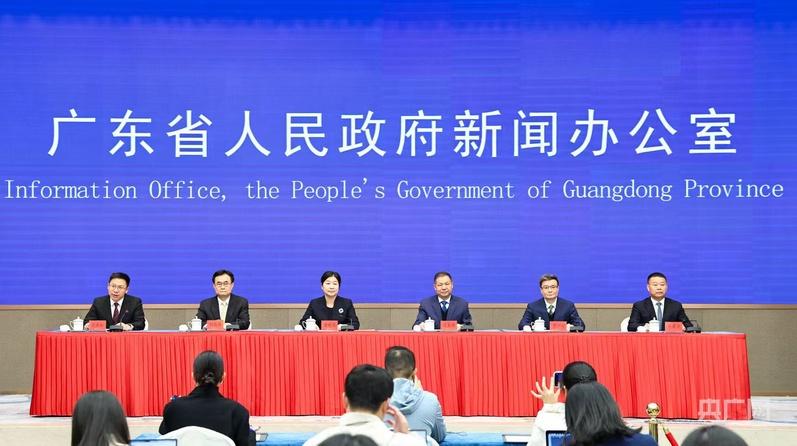
Core Viewpoint - Guangdong Province has achieved significant results in ecological construction during the "14th Five-Year Plan" period, balancing high-quality economic development with effective environmental protection [1][9]. Group 1: Pollution Prevention and Control - Breakthroughs in pollution prevention have been realized, with air quality meeting standards for 11 consecutive years since 2015, and a target of 95.4% for good air quality days by 2025 [5]. - Surface water quality has improved, with the excellent rate rising from 87.3% at the end of the "13th Five-Year Plan" to a target of 94.6% by 2025 [5]. - Marine pollution control has seen a 91.2% target for good water quality in coastal areas by 2025, with 100% of key bay pollution sources under control [5]. Group 2: Green and Low-Carbon Development - Guangdong has implemented environmental zoning and established 19,03 land and 564 marine control units, with 28,000 access lists to optimize production layout [6]. - The province has exceeded national emission reduction targets ahead of schedule and leads in clean energy construction, with a carbon market transaction volume of 233 million tons and over 6.78 billion yuan in transaction value [6]. Group 3: Ecological Construction - The province has completed 11.05 million acres of forest optimization and 11.11 million acres of forest nurturing, along with the construction of 7,608 kilometers of greenways [6]. - Guangdong has established a national-level plant conservation system and leads in mangrove area and growth, with the first international mangrove center located in Shenzhen [6]. Group 4: Governance and Capacity Building - The environmental governance system has been strengthened, with a focus on pollution source regulation and ecological environment monitoring [8]. - The province has built 115,000 kilometers of urban sewage pipelines and has a daily treatment capacity of 40.2 million tons, leading the nation [8]. Group 5: Beautiful China Initiative - The "Beautiful China Pilot Zone" initiative has been launched, with plans for ecological construction transitioning from pollution control to comprehensive development [9]. - Guangdong aims to create model cities for ecological beauty and has introduced a reward-based approach for beautiful county construction [9].
高毛利重点项目集中落地与交付 同兴科技预计2025年扣非净利润同比增长超169%
Zheng Quan Ri Bao Wang· 2026-01-15 12:59
Core Viewpoint - Tongxing Environmental Technology Co., Ltd. (Tongxing Technology) is expected to achieve significant profit growth in 2025, driven by strong performance in its core business and the development of its sodium battery products [1][2]. Group 1: Financial Performance - The company forecasts a net profit attributable to shareholders of 68 million to 88 million yuan for 2025, representing a year-on-year increase of 74.2% to 125.44% [1]. - The net profit after deducting non-recurring gains and losses is expected to be between 60 million and 80 million yuan, reflecting a growth of 169.75% to 259.67% [1]. - For the first three quarters of 2025, Tongxing Technology reported an operating income of 562 million yuan, up 38.52% year-on-year, with a net profit of 61.98 million yuan, marking a 217.88% increase [1]. Group 2: Business Drivers - The core driver of the positive performance is the successful implementation and delivery of high-margin projects in pollution control, particularly in the steel, coking, and building materials sectors [1]. - The company benefits from its advanced low-temperature SCR denitrification catalyst technology and a circular economy model, which are supported by favorable policies in the industry [1]. Group 3: Operational Efficiency - Continuous internal management optimization and cost reduction efforts have strengthened the company's profitability [2]. - The gross profit margin for the first three quarters of the previous year was 25.83%, while the net profit margin was 11.16%. In contrast, for the first three quarters of 2024, the gross profit margin dropped to 19.13%, and the net profit margin fell to 5.44%, indicating improvements in cost control and product competitiveness [2]. Group 4: New Energy Development - The sodium battery sector is emerging as another growth engine for the company, with competitive advantages in resource supply, safety, and cycle performance [2]. - The company has sent samples of its sodium battery products to over 30 clients, including Guoxuan High-Tech Co., Ltd. [2]. - The sodium battery product line is nearing commercial application maturity, particularly in energy storage and marine scenarios, with initial shipments to the motorcycle market in Southeast Asia [2][3].

2025新实施标准盘点:环境环保篇——共有284份新标准实施
仪器信息网· 2025-12-17 09:08
Core Viewpoint - The article emphasizes the critical role of analytical instruments in environmental protection and governance, highlighting the implementation of 284 new environmental standards by 2025, which will enhance monitoring and compliance in the industry [2][3][4]. Summary by Sections Environmental Industry Standards - Environmental industry standards are essential for protecting public health, preventing environmental pollution, and promoting ecological balance [3]. - The article identifies analytical instruments as the "eyes" and "scales" of environmental monitoring, with modern analytical technologies like chromatography, mass spectrometry, and spectroscopy becoming foundational for environmental monitoring [3]. New Environmental Standards for 2025 - A total of 284 new environmental standards will be implemented in 2025, focusing on various aspects of environmental monitoring and protection [4]. - Key standards include: - DB41/T: Online monitoring system for heavy metals in surface water using inductively coupled plasma mass spectrometry [5]. - HJ 1414: Determination of particulate matter sources in ambient air using gas chromatography-mass spectrometry [5]. - HJ 1399: Measurement of 17 fluoroquinolone antibiotics in water using high-performance liquid chromatography [5]. - HJ 1398: Measurement of 18 sulfonamide antibiotics and methoxydiphenylamine in water using high-performance liquid chromatography [5]. - HJ 1392: Measurement of trifluoromethane and other gases in ambient air using gas chromatography-mass spectrometry [5]. Additional Environmental Standards - The article lists various other standards set to be implemented in 2025, including guidelines for carbon footprint accounting, hazardous waste incineration pollutant discharge standards, and ecological restoration of mining sites [6][7][8]. - These standards aim to enhance environmental monitoring, ensure compliance with pollution control measures, and promote sustainable practices across different sectors [6][7][8].