
业绩驱动

Search documents
【十大券商一周策略】A股下行空间相对有限,决断看4月!聚焦景气确定性
券商中国· 2026-03-22 14:41
Group 1 - The core viewpoint is that the market is currently facing significant uncertainty due to geopolitical tensions and economic conditions, with a decisive direction expected to emerge around April [2] - The article discusses three key unresolved questions regarding the Iran conflict, U.S. Federal Reserve's focus, and China's economic situation, which are crucial for market predictions [2] - The market has seen some short-term reduction in positions, particularly in previously high-performing sectors, but overall returns have reverted to the starting line since the beginning of the year [2] Group 2 - The article identifies sectors that may maintain independent high prosperity despite geopolitical tensions and high oil prices, highlighting the importance of sectors like optical communication and energy storage [3] - It suggests that sectors with upward trends and less sensitivity to oil prices, such as energy storage and domestic AIDC chains, should be prioritized for investment [3] Group 3 - The current phase is described as potentially the most pressured stage due to the ongoing U.S.-Iran conflict, with a focus on the divergence between stable policy and absolute return strategies [4] - The article emphasizes that the mid-term variables are underestimated, particularly regarding inflation tolerance and the resilience of the U.S. and Chinese economies [4][5] Group 4 - A-shares are expected to have limited downside potential, with the market likely to experience oscillation and structural rotation as it absorbs external pressures [6] - Key sectors to watch include energy-related industries, defensive assets, and technology innovation sectors, with a focus on undervalued consumer segments [6] Group 5 - The market is anticipated to undergo a prolonged period of consolidation due to the impact of the U.S.-Iran conflict and changing expectations regarding interest rates [7] - The article highlights three investment directions: industries benefiting from high oil prices, stable cash flow defensive stocks, and certain growth sectors that may be undervalued [7] Group 6 - China's manufacturing sector is positioned for a value reassessment, with leading industries in coal chemical and power equipment showing resilience and potential for growth [8] - The article notes that China's energy system's completeness reduces vulnerability to external shocks and enhances its role in global energy supply [8] Group 7 - The narrative around the rise of physical assets remains intact, with a focus on energy security and the potential for China's manufacturing sector to serve as a stabilizing force in the global economy [9] - Investment recommendations include sectors related to energy, manufacturing, and consumer goods that are expected to benefit from structural changes in the market [9] Group 8 - The current market adjustment is attributed to concerns over economic stagnation and escalating conflict risks, with a potential for market recovery when sentiment is at its lowest [11] - Investment strategies should focus on sectors that benefit from rising oil prices and those with clear growth prospects, particularly in technology and renewable energy [11] Group 9 - The market is expected to remain under pressure from external factors, but there are positive indicators such as proactive monetary policy and strong early economic data [12] - The article suggests a dual focus on growth and cyclical sectors, with an emphasis on clean energy and resource-related investments [12] Group 10 - The outlook for the market suggests a gradual stabilization post-mid-March, with a focus on both growth and value sectors, particularly in energy and technology [13] - The article encourages investment in sectors that are likely to benefit from ongoing trends in AI and traditional industries undergoing value reassessment [13] Group 11 - The ongoing U.S.-Iran conflict and shifting interest rate expectations are impacting global markets, with a focus on stable domestic policies providing a clearer investment environment [14] - Recommended sectors include defensive strategies, energy independence, and high-growth areas such as AI and energy storage [14]

申万期货品种策略日报——股指-20260304
Shen Yin Wan Guo Qi Huo· 2026-03-04 03:47
Report Summary 1. Report Industry Investment Rating - No industry investment rating is provided in the report [1][2] 2. Core View of the Report - Affected by geopolitical factors, US stocks continued to decline significantly, and A - shares fell again in the previous trading day. The defense and military industry sector led the decline, while the petroleum and petrochemical sector led the rise, with a market turnover of 3.16 trillion yuan. From March onwards, as listed companies gradually disclose their annual and first - quarter reports, industry leaders with strong performance certainty will attract funds, driving the market from "expectation - driven" to "profit - driven". The market will enter the "alpha selection" stage, with pure concept stocks and small - cap stocks without performance support likely to remain weak, while policy - beneficiary and performance - improving sectors may have sustainable opportunities. In the short term, due to geopolitical disturbances, the risk - aversion sentiment has increased, and the risk preference has declined. In the long run, the stock index trend will return to the domestic fundamentals, focusing on the resonance effect of policy implementation and industry catalysis, and funds are likely to continue to focus on high - growth sectors to consolidate the market's structural trend [2] 3. Summary by Relevant Catalogs 3.1 Stock Index Futures Market - **IF Contracts**: The previous day's closing prices of IF contracts (current month, next month, next quarter, and far - quarter) were 4651.40, 4639.40, 4606.60, and 4541.20 respectively, with declines of 60.60, 64.40, 59.40, and 61.20, and decline rates of 1.29%, 1.37%, 1.27%, and 1.33% respectively. The trading volumes were 107068.00, 7207.00, 37297.00, and 15057.00, and the open interests were 145903.00, 7122.00, 94886.00, and 40016.00, with changes of - 4542.00, 1534.00, 2246.00, and 1146.00 respectively [1] - **IH Contracts**: The previous day's closing prices of IH contracts (current month, next month, next quarter, and far - quarter) were 3019.00, 3016.40, 3010.20, and 2972.80 respectively, with declines of 25.20, 28.40, 27.80, and 30.60, and decline rates of 0.83%, 0.93%, 0.92%, and 1.02% respectively. The trading volumes were 52257.00, 3366.00, 16224.00, and 7126.00, and the open interests were 62121.00, 4171.00, 31817.00, and 16433.00, with changes of 580.00, 525.00, - 121.00, and 694.00 respectively [1] - **IC Contracts**: The previous day's closing prices of IC contracts (current month, next month, next quarter, and far - quarter) were 8266.20, 8214.80, 8136.20, and 7993.20 respectively, with declines of 366.40, 393.60, 374.20, and 368.20, and decline rates of 4.24%, 4.57%, 4.40%, and 4.40% respectively. The trading volumes were 150232.00, 11368.00, 72049.00, and 27683.00, and the open interests were 148457.00, 11245.00, 116607.00, and 55794.00, with changes of 5416.00, 2770.00, 7095.00, and 5201.00 respectively [1] - **IM Contracts**: The previous day's closing prices of IM contracts (current month, next month, next quarter, and far - quarter) were 8129.40, 8089.00, 7949.40, and 7766.80 respectively, with declines of 300.60, 297.20, 286.80, and 271.40, and decline rates of 3.57%, 3.54%, 3.48%, and 3.38% respectively. The trading volumes were 179978.00, 15339.00, 68726.00, and 29646.00, and the open interests were 185852.00, 16170.00, 125408.00, and 74477.00, with changes of 4833.00, 5535.00, 4766.00, and 3778.00 respectively [1] - **Inter - month Spreads**: The current values of inter - month spreads for IF, IH, IC, and IM contracts were - 12.00, - 2.60, - 51.40, and - 40.40 respectively, compared with the previous values of - 8.60, - 2.00, - 24.00, and - 43.60 [1] 3.2 Stock Index Spot Market - **CSI 300 Index**: The previous day's index value was 4655.90, with a trading volume of 370.62 billion lots and a total trading value of 8016.59 billion yuan, a decline of 1.54% compared to the previous two - day value [1] - **SSE 50 Index**: The previous day's index value was 3014.27, with a trading volume of 104.83 billion lots and a total trading value of 2217.06 billion yuan, a decline of 1.06% compared to the previous two - day value [1] - **CSI 500 Index**: The previous day's index value was 8281.61, with a trading volume of 346.15 billion lots and a total trading value of 6346.60 billion yuan, a decline of 4.35% compared to the previous two - day value [1] - **CSI 1000 Index**: The previous day's index value was 8142.45, with a trading volume of 390.19 billion lots and a total trading value of 6648.64 billion yuan, a decline of 3.95% compared to the previous two - day value [1] - **CSI 300 Industry Index**: The decline rates of major consumer, pharmaceutical and healthcare, real estate and finance, and information technology sectors were - 0.47%, - 1.45%, 0.42%, and - 4.30% respectively. The decline rates of telecommunications services and public utilities sectors were - 1.88% and 1.03% respectively [1] 3.3 Futures - Spot Basis - **CSI 300**: The previous day's values of the basis for IF contracts (current month, next month, next quarter, and far - quarter) were - 4.50, - 16.50, - 49.30, and - 114.70 respectively [1] - **SSE 50**: The previous day's values of the basis for IH contracts (current month, next month, next quarter, and far - quarter) were 4.73, 2.13, - 4.07, etc. [1] - **CSI 500**: The previous day's values of the basis for IC contracts (current month, next month, next quarter, and far - quarter) were - 15.41, - 66.81, - 145.41, etc. [1] - **CSI 1000**: The previous day's values of the basis for IM contracts (current month, next month, next quarter, and far - quarter) were - 13.05, - 53.45, - 193.05, - 375.65 respectively [1] 3.4 Other Domestic and Overseas Major Indices - **Domestic Indices**: The decline rates of the Shanghai Composite Index, Shenzhen Component Index, Small and Medium - Sized Board Index, and ChiNext Index were - 1.43%, - 3.07%, - 3.16%, and - 2.57% respectively [1] - **Overseas Indices**: The decline rates of the Hang Seng Index, Nikkei 225, S&P Index, and DAX Index were - 1.12%, - 3.06%, - 0.94%, and - 3.57% respectively [1] 3.5 Macro Information - The 2026 National Two Sessions are about to start. The Fourth Session of the 14th National Committee of the Chinese People's Political Consultative Conference will be held from March 4th to 11th, and the Fourth Session of the 14th National People's Congress will open on March 5th [2] - The spokesperson of the National Committee of the Chinese People's Political Consultative Conference said that China's economy has a stable foundation, many advantages, strong resilience, and great potential, and the long - term positive support conditions and basic trends remain unchanged [2] - China's foreign ministry and foreign minister expressed their positions on the Middle East issue, urging all parties to stop military actions and maintain energy security [2] - US President Trump made a series of tough statements during his meeting with the German Chancellor, including on the Iran situation, European ally relations, and oil prices [2] 3.6 Industry Information - Six departments including the Ministry of Industry and Information Technology jointly issued a guidance on promoting the comprehensive utilization of photovoltaic modules [2] - The National Energy Administration emphasized ensuring power supply in the "15th Five - Year Plan", promoting energy transformation, and building a unified power market [2] - In 2025, China's primary energy production exceeded 500 million tons of standard coal, and non - fossil energy became the main source of new power generation [2] - Due to the tense situation in the Middle East, the traffic volume in the Strait of Hormuz has dropped sharply, and logistics in the region has come to a standstill [2]
寻踪2026投资机遇 百亿私募瞄准“预期差”
Shang Hai Zheng Quan Bao· 2026-01-25 14:24
Group 1 - The core viewpoint is that the A-share market is expected to experience a structural trend in 2026, driven by positive liquidity and fundamentals, with a focus on sectors like technology, consumption, and real estate that present "expectation differences" [2] - Multiple billion-level private equity fund managers believe that undervalued stocks are likely to undergo a systematic repricing in 2026, as the risk-free rate has declined rapidly over the past three years without a corresponding increase in stock valuations [3] - The market's focus is shifting towards companies with strong earnings support, as 2025 is likely to be the bottom of the current A-share profit cycle, providing a solid foundation for future earnings clarity and industry performance [6] Group 2 - The AI sector remains a focal point, with discussions around whether it has entered a bubble; however, key fund managers emphasize the importance of capital expenditure from leading cloud companies as a critical variable for AI investments in 2026 [4][5] - Specific opportunities in the AI field are identified, including advancements in computing infrastructure and applications in autonomous driving and robotics, which are expected to create new business prospects [5] - The market logic is anticipated to transition from valuation recovery to earnings-driven performance, indicating a need for detailed industry analysis to identify growth potential [6]

量化观市:宽货币严监管带动下,市场风格会切换吗?
SINOLINK SECURITIES· 2026-01-19 14:36
- The report discusses a rotation model that monitors micro-cap stocks and the "Mao Index" (茅指数). The rotation model uses the relative net value of micro-cap stocks to the Mao Index and their respective 20-day closing price slopes. When the slopes diverge and one is positive, the model suggests investing in the index with the positive slope to anticipate potential style shifts[17][23][24] - Timing indicators for micro-cap stocks are based on the 10-year government bond yield (threshold: 0.3) and the volatility crowding degree (threshold: 0.55). If either indicator reaches its threshold, a closing signal is triggered[23] - The macro timing model evaluates economic growth and monetary liquidity signals. For January, the model recommends a 60% equity allocation, with economic growth and liquidity signals both at 60%. The model's year-to-date return is 14.59%, compared to 26.87% for the Wind All-A Index[44][45][46] - Eight major stock selection factors are tracked, including quality, growth, and consensus expectations, which performed well in the past week. Quality and growth factors showed IC averages of 14.07% and 8.69%, respectively, while reversal and value factors underperformed[47][48][49] - Convertible bond selection factors are constructed based on the relationship between the underlying stock and the convertible bond. Factors include parity, floor premium rate, and financial quality of the underlying stock. Among these, the financial quality of the underlying stock achieved a high IC average last week[56][57][58]
A股稳守4100点与港股回调:2026年初结构性分化行情下的市场逻辑
Sou Hu Cai Jing· 2026-01-19 10:09
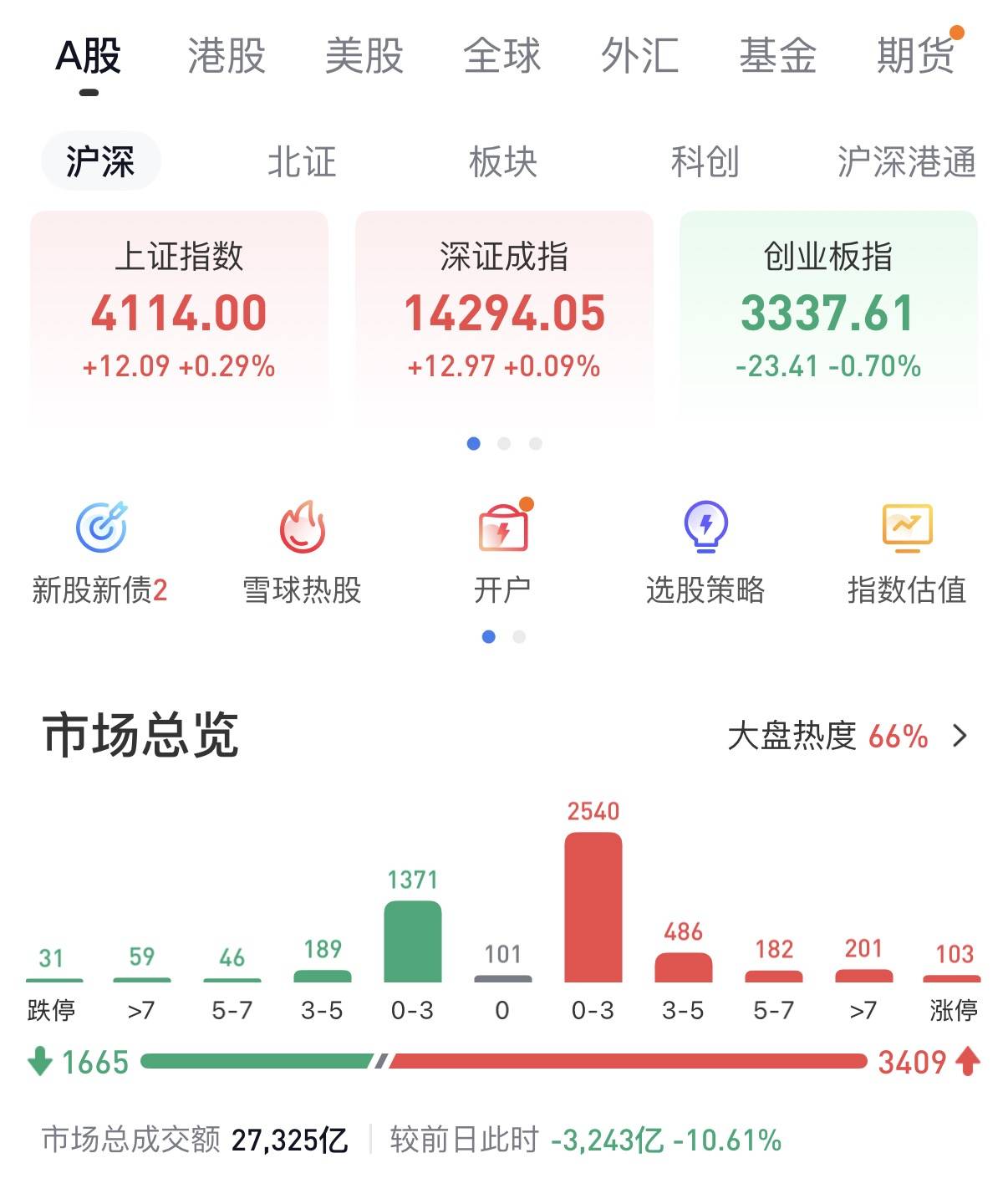
Core Viewpoint - The Chinese capital markets are exhibiting divergent trends, with A-shares showing resilience while Hong Kong stocks are under pressure, reflecting significant changes in capital flows and market sentiment at the start of 2026 [3][4]. A-Share Market Performance - The A-share market demonstrated a mixed performance with the Shanghai Composite Index rising by 0.29% to close at 4114.00 points, while the Shenzhen Component Index increased by 0.09% and the ChiNext Index fell by 0.70% [3]. - Over 3500 stocks in the A-share market rose, indicating a positive earning effect despite a significant decrease in trading volume to 2.71 trillion yuan, suggesting cautious entry of new funds [4]. - The electric grid equipment sector showed strong performance due to a projected investment of 4 trillion yuan during the 14th Five-Year Plan, a 40% increase from the previous plan, providing robust support for the entire industry chain [4][5]. Sectoral Analysis - The commercial aerospace sector is gaining momentum as several companies initiate IPO processes, indicating a shift towards capitalized and scaled development [5]. - The robotics sector is closely linked to the global AI wave and domestic manufacturing upgrades, while the tourism and hotel sectors are benefiting from anticipated consumer recovery during the Spring Festival [5]. - Conversely, previously popular themes, particularly AI applications, are experiencing a significant decline due to regulatory warnings against excessive speculation, leading to a market shift towards performance-driven and value investments [5][6]. Hong Kong Market Dynamics - The Hong Kong market is facing greater pressure, with the Hang Seng Index dropping by over 1%, primarily due to weak performances in major technology and financial stocks [6][7]. - The decline in technology stocks may be attributed to global valuation adjustments and investor reassessment of growth prospects for major internet companies, while financial stocks are under pressure due to concerns about macroeconomic recovery and interest rate environments [6][7]. - Despite the downturn, some sectors like aviation stocks are performing well, with China Eastern Airlines seeing a price increase of over 9% due to optimistic expectations regarding supply-demand dynamics in the aviation industry [6]. Market Outlook and Investment Strategy - Analysts suggest that the current market environment is characterized by a transition towards a "slow bull" market, with regulatory measures aimed at curbing excessive speculation and leveraging risks [8][9]. - The A-share market is expected to experience structural differentiation as it moves towards a phase where company performance and industry trends become the primary focus for investment selection [9]. - For the Hong Kong market, internal recovery momentum and external factors such as U.S. monetary policy and geopolitical risks will continue to influence its performance, with long-term investors finding value in its low valuation despite short-term pressures [9].
A股突然降温!融资收紧保证金调整,是打压市场还是保护散户?
Sou Hu Cai Jing· 2026-01-17 10:21
Core Viewpoint - The adjustment of the financing margin ratio from 80% to 100% by the Shanghai, Shenzhen, and Beijing stock exchanges aims to reduce excessive leverage in the A-share market, which has seen record-high trading volumes and margin balances, thereby ensuring market stability and protecting investors' rights [1][15]. Group 1: Policy Changes and Market Reactions - The new financing margin ratio will take effect on January 19, significantly reducing investors' new financing capabilities and directly lowering the overall leverage level by 20% [4][6]. - Following the announcement, the A-share market experienced a sharp decline, with major indices turning negative and significant sell orders observed in heavyweight stocks, such as China Merchants Bank with over 6.5 billion yuan in sell orders [1][4]. - The adjustment is a response to the overheated margin trading environment, with the A-share margin trading volume reaching a record 427.2 billion yuan on January 12 and the margin balance exceeding 2.7 trillion yuan on January 15 [1][12]. Group 2: Impact on Investors and Market Dynamics - The increase in the financing margin ratio raises the entry barrier for retail and aggressive investors, making them more cautious about leveraging their investments [6][17]. - The "new and old separation" rule allows existing financing contracts to continue under the previous 80% margin ratio, providing a buffer period for the market to adjust without forcing existing investors to add margin or face liquidation [6][10]. - The current leverage level in the A-share market is relatively low, with margin balances accounting for only 2.56% of the A-share market's circulating value, indicating that the market is not in a bubble [12][15]. Group 3: Long-term Market Outlook - The adjustment is seen as a moderate normalization of policy rather than a drastic measure to suppress the market, aiming for a sustainable "slow bull" market rather than a speculative "crazy bull" [10][15]. - The regulatory intent is to guide the market from being driven by capital to being driven by performance, fostering a more rational investment environment [14][17]. - Analysts believe that while high-volatility sectors may face profit-taking pressures, blue-chip stocks will be less affected, and the overall market is unlikely to experience systemic risks [12][15].

交易所对杠杆“点刹”!融资保证金回归100%,A股慢牛要来了?
Sou Hu Cai Jing· 2026-01-16 13:17
Group 1 - The core point of the article is the regulatory adjustment of the financing margin ratio, which has been raised from 80% to 100%, aimed at cooling down the overheated A-share market [8][27]. - The timing of this policy change is notable, as it comes after a significant influx of leveraged funds, with net purchases reaching 140 billion yuan and margin trading balances exceeding 2.68 trillion yuan, marking a historical high [4][8]. - The adjustment is expected to impact high-volatility sectors such as AI, semiconductors, and new energy, which have seen significant price increases driven by leveraged trading [13][14]. Group 2 - The increase in the financing margin ratio is likely to lead to a shift in market focus from speculative trading to fundamental-driven investment strategies, emphasizing the importance of company performance [22][24]. - Brokerages that heavily rely on margin trading for income may face challenges, particularly smaller firms, while larger firms with diversified business models may experience limited impact [16][20]. - Low-valuation, high-dividend sectors such as banking, insurance, and utilities may become attractive to investors seeking stability amid increased financing costs [18][20].
高毛利重点项目集中落地与交付 同兴科技预计2025年扣非净利润同比增长超169%
Zheng Quan Ri Bao Wang· 2026-01-15 12:59
Core Viewpoint - Tongxing Environmental Technology Co., Ltd. (Tongxing Technology) is expected to achieve significant profit growth in 2025, driven by strong performance in its core business and the development of its sodium battery products [1][2]. Group 1: Financial Performance - The company forecasts a net profit attributable to shareholders of 68 million to 88 million yuan for 2025, representing a year-on-year increase of 74.2% to 125.44% [1]. - The net profit after deducting non-recurring gains and losses is expected to be between 60 million and 80 million yuan, reflecting a growth of 169.75% to 259.67% [1]. - For the first three quarters of 2025, Tongxing Technology reported an operating income of 562 million yuan, up 38.52% year-on-year, with a net profit of 61.98 million yuan, marking a 217.88% increase [1]. Group 2: Business Drivers - The core driver of the positive performance is the successful implementation and delivery of high-margin projects in pollution control, particularly in the steel, coking, and building materials sectors [1]. - The company benefits from its advanced low-temperature SCR denitrification catalyst technology and a circular economy model, which are supported by favorable policies in the industry [1]. Group 3: Operational Efficiency - Continuous internal management optimization and cost reduction efforts have strengthened the company's profitability [2]. - The gross profit margin for the first three quarters of the previous year was 25.83%, while the net profit margin was 11.16%. In contrast, for the first three quarters of 2024, the gross profit margin dropped to 19.13%, and the net profit margin fell to 5.44%, indicating improvements in cost control and product competitiveness [2]. Group 4: New Energy Development - The sodium battery sector is emerging as another growth engine for the company, with competitive advantages in resource supply, safety, and cycle performance [2]. - The company has sent samples of its sodium battery products to over 30 clients, including Guoxuan High-Tech Co., Ltd. [2]. - The sodium battery product line is nearing commercial application maturity, particularly in energy storage and marine scenarios, with initial shipments to the motorcycle market in Southeast Asia [2][3].

A股“点刹”引爆震荡!三大交易所突提融资保证金,慢牛信号拉满
Sou Hu Cai Jing· 2026-01-15 02:47
Group 1 - The core message of the news is that the Chinese stock market is experiencing a significant regulatory intervention aimed at cooling down an overheated market, with a specific focus on reducing leverage in margin trading [1][3] - The margin financing ratio was raised from 80% to 100%, which directly reduces the leverage available to investors, indicating a clear shift in policy from a "crazy bull" market to a "slow bull" market [1] - The regulatory measures are designed to prevent a repeat of the 2015 market crash, with a focus on ensuring that market growth is driven by company performance rather than excessive speculation [3] Group 2 - High valuation and high leverage stocks, such as Cambrian and robotics, faced significant sell-offs, while established tech manufacturers and high-dividend sectors like banks and utilities became safe havens [3] - Approximately 70% of new retail investors who bought at high prices were trapped, highlighting the vulnerability of retail behavior in the current market environment [3] - The policy aims to transition the market from being driven by capital inflows to being driven by earnings, as evidenced by the recent performance of quality companies [3]
中国银河证券:进口影片表现亮眼 看好26Q1游戏行业表现
智通财经网· 2026-01-07 01:44
Core Viewpoint - The growth of the media and internet industry in China is driven by performance and AI empowerment, with a focus on increasing AI investments and the long-term benefits of core internet assets in the Hong Kong stock market [1] Group 1: Film Industry - The performance of imported films has been strong, with a significant year-on-year increase in box office revenue [2] - In December 2025, the national box office reached 3.713 billion yuan, a year-on-year increase of 57.93% and a month-on-month increase of 4.50% [2] - The film "Zootopia 2" achieved a monthly box office of 2.098 billion yuan, accounting for 56.5% of the total box office for the month [2] - A total of 83 films were released in December, representing a year-on-year increase of 43.10% and a month-on-month increase of 56.60% [2] - An estimated 29 new films are expected to be released in January 2026 [2] Group 2: Gaming Industry - The domestic gaming market achieved a record sales revenue of 350.789 billion yuan in 2025, with a year-on-year growth of 7.68% [3] - The user base reached 683 million, marking a year-on-year increase of 1.35% [3] - The mobile gaming market generated 257.076 billion yuan in revenue, with a year-on-year increase of 7.92% [3] - The client-based gaming market saw a significant revenue increase of 14.97%, totaling 78.16 billion yuan [3] - A total of 1,676 domestic game licenses were issued in 2025, a nearly 30% increase compared to the previous year [3] Group 3: Marketing Industry - The overall advertising market expenditure increased by 5.4% year-on-year from January to November 2025, with November showing a 16.6% year-on-year increase [4] - Specific industries such as telecommunications, personal care, entertainment, and IT services saw significant advertising expenditure growth, with increases of 86.1%, 62.0%, 22.9%, and 17.8% respectively [4] - Conversely, industries like pharmaceuticals, alcoholic beverages, and cosmetics experienced declines in advertising expenditure, with decreases of -14.6%, -10.3%, and -6.3% respectively [4] Group 4: AI Industry - Meta completed the acquisition of Manus, marking its third-largest acquisition since its inception [5] - Domestic AI company DeepSeek released two new models, achieving performance levels comparable to GPT-5 [5] - Two companies, Zhiyu Huazhang and MiniMax, are expected to go public in early 2026 after passing the Hong Kong Stock Exchange's listing hearing [5] Group 5: Investment Recommendations - Focus on Hong Kong internet companies with stable growth and improving profitability, particularly in the internet video platform sector and leading domestic AI video tool companies [6] - Emphasize AI applications and related industry chains, as well as content production sectors [6] - Consider traditional publishing companies that are exploring new business opportunities as the Lunar New Year approaches [6]
