海关管理

Search documents
特朗普关税退款需要“500年”?
第一财经· 2026-03-16 03:37
Core Viewpoint - The article discusses the ongoing challenges faced by thousands of U.S. companies in obtaining tariff refunds, highlighting the slow and complex refund process managed by the U.S. Customs and Border Protection (CBP) [3]. Refund System Development - The CBP has reported that the development of a new automated commercial environment (ACE) system is underway, with progress ranging from 40% to 80% across its four components [5]. - Once the system is operational, it is expected to handle the majority of refund applications during the initial development phase [6]. - The current manual processing of refund applications is estimated to take 443 million hours, equivalent to 506 years, indicating significant inefficiencies in the existing system [7]. Refund Initiation Timeline - Companies are pressing for the swift return of $166 billion in tariffs declared unconstitutional by the Supreme Court, but the CBP has indicated that the refund process will take time [9]. - The CBP aims to have the new system feature ready within 45 days, potentially allowing refunds to begin by the end of April [10]. - However, there are doubts about whether the new functionality will be ready on time, and even if it is, the actual refund process could take several months due to various factors [10]. Potential Legal Actions - The U.S. government retains the right to appeal the International Trade Court's ruling before May 4, which could lead to further delays and uncertainties for importers and taxpayers [12]. - If the implementation of the refund process is not smooth, the court may reinstate its orders, and the government may consider further appeals [13]. - The Cato Institute has criticized the government's potential appeal as a costly and ungracious effort, warning that administrative hurdles could disproportionately affect small businesses [14].


美国海关:关税退税系统建设已完成40%至80%
第一财经· 2026-03-13 00:10
Core Viewpoint - The U.S. Customs and Border Protection (CBP) has reported that the system for refunding approximately $166 billion in illegally collected tariffs and interest is 40% to 80% complete [1] Group 1 - CBP is developing an online claims portal for importers and intermediaries to submit refund requests, expected to launch by mid-April [1] - The U.S. Supreme Court rejected most of the Trump administration's tariff policies in February but did not provide specific guidance on the refund process [1]

上海东方枢纽国际商务合作区先行启动区封闭管理试运行已“满月”
Sou Hu Cai Jing· 2026-02-24 08:42
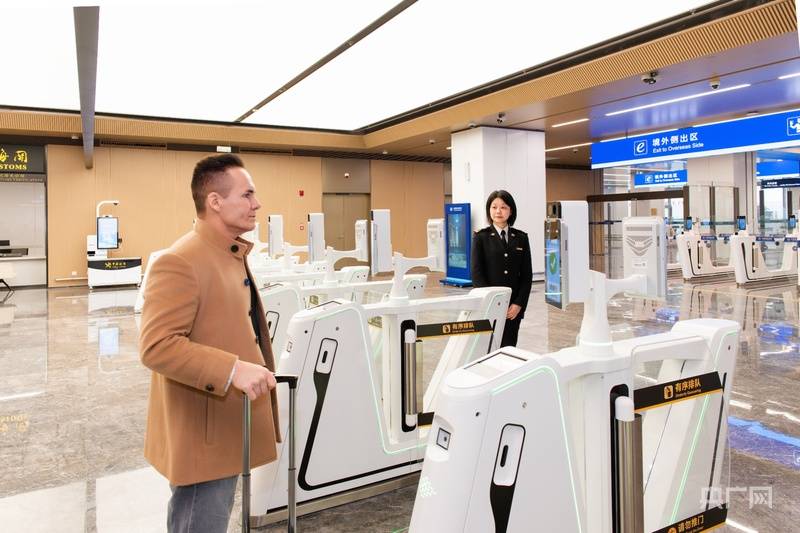
Core Insights - The Shanghai Oriental Hub International Business Cooperation Zone has successfully completed its first month of trial operation under closed management, with smooth customs clearance and effective implementation of facilitation policies [1][2] Group 1: Operational Performance - As of the end of January, Shanghai Customs has supervised 36,000 entries and exits of personnel participating in international exhibitions, business exchanges, and training, along with 2,389 batches of goods [1] - The first large-scale international business event was successfully held within the zone, demonstrating the operational efficiency and effectiveness of the customs facilitation measures [1][5] Group 2: Management and Coordination - The customs authority has implemented a "one line open, one line manage" model, expanding from goods regulation to natural person management, integrating three main functions: international business communication, exhibitions, and training [2] - A collaborative mechanism has been established with various agencies, including the management bureau, immigration management, and public security, to enhance emergency response capabilities [2] Group 3: Technology and Innovation - The use of integrated smart channels and AI comparison systems has significantly improved the customs clearance experience, providing a seamless and efficient process for participants [3] - The customs authority has utilized digital tools such as LED displays and a "digital person" system to offer real-time policy consultation and guidance during the customs process [2]
大湾区“东大门”的守卫者(新春走基层)
Ren Min Ri Bao· 2026-02-14 00:51
Core Viewpoint - The article highlights the operational efficiency and strategic importance of the Sanmen Island Customs in facilitating trade and ensuring maritime security in the Guangdong-Hong Kong-Macao Greater Bay Area, especially in the face of increasing demands for timely customs clearance and inspections. Group 1: Operational Efficiency - Sanmen Island Customs has improved its customs inspection efficiency, reducing the average inspection time for passing vessels from over 1 hour to approximately 40 minutes through the use of a smart logistics platform [2]. - The customs authority has established five foundational databases for vessels, enhancing the precision of inspections and monitoring [2]. Group 2: Strategic Importance - Sanmen Island is positioned as the "eastern gateway" of the Greater Bay Area, playing a crucial role in maritime logistics and trade facilitation [2]. - The customs authority is committed to maintaining a robust maritime regulatory network to support the high-quality development of the Greater Bay Area [5]. Group 3: Challenges and Adaptations - The region faces extreme weather challenges, with Sanmen Island experiencing up to nine instances of severe weather events in 2025, including typhoons and heavy rainfall [4]. - Customs officers have adapted to the harsh environment by creating a self-sustaining "Island Customs Farm" to meet their living needs, reflecting their commitment to duty despite the challenges [4]. Group 4: Growth Metrics - In 2025, the volume of inspected vessels at Sanmen Island Customs increased by 66% year-on-year, indicating a significant rise in maritime activity and compliance enforcement [4]. - The customs authority successfully identified and reported a case of illegal domestic transportation by incoming and outgoing vessels, which has been recognized as a typical case by the General Administration of Customs [4].
2025年大连海关外贸企业数量增长8.9%
Xin Lang Cai Jing· 2026-02-08 20:36
Core Insights - In 2025, Dalian Customs has significantly advanced cross-border trade facilitation, leading to an 8% and 10.6% increase in exports for Liaoning Province and Dalian City respectively, successfully reversing trade deficits that lasted for 9 and 11 years [1][2] Group 1: Trade Facilitation Measures - Dalian Customs implemented a 35-measure strategy to promote cross-border trade facilitation, including a "comprehensive inspection once" policy that reduced enterprise inspection frequency by 50% [1] - The overall customs clearance time ranks among the best in the country, with 15 AEO (Authorized Economic Operator) enterprise incentive measures introduced [1] - Under the RCEP framework, tax reductions amounted to 1.67 billion yuan, and tax refunds reached 3.61 billion yuan, with a growth of 8.9% in the number of foreign trade enterprises in the customs area [1] Group 2: Customs Operations and Security - In 2025, Dalian Customs supervised 210 million tons of goods, 107,000 vehicles (ships, aircraft) (a 34.1% increase), and 2.038 million people (a 23.7% increase), generating tax revenue of 52.27 billion yuan [2] - The customs authority detected 693 cases of infectious diseases and intercepted 6,914 instances of quarantine pests, along with 1,219 batches of invasive species [2] - Dalian Customs has maintained public health and safety by returning or destroying 54 batches of non-compliant imported food and recovering economic losses of 859,000 USD from 344 cases of short weight in bulk commodities [2] Group 3: Technological Advancements - The Dalian Customs' smart customs project has been recognized as one of the "Top Ten Projects" by the General Administration of Customs for three consecutive years [2] - The "Smart Screening" system facilitated tax refunds of 46.26 million yuan, while the "Visa Data Exchange" enabled verification with 21 countries [2] - The first national customs quality monitoring system, "Quality Control Smart," was developed to reduce laboratory testing time by 15%, effectively lowering enterprise time costs and enhancing cargo clearance efficiency [2]
2025年西藏航空口岸出入境航班、旅客均大增
Xin Lang Cai Jing· 2026-02-05 14:06
Core Insights - The article highlights the significant growth in air traffic and passenger numbers at Lhasa Gonggar International Airport, indicating a robust recovery and expansion in international connectivity for Tibet [1][2] - The customs authority is actively enhancing the airport's capacity and quality, supporting new international routes, and implementing advanced technology for passenger and cargo processing [1][2] Group 1: Air Traffic and Passenger Growth - In 2025, customs supervision recorded 776 inbound and outbound flights and 16,909 passengers, representing a year-on-year increase of 237.4% and 103.8% respectively [1] - The airport serves as the only international air port in Tibet, connecting the region to the world [1] Group 2: Infrastructure and Technology Enhancements - The customs authority has supported the addition of two new international routes, bringing the total to four, thereby strengthening air links with South Asia and Hong Kong [1] - Advanced technology measures such as "smart boarding" and pre-inspection of incoming luggage have been implemented to optimize the passenger experience [1] Group 3: Cargo Operations and Future Development - The first international cargo station at the airport has commenced operations, facilitating efficient handling of import and export goods with a value exceeding 10 million RMB in 2025 [1] - The customs authority is exploring "air-to-air transfer" business models to enhance the smooth flow of goods [1][2] - Future initiatives will focus on supporting foreign trade enterprises and enhancing the high-quality development of the airport [2]
2025年石家庄海关监管进出口货物4.5亿吨
Xin Lang Cai Jing· 2026-02-01 10:01
Core Insights - In 2025, Shijiazhuang Customs managed 450 million tons of import and export goods, issued 149,000 certificates of origin, and implemented 42 joint incentive measures for Authorized Economic Operators (AEO), contributing to the first export of Chinese fresh pears to Argentina [1][2] - Hebei Province's total import and export value reached 682.22 billion yuan, marking an 11% year-on-year increase and achieving growth for nine consecutive years [1] - Shijiazhuang Customs introduced over 200 supportive measures to facilitate foreign trade development, including the first implementation of "bonded mixed mining" for imported copper concentrate and a pilot program for cross-border e-commerce export consolidation in the Beijing-Tianjin-Hebei region [1] Summary by Sections - **Trade Performance**: In 2025, Shijiazhuang Customs signed 149,000 certificates of origin, resulting in a tax exemption of 2.37 billion yuan for enterprises [1] - **Regulatory Innovations**: The customs authority achieved full coverage of "direct loading and direct delivery" for water, air, and rail transport, and was approved as a pilot for batch inspection and quarantine reform for exported agricultural products, ensuring 14.77 billion yuan in agricultural product exports [1] - **Future Plans**: In 2026, Shijiazhuang Customs aims to enhance port supervision, strengthen food and product safety regulations, and implement special measures to upgrade Hebei's characteristic industrial clusters [2] - **Support for Trade Facilitation**: The customs will promote a "group cultivation" certification model for quality enterprises and continue to expand the AEO benefits list, while also developing a public service platform for inspection and testing in the Hebei Free Trade Zone [2] - **Policy Advantages**: The customs will leverage the combined advantages of "channel + bonded + site" policies to support the development of China-Europe freight trains and enhance the comprehensive functions of the port [2]
数智领航守国门 大连海关激活外贸发展新引擎
Xin Lang Cai Jing· 2026-01-31 13:19
Core Viewpoint - The Dalian Customs is leveraging technological innovation to enhance the business environment and streamline cross-border trade, with a focus on efficiency and safety in customs operations [1][2]. Group 1: Technological Innovations and Achievements - In 2025, Dalian Customs implemented 35 measures to facilitate cross-border trade, reducing enterprise inspection frequency by 50% and decreasing laboratory testing time by 10% [1]. - The customs successfully managed 2.1 billion tons of goods and 10.7 million transportation vehicles, achieving a tax revenue of 52.27 billion yuan, with significant year-on-year growth in both vehicle inspections (34.1%) and personnel inspections (23.7%) [2]. - The introduction of the "Quality Control Smart" system has led to a 15% reduction in laboratory testing time and eliminated discrepancies in testing standards [3]. Group 2: Biological Safety and Risk Management - Dalian Customs detected 6,914 instances of quarantine pests and 2,933 types of invasive species, including the interception of the Venezuelan Sun Tiger spider, highlighting the effectiveness of their biological safety measures [2]. - The customs conducted outreach on biological safety to over 4 million people, emphasizing the importance of public awareness in maintaining national security [2]. Group 3: Economic Impact and Trade Growth - The technological advancements at Dalian Customs contributed to a 10.6% increase in exports for Dalian and an 8% increase for Liaoning Province, reversing long-standing trade deficits [4]. - The "Smart Customs" initiatives have been recognized as top projects by the General Administration of Customs for three consecutive years, showcasing the successful integration of technology in customs operations [4].
(新春走基层)浙江宁波海关“机器狗”赋能口岸查验升级
Zhong Guo Xin Wen Wang· 2026-01-30 12:02
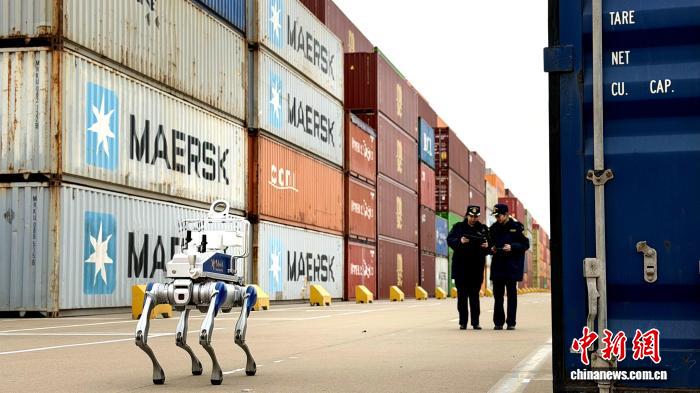
Core Insights - The introduction of AI-powered quadruped robots at Ningbo Customs has significantly enhanced the efficiency of container inspections, achieving over a twofold increase compared to manual inspections [1][6]. Group 1: Technology Implementation - The AI robots are equipped with dual-light cloud platforms, industrial-grade cameras, and high-precision navigation modules, enabling them to perform six core functions including automatic patrol, box number recognition, and layer detection [6]. - Since the full-scale trial run began on January 6, the robots have assisted in inspecting 1,655 natural boxes, achieving a box number recognition accuracy rate of 92% and a foreign object detection rate of 95% [6]. Group 2: Operational Efficiency - The traditional manual inspection process faced limitations due to labor shortages, with an average daily inspection capacity of only 200 boxes, which was further impacted by extreme weather conditions [1]. - The new robotic system not only ensures the safety of customs officers but also meets the demand for rapid turnover of empty containers, marking a significant achievement in the construction of a smart customs system [6]. Group 3: Future Projections - The Meishan Port area is projected to exceed a container throughput of 13 million TEUs by 2025, with foreign trade import empty container volume reaching 3.858 million TEUs [1].
2025年南京海关共检出进境植物有害生物1595种
Zhong Guo Xin Wen Wang· 2026-01-27 07:09
Core Viewpoint - In 2025, Nanjing Customs detected a total of 1,595 types of harmful organisms in imported plants, with 97,000 instances recorded, significantly contributing to ecological safety [1]. Group 1: Detection and Impact - Nanjing Customs reported the detection of 1,595 species of harmful organisms in imported plants, totaling 97,000 instances [1]. - The presence of foreign species, such as the woolly mammoth beetle found in a package, poses a threat to local ecosystems by disrupting the balance of native species [3]. Group 2: Preventive Measures - Nanjing Customs has initiated a three-year special action plan to prevent the invasion of foreign species, strengthening quarantine measures at ports [3]. - Jinling Customs has enhanced the application of intelligent image recognition technology, utilizing AI models for initial screening and establishing a multi-layered verification mechanism [3]. - Suzhou Customs focuses on pre-warning risk management by implementing a high-risk mail monitoring and interception system, which organizes and analyzes vast amounts of mail data for early warnings [3]. - Zhangjiagang Customs has deployed an AI image recognition system capable of identifying 145 types of wood, over 100 types of weed seeds, and more than 80 types of insects [3].