自贸试验区提升战略

Search documents
李忠军走访慰问南京海关
Nan Jing Ri Bao· 2026-02-14 02:40
Core Viewpoint - The meeting between Nanjing Mayor Li Zhongjun and Nanjing Customs highlights the importance of customs in supporting the city's economic and social development, emphasizing collaboration for enhancing trade facilitation and open economic growth [1][2] Group 1: Nanjing Customs' Role - Nanjing Customs has been fulfilling its mission of "guarding the national gate and promoting development," focusing on modern customs construction and optimizing the port business environment [1] - The customs authority aims to enhance cross-border trade facilitation, improve international freight functions, and build high-level open platforms [1] Group 2: Strategic Cooperation - Nanjing is implementing a free trade zone enhancement strategy and strengthening cooperation with Hainan Free Trade Port, which requires efficient customs operations [1] - The city plans to expand institutional openness and improve the collaborative service system between customs and local authorities [1] Group 3: Future Initiatives - Nanjing Customs will continue to align with the city's development strategy, pushing for reforms and innovations to elevate trade facilitation levels [2] - The customs authority is committed to contributing to Nanjing's higher quality development and higher-level openness [2]
2025年大连海关外贸企业数量增长8.9%
Xin Lang Cai Jing· 2026-02-08 20:36
Core Insights - In 2025, Dalian Customs has significantly advanced cross-border trade facilitation, leading to an 8% and 10.6% increase in exports for Liaoning Province and Dalian City respectively, successfully reversing trade deficits that lasted for 9 and 11 years [1][2] Group 1: Trade Facilitation Measures - Dalian Customs implemented a 35-measure strategy to promote cross-border trade facilitation, including a "comprehensive inspection once" policy that reduced enterprise inspection frequency by 50% [1] - The overall customs clearance time ranks among the best in the country, with 15 AEO (Authorized Economic Operator) enterprise incentive measures introduced [1] - Under the RCEP framework, tax reductions amounted to 1.67 billion yuan, and tax refunds reached 3.61 billion yuan, with a growth of 8.9% in the number of foreign trade enterprises in the customs area [1] Group 2: Customs Operations and Security - In 2025, Dalian Customs supervised 210 million tons of goods, 107,000 vehicles (ships, aircraft) (a 34.1% increase), and 2.038 million people (a 23.7% increase), generating tax revenue of 52.27 billion yuan [2] - The customs authority detected 693 cases of infectious diseases and intercepted 6,914 instances of quarantine pests, along with 1,219 batches of invasive species [2] - Dalian Customs has maintained public health and safety by returning or destroying 54 batches of non-compliant imported food and recovering economic losses of 859,000 USD from 344 cases of short weight in bulk commodities [2] Group 3: Technological Advancements - The Dalian Customs' smart customs project has been recognized as one of the "Top Ten Projects" by the General Administration of Customs for three consecutive years [2] - The "Smart Screening" system facilitated tax refunds of 46.26 million yuan, while the "Visa Data Exchange" enabled verification with 21 countries [2] - The first national customs quality monitoring system, "Quality Control Smart," was developed to reduce laboratory testing time by 15%, effectively lowering enterprise time costs and enhancing cargo clearance efficiency [2]
2026年稳外贸稳外资,商务部官宣建设国家数字贸易示范区
Di Yi Cai Jing· 2026-01-26 12:28
Core Viewpoint - China aims to strengthen foreign trade and investment in 2026, focusing on service trade and digital trade as new growth points, while enhancing policies to attract foreign investment and stabilize the foreign trade landscape [2][5][9] Group 1: Foreign Trade Performance - In 2025, China's total foreign trade reached 45.47 trillion yuan, marking a 3.8% increase, achieving a historical high [1][3] - China maintained trade relations with 249 countries and regions, with trade volume exceeding 1 trillion, 100 billion, and 10 billion yuan with 14, 62, and 137 countries respectively, showing a diversification trend [4] - The top ten trading partners accounted for 47.7% of China's total foreign trade, a decrease of 2 percentage points from 2024, indicating a more balanced trade structure [4] Group 2: Service and Digital Trade - In the first eleven months of 2025, China's service trade totaled 720.24 billion yuan, with exports at 319.80 billion yuan (up 13.4%) and imports at 400.44 billion yuan (up 2.5%), resulting in a service trade deficit of 80.64 billion yuan [5] - The government plans to enhance service trade by improving management systems, promoting market openness, and establishing national service trade innovation development demonstration zones [5][6] Group 3: Foreign Investment Trends - In 2025, over 70,000 new foreign enterprises were established in China, with foreign investment reaching 747.69 billion yuan, a 19.1% increase [1][7] - The service sector attracted 72.9% of the total foreign investment, reflecting a significant increase in the quality and resilience of foreign investment [8] - The revised "Encouraged Foreign Investment Industry Catalog" aims to direct more foreign investment towards advanced manufacturing, modern services, and high-tech sectors starting February 1, 2026 [9]
商务部:一视同仁支持外资企业参与提振消费、政府采购、招投标等
2 1 Shi Ji Jing Ji Bao Dao· 2026-01-26 12:02
Core Insights - The Ministry of Commerce aims to attract and utilize foreign investment more effectively in 2025, with a target of establishing over 70,000 new foreign enterprises, representing a growth of 19.1% and an absorption of foreign capital amounting to 747.69 billion yuan, with high-tech industries accounting for 32.3% of this investment [1][2] Group 1: Foreign Investment Strategy - The focus will be on expanding market access and opening up service sectors such as telecommunications, healthcare, and education, promoting pilot projects to support the professionalization and integration of foreign service enterprises [2] - Policies will be optimized to support foreign investment, including tax incentives for overseas investors reinvesting profits earned in China and encouraging foreign participation in consumption, government procurement, and bidding activities [2] - A comprehensive service guarantee system for foreign investment will be established, ensuring national treatment for foreign enterprises and addressing their concerns through continuous service optimization [2] Group 2: Open High Ground Development - The Ministry will work on diversifying the layout of free trade pilot zones, providing broader space and richer platforms for innovative trials [2] - There will be a focus on aligning with international high-standard economic and trade rules, conducting extensive and in-depth institutional opening-up experiments, and supporting emerging industries in comprehensive innovation across the entire industrial chain [2]


商务部:2026年将深化外商投资促进体制机制改革
Yang Shi Wang· 2026-01-26 08:28
Core Viewpoint - The Chinese government is committed to enhancing foreign investment and implementing a strategy to elevate free trade zones in 2026, focusing on expanding market access, optimizing support policies, improving service systems, and creating diverse open highlands [1][2]. Group 1: Market Access and Opening Up - The focus will be on expanding market access in the service sector, including telecommunications, healthcare, and education, to support foreign investment and promote the development of service industries [1]. - The government aims to ensure that foreign investments are both permitted and operational in already opened sectors [1]. Group 2: Support Policies for Foreign Investment - The government plans to implement tax incentives for foreign investors reinvesting profits earned in China and to encourage foreign participation in consumption, government procurement, and bidding activities [1]. Group 3: Service Guarantee System for Foreign Investment - A comprehensive service guarantee system will be established to ensure national treatment for foreign enterprises, focusing on their concerns and continuously optimizing services [2]. - The government will convert the "demand list" of enterprises into a "service list" to assist in resolving issues faced by foreign companies [2]. Group 4: Diverse Open Highlands - The government will optimize the layout of free trade zones to provide broader space and richer platforms for pilot programs [2]. - There will be an emphasis on aligning with international high-standard trade rules and conducting extensive and deep institutional opening-up trials [2].
“十五五”改革攻坚,上海将有这些新举措
Xin Lang Cai Jing· 2026-01-19 14:04
Group 1 - The core viewpoint of the article emphasizes Shanghai's strategic role in driving innovative reforms and opening up during the 14th Five-Year Plan period [3][5][6] - The proposal outlines key reforms aimed at deepening the market-oriented allocation of factors, including the elimination of barriers in resource acquisition and government procurement [3][5] - It highlights the construction of a new open economic system, focusing on aligning with international high-standard trade rules and expanding service sector openness [6][11] Group 2 - The article discusses the enhancement of international technological innovation centers, including reforms in high-tech talent immigration and major scientific infrastructure [7][9] - It mentions the importance of reforming state-owned enterprises to improve their core functions and competitiveness [12] - The proposal includes measures to improve public health systems and the governance of public hospitals, emphasizing a collaborative approach to healthcare [12][13]

优化实施消费品以旧换新政策
Sou Hu Cai Jing· 2026-01-11 23:32
Group 1 - The core focus for 2026 includes implementing eight key areas of work, with a strong emphasis on boosting consumption and creating the "Buy in China" brand [1] - The initiative aims to enhance service consumption, optimize the old-for-new policy for consumer goods, and develop an international consumption environment [1] - The establishment of a modern market and circulation system is crucial for advancing the unified national market, with a focus on retail innovation and integrated domestic and foreign trade [1] Group 2 - The meeting emphasizes promoting trade innovation and establishing the "Export China" brand, with a focus on optimizing goods trade and developing service trade [2] - Efforts to attract foreign investment will include enhancing the "Invest in China" brand and improving the foreign investment service guarantee system [2] - The strategy includes aligning with international high-standard economic and trade rules and enhancing the effectiveness of open platforms, particularly in free trade zones [2]
深入实施提振消费专项行动
Sou Hu Cai Jing· 2026-01-11 23:26
Core Viewpoint - The national business system in China will focus on eight key areas in 2026, including boosting consumption, trade innovation, and foreign investment, while enhancing international cooperation and risk management [1][2] Group 1: Consumption and Trade - The first priority is to implement a special action to boost consumption, aiming to create the "Buy in China" brand by fostering new growth points in service consumption and optimizing policies for upgrading consumer goods [1] - The meeting emphasizes the need to innovate in trade, promoting the "Export China" brand through the optimization of goods trade and the development of service trade, digital trade, and green trade [2] Group 2: Foreign Investment and International Cooperation - To attract foreign investment, the focus will be on creating new advantages and enhancing the "Invest in China" brand by expanding service sector openness and improving investment promotion levels [2] - The meeting calls for aligning with international high-standard economic and trade rules and advancing the construction of open highlands, including enhancing the Hainan Free Trade Port's trade and investment facilitation [2] Group 3: Risk Management and Multilateral Cooperation - Effective management of outbound investment is crucial as Chinese companies expand internationally, with an emphasis on guiding cross-border supply chain layouts and strengthening overseas project supervision [2] - The meeting also highlights the importance of multilateral economic cooperation, expanding the free trade zone network, and improving the legal framework related to foreign trade [2]
着力打造“购在中国”品牌
Xin Lang Cai Jing· 2026-01-11 22:26
Group 1 - The core focus of the national business system is to implement eight key initiatives to boost consumption, trade, and investment by 2026, marking the beginning of the 14th Five-Year Plan [1][2] - The first priority is to enhance the "Buy in China" brand by fostering new growth points in service consumption, optimizing the old-for-new consumption policy, and creating an international consumption environment [2][3] - The meeting emphasizes the importance of developing digital, green, and health consumption to invigorate the lower-tier market [2] Group 2 - The initiative to promote the "Export China" brand includes optimizing and upgrading goods trade, significantly developing service trade, and encouraging service exports [2][3] - The focus is on innovating digital and green trade while promoting the integration of trade and investment [2] - To attract foreign investment, the strategy includes expanding autonomous openings in the service sector and enhancing the foreign investment service guarantee system, thereby polishing the "Invest in China" brand [2][3] Group 3 - The meeting outlines the need for effective management of foreign investments, guiding cross-border supply chain layouts, and enhancing overseas service systems [3] - It also highlights the importance of deepening "Belt and Road" economic cooperation and developing cross-border e-commerce [3] - The agenda includes expanding and enriching the free trade zone network and improving the legal framework related to foreign trade [3]
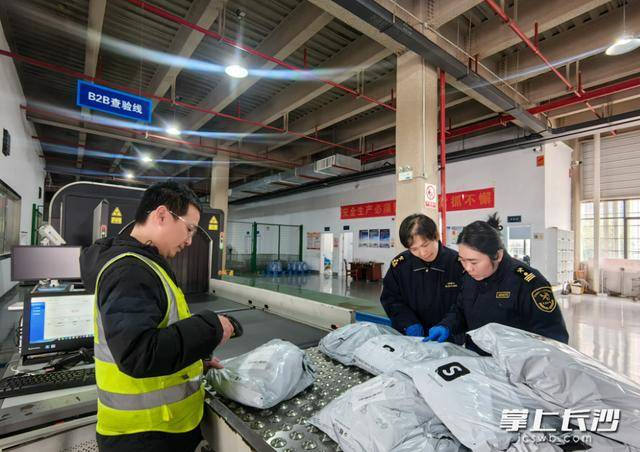
出口渠道拓宽!改革创新助力湖南跨境电商出口提质发展
Sou Hu Cai Jing· 2026-01-08 11:05
Core Insights - Cross-border e-commerce has become a significant engine for foreign trade innovation and a key driver for economic growth in Changsha [3] Group 1: Growth and Efficiency - The cross-border e-commerce export transshipment business at Changsha Huanghua International Airport has seen significant growth, with transshipment cargo volume exceeding 2,900 tons from January to November 2025, doubling compared to the same period in 2024 [1] - The logistics efficiency is highlighted by the rapid processing of goods, with items arriving from Guangdong and being shipped to Africa or other regions on the same day [1][3] Group 2: Operational Mechanisms - The airport has established three efficient transshipment routes: via Guangzhou to Southeast Asia, via Beijing Capital Airport to East Asia, and via Beijing Daxing Airport to Europe, America, and Central Asia [4] - The "air-to-air transshipment" model has emerged as an important supplement to export capacity, optimizing resource allocation and reducing overall transportation costs [3][4] Group 3: Customs and Regulatory Framework - Customs at Changsha Huanghua Airport operates a 24/7 appointment system to ensure rapid inspection and release of goods, with most items cleared for export on the same day or early the next morning [5] - A smooth communication mechanism has been established between customs, logistics companies, and airlines to address any issues during the transportation and inspection process [5] Group 4: Future Prospects - In 2025, Changsha was approved as an airport-based national logistics hub, providing new opportunities for the development of cross-border e-commerce [5] - The focus will be on enhancing logistics facilitation and implementing strategic actions to promote integrated development between the zone and the port, aiming to establish Changsha as a regional distribution center for cross-border e-commerce in Central and Western China [5]