
生态循环农业

Search documents
熊征宇赴新洲区看望慰问基层干部群众
Chang Jiang Ri Bao· 2026-02-13 01:19
Group 1 - The city is focusing on rural revitalization and urban-rural integration, emphasizing the importance of improving people's sense of gain, happiness, and security [1] - The Wuhan Kewei Biotechnology Co., Ltd. in the Li Ji Industrial Park is highlighted as a technology-driven company that utilizes livestock manure to produce animal protein and efficient fertilizers, indicating a significant potential in ecological circular agriculture [1] - The city is committed to ensuring safety and smooth transportation during the Spring Festival, with a focus on vehicle inspections and driver safety [1] Group 2 - The city government is actively engaging with vulnerable groups, ensuring that assistance policies are effectively implemented to improve the living conditions of difficult families [2] - There is a strong emphasis on maintaining social stability and safety during the festive season, with various departments tasked with addressing urgent issues faced by the community [2]
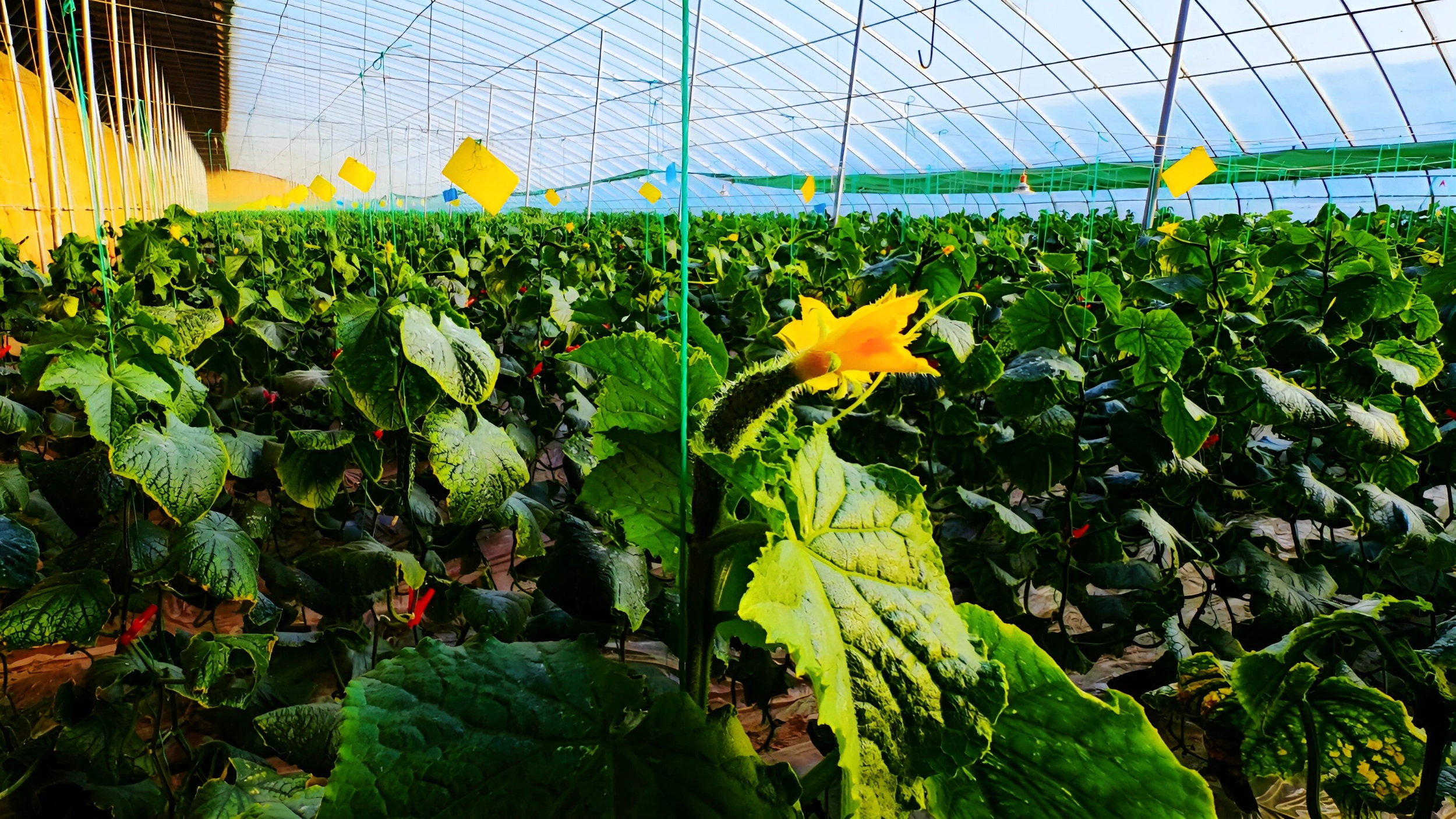
“一水两用、一棚双收”,府谷循环农业激活乡村振兴“一池春水”
Zhong Guo Fa Zhan Wang· 2026-01-19 08:03
Core Viewpoint - The article highlights the innovative "circular agriculture" model in Fugu County, Shaanxi Province, which integrates planting and aquaculture to promote rural revitalization and sustainable agricultural practices [2][3][6]. Group 1: Circular Agriculture Model - The ecological park in Fugu County features greenhouses and aquaculture facilities that demonstrate a "mutual support" system between planting and breeding, effectively reducing the use of pesticides and fertilizers [3][6]. - The model utilizes treated aquaculture wastewater as "ecological water" for nurturing seedlings, while plant waste is converted into feed for fish, showcasing a systematic reconstruction based on ecological principles [2][3]. Group 2: Benefits and Impact - The circular agriculture approach ensures clean water quality, increases fish survival rates, and provides "natural nutrients" for crops, aligning with market demands for green and sustainable products [5]. - This innovative practice serves as a replicable solution tailored to local ecological characteristics, contributing to the green transformation of agriculture and achieving a win-win scenario for ecological protection and industrial development [6].

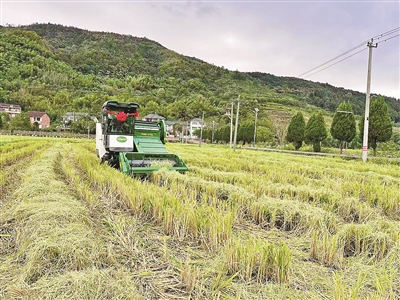
桐庐循环经济激活绿色新动能
Hang Zhou Ri Bao· 2025-11-14 03:10
Core Viewpoint - The article highlights the innovative agricultural practices in Tonglu County, focusing on the transformation of rice straw into organic fertilizer through advanced technology and efficient processes [3][4][5][6] Group 1: Agricultural Waste Management - The company provides a full-chain service for straw collection, storage, disposal, and resource utilization, processing 35,000 tons of agricultural waste annually [3] - The use of new intelligent fermentation equipment has improved composting efficiency by over 30% compared to traditional methods [4] - The organic fertilizers produced have shown significant benefits in soil improvement and crop quality, leading to positive feedback from local farmers [4] Group 2: Technological Advancements - The fermentation process utilizes a "straw-manure collaborative aerobic high-temperature fermentation" technique, which effectively reduces production costs [4] - A straw carbonization machine, in collaboration with Zhejiang University of Technology, is being tested to create carbon-based fertilizers that enhance soil quality [5][6] Group 3: Policy and Market Development - Since 2020, Tonglu County has implemented six rounds of special support policies for the organic fertilizer industry, promoting a shift towards large-scale, standardized, and intensive operations [5] - The county's agricultural bureau has provided 55 sets of machinery to major grain producers and fully subsidized 32 sets for local outlets, significantly lowering processing costs [5] Group 4: Future Prospects - The county is expanding its ecological circular agriculture model, integrating research and development with local universities to create specialized organic fertilizers [6] - The upcoming provincial conference on organic fertilizer production quality improvement in Tonglu indicates growing recognition of the county's agricultural model [6]
多层次推动生态循环农业高质量发展
Zhong Guo Huan Jing Bao· 2025-11-10 05:46
Core Viewpoint - Ecological circular agriculture is a crucial aspect of green development in the agricultural sector, aiming to break through traditional flat agricultural production challenges and achieve a three-dimensional cycle in agricultural production [1] Group 1: Systematic Promotion and Innovation - Development of ecological circular agriculture requires a robust, targeted, and adaptive technical support mechanism [1] - Establishment of pilot projects to explore ecological circular agriculture models and the growth of new agricultural business entities to enhance demonstration effects [1] - Emphasis on cultivating high-quality application-oriented talents in ecological circular agriculture through categorized training and the establishment of educational bases [1] Group 2: System Improvement and Efficiency Integration - Expanding and extending the circular agricultural industry chain is essential for promoting ecological circular agriculture [2] - Encouragement of deep processing in agricultural product industries and comprehensive utilization of by-products [2] - Development of a complete agricultural product circulation system and exploration of new models like "Internet + ecological agricultural products" [2] Group 3: Mechanism Improvement and Strengthened Support - Development of ecological circular agriculture requires substantial support in tax incentives, ecological compensation, and infrastructure construction [3] - Increased public financial support for ecological circular agriculture, with a shift towards targeted funding policies [3] - Establishment of a multi-source investment mechanism involving government guidance, agricultural production entities, and social capital [3]
向“新”而行!河源生态循环农业创造超千万收益
Nan Fang Nong Cun Bao· 2025-10-29 09:02
Core Viewpoint - The article highlights the development of ecological circular agriculture in Heyuan, which has generated over 10 million yuan in additional income through innovative agricultural practices and sustainable farming techniques [5][10]. Group 1: Agricultural Innovations - The introduction of winter-sown purple vetch improves soil quality by fixing nitrogen and enhancing fertility, leading to increased crop yields [16][23]. - The "rice-purple vetch" rotation model has raised the average organic matter content in soil by 3.5% in Dongyuan County [24]. - The cultivation of purple vetch has resulted in a significant reduction of 15%-20% in chemical fertilizer usage, improving soil health and crop quality [20][21]. Group 2: Ecological Tea Gardens - The promotion of smart tea gardens in Zijin County encourages organic farming practices, eliminating the use of chemical fertilizers and pesticides [29][30]. - The production of Zijin tea has seen a growth rate of 28.6% over the past three years, driven by the ecological farming methods [36][38]. Group 3: Sustainable Aquaculture - The implementation of high-density, low-risk aquaculture using recirculating water systems has led to a 23.03% increase in fish production, reaching 5,049 tons [59]. - The innovative aquaculture facilities, such as the circular water "farming factory," allow for efficient use of space and resources, with each tank capable of raising 5,000 fish [52][54]. Group 4: Waste Management and Resource Utilization - The East Source Dongrui project has established a comprehensive waste management system that generates over 10 million yuan annually from waste treatment [61][64]. - The project also produces biogas from pig waste, contributing to sustainable energy solutions and reducing environmental impact [66][68]. Group 5: Overall Agricultural Growth - The total agricultural output value in Heyuan is projected to reach 28.453 billion yuan in 2024, reflecting a year-on-year growth of 5.1% [43][44]. - The region's commitment to sustainable agricultural practices has led to the establishment of numerous standardized demonstration farms, enhancing the ecological farming landscape [76][78].


苏州全市秸秆综合利用率99.9%,走在全国前列
Su Zhou Ri Bao· 2025-08-08 23:39
Group 1 - The core viewpoint is that Suzhou has successfully implemented innovative straw resource utilization methods, achieving a straw comprehensive utilization rate of 99.9% and livestock manure resource utilization rate of 96.4%, leading the nation in these metrics [1][2] - The traditional methods of straw disposal, such as burning, have been detrimental to air quality and soil health, prompting the need for more sustainable practices [1] - Longyun Village has developed a cooperative farming model that utilizes scientific techniques to convert straw into organic fertilizer, enhancing rice growth and improving soil quality [1] Group 2 - Donglin Village in Taicang has upgraded its straw utilization to a "3.0 version," producing 30,000 tons of fermented straw feed annually, which is sold for 500 yuan per ton across various regions [2] - The transformation of straw from a waste product to a profitable resource has contributed to the economic development of local villages, showcasing a successful model of ecological circular agriculture [2] - Donglin Village was recognized as a "Zero Carbon Village Demonstration Village" by the Ministry of Agriculture and Rural Affairs and the United Nations Development Programme, highlighting its commitment to sustainable practices [2]