
石雕

Search documents
让石雕变“轻”融入日常
Xin Lang Cai Jing· 2026-02-09 23:28
Core Insights - The event "Stone Comes to Life, Fortune is Coming Soon" in Huian aims to revitalize the cultural tourism market ahead of the Spring Festival by showcasing diverse and engaging stone carving activities [1] Group 1: Industry Transformation - The stone carving industry is currently in a transitional phase, facing challenges akin to previous periods of adjustment, necessitating a shift towards lighter, more accessible forms of stone art [1] - Huian's initiative exemplifies the local effort to upgrade and integrate the stone carving industry with cultural creativity, tourism experiences, and aesthetic living [1] Group 2: Material Innovation - The concept of "pan-stone carving" is emerging, incorporating various materials such as ceramics, crystals, and metals, allowing for a more seamless integration of stone art with home aesthetics [2] - The industry is encouraged to move beyond traditional stone carving due to material shortages and environmental policies, thus expanding product categories and market reach [2] Group 3: Youth Engagement - The recent "Li Zhou Cup" stone carving design competition highlights the involvement of younger artists, with award-winning designs like "Flourishing Flowers" gaining popularity in the consumer market [2] - Huian is actively fostering innovation through competitions, aiming to discover new products that resonate with the emotional consumption trend, which is essential for the continuation of this traditional craft [2] Group 4: Market Demand - The evolution of stone carving reflects a need for it to become a spiritual medium integrated into daily life, rather than remaining a heavy and cold material [2]
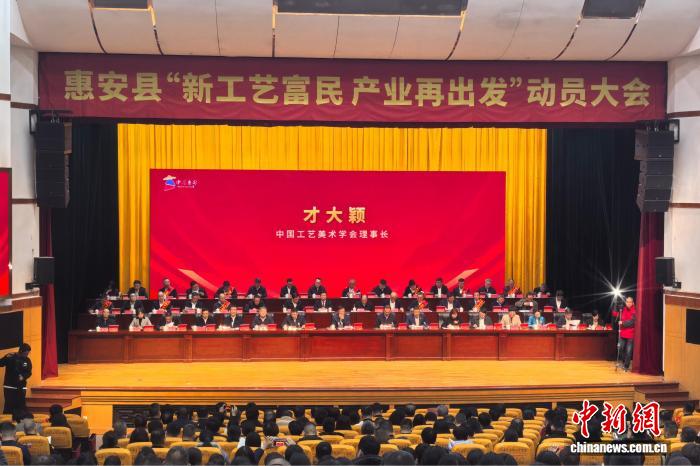
新工艺富民 侨乡惠安多措并举助力产业再出发
Zhong Guo Xin Wen Wang· 2026-01-22 01:08
Core Insights - The conference in Huian, Fujian, titled "New Craftsmanship for Prosperity and Industry Restart," aims to address the challenges faced by traditional industries such as stone carving, construction, and school uniforms, and to promote high-quality economic and social development through new technologies and industries [1][2][3] Group 1: Industry Overview - Huian is recognized as the "World Stone Carving Capital," "China's Construction Town," and "Base for School Uniform Industry," with an annual output value exceeding 1 trillion yuan, supporting nearly 600,000 jobs [1] - The three major industries directly support over 60% of Huian's population in terms of employment and livelihood, highlighting their significance to the local economy and culture [3] Group 2: Strategic Initiatives - The conference emphasized the importance of embracing intelligent manufacturing as a necessary evolution for the industries, with a focus on innovation and self-reflection [2] - The local government aims to create a collaborative industrial environment, promote innovation, and establish a favorable business climate to enhance economic contributions [2][3] Group 3: Future Directions - The county's leadership outlined a comprehensive plan focusing on preserving traditional craftsmanship, expanding industry reach, and fostering brand innovation through cross-industry collaboration [5] - Emphasis was placed on the need for enterprises to innovate, develop new brands, and enhance competitiveness while integrating technology into traditional industries [5]

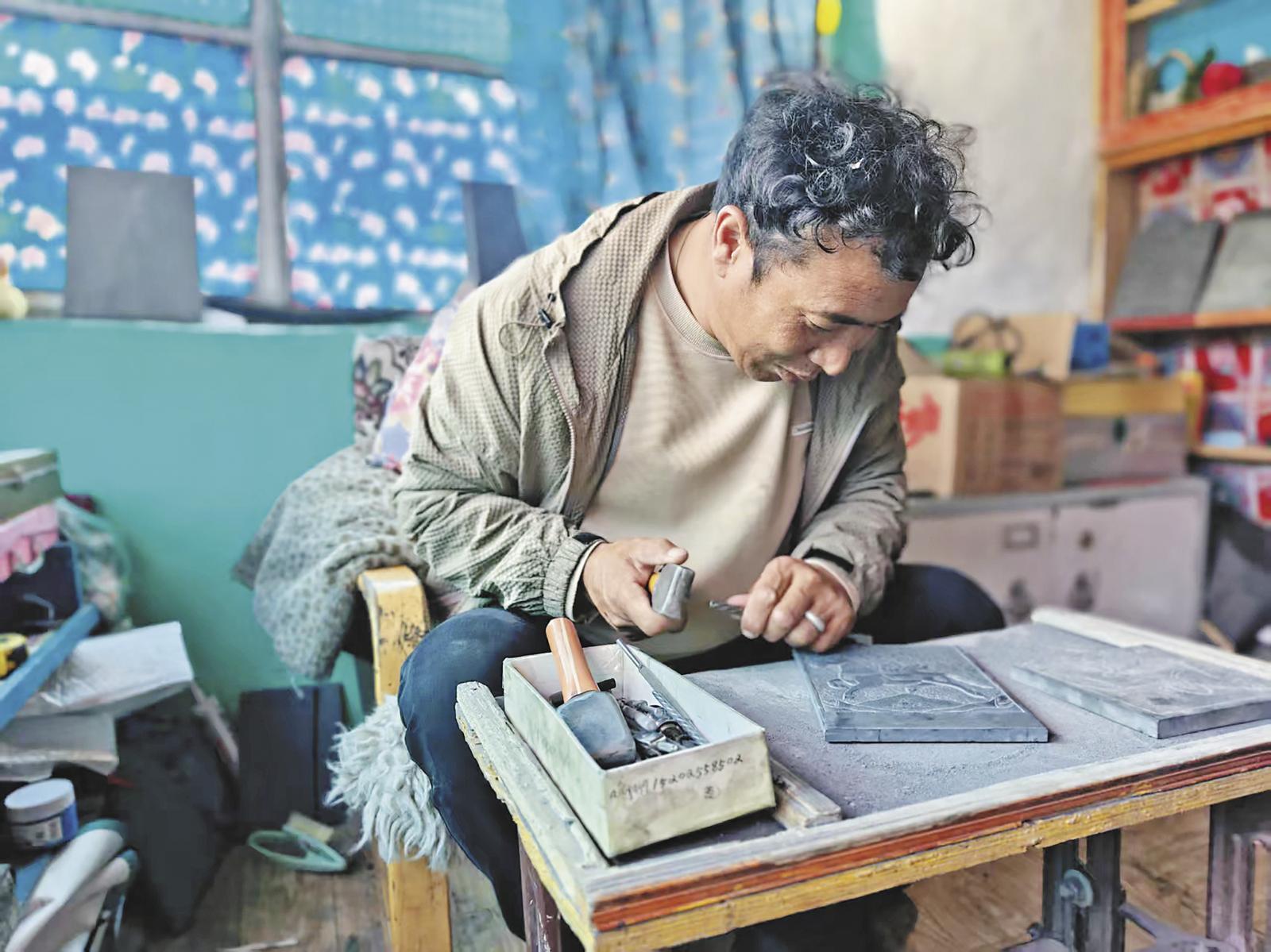
刻刀起落间 雕出幸福景
Xin Lang Cai Jing· 2026-01-13 19:51
Core Insights - The article highlights the transformation of the stone carving industry in He Ri Village, which has become a significant source of income for local residents, with annual earnings of 70,000 to 80,000 yuan per household [1][2] - The village's stone carving was recognized as a national intangible cultural heritage in 2008, leading to the establishment of a cooperative model that unites artisans and enhances employment opportunities [1][4] Group 1: Economic Impact - In 2011, the average income of villagers reached over 7,400 yuan, thanks to the consolidation of artisans and the influx of large orders from various provinces [2] - The stone carving industry currently employs over 560 people, accounting for 55% of the village's population, and is projected to generate nearly 4 million yuan in income by 2025 [6][7] Group 2: Government Support and Policy - The local government has implemented a series of employment and development policies, focusing on promoting traditional craftsmanship as a means to create stable jobs and increase income [4][6] - Continuous support from local authorities has led to the establishment of standardized workshops and the introduction of modern cutting and polishing machinery, enhancing efficiency and artistic value [5][6] Group 3: Innovation and Training - The village has adopted a model of "old craftsmen mentoring new apprentices" to attract skilled returnees, thereby improving the talent pool in the stone carving industry [6] - Training programs in stone carving techniques and e-commerce operations have been regularly conducted to align traditional crafts with modern market demands, resulting in a diversification of products and increased market competitiveness [6][7]
这个最神秘的小县城,决定80%日本人的“身后事”
商业洞察· 2025-11-17 09:23
Core Viewpoint - The article highlights the significance of Huian County in Fujian, which has developed a world-leading stone carving industry, particularly in producing tombstones for the Japanese market, capturing 80-90% of the market share [4][14]. Group 1: Huian's Stone Carving Industry - Huian has a rich history of stone carving that dates back over 1600 years, leveraging its abundant granite resources [6][9]. - The local stone carving industry flourished due to cultural exchanges and increased demand for intricate stone art, especially in religious contexts [9][10]. - After Japan's restrictions on domestic granite mining, Huian became a key supplier, meeting the high-quality standards required by Japanese consumers [11][12]. - By 1992, Huian's stone carving enterprises generated nearly 80% of their revenue from exports, primarily to Japan [12]. - The local government has implemented strategic initiatives to modernize the industry, including the establishment of the China Sculpture City and various industrial parks [12][13]. - As of 2024, Huian's stone carving industry has an industrial output value exceeding 55 billion yuan, making it the largest stone carving production and export base in China [13][14]. Group 2: Economic Development and Diversification - Huian has transformed from a poor county to one of China's top 100 economic counties, with a GDP of 131.12 billion yuan and a per capita GDP of 158,200 yuan [16][18]. - Other key industries in Huian, such as petrochemicals, campus apparel, and food production, are also undergoing upgrades and contributing to economic growth [16][18]. - The county is now focusing on emerging sectors, particularly the renewable energy industry, with plans to develop a new energy battery integration system [16][20]. - The global lithium battery market is projected to grow significantly, with China leading in production and innovation, aligning with Huian's strategic plans [19][20]. - Huian aims to leverage its petrochemical industry to develop key materials for the battery sector, such as electrolyte solvents and high-end membrane materials [25][27]. - The county is also exploring opportunities in energy storage systems and specialized vehicle battery packs, which require customized solutions [27][30].
曾云平:以艺术振兴乡村,用石雕密钥开启农民共富门丨粤匠担当 兴农之道①
Nan Fang Nong Cun Bao· 2025-10-23 13:30
Core Viewpoint - The article highlights the transformative journey of a master craftsman, Zeng Yunping, who utilizes stone carving to empower rural farmers, fostering skill development and economic prosperity in Guangdong Yunfu [4][52]. Group 1: Artisan's Role in Rural Revitalization - Zeng Yunping has turned stone into a "golden key" for farmers, unlocking opportunities for skill-based wealth and industrial revitalization [4][3]. - His approach emphasizes collective learning and skill-sharing, moving from individual artistry to a collaborative model that enhances community prosperity [12][14]. - The establishment of training centers and workshops has created a "Huangpu Military Academy" for cultivating skilled artisans in the region [16][17]. Group 2: Training and Skill Development - Zeng Yunping has developed a tiered training system that simplifies the learning of stone carving for individuals without an artistic background [21][22]. - The modular teaching method allows students to specialize in specific processes, making it easier for them to secure employment before pursuing artistic excellence [25][24]. - Over 400 individuals trained by Zeng have received various awards and titles, with more than 300 achieving monthly incomes exceeding 10,000 yuan through their acquired skills [32][33]. Group 3: Brand Development and Market Expansion - Zeng Yunping has leveraged his reputation to promote "Yunfu Stone Art" on national and international stages, enhancing the visibility of local craftsmanship [36][34]. - He has organized competitions that serve as platforms for technical exchange, product display, and business negotiations, benefiting local artisans and businesses [40][41]. - Major projects, such as the Beijing Olympic Park's railings and Tajikistan's presidential residence, have been executed with local artisans, increasing the overall value and recognition of Yunfu stone art [44][46]. Group 4: Economic Impact and Future Outlook - Zeng Yunping's initiatives have created over 3,000 job opportunities for local farmers and benefited more than 2,000 enterprises [49][50]. - The article emphasizes the importance of a virtuous cycle where artistic value, market value, and human value mutually reinforce each other for sustainable rural development [54][55]. - Looking ahead, Zeng hopes for increased support from the government and society to provide broader market access and innovative financial backing for rural artisans [56][57].

历史经典产业再创经典
Xin Hua Wang· 2025-07-20 02:54
Core Insights - The historical classic industry in Zhejiang is experiencing a revival, with a reported revenue of 33.187 billion yuan in Q1, reflecting a year-on-year growth of 6.17% [1] - The industry is focusing on integrating traditional products into modern lifestyles to attract younger consumers [3][5] Group 1: Industry Performance - Zhejiang's historical classic industry achieved a revenue of 33.187 billion yuan in Q1, marking a 6.17% increase year-on-year [1] - The province has cultivated a total of 252 historical classic old brand names [1] Group 2: Consumer Engagement - The industry is shifting from highbrow to more accessible products, exemplified by the success of the portable Qingci cup, which sold over 1,000 sets in one night [3] - Dragon Spring Sword has redefined its products by creating emotional connections with consumers through the concept of "Six Swords of Life" [4] - The yellow wine industry is innovating with new products like sparkling yellow wine and flavored variants to appeal to younger demographics [5] Group 3: Innovation and Modernization - The industry faces challenges due to a predominance of small workshops, with over 90% of market players being individual or family-run businesses [8] - Zhejiang is addressing these challenges by implementing standardization and scientific production methods in traditional industries [9] - The province is also focusing on talent development, with over 2,800 professionals trained annually in traditional industry fields [9] Group 4: Digital Transformation - The historical classic industry is undergoing digital transformation, with significant investments in projects exceeding 1 billion yuan, totaling 17.91 billion yuan across 109 key projects [10] - The government is launching initiatives to enhance collaboration between various stakeholders in the industry, aiming to establish a high-level development framework by 2027 [10]