
综合交通枢纽

Search documents
济南从区域交通枢纽迈向全球联通
Qi Lu Wan Bao· 2026-01-22 10:12
Core Insights - Jinan is advancing towards becoming an international comprehensive transportation hub city, with significant investments and infrastructure developments underway [2][3][4]. Group 1: Development Plans and Investments - The approval of the "Jinan Land Space Overall Plan (2021-2035)" has positioned Jinan as a national comprehensive transportation hub city, with aspirations to elevate its status to an international hub [2][3]. - Jinan has initiated 179 key transportation projects with a total investment of 527.9 billion yuan, reflecting a strong commitment to enhancing its transportation capabilities [2][4]. - The "International Comprehensive Transportation Hub City" goal has been emphasized in various top-level designs and meetings since 2025, indicating a clear direction for urban development [3]. Group 2: Transportation Network Enhancements - Jinan's transportation network is evolving into a three-dimensional system, with significant improvements in road and rail connectivity, including a "cross-shaped" high-speed rail network [4][5]. - By the end of 2025, the highway network in the Jinan metropolitan area is expected to reach 915.6 kilometers, with a high density of dual six-lane roads [4]. - The Jinan International Airport is undergoing expansion to meet a passenger throughput capacity of 55 million annually, enhancing its status as a modern transportation hub [5]. Group 3: International Connectivity - Jinan has established international road transport routes, including the Jinan-Moscow route, and is exploring new international road transport lines to Central Asia [6]. - The city is also developing a robust international freight network, with the China-Europe Railway Express expected to maintain over 1,000 trips annually, connecting to more than 20 countries [6][8]. - The opening of new air freight routes, such as the Luxembourg-Jinan-Nottingham route, enhances Jinan's global market connectivity [6]. Group 4: Strategic Advantages and Challenges - Jinan's geographical position as a key node in the Beijing-Shanghai corridor and the Yellow River basin provides natural advantages for external connectivity [4][9]. - Despite its potential, Jinan faces challenges in enhancing its global connectivity and hub efficiency compared to established cities like Guangzhou and Zhengzhou [9][10]. - The city aims to leverage its latecomer advantages and comprehensive support to develop its transportation hub, drawing lessons from successful models in other cities [10].

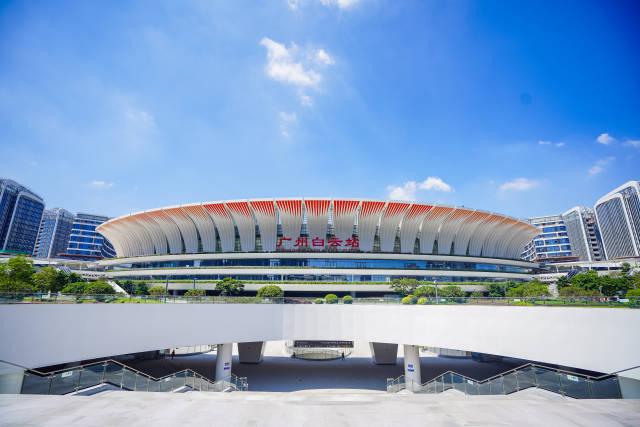
白云站“流量倍增”背后:“枢纽+”如何重塑城市格局?
2 1 Shi Ji Jing Ji Bao Dao· 2025-10-15 13:36
Core Insights - The article highlights the significant increase in passenger flow at Guangzhou Baiyun Station, which has doubled year-on-year, indicating its transformation into a major transportation hub in the Greater Bay Area [1][3][10]. Group 1: Passenger Flow and Infrastructure - During the 2025 National Day and Mid-Autumn Festival, Baiyun Station recorded an average of 159,800 passengers daily, with a peak of 211,600 passengers, marking a year-on-year increase of 115% and 137% respectively [3][10]. - The station's operations have been enhanced by the recent railway timetable adjustments, which transferred 60 trains from Guangzhou Station, significantly boosting passenger numbers [5]. - The opening of the Guangzhou Metro Line 12 has facilitated seamless transfers, further contributing to the increase in passenger flow [8]. Group 2: Strategic Development Initiatives - Baiyun District is implementing a "Hub +" strategy, aiming to integrate transportation advantages with urban space and industrial layout, potentially leading to the creation of a trillion-yuan industrial cluster [10][12]. - A collaboration with Singapore's Perennial Group aims to develop a 1.18 square kilometer Baiyun International Health and Wellness City, with an investment exceeding 10 billion yuan, focusing on a comprehensive health industry ecosystem [12][14]. - Urban renewal projects around Baiyun Station are expected to release approximately 2.8 million square meters of industrial space, driving significant fixed asset investments and improving public service facilities [14][16]. Group 3: Economic and Urban Integration - Baiyun Station is positioned as a key node in a multi-modal transport network, enhancing connectivity within the Greater Bay Area and Southeast Asia, which is expected to attract global talent and investment [18][20]. - The district aims to create a modern industrial cluster encompassing health, fashion, commerce, and tourism, leveraging the station's strategic location to foster economic growth [20][21]. - The development of a 7.8 square kilometer "Guangzhou Fashion Capital" around Baiyun Station is set to transform local industries and enhance the area's international competitiveness [23][25].
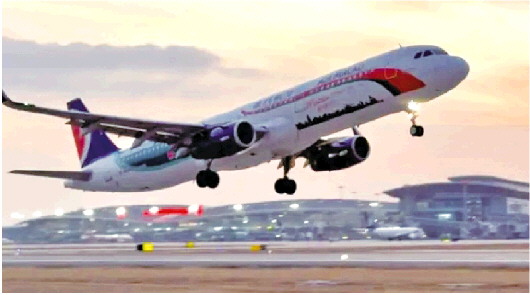
“九省通衢”武汉加快建设国际性综合交通枢纽城市
Zhong Guo Xin Wen Wang· 2025-10-15 00:39
Core Insights - Wuhan is accelerating the construction of an international comprehensive transportation hub city during the 14th Five-Year Plan period, with a focus on enhancing its transportation network and economic stability [1][2] Transportation Infrastructure Development - The comprehensive transportation network in Wuhan has reached 18,500 kilometers, with significant international connectivity through 120+ international transport channels [2] - Wuhan's Tianhe and Huahu airports have established a dual hub for passenger and cargo transport, with international and regional routes totaling 65, and annual passenger and cargo throughput increasing to 5.4 times and 6.3 times that of 2020, respectively [2][3] - The China-Europe Railway Express has 58 international routes, operating over 1,000 trains for two consecutive years, doubling the volume compared to 2020 [2] Economic Growth and Logistics - The transportation, warehousing, and postal service sectors in Wuhan are projected to reach a value of 115.47 billion yuan in 2024, with total social logistics expected to hit 5.1 trillion yuan, reflecting growth of 56.9% and 39.1% from 2020 [3] - The city has seen a cumulative investment in transportation fixed assets increase by over 40% in the past five years, with 285 new A-level logistics companies established, bringing the total to 457, the highest in the country [3] Integration and Innovation - Wuhan is focusing on integrated development, safety enhancement, smart upgrades, and green transformation, with three national multimodal transport demonstration projects underway [3] - The city is promoting the development of smart connected vehicles in logistics and has integrated 15,000 taxis with intelligent terminals, while also launching 23 low-altitude flight routes for aerial sightseeing and drone delivery [3]