绿色建材生产

Search documents
开放与定力:中国经济如何为世界提供“确定性”?
Sou Hu Cai Jing· 2025-12-22 14:25
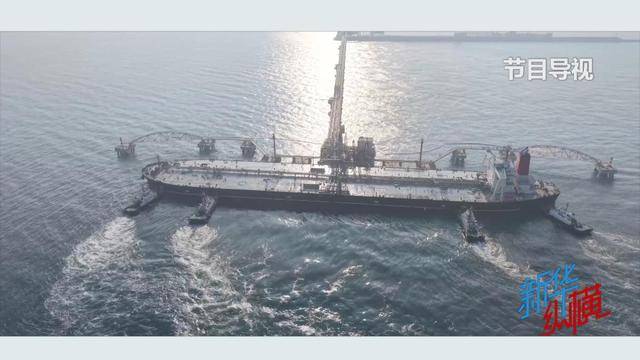
Group 1 - The central economic work meeting in 2025 emphasizes "maintaining openness and promoting win-win cooperation in multiple fields" as a key task for China's economic work [1] - The Hainan Free Trade Port officially launched its full island closure on December 18, marking a significant step in China's commitment to high-level openness and the construction of an open world economy [5][6] - The first batch of "zero tariff" petrochemical raw materials arrived at Yangpu Port, indicating the operational commencement of the Hainan Free Trade Port [3] Group 2 - Huang Hanquan, director of the Macro Economic Research Institute of the National Development and Reform Commission, stated that the full closure of Hainan Free Trade Port demonstrates China's significant choice to further expand openness and will not close its doors [6] - After the closure of Hainan Free Trade Port, enterprises will benefit from multiple policy incentives that will enhance their international competitiveness and support domestic market expansion [7] - As of September 2025, the import value of the "zero tariff" lists in Hainan Free Trade Port reached 27.06 billion, with tax reductions amounting to 5.09 billion [10]

海南通告:18日起全岛封关
券商中国· 2025-12-16 03:41
Core Viewpoint - The official announcement from the Hainan Provincial Government states that the Hainan Free Trade Port will officially start its full island closure on December 18, 2025, marking a significant step in China's commitment to high-level opening-up and the construction of an open world economy [1][10]. Summary by Sections Announcement Details - The announcement specifies that starting from December 18, 2025, the Hainan Free Trade Port will implement a full island closure [3][8]. - A series of regulatory documents will come into effect on the same date, including tax policies for goods entering and exiting the port, a list of taxable imported goods, and management measures for duty-free goods [3][8]. Policy Implications - The full island closure is characterized by a policy of "one line" for free trade and "two lines" for regulation, allowing for a special customs supervision area across the entire island [11][13]. - The "one line" will facilitate zero tariffs on imported goods and relaxed trade management measures, while the "two line" will involve ten designated ports for goods entering the mainland [15][14]. Economic Impact - The zero-tariff policy will expand to approximately 6,600 tax items, covering about 74% of all goods, which is an increase of nearly 53% compared to before the closure [21]. - This policy is expected to save around 20% in tax costs for enterprises importing equipment, benefiting a wide range of businesses with actual import needs [22]. Talent and Employment - High-end talent working in the Hainan Free Trade Port will benefit from a tax exemption on personal income tax exceeding 15% [23]. - The number of encouraged industries has expanded to over 1,100, including sectors like biomedicine and green building materials, with a corporate income tax rate of 15% for related enterprises [23].
九问九答!海南自贸港全岛封关,将带来这些红利
Jing Ji Wang· 2025-12-12 01:36
Core Viewpoint - The full island closure of Hainan Free Trade Port on December 18 marks a significant step in China's commitment to high-level opening-up and the construction of an open world economy, bringing various benefits to enterprises, individuals, and regional economic development [1]. Group 1: Definition and Implementation - Full island closure refers to the establishment of Hainan Island as a special customs supervision area, implementing a policy characterized by "free on the first line, controlled on the second line, and free within the island" [2]. - The first line will include eight existing open ports for direct release of eligible imported goods, while the second line will feature ten new ports for innovative measures to facilitate goods entering the mainland [4]. Group 2: Benefits of Full Island Closure - The closure is not a restriction but an expansion of openness, aimed at attracting global quality resources and promoting high-quality development of Hainan Free Trade Port [5]. - Travel to Hainan will be more convenient, with no additional documentation required for Chinese citizens, and visa-free entry for citizens from 86 countries holding ordinary passports [6]. Group 3: Tax and Shopping Policies - The duty-free shopping policy for departing travelers has been adjusted, allowing new categories of goods such as pet supplies and musical instruments to be sold in duty-free shops [7]. - The range of "zero tariff" goods has expanded to approximately 6,600 tax items, covering about 74% of all tax items, an increase of nearly 53% compared to before the closure [9]. - The "zero tariff" goods include nearly all production equipment and raw materials, potentially saving about 20% in tax costs for importing equipment [10]. Group 4: Talent and Employment Opportunities - High-end talent working in Hainan Free Trade Port will benefit from a tax exemption on personal income tax exceeding 15% [11]. - The number of encouraged industries has expanded to over 1,100, covering sectors such as biomedicine and green building materials, with related enterprises eligible for a 15% corporate income tax reduction [11].
海岛新程|政策红利释放 助力企业降本增效
Xin Hua Wang· 2025-12-04 13:01
Group 1 - The Hainan Free Trade Port will enter a new phase of full island closure operation on December 18, with multiple policies continuing to release benefits for enterprises [1] - The number of "zero tariff" products will significantly increase, covering approximately 74% of product categories, benefiting key industries such as pharmaceuticals and high-end food processing [1] - After the closure, the number of "zero tariff" products is expected to rise to about 6,600 categories, which will include almost all production equipment and raw materials, potentially saving import equipment companies about 20% in tax costs [1] Group 2 - The new generation of electronic information industries, such as robotics and artificial intelligence, can find a foothold in Hainan [3] - As of September 2025, the import value of the "zero tariff" lists in Hainan Free Trade Port is projected to reach 27.06 billion yuan, with tax reductions amounting to 5.09 billion yuan [3] - The processing value-added policy has accumulated domestic sales of 11.08 billion yuan, exempting 860 million yuan in tariffs [3] Group 3 - Hainan Free Trade Port needs to establish comprehensive basic rules at multiple levels, combining China's practices to form new standards, especially in emerging industries [5] - The development of Hainan Free Trade Port will occur in several steps and stages, gradually becoming a leading free trade port globally [5]
(经济观察)海南自贸港封关临近,勾勒开放新图景
Zhong Guo Xin Wen Wang· 2025-10-16 12:37
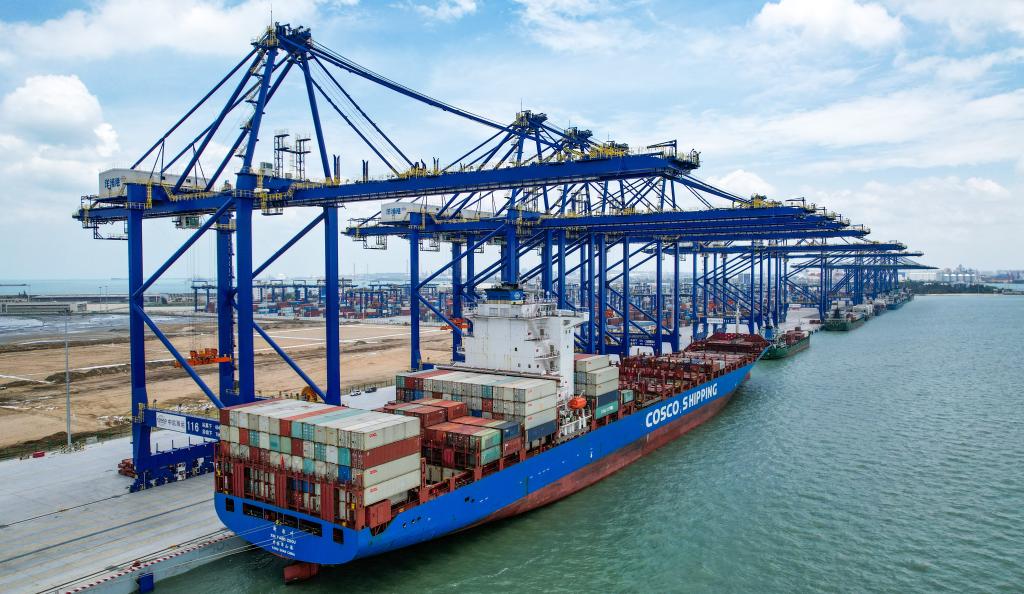
Core Viewpoint - The Hainan Free Trade Port is approaching its full closure operation, which will enhance international trade and investment opportunities, marking a new phase of openness and development for the region [1][2]. Group 1: Policy and Regulatory Framework - The full closure operation of Hainan Free Trade Port is set to begin on December 18, with preparations nearly complete [1]. - The closure will implement a regulatory framework that includes "zero tariff" for certain goods, facilitating smoother customs processes at designated ports [1]. - The policy system aims to create a more favorable environment for trade, with enhanced efficiency and precision in regulatory measures [1][2]. Group 2: Tax Incentives and Economic Impact - The "zero tariff" goods list will expand from 1,900 to approximately 6,600 items, increasing the proportion of zero-tariff goods from 21% to 74% [2]. - Systematic tax incentives, including a dual 15% tax rate for enterprises and individuals, will continue to support various industries, effectively reducing operational costs [2]. - The tax benefits will cover over 1,100 industry categories, including biomedicine and green building materials, and will also apply to high-demand talent across all sectors [2]. Group 3: Trade and Investment Growth - Since the release of the overall plan for the Hainan Free Trade Port in 2020, foreign trade has seen continuous growth, with import and export values projected to rise from 936.3 billion RMB in 2020 to 2,778.9 billion RMB by 2024, averaging a 31.3% annual increase [3]. - The closure is expected to attract more cross-border trade elements to Hainan, further expanding its international trade scale and enhancing the local economy [3]. - Hainan aims to leverage its favorable policies to attract foreign investment, particularly from ASEAN countries, fostering deeper economic cooperation and mutual benefits [3].
海南自贸港税制体系初步建立 官员称封关后企业受益最明显
Zhong Guo Xin Wen Wang· 2025-10-15 03:27
Core Viewpoint - The tax system of Hainan Free Trade Port has been initially established, with companies expected to benefit the most from tax policies after the port's closure [1][3]. Tax Policy Overview - The tax system is characterized by "zero tariffs" and "low tax rates," aiming to align with high-level international trade rules [3][4]. - The range of "zero tariff" products has expanded from 1,900 to approximately 6,600 items, increasing the coverage from 21% to 74% of product categories [3][4]. - The "low tax rate" policy continues to encourage specific industries with a reduced corporate income tax rate of 15% and exemptions for high-end talent [4][5]. Benefits for Enterprises - Companies importing equipment can save about 20% in costs due to the elimination of import tariffs (5%-10%) and value-added tax (13%) [4][5]. - Enterprises engaged in processing and selling imported raw materials can benefit from both "zero tariff" and additional tax exemptions [5]. - The corporate income tax reduction applies to over 1,100 industry categories, including biomedicine and green building materials [5][6]. Economic Impact - The series of tax policies create a virtuous cycle of "policy guidance - investment aggregation - industrial upgrading - talent inflow" [6].