对外开放

Search documents
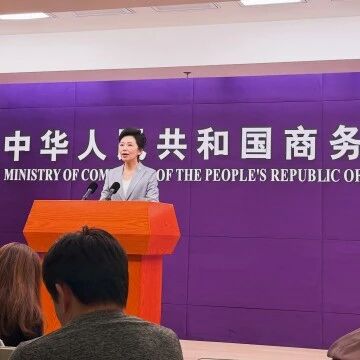
跨国巨头密集访华、外资加码中国市场,商务部回应
第一财经· 2026-03-26 13:55
Core Viewpoint - Recent visits by executives from multinational companies to China indicate a strong interest in investment opportunities, highlighting China's robust economic resilience and market potential [3][4]. Group 1: Multinational Companies' Investment in China - High-level executives from companies such as Apple, Eli Lilly, BASF, Volkswagen, Bosch, and others have visited China, expressing confidence in the country's economic prospects and business environment [3][4]. - The Chinese Ministry of Commerce reported that actual foreign investment in high-tech industries reached 63.21 billion RMB in the first two months of the year, a year-on-year increase of 20.4%, accounting for 39.2% of total foreign investment [3][4]. - BASF's largest single investment project in China, the BASF (Guangdong) integrated base, has officially commenced production, demonstrating the company's commitment to expanding its presence in the Chinese market [6]. Group 2: Economic Cooperation and Future Plans - U.S. companies view China as an irreplaceable strategic market and are eager to align with China's development plans for mutual benefits [5]. - BASF plans to leverage opportunities in sustainable and green development in China, while Bosch aims to increase R&D investments and production in the country [5][6]. - Eli Lilly has announced a plan to invest $3 billion in China over the next decade to expand production capabilities [6]. Group 3: Trade Growth and Market Dynamics - China's foreign trade showed robust growth, with total import and export value reaching 7.73 trillion RMB in the first two months, a year-on-year increase of 18.3% [8]. - Exports of mechanical and electrical products grew by 24.3%, while imports of the same category increased by 21.3%, reflecting the resilience and innovative capacity of China's foreign trade [8]. - The Ministry of Commerce emphasizes the importance of high-level opening-up and aims to enhance the import of quality goods and services, capitalizing on China's position as the second-largest economy and import market globally [9].


何立峰会见跨国公司负责人
21世纪经济报道· 2026-03-21 12:43
Group 1 - The core viewpoint of the article emphasizes China's commitment to high-level opening up and high-quality development during the 14th Five-Year Plan period, which will create broader market opportunities for multinational companies [1] - Chinese Vice Premier He Lifeng met with leaders from renowned multinational companies, expressing confidence in the Chinese economy and encouraging increased investment in China [1] - Multinational company representatives expressed their confidence in the Chinese market and their willingness to deepen investment and cooperation in China [1]
一文梳理“十五五”规划相关产业投资机会-20260317
Guolian Minsheng Securities· 2026-03-17 04:33
Core Insights - The report emphasizes three strategic directions in the "14th Five-Year Plan": technological self-reliance, boosting domestic demand, and upgrading openness [2] - The plan marks a significant shift in focus, highlighting the importance of technology in driving industry, with a dedicated section on achieving high-level technological self-reliance [3] - The report identifies key investment opportunities across various sectors, particularly in emerging industries and new energy sectors, with a projected investment exceeding 7 trillion yuan in the current year [4][10] Strategic Directions - Technological Self-Reliance: The plan elevates technology from a supporting role to a leading role, indicating a strategic shift towards high-level self-reliance in technology [2][3] - Domestic Demand: The plan sets a core goal of significantly increasing the household consumption rate, emphasizing the need to enhance consumption capacity and promote new types of consumption [2] - Upgraded Openness: The plan stresses a higher level of institutional openness, particularly in the service sector, and introduces the concept of "unilateral openness" [2] Industry Analysis - The report outlines significant changes in industrial policy, including a focus on maintaining a reasonable proportion of manufacturing and enhancing the autonomy of supply chains [3] - Key emerging industries are expected to see substantial growth, with projections indicating that the output of six major emerging pillar industries could double by 2030 [10] - The report categorizes investment opportunities into five main areas: mechanical equipment and materials, biomedicine, power and new energy equipment, TMT (technology, media, and telecommunications), and military industry [7] Quantitative Analysis - The report estimates that investments in the "six networks" and key areas will exceed 7 trillion yuan this year, with an additional 200 billion yuan allocated for long-term special bonds to support equipment upgrades [4][10] - The service sector is projected to surpass 100 trillion yuan during the "14th Five-Year Plan" period, with an expected growth rate of approximately 25% [10] - Specific growth targets for new energy industries include a projected increase in pumped storage power stations and offshore wind power installations, with expected growth rates of 152% and 113%, respectively [10][11] Investment Recommendations - The report suggests focusing on five major investment themes: technological innovation, high-end manufacturing, green low-carbon technologies, digital economy, and service consumption [15]
“十五五”规划纲要深度解读:新质生产力引领,开启现代化建设新篇章
GUOTAI HAITONG SECURITIES· 2026-03-16 02:45
Group 1: Strategic Goals - The "14th Five-Year Plan" laid a solid foundation for the "15th Five-Year Plan," achieving significant economic and social development milestones[9] - The "15th Five-Year Plan" aims to achieve substantial progress in high-quality development, with a focus on increasing the resident consumption rate and total factor productivity[30] - The plan emphasizes the importance of technological self-reliance and innovation, with a target to significantly enhance the level of technological independence[30] Group 2: Key Development Tasks - The plan outlines twelve core tasks, including the construction of a modern industrial system and the promotion of digital and intelligent development[4] - It highlights the need for a strong domestic market, focusing on enhancing consumer capacity and improving investment in both human and physical resources[4] - The plan aims to accelerate the green transition, with specific mechanisms and tasks to promote energy efficiency and carbon reduction[4] Group 3: Economic and Social Indicators - The "15th Five-Year Plan" sets ambitious targets, including a GDP growth rate that remains reasonable and a significant increase in the proportion of non-fossil energy in total energy consumption[39] - It aims for a substantial increase in the number of high-value invention patents per capita, targeting 22 patents per 10,000 people[41] - The plan includes a goal for the urbanization rate of the permanent population to reach 71%[41]
从细节看重点:对“十五五”规划纲要的简要梳理-20260315
GF SECURITIES· 2026-03-15 06:58
Economic Development Goals - The "15th Five-Year Plan" sets 20 main economic and social development goals, including GDP growth, labor productivity, and urbanization rates[6] - The GDP growth target continues to emphasize maintaining a reasonable range, with a new long-term goal of doubling per capita GDP by 2035 compared to 2020 levels[5] - The plan aims to increase the proportion of non-fossil energy in total energy consumption to 25%[5] Technological and Industrial Development - The focus on modern industrial systems has shifted, with an emphasis on advanced manufacturing as the backbone, and new requirements for aerospace, transportation, and network power[7] - The plan highlights the importance of innovation in key areas such as artificial intelligence, quantum technology, and biotechnology, with a commitment to achieving breakthroughs in core technologies[9] - The modernization of infrastructure is prioritized, with a focus on sustainable energy and digital infrastructure development[9] Social Welfare and Population Development - The plan introduces a target to increase the proportion of nursing beds in elderly care institutions from 68% to 73%[5] - It aims to raise the childcare enrollment rate for children under three by 6 percentage points, reflecting a shift from supply to demand in childcare policy[5] - Policies to support childbirth and reduce costs associated with raising children are emphasized, including tax deductions and expanded insurance coverage[20] Domestic Market and Investment - The plan emphasizes boosting consumption and effective investment, with specific measures to enhance employment and improve consumer confidence[11] - It aims to increase the proportion of government investment in social welfare projects, particularly in healthcare and elderly care[11] - The establishment of a unified national market is a key focus, with improvements in property rights protection and market access[11] Environmental and Green Development - The plan prioritizes achieving carbon peak and neutrality, implementing dual control over carbon emissions and intensity[20] - Specific targets include saving 1.5 million tons of standard coal through energy efficiency improvements in key industries[20] - The plan outlines measures for clean energy transition, including the promotion of biomass and green hydrogen projects[20]
事关老年人就业、义务教育年限、生育休假等,这场记者会信息量很大
21世纪经济报道· 2026-03-07 10:25AI Processing
国务院新闻办公室于2026年3月7日(星期六)下午3时举行吹风会,请国家发展改革委副主任郑备,国家发展改革委秘书长袁达,国 家发展改革委发展战略和规划司司长陈雷,国家发展改革委创新和高技术发展司司长白京羽,国家发展改革委社会发展司司长刘德 春解读"十五五"规划《纲要(草案)》,并答记者问。 发布会要点如下: 国家发展改革委副主任 郑备: "十五五"规划纲要草案共设18篇、62章、171节 "十五五"规划纲要草案共设18篇、62章、171节,分为三大板块。 第一板块为总论,对应第一篇,包括发展环境、指导方针和主要目标,主要是贯彻落实党中央《建议》明确的指导思想、原则和目 标要求,提出了"十五五"时期经济社会发展的20项主要指标。 第二板块是重大战略任务,对应第二篇至第十七篇,从产业发展、科技创新、数智化发展、国内市场、深化改革、对外开放、乡村 振兴、城乡区域、文化建设、人口发展、民生保障、绿色发展、安全发展、国防建设、民主法治、一国两制等16个方面阐述主要任 务和重大举措。 其中,顺应数字技术和人工智能发展大势,将提升数智化发展水平单独成篇;立足人口发展的阶段性特征,将人口 高质量发展单独成篇。 第三板块是规划 ...

2026年政府工作报告对外开放工作解读:拓开放新局,筑发展根基
Yin He Zheng Quan· 2026-03-06 09:25
Group 1: Achievements in 2025 - Significant progress in autonomous and unilateral opening, with a focus on service sector advancements[5] - Stable growth in foreign trade volume, achieving a historical high in trade scale and surplus, with exports increasing by 6.35%[11] - Increased foreign investment, with the number of newly established foreign enterprises rising by 19.1% to 70,392[15] Group 2: New Highlights for 2026 - "Autonomous opening" has been added as the primary task in the government work report, emphasizing proactive measures[34] - Expansion of cross-border use of the Renminbi in trade, aiming to enhance international trade efficiency[5] - Shift in investment focus from "encouraging foreign investment" to "two-way investment," promoting mutual investment opportunities[5] Group 3: Key Tasks for 2026 - Actively expand autonomous opening to enhance market access and competitiveness[5] - Promote stable scale and optimized structure in foreign trade, ensuring quality growth[5] - Strengthen high-quality cooperation in the Belt and Road Initiative, enhancing strategic alignment with partner countries[5]
两会|大会发言人:中国必将是外商理想、安全、有为的投资目的地
券商中国· 2026-03-04 07:13
Group 1 - The core viewpoint of the article emphasizes that China's economy is progressing under pressure, aiming for new and superior development, supported by its robust manufacturing system, large consumer market, and commitment to openness [1] - China possesses the world's largest and most comprehensive manufacturing system, making it a key link in the global supply chain [1] - The country is projected to have over 800 million middle-income individuals in the next decade, providing an optimal environment for the new round of technological revolution and industrial transformation [1] - China's steadfast policy of openness creates a transparent, stable, and predictable policy environment, making it an ideal investment destination for foreign investors [1]
东北这座城,最争气
虎嗅APP· 2026-02-17 14:10
Core Viewpoint - Dalian has achieved a significant economic milestone by surpassing a GDP of 1 trillion yuan, marking its role as a key player in the revitalization of Northeast China and setting an example for regional economic growth [5][9][34]. Economic Performance - In 2025, Dalian's GDP reached 1,000.21 billion yuan, reflecting a rapid growth trajectory from 700 billion to 1 trillion yuan since 2018 [5][6]. - The city's industrial added value increased by 11.7% year-on-year, with the petrochemical industry growing by 8.9% and equipment manufacturing by 15.4% [16][17]. Strategic Positioning - Dalian serves as the only coastal city in Northeast China and a critical gateway for international trade, handling over 98% of the region's foreign trade containers [7][16]. - The city has attracted over 100 Fortune 500 companies, with its foreign trade accounting for approximately 40% of the total in Northeast China [16]. Innovation and Development - Dalian has seen a significant increase in technology-driven enterprises, with over 10,000 companies and a 75% growth in high-value invention patents over five years [24]. - The establishment of the Dalian Free Trade Zone has led to 540 institutional innovations, enhancing its role as a hub for global resource allocation [16][40]. Challenges and Opportunities - Despite its achievements, Dalian faces challenges such as an aging population, with 24.71% of residents over 60 years old, and a need for high-quality job creation to retain talent [27][28]. - The city’s per capita GDP of approximately 132,600 yuan, while leading in Northeast China, still lags behind more developed eastern cities like Shenzhen and Hangzhou [28]. Regional Collaboration - Dalian's future growth depends on its ability to foster regional collaboration with neighboring cities like Shenyang and Changchun, enhancing industrial integration and supply chain connectivity [31][38]. - The city must overcome institutional barriers that limit the benefits of its Free Trade Zone to local enterprises, ensuring that regional industries can fully integrate into its economic framework [40].


《求是》发表习近平总书记重要文章《当前经济工作的重点任务》;商务部等拨出首批625亿元国补资金|每周金融评论(2026.2.9-2026.2.16)
清华金融评论· 2026-02-17 13:19
Group 1: Core Insights - The article emphasizes the importance of domestic demand as a key strategy for driving China's modernization and high-quality development, particularly in the context of external risks and challenges [6][7] - It highlights the need for a robust domestic market to counteract external demand fluctuations and enhance economic resilience, with a focus on improving living standards through income growth plans for urban and rural residents [6][7] - The article outlines the government's commitment to increasing central budget investments and optimizing local government bond usage to stimulate private investment and support urban renewal projects [6] Group 2: Major Policies - The People's Bank of China, along with other regulatory bodies, has issued guidelines to establish a normalized financial support mechanism aimed at preventing poverty and promoting rural revitalization [9][10] - The guidelines encourage financial institutions to issue special bonds for small and micro enterprises and agriculture, and to innovate insurance products and services to support rural development [9][10] Group 3: Significant Events - The Ministry of Commerce, in collaboration with the National Development and Reform Commission and the Ministry of Finance, has allocated the first batch of 62.5 billion yuan in national subsidies to boost consumer spending during the Spring Festival [11] - The government plans to implement a prize invoice pilot program in 50 cities, with a total of 10 billion yuan in rewards during the six-month implementation period [11] Group 4: Key Data - As of the end of January 2026, the broad money supply (M2) stood at 347.19 trillion yuan, reflecting a year-on-year growth of 9% [12][13] - The total social financing scale was reported at 449.11 trillion yuan, with an 8.2% year-on-year increase, and a net cash injection of 519.1 billion yuan in January [12][13]