芝麻贸易

Search documents
零关税 让更多非洲产品丰富中国市场
Ren Min Ri Bao· 2025-12-03 01:55
Group 1: Trade Policy Impact - China will implement a zero tariff policy on 100% of products from the least developed countries that have diplomatic relations with China starting December 1, 2024, which aims to promote mutual development [1] - The zero tariff policy is expected to enhance the competitiveness of Ethiopian coffee in the Chinese market, with exports to China growing significantly [2][3] Group 2: Coffee Industry Developments - Ethiopian coffee exports to China have been growing at an annual rate of 27%, with over 34,000 tons exported in the 2024/2025 fiscal year, generating over $218 million in revenue [2] - The zero tariff policy has increased the price competitiveness of Ethiopian coffee, benefiting local farmers and related industries [2] - The Ethiopian Coffee and Tea Authority indicates that China has become Ethiopia's fourth-largest coffee export market [2] Group 3: Supply Chain Efficiency - The import of sesame from Mozambique to China has become more efficient, with direct sourcing channels improving the supply chain [4][5] - The company in Chengdu has expanded its direct sourcing network, importing 1,120 tons of white sesame from Niger, enhancing the quality control from the planting stage [4][5] Group 4: Rubber Industry Developments - The implementation of the zero tariff policy has allowed Shandong Triangle Tire Co., Ltd. to import natural rubber from Liberia with a tariff reduction of approximately 300,000 yuan [6][7] - The company has utilized the cost savings from reduced tariffs to invest more in R&D, leading to the development of energy-saving tires suitable for electric vehicles [7] - In the first ten months of the year, Shandong Province's imports from Africa reached 87.645 billion yuan, a year-on-year increase of 50.3% [7]

零关税,让更多非洲产品丰富中国市场(经济聚焦)
Ren Min Ri Bao· 2025-12-02 22:33
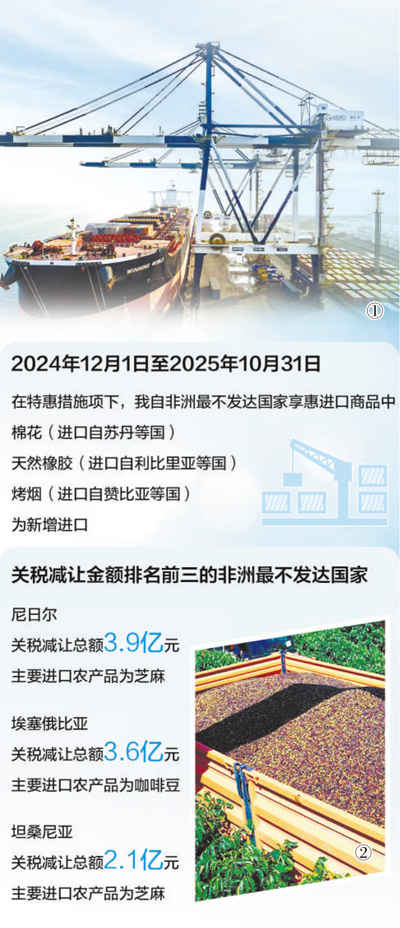
Group 1: Trade Policy Impact - From December 1, 2024, China will implement a zero tariff policy on 100% of products from the least developed countries that have diplomatic relations with China, aiming to enhance mutual development [6] - The zero tariff policy is expected to boost trade vitality between China and Africa, particularly benefiting African industries and enriching consumer choices in China [6] Group 2: Coffee Industry Growth - Ethiopia's coffee exports to China have been growing at an annual rate of 27%, with over 34,000 tons exported in the 2024/2025 fiscal year, generating over $218 million in revenue [7] - The zero tariff policy has significantly increased the competitiveness of Ethiopian coffee in the Chinese market, leading to a substantial rise in export volumes [7][8] - Ethiopian coffee producers plan to increase production to meet the growing demand from China, driven by the favorable tariff conditions [7] Group 3: Sesame Supply Chain Efficiency - Sesame, as Africa's largest agricultural export to China, is being imported more efficiently through direct sourcing channels, enhancing the supply chain from Mozambique to China [9] - The company has expanded its direct sourcing network, importing 1,120 tons of white sesame from Niger, with the first batch arriving in May [9][10] - Efficient logistics and a paperless customs process have streamlined the importation of sesame, reducing costs and improving delivery times [10] Group 4: Rubber Import and Production - The implementation of the zero tariff policy has allowed companies like Triangle Tire to import natural rubber from Liberia without tariffs, saving approximately 300,000 yuan [11] - The reduction in tariff costs enables companies to invest more in R&D, leading to the development of new tire products suitable for electric vehicles and extreme conditions [12] - In the first ten months of the year, Shandong province's imports from Africa reached 87.645 billion yuan, a 50.3% increase year-on-year, with natural and synthetic rubber imports also seeing significant growth [12]