
中非贸易合作

Search documents
零关税,让更多非洲产品丰富中国市场
Huan Qiu Wang· 2025-12-03 02:43
Group 1: Trade Policy Impact - From December 1, 2024, China will implement a zero tariff policy on 100% of products from least developed countries that have diplomatic relations with China, aiming to enhance mutual development [6] - The zero tariff policy is expected to boost trade vitality between China and Africa, particularly benefiting African industries and enriching consumer choices in China [6] Group 2: Coffee Industry Growth - Ethiopia's coffee exports to China have been growing at an annual rate of 27%, with over 34,000 tons exported in the 2024/2025 fiscal year, generating over $218 million in revenue [7] - The zero tariff policy has significantly increased the competitiveness of Ethiopian coffee in the Chinese market, leading to a substantial rise in export volumes [7][8] - The Ethiopian Coffee and Tea Authority noted that China has become Ethiopia's fourth-largest coffee export market [7] Group 3: Supply Chain Efficiency - The import of sesame from Mozambique to China has become more efficient, with direct sourcing channels allowing for better quality control and smoother market entry [9][10] - The logistics process for sesame includes modern transportation methods and a streamlined customs clearance process, reducing costs and improving delivery times [10][11] Group 4: Rubber Industry Developments - The implementation of the zero tariff policy has reduced the tariff on natural rubber from Liberia from 20% to zero, saving approximately 300,000 yuan on the first batch of imports [12] - The reduction in tariff costs allows companies to invest more in research and development, leading to the creation of new products such as energy-saving tires for electric vehicles [13] - In the first ten months of the year, Shandong province's imports from Africa reached 87.645 billion yuan, a year-on-year increase of 50.3%, with natural and synthetic rubber imports growing by 50.7% [13]


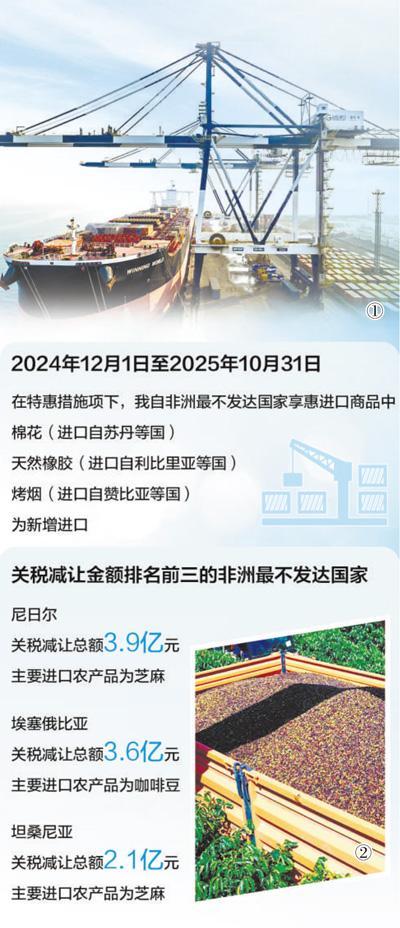
零关税 让更多非洲产品丰富中国市场
Ren Min Ri Bao· 2025-12-03 01:55
Group 1: Trade Policy Impact - China will implement a zero tariff policy on 100% of products from the least developed countries that have diplomatic relations with China starting December 1, 2024, which aims to promote mutual development [1] - The zero tariff policy is expected to enhance the competitiveness of Ethiopian coffee in the Chinese market, with exports to China growing significantly [2][3] Group 2: Coffee Industry Developments - Ethiopian coffee exports to China have been growing at an annual rate of 27%, with over 34,000 tons exported in the 2024/2025 fiscal year, generating over $218 million in revenue [2] - The zero tariff policy has increased the price competitiveness of Ethiopian coffee, benefiting local farmers and related industries [2] - The Ethiopian Coffee and Tea Authority indicates that China has become Ethiopia's fourth-largest coffee export market [2] Group 3: Supply Chain Efficiency - The import of sesame from Mozambique to China has become more efficient, with direct sourcing channels improving the supply chain [4][5] - The company in Chengdu has expanded its direct sourcing network, importing 1,120 tons of white sesame from Niger, enhancing the quality control from the planting stage [4][5] Group 4: Rubber Industry Developments - The implementation of the zero tariff policy has allowed Shandong Triangle Tire Co., Ltd. to import natural rubber from Liberia with a tariff reduction of approximately 300,000 yuan [6][7] - The company has utilized the cost savings from reduced tariffs to invest more in R&D, leading to the development of energy-saving tires suitable for electric vehicles [7] - In the first ten months of the year, Shandong Province's imports from Africa reached 87.645 billion yuan, a year-on-year increase of 50.3% [7]
零关税 让更多非洲产品丰富中国市场(经济聚焦)
Ren Min Ri Bao· 2025-12-02 22:05
Group 1: Tax Policy Impact - From December 1, 2024, China will implement a zero tariff policy on 100% of products from least developed countries that have diplomatic relations with China, enhancing trade opportunities [1] - The zero tariff policy is expected to significantly boost the competitiveness of Ethiopian coffee in the Chinese market, with exports growing at an annual rate of 27% [2][3] - The policy is anticipated to increase the production capacity and export capabilities of African countries, leading to higher revenues from exported products [3] Group 2: Industry Developments - Ethiopia exported over 34,000 tons of coffee to China in the 2024/2025 fiscal year, generating over $218 million in revenue [2] - The introduction of zero tariffs has allowed Ethiopian coffee producers to enhance their price competitiveness, leading to increased export volumes and higher incomes for local farmers [2] - The sesame trade from Mozambique to China has become more efficient, with direct sourcing channels improving the supply chain and product quality [4][5] Group 3: Company Insights - Triangle Tire Co., Ltd. has benefited from the zero tariff policy, with the import tariff on natural rubber from Liberia reduced from 20% to zero, saving approximately 300,000 yuan [6][7] - The company has utilized cost savings to invest in research and development, resulting in the creation of energy-efficient tires suitable for electric vehicles [7] - In the first ten months of the year, the company exported goods worth 4.8 billion yuan, reflecting the positive impact of the tariff reductions on business operations [7]
乌干达首批输华干辣椒启运
Ren Min Ri Bao· 2025-11-21 22:12
Core Points - The Ugandan government celebrated the shipment of the first 11 tons of dried chili peppers to China, marking a significant step in agricultural exports [1] - Ugandan President Museveni expressed gratitude towards China's ongoing cooperation with African nations and emphasized the importance of mutual respect and benefit in trade relations [1] - The initiative aims to encourage local farmers to cultivate cash crops like chili peppers to alleviate poverty [1] Group 1 - The shipment consists of dried chili peppers sourced from China and produced in Uganda, which will be shipped via sea to Shanghai [1] - The event highlights the strengthening trade ties between Uganda and China, with expectations for further cooperation [1] - President Museveni's remarks underline the potential for economic development through agricultural exports [1]
前五月我省对非洲出口同比增27.1%
Xin Hua Ri Bao· 2025-07-02 21:39
Group 1 - Jiangsu's import and export to Africa reached 85.96 billion yuan from January to May, with a year-on-year growth of 7.7% [1] - Exports from Jiangsu amounted to 73.81 billion yuan, showing a significant year-on-year increase of 27.1% [1] - Jiangsu Runbang Industrial Equipment Co., Ltd. has successfully expanded its market to Morocco, exporting container cranes to multiple African countries including Djibouti and Egypt [1] Group 2 - Aike (Changzhou) Agricultural Machinery Co., Ltd. exported agricultural machinery worth 23.93 million yuan to Africa, reflecting a year-on-year growth of 23% [2] - The company benefits from AEO (Authorized Economic Operator) certification, which facilitates smoother customs processes in several African countries [2] - The company has focused on green innovation and technology development to meet the growing demand for agricultural mechanization in Africa [2]