
锂电装备制造

Search documents
圆柱论坛演讲嘉宾丨大族锂电 韦武警 将发表 圆柱电池PACK智能化装备制造解决方案与产业实践 主题演讲报告
起点锂电· 2026-03-26 03:08
Core Viewpoint - The article highlights the upcoming 2026 (Second) Starting Point Cylindrical Battery Technology Forum, emphasizing the breakthrough of full-tab technology and the acceleration of cylindrical battery penetration in both power and energy storage sectors, predicting a dual windfall of technological leap and market explosion by 2026 [2]. Group 1: Event Details - The forum will take place on April 10 at the Venus Royal Hotel in Bao'an, Shenzhen, with the theme "Full-Tab Technology Leap, Leading the Large Cylindrical Market," gathering over 600 industry elites to explore technological breakthroughs and new growth opportunities [2]. - Shenzhen Dazhu Lithium Battery Intelligent Equipment Co., Ltd. will participate in the forum, with its technical manager, Wei Wuqing, delivering a keynote speech on intelligent manufacturing solutions for cylindrical battery PACK [2]. Group 2: Company Overview - Shenzhen Dazhu Lithium Battery Intelligent Equipment Co., Ltd. specializes in the research, production, and sales of battery intelligent equipment and smart factories, recognized as a national specialized and innovative enterprise [9]. - The company provides comprehensive equipment solutions and services for various battery types, including power batteries, energy storage batteries, consumer batteries, and more [9]. Group 3: Product Offerings - The main products of the company include a wide range of equipment such as rolling presses, die-cutting machines, winding/stacking machines, and various assembly solutions for battery modules and PACK [11]. Group 4: R&D and Innovation - The company adheres to the philosophy of "innovation and leadership," investing approximately 10% of its annual revenue in R&D, resulting in over 1,000 authorized patents [13]. - It collaborates with universities and research institutions to develop new battery manufacturing technologies, focusing on process research and energy-saving studies [15]. Group 5: Management and Global Services - The company has achieved certifications in various management systems, including ISO 27001:2022 for information security and ISO 14001:2015 for environmental management, ensuring adherence to international standards [17]. - With production and service bases established in Shenzhen, Jingmen, Changzhou, and Dongguan, the company provides global support across major battery production regions in Europe, North America, and Asia [19].


大族锂电 重点支持2026(第二届)起点锂电圆柱电池技术论坛暨圆柱电池20强排行榜发布会举办!
起点锂电· 2026-03-05 11:48
Core Viewpoint - The demand for cylindrical batteries is expected to double, with a significant growth forecasted for 2026, highlighted by the upcoming 2026 (Second) Cylindrical Battery Technology Forum and the release of the Top 20 Cylindrical Battery Rankings [2][18]. Industry Background - The cylindrical battery market is projected to see a surge in shipments, with a growth rate exceeding 15% in 2025 for China, and over 40% for large cylindrical batteries [18]. - Major companies in the cylindrical battery sector are facing supply shortages, indicating strong market demand [18]. - New technologies such as full-tab, high nickel, silicon-carbon, and sodium batteries are expected to create new growth points and market opportunities [18]. Event Details - The 2026 (Second) Cylindrical Battery Technology Forum will take place on April 10, 2026, in Shenzhen, focusing on cutting-edge technologies and applications in the cylindrical battery industry [2][19]. - The event will gather over 600 industry professionals to discuss advancements in cylindrical battery technology, materials, and market applications [2][20]. Company Overview - Dazhu Group has been a key player in the lithium battery equipment manufacturing industry since 2000, becoming a major supplier for international battery companies [4]. - The company specializes in providing comprehensive equipment solutions for various battery types, including cylindrical, square, and pouch batteries [4]. Product Offerings - The company offers a wide range of products including rolling, die-cutting, winding, assembly, and packaging solutions for battery manufacturing [6]. - Key products include integrated machines for rolling and cutting, laser cutting and pressing, and various automated production solutions [6]. R&D and Innovation - The company invests approximately 10% of its annual revenue into R&D, holding over 1,000 authorized patents [8]. - It collaborates with universities and research institutions to develop new battery manufacturing technologies and processes [10]. Management and Global Service - The company has established a robust management system certified by international standards, ensuring high-quality production and operational excellence [12]. - With production bases in Shenzhen, Jingmen, Changzhou, and Dongguan, the company provides global service and support across major battery production regions [14].

专访先导智能董事长王燕清:我们不是在追赶,而是定义下一代技术
21世纪经济报道· 2026-01-04 12:00
Core Viewpoint - The lithium battery industry is entering the "TWh era," with global demand for power batteries expected to exceed 1300 GWh by 2025, alongside explosive growth in the energy storage market [1][5]. Group 1: Industry Dynamics - The competition in the "TWh era" is not just about individual companies but the resilience of the entire industry chain [1]. - The shift from scale competition to a focus on efficiency, quality, and production capacity is crucial for battery manufacturers [5]. - The concept of "extreme manufacturing" is introduced as a solution to overcome the challenges of scale, efficiency, and quality [5]. Group 2: Technological Innovations - Data-driven approaches, AI empowerment, and flexible automation are key components in enhancing production efficiency [5]. - The use of digital twin technology allows for the creation of virtual factories, improving equipment delivery efficiency by up to 50% and enhancing overall equipment effectiveness (OEE) by 35% [5]. Group 3: Competitive Barriers - Deep collaboration with top-tier battery companies forms a second barrier, allowing for precise market alignment through joint R&D [7]. - A large delivery scale provides advantages in supply chain negotiations and cost control, forming a third barrier [7]. - The company emphasizes a "platformization" strategy, a robust R&D system, and global service capabilities as core competitive strengths [7]. Group 4: Market Strategy - The company advocates for a shift from price competition to a "value war," focusing on total cost of ownership (TCO) rather than just equipment purchase price [10][11]. - Differentiation through high-tech orders in solid-state batteries and large-capacity storage batteries helps avoid price wars [11]. - Global expansion is seen as a way to escape domestic price competition, with overseas revenue reaching 1.154 billion yuan in the first half of 2025, showing a continuous increase [11]. Group 5: Industry Standards and Intellectual Property - The company is actively involved in setting national and international industry standards to promote the development of standardized and modular manufacturing [11][12]. - Emphasis is placed on protecting intellectual property to encourage a shift from price competition to technology-driven competition [12].

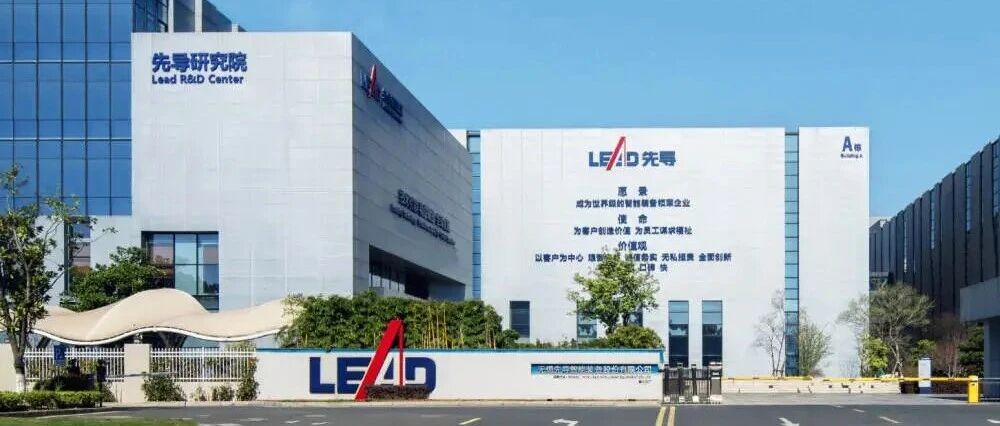
先导智能王燕清:我们不是在追赶,而是定义下一代技术
2 1 Shi Ji Jing Ji Bao Dao· 2025-12-24 11:17
Core Viewpoint - The lithium battery industry is entering the "TWh era," with global demand for power batteries expected to exceed 1300 GWh by 2025, alongside explosive growth in the energy storage market [2] Group 1: Industry Dynamics - The competition in the "TWh era" is not just about individual companies but the resilience of the entire industry chain [3] - The biggest change in the lithium battery "TWh era" is the restructuring of competitive logic, moving beyond mere capacity growth [4] - Over the past decade, lithium battery companies have focused on scale competition, with rapid factory construction and production line deployment being key to gaining an advantage [5] Group 2: Company Strategy - The company has established a first barrier with its "full value chain delivery" capability, enhancing customer loyalty through "turnkey" solutions in non-standard automation [6] - The company is addressing the "impossible triangle" of scale, efficiency, and quality through "extreme manufacturing," emphasizing data-driven decision-making, AI empowerment, and flexible automation [7] - The company collaborates with top global battery enterprises from the initial design phase to ensure its products meet market demands [8] Group 3: Competitive Advantages - The company leverages its large delivery scale for supply chain negotiation, core component self-research, and cost control, allowing it to respond effectively to market competition [9] - The core competitive advantages are summarized as the reuse capability of the "platform strategy," a robust R&D innovation system, and localized global service capabilities [10] Group 4: Market Positioning - The company advocates for a shift from price competition to "value warfare," focusing on total cost of ownership (TCO) rather than just equipment purchase prices [11] - The company aims to avoid low-end capacity competition by targeting high-tech orders in advanced fields like solid-state batteries and large-capacity energy storage [12] - The company is expanding its global presence, with overseas business revenue reaching 1.154 billion yuan in the first half of 2025, reflecting a continuous increase and a gross margin of 40.27% [12] Group 5: Industry Standards and Innovation - The company is actively participating in the formulation of national and international industry standards, promoting the standardization and modularization of equipment manufacturing [12] - The company emphasizes the importance of protecting intellectual property to encourage a shift from price competition to technology-driven competition [13]
赢合科技:公司长期深耕锂电装备制造领域
Zheng Quan Ri Bao Wang· 2025-11-24 09:44
Core Viewpoint - The company, Yinghe Technology, is focused on the lithium battery equipment manufacturing sector, providing advanced products that enhance production efficiency and product consistency for leading battery manufacturers domestically and internationally [1] Group 1: Company Overview - Yinghe Technology has a long-term commitment to the lithium battery equipment manufacturing field, with products utilized across various applications including power, energy storage, and consumer batteries [1] - The company's core equipment is recognized for its leading performance, which empowers top clients in battery production [1] Group 2: Innovation and Collaboration - The company actively engages in joint research and development with clients, delivering equipment that supports the validation of new processes [1] - Yinghe Technology is dedicated to advancing the synergy between battery manufacturing processes and equipment innovation [1]
