TWh时代

Search documents
专访先导智能董事长王燕清:我们不是在追赶,而是定义下一代技术
21世纪经济报道· 2026-01-04 12:00
Core Viewpoint - The lithium battery industry is entering the "TWh era," with global demand for power batteries expected to exceed 1300 GWh by 2025, alongside explosive growth in the energy storage market [1][5]. Group 1: Industry Dynamics - The competition in the "TWh era" is not just about individual companies but the resilience of the entire industry chain [1]. - The shift from scale competition to a focus on efficiency, quality, and production capacity is crucial for battery manufacturers [5]. - The concept of "extreme manufacturing" is introduced as a solution to overcome the challenges of scale, efficiency, and quality [5]. Group 2: Technological Innovations - Data-driven approaches, AI empowerment, and flexible automation are key components in enhancing production efficiency [5]. - The use of digital twin technology allows for the creation of virtual factories, improving equipment delivery efficiency by up to 50% and enhancing overall equipment effectiveness (OEE) by 35% [5]. Group 3: Competitive Barriers - Deep collaboration with top-tier battery companies forms a second barrier, allowing for precise market alignment through joint R&D [7]. - A large delivery scale provides advantages in supply chain negotiations and cost control, forming a third barrier [7]. - The company emphasizes a "platformization" strategy, a robust R&D system, and global service capabilities as core competitive strengths [7]. Group 4: Market Strategy - The company advocates for a shift from price competition to a "value war," focusing on total cost of ownership (TCO) rather than just equipment purchase price [10][11]. - Differentiation through high-tech orders in solid-state batteries and large-capacity storage batteries helps avoid price wars [11]. - Global expansion is seen as a way to escape domestic price competition, with overseas revenue reaching 1.154 billion yuan in the first half of 2025, showing a continuous increase [11]. Group 5: Industry Standards and Intellectual Property - The company is actively involved in setting national and international industry standards to promote the development of standardized and modular manufacturing [11][12]. - Emphasis is placed on protecting intellectual property to encourage a shift from price competition to technology-driven competition [12].


专访先导智能董事长王燕清:我们不是在追赶,而是定义下一代技术
2 1 Shi Ji Jing Ji Bao Dao· 2025-12-31 00:17
Core Viewpoint - The lithium battery industry is entering the "TWh era," marking a significant shift in production capacity and demand, with major players ramping up their capacity planning to meet this new standard [1][2]. Group 1: Industry Trends - By 2025, global demand for power batteries is expected to exceed 1300 GWh, with the energy storage market also experiencing explosive growth [2]. - The competition in the "TWh era" is not just about individual companies but rather a test of the resilience of the entire industry chain [2][3]. - The shift from scale competition to a restructured competitive logic is a key change in the lithium battery industry [3]. Group 2: Company Strategy - The company has established a "turnkey" solution capability across the entire value chain, which enhances customer loyalty and creates a significant barrier to entry for competitors [5]. - The company is focused on "extreme manufacturing," leveraging data-driven approaches, AI empowerment, and flexible automation to overcome challenges related to scale, efficiency, and quality [5]. - The company has formed deep partnerships with top global battery manufacturers, engaging in joint R&D to ensure that its products meet market demands [7]. Group 3: Competitive Advantages - The company benefits from a large delivery scale, which provides advantages in supply chain negotiations, core component self-research, and cost control [8]. - The company emphasizes a "platformization" strategy, a robust R&D innovation system, and global localized service capabilities as its core competitive strengths [8]. - The company is proactively defining next-generation technologies, such as solid-state battery equipment, to maintain its leading position in the market [8]. Group 4: Market Positioning - The company advocates for a shift from price competition to a "value war," focusing on total cost of ownership (TCO) rather than just equipment purchase prices [9]. - The company aims to avoid low-end capacity competition by targeting high-tech, high-barrier markets such as solid-state batteries and large-capacity energy storage [9]. - The company is expanding its global presence to seek new growth opportunities, emphasizing the importance of technology stability and delivery capability in overseas markets [9]. Group 5: Financial Performance - In the first half of 2025, the company's overseas business generated revenue of 1.154 billion yuan, with a gross margin of 40.27%, surpassing the overall business gross margin [10]. - The company is actively participating in the formulation of national and international industry standards to promote the standardization and modularization of equipment manufacturing [10].
21专访|先导智能王燕清:我们不是在追赶,而是定义下一代技术
2 1 Shi Ji Jing Ji Bao Dao· 2025-12-24 11:28
Core Insights - The lithium battery industry is entering the "TWh era," with global demand for power batteries expected to exceed 1300 GWh by 2025, alongside explosive growth in the energy storage market [1] - The competition in the "TWh era" is not just about individual companies but the resilience of the entire industry chain [1] Group 1: Industry Dynamics - The shift to the "TWh era" signifies a reconstruction of competitive logic, moving beyond mere capacity growth to a focus on efficiency and quality [5] - In the past decade, lithium battery companies competed primarily on scale, with rapid factory construction and production line deployment being key to gaining market share [6] - The new challenges in the "TWh era" require manufacturers to achieve capacity increases within limited space and labor constraints, necessitating a departure from traditional production line replication [8] Group 2: Company Strategy - The company has established a "full value chain" capability for "turnkey delivery," creating a competitive moat [7] - The company emphasizes "extreme manufacturing" to address the challenges of scale, efficiency, and quality, relying on data-driven decision-making, AI empowerment, and flexible automation [8] - The use of digital twin technology allows for significant efficiency improvements, with equipment delivery efficiency potentially increasing by 50% and overall equipment effectiveness (OEE) improving by 35% [8] Group 3: Collaborative Innovation - The company has formed joint R&D mechanisms with top global battery enterprises, allowing for collaborative innovation from the initial design phase [9] - This deep collaboration ensures that the company's products are precisely aligned with market demands [9] Group 4: Competitive Barriers - The company leverages its large delivery scale to gain advantages in supply chain negotiations and cost control [10] - The core competitive strengths are summarized as platform reuse capabilities, a robust R&D innovation system, and localized global service capabilities [10] Group 5: Technological Leadership - The company aims to define next-generation technologies rather than merely catch up, with early investments in solid-state battery equipment and other advanced technologies [11] - Key factors for the industrialization of solid-state batteries include manufacturing processes, equipment efficiency, and cost control [11] Group 6: Market Positioning - The company advocates for a shift from price competition to a "value war," focusing on total cost of ownership (TCO) rather than just equipment purchase prices [12] - By targeting high-tech, high-barrier markets such as solid-state batteries, the company avoids low-end capacity competition and positions itself for future market leadership [12] - The company is expanding its global presence to tap into higher-quality orders, moving away from domestic price wars [12] Group 7: Financial Performance - The company's overseas business generated revenue of 1.154 billion yuan in the first half of 2025, with a gross margin of 40.27%, surpassing the overall business margin [13] - The company is actively involved in setting national and international industry standards to promote the development of standardized and modular manufacturing [13]

先导智能王燕清:我们不是在追赶,而是定义下一代技术
2 1 Shi Ji Jing Ji Bao Dao· 2025-12-24 11:17
Core Viewpoint - The lithium battery industry is entering the "TWh era," with global demand for power batteries expected to exceed 1300 GWh by 2025, alongside explosive growth in the energy storage market [2] Group 1: Industry Dynamics - The competition in the "TWh era" is not just about individual companies but the resilience of the entire industry chain [3] - The biggest change in the lithium battery "TWh era" is the restructuring of competitive logic, moving beyond mere capacity growth [4] - Over the past decade, lithium battery companies have focused on scale competition, with rapid factory construction and production line deployment being key to gaining an advantage [5] Group 2: Company Strategy - The company has established a first barrier with its "full value chain delivery" capability, enhancing customer loyalty through "turnkey" solutions in non-standard automation [6] - The company is addressing the "impossible triangle" of scale, efficiency, and quality through "extreme manufacturing," emphasizing data-driven decision-making, AI empowerment, and flexible automation [7] - The company collaborates with top global battery enterprises from the initial design phase to ensure its products meet market demands [8] Group 3: Competitive Advantages - The company leverages its large delivery scale for supply chain negotiation, core component self-research, and cost control, allowing it to respond effectively to market competition [9] - The core competitive advantages are summarized as the reuse capability of the "platform strategy," a robust R&D innovation system, and localized global service capabilities [10] Group 4: Market Positioning - The company advocates for a shift from price competition to "value warfare," focusing on total cost of ownership (TCO) rather than just equipment purchase prices [11] - The company aims to avoid low-end capacity competition by targeting high-tech orders in advanced fields like solid-state batteries and large-capacity energy storage [12] - The company is expanding its global presence, with overseas business revenue reaching 1.154 billion yuan in the first half of 2025, reflecting a continuous increase and a gross margin of 40.27% [12] Group 5: Industry Standards and Innovation - The company is actively participating in the formulation of national and international industry standards, promoting the standardization and modularization of equipment manufacturing [12] - The company emphasizes the importance of protecting intellectual property to encourage a shift from price competition to technology-driven competition [13]
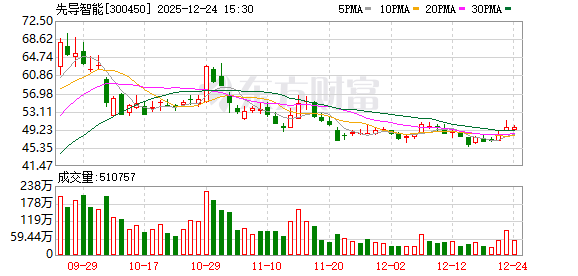
直面TWh时代挑战,尚水智能新品发布引领技术“跃迁”
高工锂电· 2025-11-24 09:41
Core Viewpoint - The article emphasizes the significant advancements made by Shangshui Intelligent in the lithium battery manufacturing sector, particularly in response to the industry's evolving demands for efficiency, quality, and innovation as it transitions into the TWh era [1][2]. Group 1: Industry Trends - By 2025, the Chinese lithium battery industry is expected to enter a new high-quality development cycle following a deep restructuring [2]. - In the first three quarters, the total shipment of lithium batteries in China exceeded 1.2 TWh, marking a year-on-year increase of 60%, indicating a robust growth momentum driven by dual engines of power and energy storage demand [3]. Group 2: Company Innovations - Shangshui Intelligent launched groundbreaking solutions at the "Leap Forward: Co-creating a New Era of Battery Intelligence Manufacturing" event, including intelligent manufacturing lines for powder new materials and large-capacity electrode manufacturing solutions [1][10]. - The company introduced a fully automated unpacking machine with a dust leakage prevention design, achieving a package emptying rate of ≥99.97% and a small package unpacking efficiency of less than 2 minutes per package [15]. Group 3: Manufacturing Solutions - The new powder new materials intelligent manufacturing line integrates a full-process solution from laboratory to mass production, addressing the challenges of cost control and efficiency in material production [10][12]. - The 6-12 GWh large-capacity electrode manufacturing solution aims to reduce unit capacity investment by 60-70%, labor by 75%, and land area by 70%, while also decreasing process time and overall energy consumption by over 60% [18][20]. Group 4: Future Technologies - Solid-state batteries are anticipated to become the core development direction for next-generation battery technology, with expectations for large-scale application between 2027 and 2030 [23]. - Shangshui Intelligent is focusing on a comprehensive approach to solid-state battery and dry electrode technology, emphasizing the need for full-process validation and mass production adaptability [23][25].