
非遗体验

Search documents
春节消费新趋势,一组数据带你感受
Xin Hua Wang· 2026-02-26 06:09
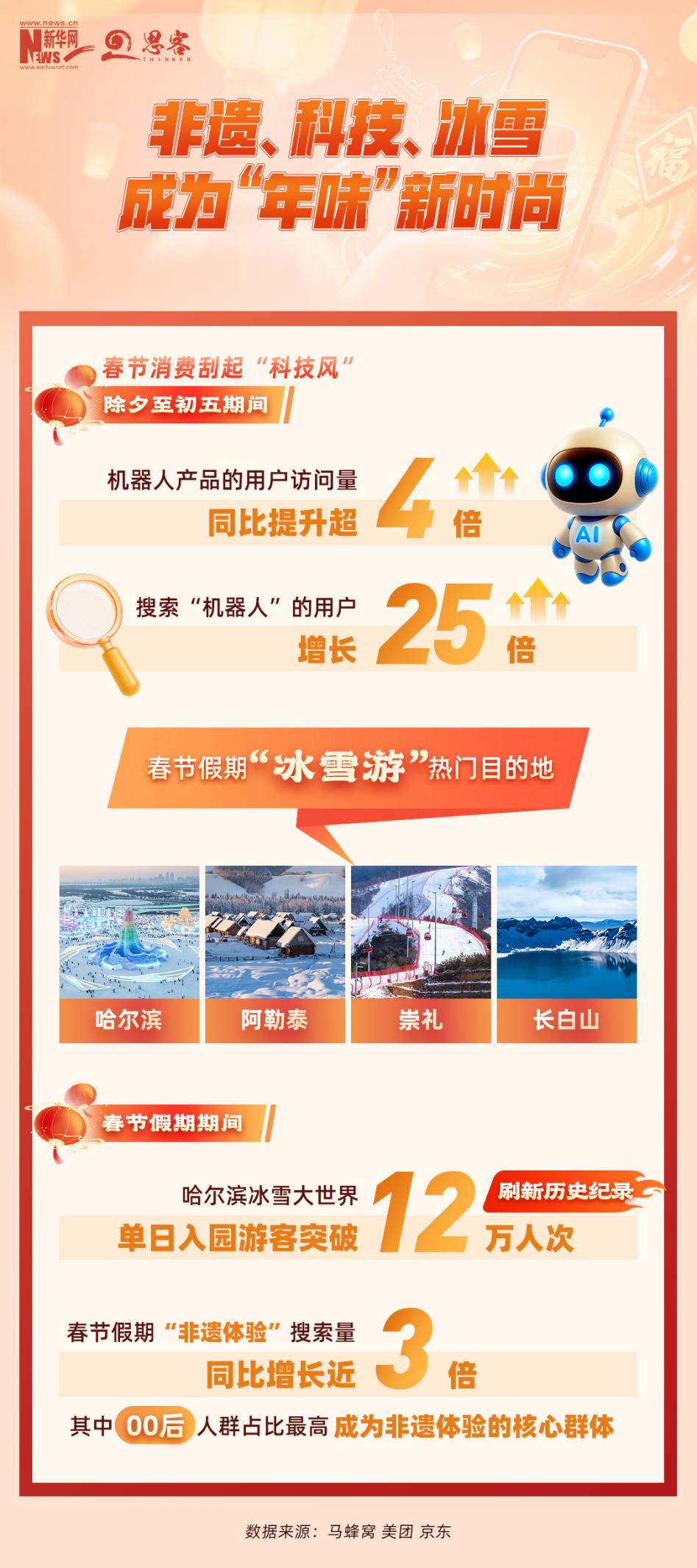
Group 1 - The Spring Festival holiday saw a surge in consumer activity, with new trends emerging in consumption patterns, including "segment-style" and "reverse" celebrations [2][6] - Foreign tourists are increasingly visiting China during the Spring Festival to experience traditional culture, with cities like Beijing and Shanghai offering curated travel routes and cultural experiences [2] - The integration of technology into the Spring Festival celebrations, such as robot performances, has sparked consumer interest in tech products, leading to significant sales growth [3][6] Group 2 - The experience of intangible cultural heritage has shifted from "check-in" to "immersive," attracting young tourists to engage in traditional cultural activities [6] - The Winter Olympics coinciding with the Spring Festival has boosted interest in winter sports, with indoor skiing facilities seeing a 117% increase in search volume in Shanghai [6] - New service consumption trends have emerged, including on-demand services like pet care and home chefs, reflecting a growing demand for personalized and quality services during the holiday [7][9]

文旅市场热度节节攀升
Jing Ji Ri Bao· 2025-05-05 22:04
Core Insights - The tourism and cultural market in China is thriving during the "May Day" holiday, showcasing resilience and vitality through innovative consumer experiences and government initiatives to enhance service quality [1][2]. Group 1: Government Initiatives - Various regions have implemented over 800 cultural and tourism promotional activities and benefits to attract visitors, such as Shandong's "Good Guest Shandong" tourism discount package [2]. - Extended opening hours and increased night activities have been adopted by attractions, with Hunan Museum extending hours to 8 PM and adding 5,000 daily reservations, while the Qin Shi Huang Mausoleum has increased ticket availability by 15,000 per day [2]. - Public services have been enhanced, with initiatives like the opening of government canteens to the public in Chongqing, attracting over 3,000 visitors, and the release of nearly 100,000 public parking spaces in Jiangsu to alleviate parking difficulties during the holiday [2]. Group 2: Diverse Tourism Offerings - The market is invigorated by diverse tourism products, including red tourism, industrial tourism, and rural tourism, catering to various visitor preferences [3]. - Red tourism has gained popularity, with attractions like the immersive experience in Yan'an, which hosted up to 2,000 visitors per day through a large-scale indoor performance [3]. - The transformation of the former soap factory in Zhengzhou into a 24-hour cultural landmark has attracted over 50,000 visitors daily, with 60% being from outside the city [3]. Group 3: Rural Tourism Growth - Rural tourism is flourishing, with significant participation in local cultural and sports events, such as basketball and food festivals, enhancing visitor engagement [4]. - In the first three days of the holiday, Jiangsu's monitored rural tourism sites received 3.37 million visitors, while Gansu's rural tourism saw a 29.81% increase in visitor spending, totaling 1.154 billion yuan [4]. Group 4: Cultural and Technological Integration - The integration of culture and technology is creating vibrant holiday experiences, with cultural performances and heritage experiences being enhanced by technological advancements [5][6]. - Events like the "Flower Fair" in Shanghai and the non-material cultural heritage performances in Beijing have attracted significant visitor numbers, showcasing local culture [5]. - High-tech experiences, such as drone shows and AR interactions, are enriching the visitor experience, indicating a promising future for the tourism sector [6].