
高端机电

Search documents
破7入6!人民币重返6时代,钱袋子悄悄变厚,你的钱更值钱
Sou Hu Cai Jing· 2025-12-28 00:23
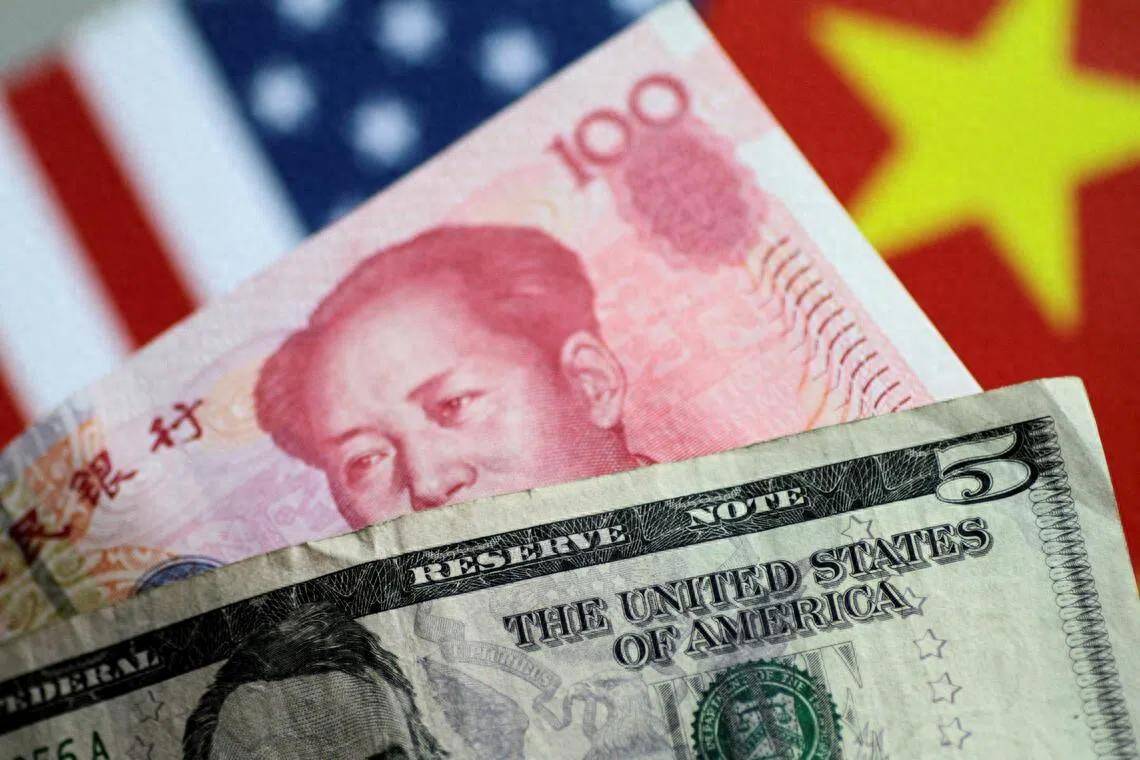
Core Viewpoint - The offshore RMB has broken the 7.0 mark against the USD, reaching a high of 6.9973, marking a significant moment in global finance and indicating a shift in the global currency landscape [2] Group 1: RMB Strength and Economic Context - The RMB's rise to the "6 era" reflects a robust recovery of the Chinese economy after challenges, showcasing its resilience [2] - In 2025, the USD index experienced a nearly 8% decline, the largest annual drop in nine years, driven by structural economic issues in the U.S. [3] - The U.S. Federal Reserve's three interest rate cuts in 2025 diminished the attractiveness of USD-denominated assets [3] Group 2: Global Currency Dynamics - Global central banks are reducing their USD reserves due to concerns over the U.S. debt expansion, leading to a diversification of currency reserves [4] - The perception of the USD as a safe haven is weakening, prompting capital to seek new opportunities, with China emerging as a preferred destination [4] Group 3: Trade Surplus and Economic Foundations - China's trade surplus surpassed $1 trillion in the first 11 months of 2025, a historic achievement indicating strong net earnings from global markets [6] - The composition of the trade surplus has shifted from low-value goods to high-value products like automobiles and advanced machinery, enhancing the credibility of the RMB [8] Group 4: Policy and Market Stability - The People's Bank of China has maintained a stable RMB without resorting to competitive devaluation, demonstrating strategic policy strength [9] - The relative stability of the China-U.S. interest rate differential has kept RMB assets attractive, evidenced by significant foreign capital inflows into Chinese government bonds [9] Group 5: Long-term Outlook for RMB - The RMB's return to the "6 era" suggests a likely long-term appreciation trend, supported by ongoing productivity improvements in China [11] - The current low allocation of global capital to Chinese assets compared to its economic size indicates potential for future inflows [11] Group 6: Opportunities and Challenges - RMB appreciation presents opportunities to lower import costs and combat inflation, while also posing short-term challenges for export-oriented businesses [13] - The recent RMB strength may signify a pivotal moment for the currency's transition from a regional to a global reserve currency [13]

“十五五”规划建议夯实中国式现代化战略根基
Zhong Guo Zheng Quan Bao· 2025-11-11 20:10
Core Insights - The "14th Five-Year Plan" proposal has been approved, providing direction for China's economic and social development over the next five years [1] - China's economy has shown resilience and strategic determination in the face of global trade challenges, with significant improvements expected as the "14th Five-Year Plan" is fully implemented [1][4] Economic Performance - In the first three quarters, China's total import and export value reached 33.6078 trillion yuan, a year-on-year increase of 4.0%, with exports amounting to 19.945 trillion yuan, growing by 7.1% [1] - The trade structure has continued to optimize, with mechanical and electrical products' exports increasing by 9.6%, accounting for 60.5% of total exports [1] Industry Outlook - The high demand for high-end mechanical and electrical products has contributed to the robust performance of China's export industries [2] - The "14th Five-Year Plan" emphasizes the importance of technological self-reliance and innovation as key drivers for modernizing the industrial system [3] Strategic Focus - The focus of policies is shifting from technological breakthroughs to building a modern industrial system, highlighting the importance of large-scale application of technology and sustainable industrial development [3] - The integration of cutting-edge technologies like artificial intelligence is expected to enhance overall productivity and reshape the core of economic growth [3] Future Projections - By 2024, the value added by the "three new" economy (new industries, new business formats, and new models) is projected to exceed 18% of GDP, indicating a significant shift towards new productive forces [3] - The "14th Five-Year Plan" aims to create a globally competitive modern industrial system, supporting high-quality development and establishing new international competitive advantages [3]