
高端装备产业

Search documents
上海:2025年GDP同比增长5.4%
财联社· 2026-01-21 01:39
Core Viewpoint - In 2025, Shanghai's economy is projected to achieve a GDP of 56,708.71 billion yuan, reflecting a year-on-year growth of 5.4% at constant prices, driven by advancements in various industries and a focus on high-quality development [2][3]. Group 1: Industrial Production - The industrial added value in Shanghai is expected to grow by 5.0% year-on-year, with the total output value of above-scale industries increasing by 4.6% [3]. - Key sectors such as railway, shipbuilding, aerospace, and other transportation equipment manufacturing are projected to see a significant output growth of 15.8% [3]. - The three leading industries in manufacturing are anticipated to grow by 9.6%, with integrated circuit manufacturing expected to rise by 15.1% and artificial intelligence manufacturing by 13.6% [3]. Group 2: Service Sector Growth - The added value of the tertiary industry is projected to increase by 6.0%, with the information transmission, software, and IT services sector leading at a growth rate of 15.3% [4]. - The financial sector is expected to grow by 9.7%, while transportation, warehousing, and postal services are projected to grow by 5.3% [4]. Group 3: Fixed Asset Investment - Fixed asset investment in Shanghai is expected to grow by 4.6%, with industrial investment leading at a remarkable growth rate of 20.0% [5]. - Investment in urban infrastructure is projected to increase by 11.2% [5]. Group 4: Market Consumption - The total retail sales of consumer goods are expected to reach 16,600.93 billion yuan, reflecting a year-on-year growth of 4.6% [6]. - Categories such as cultural and office supplies are projected to see a retail growth of 30.4%, while home appliances and audio-visual equipment are expected to grow by 24.3% [6]. Group 5: Financial Market Activity - The major financial markets in Shanghai are projected to achieve a transaction volume of 40,589.5 billion yuan, with a year-on-year growth of 11.2% [8]. - The Shanghai Gold Exchange is expected to see a transaction volume increase of 44.1%, while the Shanghai Stock Exchange is projected to grow by 32.2% [8]. Group 6: Trade Performance - The total import and export volume is expected to reach 45,100 billion yuan, with exports projected to grow by 10.8% [9]. - The "new three types" of products are expected to see an export growth of 17.4%, with electric vehicle exports increasing by 13.8% [9]. Group 7: Consumer Prices and Income - The consumer price index (CPI) is projected to rise by 0.1%, while the core CPI is expected to increase by 0.7% [10]. - The per capita disposable income is expected to reach 91,987 yuan, reflecting a growth of 4.1% [10].

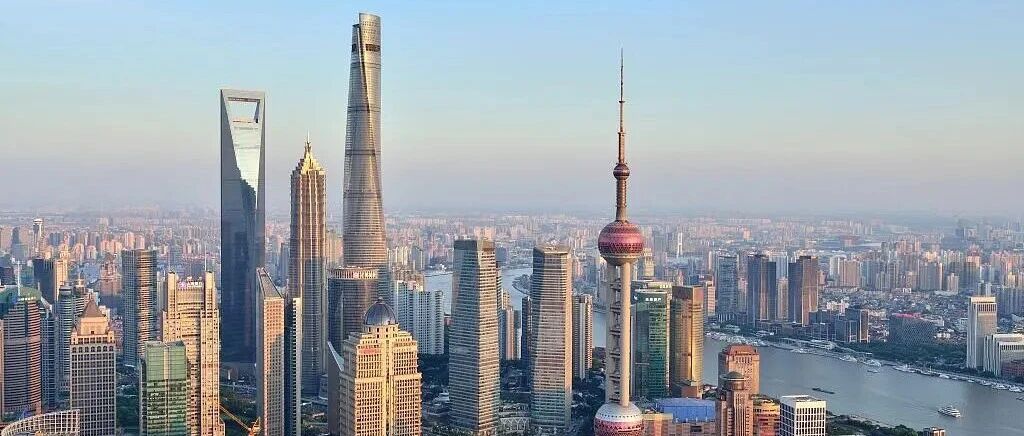
上海:2025年GDP同比增长5.4%
第一财经· 2026-01-21 01:28
Economic Overview - In 2025, Shanghai's GDP reached 56,708.71 billion yuan, reflecting a year-on-year growth of 5.4% at constant prices [1] - The primary industry added value was 99.39 billion yuan, growing by 2.0%; the secondary industry added value was 11,650.62 billion yuan, growing by 3.5%; and the tertiary industry added value was 44,958.70 billion yuan, growing by 6.0% [1][3] Industrial Production - The industrial added value in Shanghai grew by 5.0% year-on-year, with total industrial output value increasing by 4.6% [6] - Key sectors such as railway, shipbuilding, aerospace, and other transportation equipment manufacturing saw a 15.8% increase in output value, while electrical machinery and equipment manufacturing grew by 11.1% [6] - The three leading manufacturing industries experienced a 9.6% increase, with integrated circuit manufacturing growing by 15.1% and artificial intelligence manufacturing by 13.6% [6] Service Sector Growth - The tertiary industry added value increased by 6.0%, with the information transmission, software, and IT services sector growing by 15.3% [9] - The financial sector's added value reached 8,979.66 billion yuan, marking a 9.7% increase [9] Fixed Asset Investment - Fixed asset investment in Shanghai grew by 4.6%, with industrial investment surging by 20.0%, significantly outpacing the overall investment growth [12] - Urban infrastructure investment increased by 11.2% [12] Market Consumption - The total retail sales of consumer goods reached 16,600.93 billion yuan, with a year-on-year growth of 4.6% [15] - Categories such as cultural and office supplies saw a retail growth of 30.4%, while home appliances and audio-visual equipment grew by 24.3% [15] Financial Market Activity - Major financial markets in Shanghai achieved a transaction volume of 40,589.5 billion yuan, reflecting an 11.2% year-on-year increase [18] - The balance of deposits in financial institutions reached 24.50 trillion yuan, growing by 11.3% [18] Trade Performance - The total import and export volume reached 4.51 trillion yuan, with exports growing by 10.8% to 2.02 trillion yuan [21] - The "new three types" of products saw an export growth of 17.4%, with electric vehicle exports increasing by 13.8% [21] Consumer Prices and Income - The consumer price index (CPI) rose by 0.1%, while the core CPI increased by 0.7% [24] - The per capita disposable income reached 91,987 yuan, growing by 4.1% year-on-year [25]
第十届中国制造强国年会:“十五五”加速推进制造业升级
Zhong Guo Hua Gong Bao· 2025-12-31 06:08
Group 1 - The core viewpoint of the articles emphasizes the need for high-quality development and upgrading of China's manufacturing industry during the "14th Five-Year Plan" period, focusing on intelligent, green, and integrated industrialization [1][2][3] - The conference highlighted six key tasks for future development, including enhancing technological innovation, developing the digital economy, and fostering new industrial ecosystems [1] - Experts suggest that the key to upgrading China's manufacturing lies in developing competitive high-end equipment industries and fostering collaboration among teams focused on equipment organization, manufacturing, and key technology research [2][3] Group 2 - The strategy for the next decade should focus on solidifying the industrial foundation, advancing high-level technological self-reliance, and nurturing new productive forces [2] - There is a call for increased support for basic research and cutting-edge technologies in industries that have already reached a world-leading status [3] - The implementation of a "key breakthrough" strategy should be continued while also incorporating new industries such as smart instruments and biological manufacturing [3]
制造强国:从规模领先到实力领跑
Xin Hua Wang· 2025-10-09 00:02
Core Insights - China's manufacturing value-added accounts for nearly 30% of the global total, maintaining the world's largest scale for 15 consecutive years, with most industrial products ranking first in global output [1][2] Manufacturing Scale and Growth - From 2020 to 2024, China's total industrial value-added is projected to grow from 31.3 trillion yuan to 40.5 trillion yuan, while manufacturing value-added is expected to increase from 26.6 trillion yuan to 33.6 trillion yuan, contributing over 30% to global manufacturing growth [2] - The average annual growth rates for equipment manufacturing and high-tech manufacturing value-added are projected at 7.9% and 8.7%, respectively, with their shares in the industrial sector rising to 34.6% and 16.3% [2] Innovation and Technology - R&D expenditure of large-scale manufacturing enterprises exceeds 1.6% of their operating income, with over 570 industrial companies listed among the global top 2500 in R&D investment [2] - Significant achievements in key technology areas such as artificial intelligence and quantum communication have been made, with notable projects like "Chang'e" and "Beidou" demonstrating China's innovation capabilities [2] Supply Chain Resilience - The resilience of industrial and supply chains has been enhanced through the implementation of high-quality development actions and the re-engineering of industrial foundations, leading to breakthroughs in key technologies and products [3][4] - The self-sufficiency level of key industrial chains has steadily improved, with critical technology indicators for products like ultra-high voltage transmission and electric vehicles reaching international advanced levels [3] Digital Transformation - The integration of digital and physical economies is accelerating, with over 340 influential industrial internet platforms established, connecting more than 100 million devices and serving nearly 4 million enterprises [7] - The number of intelligent factories has exceeded 7000, with significant advancements in smart manufacturing technologies, including flexible production lines and predictive maintenance [7] Green Transformation - During the "14th Five-Year Plan" period, China has built the world's largest and most complete renewable energy industry chain, with a 20 percentage point increase in the share of renewable energy generation capacity [8][9] - The recycling of resources such as waste steel and waste copper is projected to exceed 400 million tons by 2024, with significant advancements in green manufacturing practices [9][10]