
Animal Husbandry

Search documents
重点抓好八方面工作 落实中央一号文件精神
Xin Lang Cai Jing· 2026-02-06 23:03
Core Viewpoint - The article discusses the implementation of specific measures by the Ministry of Agriculture and Rural Affairs to promote agricultural modernization and rural revitalization in line with the central government's directives. Group 1: Agricultural Production and Quality - Enhance agricultural comprehensive production capacity and quality efficiency to ensure stable and safe supply of important agricultural products [1] - Focus on grain and oil production, modernize livestock farming, and promote high-quality development in fisheries [1] - Strengthen farmland protection and quality improvement, and enhance agricultural disaster prevention and mitigation systems [1] Group 2: Poverty Alleviation and Support - Implement regular and precise assistance to consolidate and expand the achievements of poverty alleviation [2] - Improve the policy framework for assistance and enhance the effectiveness of industry and employment support [2] Group 3: Agricultural Technology and Equipment - Strengthen agricultural technology and equipment support to lead the development of new agricultural productivity [2] - Enhance agricultural technology innovation efficiency and accelerate the application of agricultural technology achievements [2] Group 4: Sustainable Agricultural Development - Promote a comprehensive green transformation in agriculture to steadily enhance sustainable development capabilities [2] - Improve the management of agricultural inputs and develop ecological low-carbon agriculture [2] Group 5: Rural Industry and Income Growth - Cultivate and expand rural industries to promote stable income growth for farmers [2] - Strengthen agricultural product processing and circulation, and enhance rural characteristic industries [2] Group 6: Rural Living Conditions - Accelerate the improvement of rural living conditions and promote the construction of beautiful and livable villages [2] - Continue rural construction actions and enhance the rural living environment [2] Group 7: Rural Reform and Development - Further deepen rural reforms to stimulate agricultural and rural development vitality [2] - Stabilize land contracting relationships and improve modern agricultural management systems [2] Group 8: Support and Implementation - Strengthen support for various tasks to ensure effective implementation [2] - Develop a multi-faceted investment mechanism for rural revitalization and enhance the effectiveness of agricultural support policies [2]
税费诉求回音壁 | 第24期:农业生产者的免税攻略:这样申请,咱们种植户的钱包更鼓了!
蓝色柳林财税室· 2026-02-03 15:18
Core Viewpoint - The article discusses the tax exemption policies for agricultural products in China, specifically focusing on the sales of self-produced agricultural products and the operational models that qualify for these exemptions [2][3]. Group 1: Self-Produced Agricultural Products - Self-produced agricultural products sold by agricultural producers are exempt from value-added tax (VAT) [2]. - Agricultural products purchased from others or processed after purchase do not qualify for the tax exemption and are subject to VAT at the prescribed rate [2]. Group 2: Farmer Cooperatives - Sales of agricultural products produced by members of farmer cooperatives are treated as sales of self-produced agricultural products and are exempt from VAT [2]. - Farmer cooperatives must be established and registered according to the "Farmer Professional Cooperative Law of the People's Republic of China" [2]. Group 3: "Company + Farmer" Operating Model - The "Company + Farmer" model, where companies engage in livestock breeding and buy back the livestock from farmers, qualifies as sales of self-produced agricultural products and is exempt from VAT [2]. - This model involves companies providing livestock, feed, and veterinary supplies to farmers, who then raise the livestock until maturity [2]. Group 4: Seed Production Industry - Seed production enterprises that utilize their own or rented land to breed seeds, employing farmers or workers, and then process and sell the seeds are considered agricultural producers and are exempt from VAT [3]. - Enterprises that provide parent seeds to farmers for breeding and then buy back the seeds also qualify for the VAT exemption [3]. Group 5: Policy References - The article cites several policy documents that provide the legal basis for the VAT exemptions, including the "Interim Regulations on Value-Added Tax of the People's Republic of China" and various announcements from the Ministry of Finance and the State Administration of Taxation [3]. Group 6: Compliance in Invoice Issuance - When enjoying the VAT exemption for self-produced agricultural products, sellers can issue agricultural product sales invoices or agricultural product purchase invoices, but not special VAT invoices [3]. - The input tax amount can be calculated based on the purchase price of agricultural products and a deduction rate of 9% [3].


Budget measures will have moderately positive impact on FMCG sector: SBI report
The Economic Times· 2026-02-02 07:11
Core Insights - The Union Budget 2026 is expected to have a moderately positive impact on the fast-moving consumer goods (FMCG) sector, driven by proposals aimed at supporting rural income, agricultural productivity, and employment generation [6][7] Group 1: Agricultural Initiatives - The budget announced the launch of Bharat-VISTAAR, a multilingual AI tool designed to integrate agricultural information, which is expected to enhance farm productivity and positively affect rural consumption [6] - The integrated development of 500 reservoirs and Amrit Sarovars is aimed at strengthening the fisheries sector, supporting livelihoods linked to fisheries, and improving income levels in rural areas [6][3] Group 2: Employment and Income Generation - The government proposed support for the animal husbandry sector through entrepreneurship development, including a Credit-Linked Subsidy Programme and modernization of livestock enterprises, which are expected to boost rural employment and income [4][6] - Support for high-value crops such as coconut, sandalwood, cocoa, and cashew in coastal areas, as well as agar trees in the Northeast and nuts in hilly regions, is expected to improve farm incomes across various regions [6][4] Group 3: Market Access and Distribution - The establishment of Self-Help Entrepreneur (SHE) Marts as community-owned retail outlets is expected to strengthen local distribution networks and improve market access for rural producers [5][6] Group 4: FMCG Sector Outlook - The outlook for the FMCG sector remains cautiously optimistic, with expectations of continued easing of food and commodity inflation, improving rural sentiment, and steady employment conditions supporting consumption growth [6][7]

东西同心 绘就陇原乡村振兴新图景
Zhong Guo Fa Zhan Wang· 2026-01-22 12:03
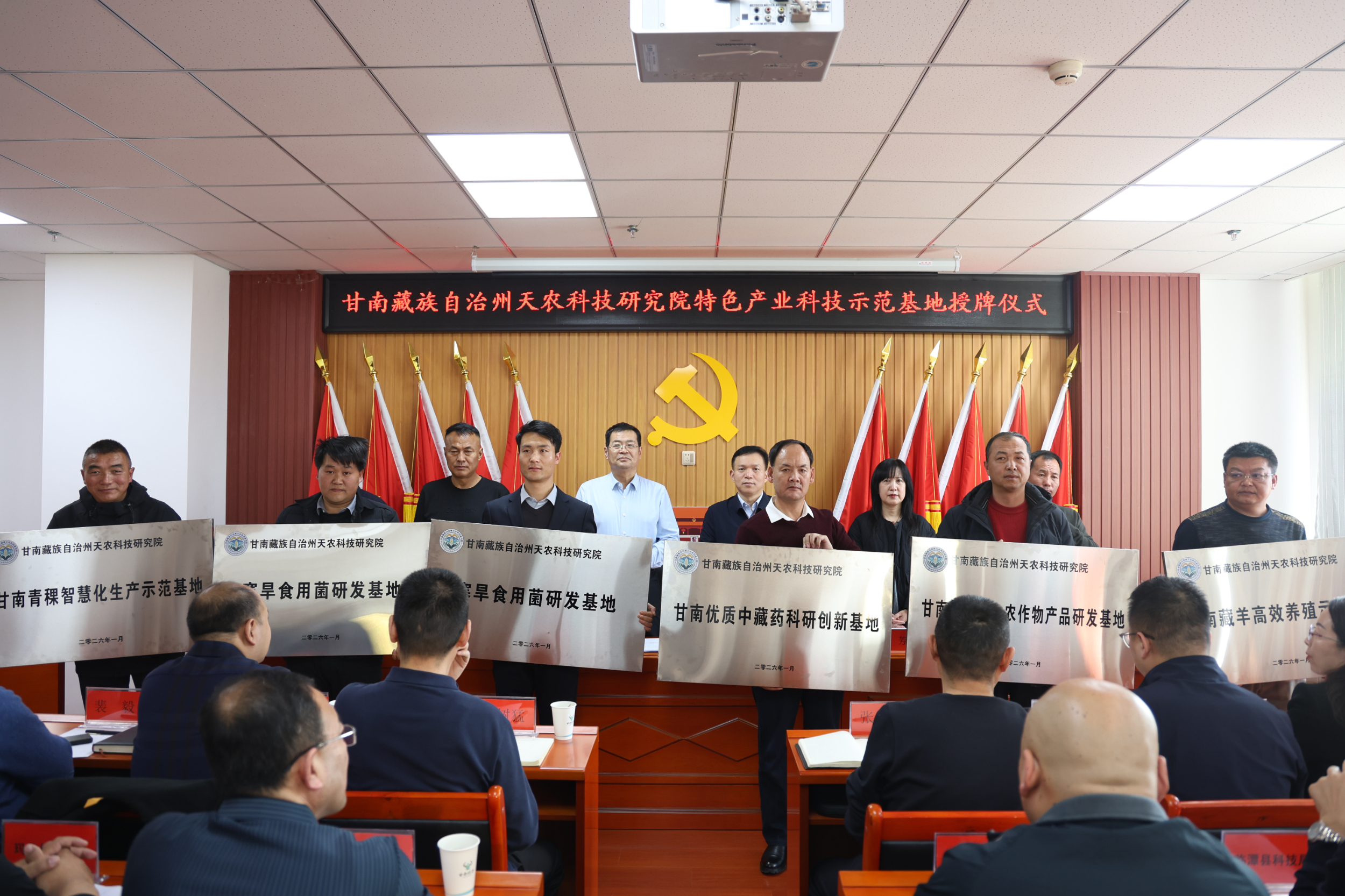
Core Viewpoint - The establishment of six specialized agricultural technology demonstration bases in Gannan Tibetan Autonomous Prefecture aims to enhance local agricultural development through advanced technology and collaboration with eastern regions, particularly Tianjin [2][3]. Group 1: Establishment of Technology Bases - Six specialized agricultural technology demonstration bases have been officially launched, including cold and drought-resistant edible mushroom research, high-efficiency yak breeding, and specialty crop product research [2]. - The collaboration is part of a broader initiative to leverage advanced agricultural technologies from eastern regions to support Gannan's agricultural development [2][3]. Group 2: Collaborative Efforts and Training - Gansu Province has implemented a comprehensive strategy for east-west technological collaboration, including annual work guidelines and training programs, resulting in the training of nearly 600 local technology talents [3][4]. - The establishment of a WeChat mini-program for "Tianjin Science Assistance" has created a technology service platform that integrates expert resources to provide remote support for farmers [4]. Group 3: Impact on Local Agriculture - The collaboration has led to the development of competitive agricultural clusters, such as "Tea Village" and "Potato Capital," significantly enhancing local agricultural competitiveness and optimizing agricultural structure [7]. - Specific examples include the expansion of freshwater aquaculture in Yongdeng County, which now covers 5,000 acres and generates an annual output of 1,500 tons of fish, valued at over 80 million yuan [7]. - The introduction of advanced apple cultivation techniques in Qin'an County has increased online sales to 40% of total sales, with the apple industry’s annual output value exceeding 6 billion yuan [7].
建成高标准农田6.1万亩!德城区农业农村现代化进程成效显著
Qi Lu Wan Bao· 2025-12-25 12:33
Core Insights - The article highlights the achievements of the agricultural and rural development in Decheng District during the 14th Five-Year Plan period, focusing on food security, agricultural modernization, and rural revitalization efforts. Group 1: Food Security and Agricultural Production - The district prioritizes food security, achieving a stable grain production capacity with a total of 61,000 mu of high-standard farmland built and an investment of 119 million yuan [2] - The mechanization rate for major crops reached 98.8%, supported by subsidies totaling 6.7047 million yuan for 504 agricultural machines, enhancing production capabilities [2] - A robust agricultural technology support system was established, training 541 individuals, including 48 provincial-level key personnel, to foster a skilled workforce for high-quality agricultural development [2] Group 2: Livestock and Aquaculture Development - The district reported the output of over 80,000 pigs and 130 million poultry, ensuring an annual supply of over 29,000 tons of meat, eggs, and milk to meet local market demands [3] - A comprehensive disease prevention strategy was implemented, achieving 100% vaccination coverage and maintaining a "zero major epidemic" status [3] - The aquaculture sector saw significant growth, particularly in tilapia farming, with a production area of 58,500 square meters and an annual output of over 1,740 tons, representing 35.95% of the district's total aquatic product output [3] Group 3: Rural Revitalization and Urban-Rural Integration - The district invested nearly 30 million yuan in rural infrastructure, enhancing village aesthetics and improving residents' quality of life through various construction projects [4] - The integration of agricultural industries is being promoted, with 20 agricultural industrialization leading enterprises established, including 4 at the provincial level, contributing to increased income for farmers [4] - A digital management platform for rural enterprises was developed to enhance financial oversight, while reforms in agricultural law enforcement were implemented to strengthen regulatory frameworks [4] - Continuous efforts are made to consolidate poverty alleviation achievements, with targeted support for 10 households and 28 individuals, ensuring comprehensive assistance for those in need [4] Group 4: Future Goals - The agricultural and rural development bureau aims to continue advancing agricultural modernization, deepen supply-side structural reforms, and promote urban-rural integration to enhance the overall quality of life in rural areas [5]
山西智慧农业五年行动计划出炉 提出到2030年底农业生产信息化率力争达到35%左右
Xin Lang Cai Jing· 2025-12-20 03:25
Core Viewpoint - The "Shanxi Province Smart Agriculture Action Plan (2026-2030)" has been officially released, focusing on the integration of digital technology with agriculture to promote high-quality development in modern agriculture in Shanxi [1] Group 1: Development Goals - By the end of 2026, the agricultural production informationization rate is expected to reach over 30%, establishing initial smart agriculture public service capabilities [1] - By the end of 2028, the provincial agricultural and rural big data platform will be basically completed, with the informationization rate increasing to over 32% [1] - By the end of 2030, the aim is to achieve widespread promotion of smart equipment and technology models, with a target informationization rate of around 35% in key areas [1] Group 2: Key Tasks - The plan includes three main tasks, focusing on enhancing public service capabilities by building an agricultural and rural big data platform and developing smart agriculture models for breeding and disaster warning [1] - The plan aims to create a unified agricultural land map and establish digital archives for arable land, along with an integrated observation system [1] Group 3: Application Expansion - The action plan covers key industries such as grain and economic crops, livestock, and fisheries, promoting technologies like "Beidou+" precision planting and intelligent water and fertilizer integration in grain production [2] - In economic crops, the plan promotes smart management in vegetable and fruit orchards, while in livestock, it focuses on electronic records and precision environmental control [2] - The fisheries sector will emphasize factory-based recirculating aquaculture systems [2] Group 4: Implementation Support - To ensure the plan's implementation, a provincial-level work promotion mechanism will be established, along with increased financial support [2] - The plan aims to enhance the capabilities of grassroots agricultural technicians and new business entities in smart agriculture applications [2]

【辉煌60载 魅力新西藏】藏北高原的生态之变
Yang Shi Wang· 2025-08-06 11:53
Group 1: Ecological Protection and Biodiversity - The Tibetan Plateau, with an average altitude of over 4500 meters, has a unique ecosystem that has been nurtured by the "green mountains and clear waters are as valuable as mountains of gold and silver" philosophy, leading to improved environmental conditions and community well-being [1] - Since the 18th National Congress of the Communist Party, Tibet has advanced integrated protection and systematic governance of mountains, waters, forests, fields, lakes, grasslands, and deserts, establishing a natural protection system centered on national parks [1] - The population of the endangered Tibetan antelope has significantly recovered, with 16 species of national first-class protected wildlife and 26 species of national second-class protected wildlife now present in the region [1] Group 2: Agricultural and Pastoral Development - The Tibetan Plateau is home to one of China's five major pastures, the Qiangtang Grassland, where local authorities promote "seasonal rotation grazing and three-season rest grazing," utilizing technology for precise grazing management [2] - Since 2019, over 7.16 million acres of degraded grassland in Naqu City have been restored, achieving a balance between grass and livestock, with the total output value of animal husbandry increasing from over 800 million yuan in 2012 to over 4 billion yuan in 2024 [2] Group 3: Clean Energy Initiatives - The clean energy industry is injecting new green momentum into the Tibetan Plateau, with the Oumatin Ga Wind Power Plant, the largest wind power project in ultra-high altitude areas, officially commencing operations in January 2024 [3] - The wind power project is expected to generate approximately 200 million kilowatt-hours of electricity annually, helping Naqu, the highest prefecture-level city in China, to eliminate its winter electricity shortages [3] - By 2024, clean energy generation in Tibet is projected to account for over 99% of total electricity production, making it the region with the highest proportion of clean energy generation in the country [3]
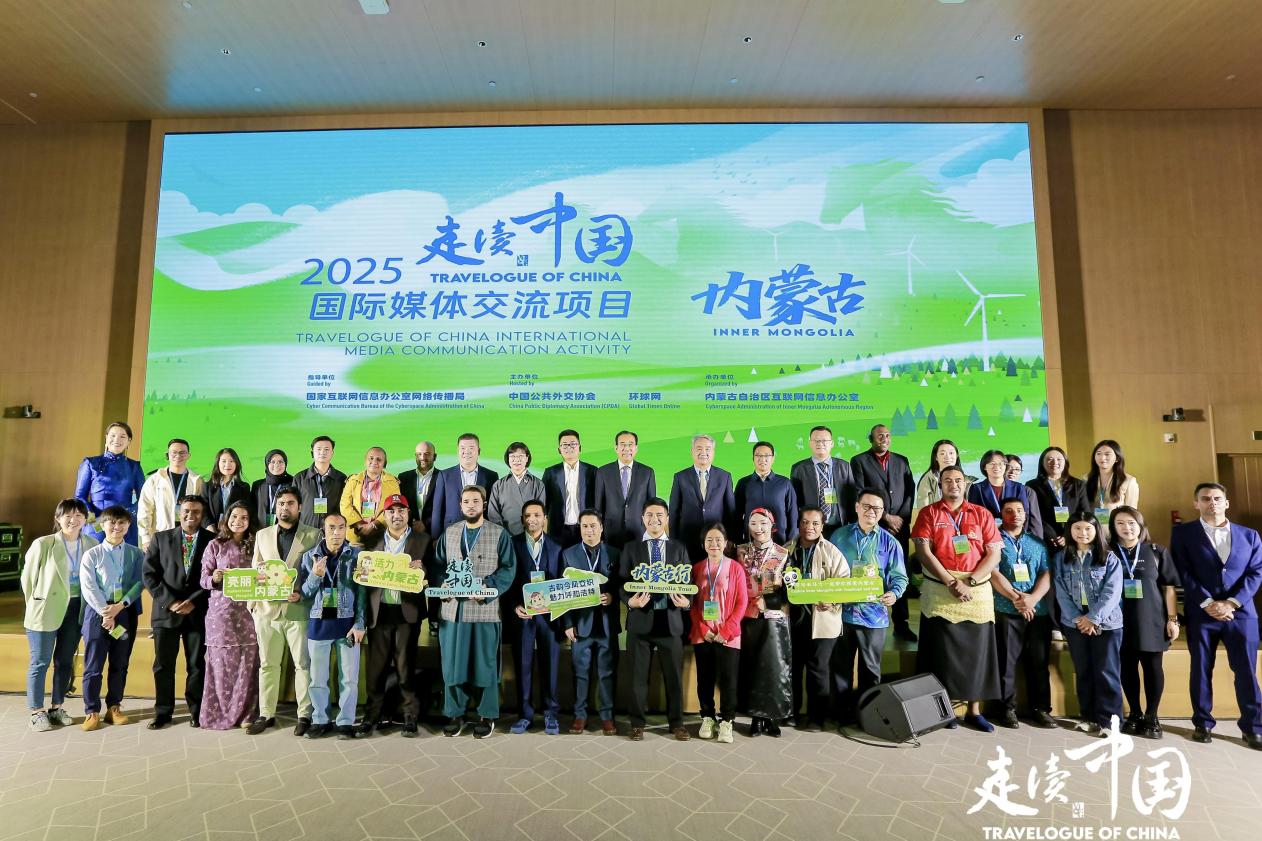
‘Travelogue of China 2025’ Inner Mongolia Tour Concludes, Highlighting Tech-Driven Growth and Global Cooperation
Globenewswire· 2025-05-19 08:07
Core Insights - The "Travelogue of China 2025" Inner Mongolia Tour emphasized the region's advancements in digital innovation, sustainable agriculture, and logistics development [2] Group 1: Digital Innovation - The tour showcased Inner Mongolia's emergence as a "cloud valley on the grasslands," highlighting its digital economy through landmarks like the Yungu Exploration Port and data centers [4] - Advanced technologies in pasture cultivation, smart farming, and intelligent manufacturing were observed at Yili's health valley and M·Grass, driving high-quality growth in animal husbandry [4] Group 2: Sustainable Agriculture - Agricultural innovation hubs such as the Cold-Tolerant Vegetable Academician Workstation and strawberry plant factories were visited, demonstrating Inner Mongolia's pioneering role in modern agriculture [4] - The region's focus on sustainable practices is evident in its agricultural initiatives, contributing to the overall growth of the sector [4] Group 3: Logistics Development - The Qisumu Logistics Park serves as an international hub for China-Europe freight trains and agro-product processing, attracting interest from foreign journalists regarding potential rail links [6] - The logistics network expansion is part of China's strategic planning, enhancing its global trade advantage [6] Group 4: Tourism Impact - The Wulanhada Volcano Geopark attracted 4.47 million tourists in 2024, generating RMB 3.73 billion in revenue and supporting thousands of local jobs, showcasing the region's tourism potential [5]
重磅!点名非粮饲料、微生物蛋白!继2023年后农业农村部再发文
合成生物学与绿色生物制造· 2025-04-30 10:09
【SynBioCon】 获 悉, 4月25日,农业农村部办公厅印发了《养殖业节粮行动实施方案》的通知。文件支持 充分挖掘利用非粮饲料资源 ,如 农作物 秸秆 等; 增补开发潜力较大的微生物、微藻、昆虫等新饲料原料 ;支持有序开展 发酵饲料产品生产许可 。 该文件是继 2023年8月 农业农村部发布的 《饲用豆粕减量替代三年行动方案》 之后再次明确持续推进饲料粮减量替代,推动养殖业节粮降耗、降本增 效。 正文如下: 农业农村部办公厅关于印发 《养殖业节粮行动实施方案》的通知 为贯彻落实党中央、国务院关于践行大食物观、构建多元化食物供给体系和粮食节约行动的部署安排,按照《农业农村部关于实施养殖业节粮行动的意 见》要求,在保障粮食和重要农产品稳定安全供给前提下,持续推进饲料粮减量替代,推动养殖业节粮降耗、降本增效,农业农村部制定了《养殖业节粮 行动实施方案》。现印发至各单位,请结合本地实际,细化目标任务,采取务实举措,认真抓好贯彻落实。 农业农村部办公厅 2025年4月25日 养殖业节粮行动实施方案 一、行动目标 统筹推进提效节粮、开源节粮、优化结构节粮三方面措施,力争到2030年,标准化规模养殖方式的每公斤动物产 ...