
Fisheries

Search documents
List of board nominees
English.Mubasher.Info· 2026-03-29 04:37
Group 1: Leadership and Experience - Engr. Majid Salim Said Al Fannah Al Araimi has been the Chairman of the Board of Directors of Galfar Engineering & Contracting SAOG since March 2017 and is involved in developing private companies and educational institutions in Oman [1] - Engr. Mohiuddin Mohammad Ali serves as Vice Chairman of PMA International LLC and MFAR Group, with extensive leadership experience in construction, hospitality, education, manufacturing, and real estate across multiple countries [3][4] - Mr. Mohammed Al Jamalani has over 30 years of experience in regulatory, financial legal fields, and capital markets, holding directorships in various organizations including Galfar and Liva Insurance [5] - Engr. Shihab Al Barwani has over 40 years of experience in the upstream oil & gas sector, specializing in project management and has worked with major companies like OQ and Shell [6] - Mr. Asim Salim Ali Al Ghailani is the Managing Director of Salim International Investment Holding Co. LLC, with over 25 years of experience in strategic planning and investment management [7][9] - Engr. Qais Mohammed Rashid Al Fannah Al Araimi has over six years of experience in civil engineering and construction management, currently leading operations within a diversified business group [10] - Mr. Seetharaman Sreedharan retired as Managing Partner of Ernst & Young, with extensive experience advising top global corporations in various sectors [11][12] - Dr. Hashil Al Mahrouqi is the CEO of OMRAN Group, focusing on tourism development in Oman, contributing to economic diversification and investment returns [13][14] - Mr. Salah Al Shamsi has over 28 years of experience in strategic leadership and management, currently leading strategic planning and risk management at Al Maha Petroleum [16] - Mr. Amer Al Jabri is a senior executive with over 25 years of experience across energy and industrial sectors, holding various high-level finance positions [18][19] Group 2: Educational Background - Engr. Majid Salim Said Al Fannah Al Araimi holds a BSc in Engineering Management from the University of Missouri, USA [1] - Engr. Mohiuddin Mohammad Ali has a Bachelor's degree in Civil Engineering from Carnegie Mellon University, USA [3] - Mr. Asim Salim Ali Al Ghailani holds an MSc in Investment Management from Bangor University, UK, and a Bachelor's degree in Finance from Oman [7] - Engr. Qais Mohammed Rashid Al Fannah Al Araimi has a BE (Hons) in Civil Engineering from the University of Nottingham and an MSc in Construction Management from the University of Reading [10] - Dr. Hashil Al Mahrouqi holds a PhD in Philosophy - Information Studies from Sultan Qaboos University and has multiple qualifications in investment and real estate management [15] - Mr. Amer Al Jabri holds an MSc in Finance & Banking and a BSc in Finance, along with executive certifications from prestigious institutions [19]



农业科技特派员(轻骑兵)12月报 | 省地联动服务产业,广东种业博览会打造农技推广新范式
Nan Fang Nong Cun Bao· 2026-02-03 05:05
Core Viewpoint - Guangdong is leveraging innovative approaches to address the "last mile" challenge in agricultural technology promotion, with the Guangdong Seed Expo serving as a key platform to showcase agricultural achievements and facilitate technology transfer [25][36][60]. Group 1: Agricultural Technology Promotion - The Guangdong Seed Expo has expanded its reach from 11 to 19 sub-venues by 2025, covering 15 cities and demonstrating over 5,000 new varieties and more than 40 supporting technologies [37][38]. - The event has facilitated the introduction of over 10,000 new varieties and the selection of nearly 500 suitable varieties, addressing practical agricultural production needs [30][31]. - The promotion of agricultural technology is crucial for enhancing public service, accelerating the transformation of scientific achievements, and driving rural industrial prosperity [32][34]. Group 2: Integration and Collaboration - A three-tiered collaborative mechanism has been established, involving provincial, municipal, and county levels to enhance agricultural technology promotion [26][45]. - The integration of various agricultural sectors, including seed breeding, planting, processing, and branding, is being emphasized to create a comprehensive development model [22][23]. - The Guangdong Seed Expo serves as a demonstration field for the integration of agricultural machinery and practices, as well as a testing ground for smart agriculture [51][60]. Group 3: Regional Development and Economic Impact - The promotion of high-value specialty crops, such as cherry tomatoes, has led to significant market success in the Guangdong-Hong Kong-Macao Greater Bay Area [23]. - The agricultural technology promotion system has contributed to a diversified regional service model, enhancing the overall agricultural industry in Guangdong [75]. - The integration of digital agriculture and smart farming technologies is being prioritized to improve efficiency and productivity in the agricultural sector [62][70]. Group 4: Training and Capacity Building - A multi-layered training system is being implemented to enhance the skills and capabilities of agricultural practitioners, focusing on both technical and managerial aspects [145][146]. - The training programs are designed to address the specific needs of various agricultural sectors, including specialty crops and livestock [152][158]. - The emphasis on talent cultivation is seen as essential for the sustainable development of rural industries and the overall agricultural landscape in Guangdong [144][145].

Budget measures will have moderately positive impact on FMCG sector: SBI report
The Economic Times· 2026-02-02 07:11
Core Insights - The Union Budget 2026 is expected to have a moderately positive impact on the fast-moving consumer goods (FMCG) sector, driven by proposals aimed at supporting rural income, agricultural productivity, and employment generation [6][7] Group 1: Agricultural Initiatives - The budget announced the launch of Bharat-VISTAAR, a multilingual AI tool designed to integrate agricultural information, which is expected to enhance farm productivity and positively affect rural consumption [6] - The integrated development of 500 reservoirs and Amrit Sarovars is aimed at strengthening the fisheries sector, supporting livelihoods linked to fisheries, and improving income levels in rural areas [6][3] Group 2: Employment and Income Generation - The government proposed support for the animal husbandry sector through entrepreneurship development, including a Credit-Linked Subsidy Programme and modernization of livestock enterprises, which are expected to boost rural employment and income [4][6] - Support for high-value crops such as coconut, sandalwood, cocoa, and cashew in coastal areas, as well as agar trees in the Northeast and nuts in hilly regions, is expected to improve farm incomes across various regions [6][4] Group 3: Market Access and Distribution - The establishment of Self-Help Entrepreneur (SHE) Marts as community-owned retail outlets is expected to strengthen local distribution networks and improve market access for rural producers [5][6] Group 4: FMCG Sector Outlook - The outlook for the FMCG sector remains cautiously optimistic, with expectations of continued easing of food and commodity inflation, improving rural sentiment, and steady employment conditions supporting consumption growth [6][7]

东西同心 绘就陇原乡村振兴新图景
Zhong Guo Fa Zhan Wang· 2026-01-22 12:03
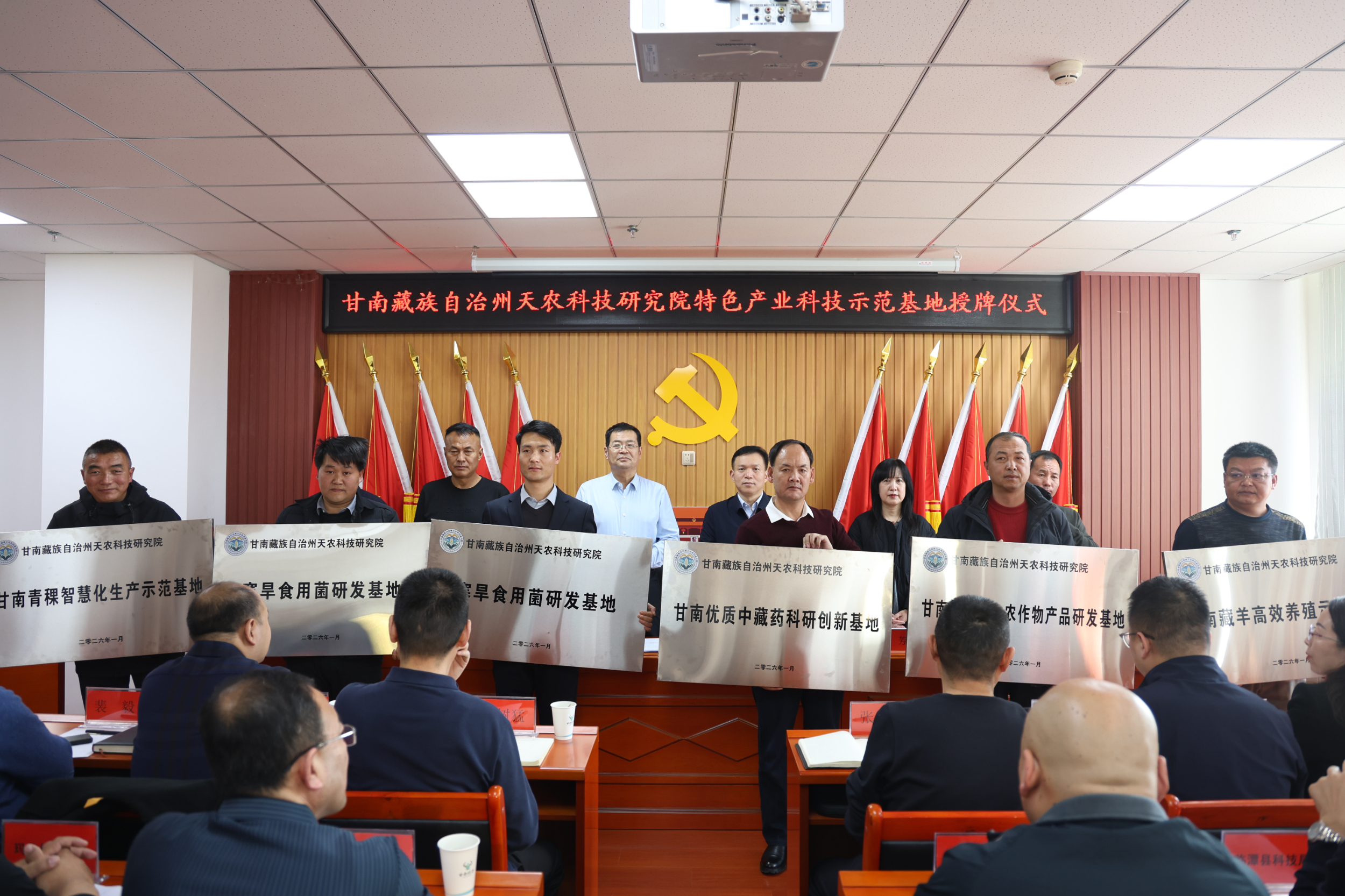
Core Viewpoint - The establishment of six specialized agricultural technology demonstration bases in Gannan Tibetan Autonomous Prefecture aims to enhance local agricultural development through advanced technology and collaboration with eastern regions, particularly Tianjin [2][3]. Group 1: Establishment of Technology Bases - Six specialized agricultural technology demonstration bases have been officially launched, including cold and drought-resistant edible mushroom research, high-efficiency yak breeding, and specialty crop product research [2]. - The collaboration is part of a broader initiative to leverage advanced agricultural technologies from eastern regions to support Gannan's agricultural development [2][3]. Group 2: Collaborative Efforts and Training - Gansu Province has implemented a comprehensive strategy for east-west technological collaboration, including annual work guidelines and training programs, resulting in the training of nearly 600 local technology talents [3][4]. - The establishment of a WeChat mini-program for "Tianjin Science Assistance" has created a technology service platform that integrates expert resources to provide remote support for farmers [4]. Group 3: Impact on Local Agriculture - The collaboration has led to the development of competitive agricultural clusters, such as "Tea Village" and "Potato Capital," significantly enhancing local agricultural competitiveness and optimizing agricultural structure [7]. - Specific examples include the expansion of freshwater aquaculture in Yongdeng County, which now covers 5,000 acres and generates an annual output of 1,500 tons of fish, valued at over 80 million yuan [7]. - The introduction of advanced apple cultivation techniques in Qin'an County has increased online sales to 40% of total sales, with the apple industry’s annual output value exceeding 6 billion yuan [7].
智慧渔业要闯三道“关”(新媒视点)
Ren Min Ri Bao· 2025-12-21 23:46
Core Viewpoint - The traditional fishing industry in China faces multiple challenges, including resource constraints, rising production costs, and environmental pressures, leading to the emergence of smart fisheries as a solution for modernization and sustainable development [1] Group 1: Current Challenges - The fishing industry is experiencing tightening resource constraints, increasing production costs, diversified market demands, and heightened ecological pressures [1] - Smart fisheries are being hindered by high costs and complexity of smart equipment, leading to reluctance among fishermen to adopt these technologies [2] - There is a lack of digital infrastructure in remote fishing areas, which limits the application of real-time monitoring and remote control technologies [2] - The aging workforce in the fishing industry has low digital literacy, resulting in underutilization of advanced systems [2] - Many smart fisheries projects focus on construction rather than sustainable operation, leading to a lack of long-term viability [2] - Data related to production, weather, market, and logistics is fragmented across various departments, creating "data silos" that hinder industry-wide collaboration [2] Group 2: Pathways for Development - To advance smart fisheries, it is essential to adapt technology to meet the real needs of the fishing industry, ensuring practicality and usability for fishermen [3] - A comprehensive big data platform covering the entire fishing industry chain is necessary to facilitate data sharing and integration across various sectors [3] - Establishing clear responsibilities and secure data sharing mechanisms will allow fishermen and enterprises to benefit from data-driven insights [3] - Training tools and applications should be developed to assist traditional fishermen and older aquaculture operators, ensuring they can keep pace with technological advancements [4] - Investment in new infrastructure, including stable communication networks and power supply in various fishing areas, is crucial for widespread adoption of smart technologies [4] - The development of smart fisheries should follow a principle of gradual implementation, balancing top-down planning with grassroots exploration [4] Group 3: Future Outlook - Smart fisheries are positioned to become a core driving force for the transformation and upgrading of the fishing industry, contributing to the revitalization of fishing areas and high-quality development [5] - The integration of smart fisheries into the broader context of digital China and agricultural modernization is expected to propel the industry forward [5]
山西智慧农业五年行动计划出炉 提出到2030年底农业生产信息化率力争达到35%左右
Xin Lang Cai Jing· 2025-12-20 03:25
Core Viewpoint - The "Shanxi Province Smart Agriculture Action Plan (2026-2030)" has been officially released, focusing on the integration of digital technology with agriculture to promote high-quality development in modern agriculture in Shanxi [1] Group 1: Development Goals - By the end of 2026, the agricultural production informationization rate is expected to reach over 30%, establishing initial smart agriculture public service capabilities [1] - By the end of 2028, the provincial agricultural and rural big data platform will be basically completed, with the informationization rate increasing to over 32% [1] - By the end of 2030, the aim is to achieve widespread promotion of smart equipment and technology models, with a target informationization rate of around 35% in key areas [1] Group 2: Key Tasks - The plan includes three main tasks, focusing on enhancing public service capabilities by building an agricultural and rural big data platform and developing smart agriculture models for breeding and disaster warning [1] - The plan aims to create a unified agricultural land map and establish digital archives for arable land, along with an integrated observation system [1] Group 3: Application Expansion - The action plan covers key industries such as grain and economic crops, livestock, and fisheries, promoting technologies like "Beidou+" precision planting and intelligent water and fertilizer integration in grain production [2] - In economic crops, the plan promotes smart management in vegetable and fruit orchards, while in livestock, it focuses on electronic records and precision environmental control [2] - The fisheries sector will emphasize factory-based recirculating aquaculture systems [2] Group 4: Implementation Support - To ensure the plan's implementation, a provincial-level work promotion mechanism will be established, along with increased financial support [2] - The plan aims to enhance the capabilities of grassroots agricultural technicians and new business entities in smart agriculture applications [2]

If My Neighbor is Unwell, Then So Am I | Dr. Jennifer Lemacks | TEDxSouthern Miss
TEDx Talks· 2025-12-19 17:29
Blue Economy & Human Health - The blue economy must include human health at its center, as strong coasts are built by strong, well people [1] - The current US food system costs $3 trillion annually due to diet-related diseases, lost productivity, and environmental damage [4] - Poor nutrition alone accounts for tens of billions of dollars in preventable healthcare costs [4] - The health of coastal communities is critical to the success of the Mississippi blue economy [6][11] Challenges & Disconnects - Fisher folk feel left behind by the blue economy, picturing a future that dishonors their traditions [2][3] - Coastal communities face realities like declining catches, floodwaters, and a lack of legacy for future generations [8] - Mississippi is a food-growing and Gulf state, yet it is the hungriest state in the nation, with poor health outcomes and unaffordable local food [12] - Global food systems may negatively impact local food systems [13] Solutions & Opportunities - Protecting the legacy of coastal communities means ensuring they are fit, fueled, and not demonized for global problems [11] - Blue economy resilience needs healthy people, as purpose, inclusion, and social support are critical for human health [15][16] - Inclusive innovation should leverage the knowledge, history, and power of coastal communities [17][18] - Innovations should involve the people they aim to serve as part of the solution, not collateral damage [20]

Where does your tuna actually come from | FT #shorts
Financial Times· 2025-11-21 11:06
Where does your tuna actually come from. Our investigation found a supply chain riddled with exploitation and abuse, where fishermen spend months or even years at sea, threatened, beaten, and deceived over pay. The International Labor Organization calls it forced labor, a form of modern slavery.And for the first time, we've directly linked this kind of abuse to the tuna found on British supermarket shelves, including Waitros, Sainsbur's, Tesco, Morrison's, and Asda. Workers talk of violations in two fisheri ...

千帆竞发飘动“浦发蓝”!浦发银行青岛分行助力涉海企业破浪前
Qi Lu Wan Bao Wang· 2025-09-26 05:53
Core Viewpoint - The article highlights the role of SPD Bank's Qingdao branch in supporting the marine economy through innovative financial products and services, enabling the growth of marine enterprises in Qingdao [1][6]. Group 1: Financial Support for Marine Enterprises - SPD Bank Qingdao branch has focused on the marine economy, providing tailored financial solutions to address the challenges faced by marine enterprises, particularly small and medium-sized fishing companies [2][3]. - The bank established a "financing task force" to conduct in-depth research on the characteristics of the deep-sea fishing industry and the asset value of fishing vessels, leading to innovative financing solutions [2][3]. - A combination guarantee model of "fishing vessel mortgage + marine usage rights mortgage" was introduced, successfully providing credit to a key industry player, enabling the upgrade of its fleet of 40 deep-sea fishing vessels [3][4]. Group 2: Support for Technology-Driven Marine Enterprises - SPD Bank Qingdao branch has developed a full lifecycle financial service system for technology-driven marine enterprises, helping them grow from startups to established companies [4][5]. - The bank created a customized financing plan for a marine health food manufacturer, utilizing a "marine usage rights mortgage + technology credit loan" model to secure higher mortgage limits and loan support [4][5]. - The bank's "浦科" product system includes five core products and seven financial service plans, designed to support marine enterprises at various stages of development [4][5]. Group 3: Building a Collaborative Ecosystem - SPD Bank Qingdao branch actively constructs a "government-bank-enterprise" ecosystem to promote deep integration of blue finance, facilitating collaboration among various stakeholders [7][8]. - The bank has organized events such as "Technology Salons" and supported competitions focused on marine technology innovation, fostering communication and cooperation among marine technology enterprises [7][8]. - The establishment of a specialized branch for marine finance marks a new chapter in the bank's commitment to supporting the blue economy in Qingdao [6][8]. Group 4: Achievements and Future Outlook - As of June 2025, SPD Bank Qingdao branch has served 1,200 marine enterprises and issued over 30 billion yuan in marine loans, demonstrating its significant impact on the blue economy [6][8]. - The bank aims to continue its partnership with marine enterprises, contributing to the sustainable development of the marine economy in Qingdao [8].

Consolidated Unaudited Interim Report of AS PRFoods for the 4th quarter and 12 months of 2024/2025 financial year
Globenewswire· 2025-08-29 13:19
Core Insights - The fourth quarter of the 2024/2025 financial year was challenging for the company due to market volatility and a weak economic environment in Estonia, particularly influenced by high food VAT rates affecting food producers and consumer demand [1][2] - The unaudited consolidated revenue for the fourth quarter was 3.8 million euros, a decrease of 15% compared to the same period last year, while the net loss decreased from 2.4 million euros to 0.6 million euros [2] - For the full financial year, the company reported a 10% increase in revenue to 18.9 million euros, with a net loss of 1.7 million euros, an improvement from 4.7 million euros in the previous year [3] Financial Performance - Fourth quarter revenue: 3.8 million euros, down 15% from 4.5 million euros in the same quarter last year [2][7] - Full year revenue: 18.9 million euros, up 10% from 17.1 million euros [3][12] - Fourth quarter EBITDA: -0.2 million euros, a decline from 0.0 million euros a year earlier [2][7] - Full year EBITDA: 0.2 million euros, an increase from -0.3 million euros [3][12] - Net loss for the fourth quarter: -0.7 million euros, improved from -2.6 million euros [7] - Full year net loss: -1.7 million euros, improved from -4.7 million euros [3][12] Operational Highlights - The UK production unit, John Ross Jr., continues to operate profitably and is experiencing growth with an increase in clients [4] - The Estonian unit has completed restructuring of production processes and aims to become the market leader in trout and salmon categories [5] - The company's brand reputation in Estonia is improving, with growing awareness of the Saare Kala brand and a positive association with quality [6] Key Ratios and Balance Sheet - Net debt as of June 30, 2025, was 13.9 million euros, down from 14.3 million euros a year earlier [10] - Equity decreased to 1.5 million euros from 3.2 million euros [10] - Liquidity ratio: 0.2, down from 0.3x [10] - ROE for the year was -70.0%, an improvement from -81.4% [10]
