
农业AI

Search documents
前荣耀AI实验室主任带队:用“超级大脑”接管农场,24小时不打烊
量子位· 2026-03-20 00:18
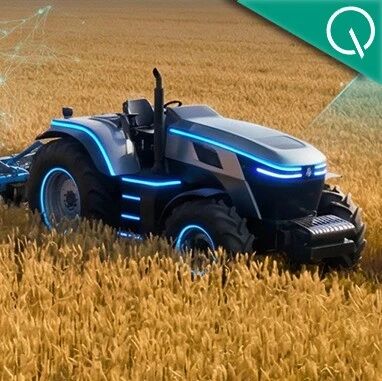
Core Viewpoint - The article discusses the innovative agricultural system called AlphaFarm, developed by Zhejiang Qiuwu Intelligent Technology, which aims to revolutionize farming by utilizing AI for autonomous decision-making and operations, addressing labor shortages and increasing agricultural efficiency [1][3][46]. Group 1: AlphaFarm Overview - AlphaFarm is described as the world's first autonomous decision-making unmanned farm system, capable of real-time monitoring and 100% autonomous execution [2][13]. - The system integrates advanced technologies, including a large agricultural language model (AgriLLM) and an iterative decision-reinforcement-cognition-optimization (IDRCO) engine, to enhance its decision-making capabilities [15][20]. Group 2: Team and Expertise - The founding team consists of experienced professionals from top tech companies and academic institutions, including AI veterans and experts in agriculture, which provides a strong foundation for the development of AlphaFarm [5][44]. - The team includes notable figures such as the founder Tang Yong, who has over 20 years of AI experience, and high-profile scientists who contribute to the system's academic rigor [5][44]. Group 3: Technological Innovations - AlphaFarm employs a multi-spectral inspection system that can analyze over 12 spectral bands for precise crop health diagnostics, achieving an accuracy rate of over 92% [26][27]. - The system's decision-making capabilities cover various agricultural scenarios, including planting planning, pest control, and real-time information retrieval, ensuring comprehensive support for farmers [21][24]. Group 4: Performance Metrics - The article highlights significant potential benefits of using AlphaFarm, including a reduction in labor costs by over 60%, an increase in operational efficiency by 3-5 times, and a yield improvement of 10-15% [49]. - AlphaFarm's evaluation framework, MAJE, assesses its performance across multiple dimensions, demonstrating its superiority over general AI models in agricultural decision-making [36][38][41]. Group 5: Future Aspirations - The ultimate goal of Qiuwu Intelligent Technology is to implement AlphaFarm across China's 1.8 billion acres of arable land, transforming the agricultural landscape through AI-driven solutions [51][54].

让AI技术“长”在泥土里
Ren Min Ri Bao· 2026-01-26 22:51
Core Insights - The "Shennong" model, developed by China Agricultural University, is a specialized AI model for agriculture, addressing the unique complexities of the agricultural sector and aiming to transform traditional farming practices into data-driven approaches [2][4]. Development - The Shennong model was initiated in 2020 to create a tailored AI solution for agriculture, recognizing that generic models often fail to meet the specific needs of the agricultural sector [2]. - A dedicated team built a core database by scanning over 3,000 agricultural books, resulting in a specialized database of 20,000 volumes to support the model's development [2][3]. - The model underwent rigorous data quality control processes, ensuring high-quality agricultural data was used for training [3]. - The Shennong model has evolved through several versions, with the 3.0 version launched in October 2025, featuring a lightweight architecture and 36 specialized intelligent agents for various agricultural tasks [4]. Applications - The Shennong model has been piloted in various regions, providing real-time data analysis and decision-making support for farmers, significantly reducing operational costs [6][7]. - In breeding, the model has successfully developed new crop varieties, such as the "Yanshi No. 2" lettuce, which shows improved yield and disease resistance [8]. - The "Policy Assistant" intelligent agent helps farmers navigate complex agricultural policies, streamlining access to information and reducing the burden on local officials [9]. Promotion - The adoption of the Shennong model is facilitated by user-friendly applications, such as the "Shennong Weitian" WeChat mini-program, which simplifies the process for farmers to diagnose crop issues [10]. - The "Technology Small Courtyard" model involves team members living and working alongside farmers to provide hands-on training and support, enhancing trust and acceptance of the technology [10]. - The upgraded 3.0 version of the model aims to lower the barriers for new farmers, enabling them to leverage AI tools for efficient farming practices [11].
AI如何升级现代农业?达沃斯讨论中的中国经验
第一财经· 2026-01-20 11:54
Core Viewpoint - The article emphasizes the growing importance of agriculture in discussions at the World Economic Forum, particularly in the context of AI as a key driver for productivity and resilience in food systems amid global economic and environmental challenges [3][4]. Group 1: AI in Agriculture - AI in agriculture is not hindered by technology but is approached with caution due to the complexity and sensitivity of real-world production systems [4]. - Unlike finance or internet sectors, agriculture lacks scalable applications despite having numerous concept validation projects. The challenges vary significantly between developed and emerging markets, with data fragmentation and infrastructure costs being major issues in developed regions, while usability for smallholders is critical in emerging economies [5]. - The low tolerance for error in agricultural technology adoption leads to a slower acceptance of new technologies compared to other industries, making caution a norm in the expansion of agricultural AI [5]. Group 2: Shift from Yield to Resilience - The focus of agricultural AI is shifting from merely increasing production to enhancing system resilience, as agriculture contributes significantly to greenhouse gas emissions and environmental degradation [7]. - Advanced data analysis and decision support technologies are beginning to reconcile the trade-off between increasing yields and reducing environmental impact, moving from a binary choice to a more manageable range of options [7]. - The discussion around food security is evolving from simply having food available to ensuring stability in food supply amidst various global risks [9]. Group 3: China's Role in Agricultural AI - China is viewed as a significant case study for agricultural AI practices, with a focus on systemic thinking that integrates technology, breeding, chemicals, machinery, and data into a cohesive production logic [11]. - The Chinese approach emphasizes practical applications of AI in specific scenarios like pest identification and weather risk assessment, making it more relevant to farmers' daily decisions [11]. - China's advancements in agricultural digitalization provide a practical testing ground for AI, with improved infrastructure and data accessibility facilitating the transition from demonstration projects to everyday decision-making [11].
AI如何升级现代农业?达沃斯讨论中的中国经验
Di Yi Cai Jing· 2026-01-20 00:32
Core Insights - The core focus of the discussions at the World Economic Forum is on agriculture as a critical area for innovation and stability, particularly in the context of global economic slowdown, climate risks, and geopolitical uncertainties [1] Group 1: AI in Agriculture - AI in agriculture is not hindered by technology but is approached with caution due to the complexity and sensitivity of real-world production systems [2] - The main challenges in agricultural AI differ by market; in developed markets, issues include data fragmentation and infrastructure costs, while in emerging economies, the usability of technology for smallholders is paramount [2] - The acceptance of new technologies in agriculture is slower compared to other industries due to the high stakes involved, where any misstep can directly impact farmers' livelihoods [2] Group 2: Shift from Production to Resilience - The importance of agricultural AI is increasingly linked to system resilience rather than just production volume, as agriculture contributes significantly to greenhouse gas emissions and environmental degradation [4] - Advanced data analysis and decision support technologies are beginning to reconcile the trade-off between increasing yield and reducing environmental impact [5] - The definition of food security is evolving from mere availability to stability, with technology playing a role in mitigating the impacts of extreme weather and geopolitical conflicts on food markets [5] Group 3: China's Role in Agricultural AI - China is viewed as a significant case study for agricultural AI practices, emphasizing a systemic approach that integrates technology, breeding, chemicals, machinery, and data [6] - The implementation of AI in China focuses on practical applications such as pest identification and weather risk assessment, making it relevant to farmers' daily decisions [6] - China's agricultural digitalization offers a model for other emerging markets, showcasing a pathway for data and AI to transition from pilot projects to everyday decision-making [6]

农业开源大语言模型“司农”发布
Xin Hua Wang· 2026-01-13 10:47
Core Insights - Nanjing Agricultural University has developed an open-source vertical large language model named "Si Nong" aimed at the general agricultural sector [1] - The model incorporates data from various sub-disciplines including animal science, agricultural economics, agricultural resources and environment, horticulture, smart agriculture, veterinary medicine, plant protection, and crop breeding, creating a comprehensive agricultural dataset [1] - "Si Nong" has been released in two parameter sizes: 8 billion and 32 billion, with an open-source strategy intended to lower the barriers for AI applications in agriculture [1] Data Collection - The dataset for "Si Nong" includes nearly 9,000 books, over 240,000 academic papers, and nearly 20,000 policies and standards, ensuring a robust foundation for agricultural research [1] Application and Innovation - The open-source approach is designed to facilitate secondary development and innovative applications by research institutions, enterprises, and developers, fostering an ecosystem for smart agriculture applications [1]
山西智慧农业五年行动计划出炉 提出到2030年底农业生产信息化率力争达到35%左右
Xin Lang Cai Jing· 2025-12-20 03:25
Core Viewpoint - The "Shanxi Province Smart Agriculture Action Plan (2026-2030)" has been officially released, focusing on the integration of digital technology with agriculture to promote high-quality development in modern agriculture in Shanxi [1] Group 1: Development Goals - By the end of 2026, the agricultural production informationization rate is expected to reach over 30%, establishing initial smart agriculture public service capabilities [1] - By the end of 2028, the provincial agricultural and rural big data platform will be basically completed, with the informationization rate increasing to over 32% [1] - By the end of 2030, the aim is to achieve widespread promotion of smart equipment and technology models, with a target informationization rate of around 35% in key areas [1] Group 2: Key Tasks - The plan includes three main tasks, focusing on enhancing public service capabilities by building an agricultural and rural big data platform and developing smart agriculture models for breeding and disaster warning [1] - The plan aims to create a unified agricultural land map and establish digital archives for arable land, along with an integrated observation system [1] Group 3: Application Expansion - The action plan covers key industries such as grain and economic crops, livestock, and fisheries, promoting technologies like "Beidou+" precision planting and intelligent water and fertilizer integration in grain production [2] - In economic crops, the plan promotes smart management in vegetable and fruit orchards, while in livestock, it focuses on electronic records and precision environmental control [2] - The fisheries sector will emphasize factory-based recirculating aquaculture systems [2] Group 4: Implementation Support - To ensure the plan's implementation, a provincial-level work promotion mechanism will be established, along with increased financial support [2] - The plan aims to enhance the capabilities of grassroots agricultural technicians and new business entities in smart agriculture applications [2]

中标千万级单产提升项目 小草数字“农业AI”战略落地加速
Zheng Quan Ri Bao Wang· 2025-10-29 13:46
Core Points - The project for improving corn yield in 2025 has been launched in the Togtoh County of Hohhot, Inner Mongolia, with a contract amount of 12.588 million yuan awarded to Xiaocao Digital Agriculture Ecological Co., Ltd [1] - Xiaocao Digital will implement a smart water and fertilizer integration system, contributing to the modernization of regional agriculture [1][2] - The project aims to optimize agricultural structure and upgrade the industry in Togtoh County, providing a model for Xiaocao Digital's business replication and regional promotion in smart agriculture [2] Company Summary - Xiaocao Digital has been recognized for its technical strength and market acceptance in the smart agriculture sector, which supports its future performance growth and potential transition to the Beijing Stock Exchange [1] - The company is leveraging "Agricultural AI + Smart Hardware" to create a closed-loop management model for precise resource allocation and intelligent crop management [2] - The project aligns with national food security strategies and the acceleration of agricultural modernization, positioning Xiaocao Digital to expand its order scale and enhance profitability [2]
博鼎集团跨界闯入农机市场 引领源头创新提升终端格局
Jing Ji Guan Cha Wang· 2025-10-28 04:57
Core Insights - Zhongnong Bodin Intelligent Agricultural Equipment Co., Ltd. made a significant debut at the China International Agricultural Machinery Expo, showcasing a comprehensive range of products and securing a large exhibition space [1][2] - The company is a subsidiary of Bodin Precision Technology Group and has developed a full lifecycle business model that integrates technology research, core component manufacturing, and complete machine assembly [2][3] - The agricultural machinery industry in China is characterized by a fragmented market with over 8,000 companies, leading to a significant technological gap compared to international competitors [3][4] - The introduction of intelligent tractors by Zhongnong Bodin aligns with national policies aimed at upgrading agricultural machinery, marking a pivotal moment for the industry [3][5] Company Overview - Zhongnong Bodin's tractors are primarily self-developed, with approximately 95% of the entire machine and 100% of core components produced in-house, making it unique in the global agricultural machinery sector [1][2] - The company has successfully launched an automated production line capable of producing 50,000 tractors annually, reflecting its commitment to innovation and efficiency [3][4] - The integration of core technologies allows Zhongnong Bodin to enhance performance while significantly reducing costs, with reported efficiency improvements of over 25% and energy savings of more than 10% compared to similar models [5][6] Market Dynamics - The Chinese agricultural machinery market is expected to undergo transformation due to the introduction of intelligent machinery, with Zhongnong Bodin positioned to lead this change [3][6] - The company has received substantial interest from dealers, with over 4,200 tractors ordered during the expo, indicating strong market demand [6] - By 2026, Zhongnong Bodin plans to reach an annual production capacity of 50,000 tractors and will also sell 50,000 powertrain systems to enhance the competitiveness of smaller enterprises in the industry [6]

大北农(002385) - 2025年10月24日投资者关系活动记录表
2025-10-26 08:08
Group 1: Overall Financial Performance - In the first three quarters of 2025, the company's total revenue reached 20.744 billion CNY, a year-on-year increase of 3% [3] - The net profit attributable to shareholders was 2.57 billion CNY, reflecting a significant year-on-year growth of 92.56% [3] - In Q3 2025, the company achieved a revenue of approximately 7.184 billion CNY, marking a year-on-year increase of 1.94% [3] Group 2: Revenue Breakdown by Business Segment - Feed products generated revenue of 13.423 billion CNY, a decline of 4.67%, accounting for 64.71% of total revenue [3] - The pig farming segment reported revenue of 4.903 billion CNY, a year-on-year increase of 49.03% [3] - Seed products achieved revenue of 513 million CNY, showing a remarkable growth of 81.07% [3] Group 3: Profitability Analysis - The feed segment contributed a profit of approximately 400 million CNY, while the pig farming segment also reported a profit of around 200 million CNY [3] - The seed segment incurred a loss of approximately 15 million CNY [3] - Total losses from other businesses and public expenses amounted to about 480 million CNY [3] Group 4: Cost Management - Selling expenses decreased by 3.58% to 817 million CNY, while management expenses fell by 5.66% to 1.019 billion CNY [3] - Financial expenses were reduced by 9.51% to 359 million CNY [3] Group 5: Business Segment Performance - In the feed business, external sales volume reached 4.0162 million tons, a year-on-year increase of 2.9% [4] - The pig farming segment saw an output of 3.1608 million pigs, generating revenue of 4.903 billion CNY [5] - The seed segment sold 20.44 million kilograms of crops, a significant increase of 151% year-on-year, with sales revenue exceeding 500 million CNY [5] Group 6: Seed Business Developments - The company ranked third among the top 20 enterprises in national seed sales, leading in the private seed industry [6] - The company has developed six nationally approved high-yield soybean varieties, contributing to domestic self-sufficiency [7] - The company holds a leading position in the domestic market for genetically modified traits, with 59% of approved corn varieties utilizing its traits [8]

2025世界农业科技创新大会在京举行
Jing Ji Ri Bao· 2025-10-17 00:13
Core Insights - The 2025 World Agricultural Technology Innovation Conference (WAFI) opened in Beijing, focusing on "Practicing the Big Food Concept and Building a Resilient Food Supply System" with nearly 800 participants from around 100 countries and regions discussing global agricultural technology issues [1][2] Group 1: Conference Overview - The conference has gained significant influence since its inception in 2023, serving as a high-end platform for international cooperation and innovation in agricultural technology [2] - The event is co-hosted by several prominent organizations, featuring a comprehensive framework that includes an opening ceremony, seven thematic meetings, a World Agricultural Technology Expo, and over 40 parallel meetings and international exchange activities [2] - The expo covers approximately 10,000 square meters with over 150 exhibitors, showcasing various national and international agricultural innovations [2] Group 2: Global Cooperation and Challenges - Kenneth Quinn, Honorary Chairman of the World Food Prize Foundation, emphasized Asia and China as key players in addressing global food security challenges, projecting a global population of 10 billion by 2049 [3] - Experts from various countries expressed a desire to deepen agricultural cooperation with China, highlighting the value of the WAFI as an international exchange platform [3][4] Group 3: Technological Advancements - Enhancing agricultural productivity is crucial for building a resilient food supply system, with calls for increased international agricultural technology cooperation and investment in developing countries [5] - The conference highlighted the importance of modern technologies such as genome editing, AI, and machine learning in addressing global food system challenges [5][6] - The release of the Shennong Model 3.0 by China Agricultural University marks a significant advancement in agricultural AI, providing comprehensive agricultural knowledge and decision-making capabilities [7]