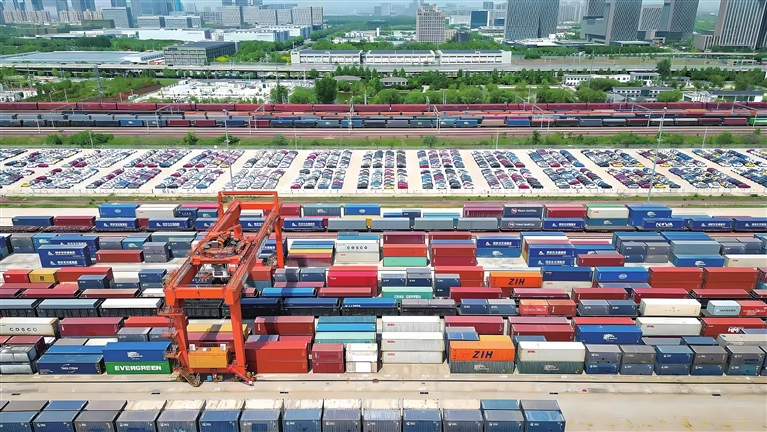
Cross - border E - commerce

Search documents
南京市玄武区发布2026年优化营商环境行动方案 首次将促进一人公司发展写入
Yang Zi Wan Bao Wang· 2026-02-26 07:15
Core Viewpoint - The "Xuanwu District 2026 Action Plan for Optimizing the Business Environment" aims to create a more efficient, cost-effective, and service-oriented development ecosystem through six key dimensions: industrial ecology, service efficiency, rights protection, institutional openness, resource empowerment, and supply-demand matching [1][2]. Group 1: Industrial Development - Xuanwu District plans to introduce over 60 flagship stores in 2026 and will focus on developing data industry clusters, leveraging the Xuanwu Large Model Factory to create benchmark scenarios like "AI + Cultural Tourism" [1][2]. - The district will promote the construction of the "Digital Carbon Valley" and a green low-carbon service platform while upgrading traditional industries through key projects like the renovation of the Nanjing Cultural and Arts Center [1][2]. Group 2: Government Services - The core goal of the action plan is to make business operations easier and more secure by implementing integrated services for market entities throughout their lifecycle and deepening the "efficient handling of one matter" reform [2]. - The plan includes support for the development of One-Person Companies (OPC) and the establishment of the "Xuanwu Modular Academy" to create a comprehensive AI talent training platform [2]. Group 3: Rights Protection and Regulation - The action plan emphasizes a clear and efficient rights protection system through inclusive and prudent regulation, credit benefits for enterprises, fair competition, and commercial mediation [2][3]. - It will implement smart regulation through "scan to enter" methods and reduce redundant inspections while exploring flexible regulatory approaches [2]. Group 4: Open Economy - The plan focuses on high-level openness in areas such as cross-border e-commerce, intellectual property protection, and China-Central Asia trade, aiming to create a stable and transparent foreign business environment [3]. - Xuanwu District will introduce a one-stop service for foreign notarization and consular certification, enhancing the convenience of foreign services [3]. Group 5: Resource Allocation - The action plan aims to build a mechanism for market-oriented allocation, precise supply, and efficient circulation of key resources like technology, talent, and data [4]. - It will promote the transformation of scientific and technological achievements and establish a layered collaborative industrial fund structure [4]. Group 6: Supply-Demand Matching - Xuanwu District will implement a regular, precise, and platform-based supply-demand matching mechanism, enhancing the functionality of platforms like "Xuanwu Release" and "Xuanwu Enterprise Services" [4]. - The district will organize activities to facilitate policy delivery and resource matching, aiming to boost regional industrial competitiveness [4]. Group 7: Future Outlook - In the coming year, Xuanwu District aims to enhance its reputation as a business-friendly environment, injecting strong momentum into regional high-quality development [5].
APEC“中国年”通关便利化不断升级 中国制造优品“丝滑”走向世界
Yang Shi Wang· 2026-02-09 12:55
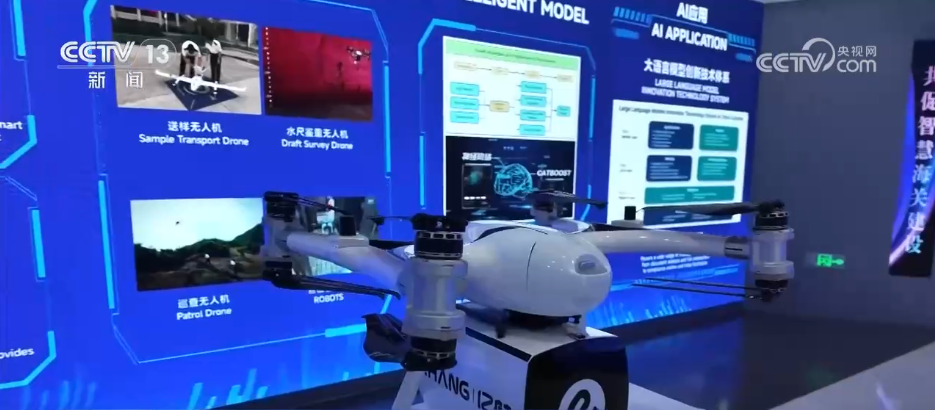
Group 1: Smart Customs Development - The APEC "China Year" event in Guangzhou focuses on "AI applications" and "cross-border e-commerce customs clearance" as key projects for the Asia-Pacific region [1] - China's smart customs construction is accelerating, leveraging technology to ensure efficient management of import and export goods [1][3] - The Huangpu Customs Equipment Management Center integrates 18 representative smart customs devices, enabling interconnected and intelligent collaboration [3] Group 2: Advanced Inspection Technologies - Customs officers now use a single smart inspection device that consolidates multiple functions, enhancing operational efficiency and data security [5] - The "Wood Identification" smart recognition equipment at Dongguan Port allows for rapid wood species identification, reducing the identification time from 10 days to under 10 minutes [6] - The smart customs model utilizes AI to analyze vast amounts of data for precise risk identification and control, positioning China as a leader in customs technology application [8] Group 3: Cross-Border E-Commerce Facilitation - Guangdong province aims to establish a stable channel for cross-border e-commerce, with projected import and export value accounting for one-third of the national total by 2025 [10][12] - The province benefits from a robust logistics system and innovative measures to enhance cross-border trade facilitation, including a "one-stop" customs clearance model [12] - The introduction of a cross-border e-commerce export consolidation model in special customs supervision areas supports efficient handling of returns and reduces logistics costs by 30% [16][18] Group 4: Logistics and Return Management - Cross-border logistics is essential for e-commerce, with return platforms enhancing customer trust and loyalty [14] - The integration of logistics and return platforms has evolved from a supportive role to a core competitive advantage for cross-border e-commerce [18] - Guangdong's innovative policies are expected to save companies approximately 1 billion yuan in logistics costs by 2025, promoting the growth of cross-border e-commerce [18]

一辆摩托车拉出10个亿,它要上市了
创业邦· 2026-02-03 09:09
Core Viewpoint - The article highlights the journey of WOOK, a company founded by Xu Longhua, from a small startup in Indonesia to a significant player in the cross-border e-commerce sector, emphasizing the importance of building trust and a robust business ecosystem in a fragmented market [5][31]. Group 1: Company Background and Development - In 2010, Xu Longhua, previously working at TCL, was inspired by the fragmented Southeast Asian market and decided to create a reliable option for consumers, leading to the establishment of WOOK [6][10]. - WOOK started with a focus on mobile accessories under the brand VIVAN, promoting a one-year warranty, which was initially met with skepticism but eventually gained traction as consumers recognized the value of quality assurance [11][13]. - By 2017, WOOK evolved from a brand manufacturer to a central hub for the retail network, investing over 200 million yuan to build a comprehensive digital system that integrates design, procurement, warehousing, logistics, sales, and after-sales services [18][19]. Group 2: Business Model and Strategy - WOOK's operational model emphasizes deep local engagement, with around 1,700 local employees acting as digital consultants to help small retailers integrate into modern commerce [19][20]. - The company has developed a dual product strategy, offering both proprietary brands and partnerships with well-known brands to meet diverse consumer needs [19][20]. - WOOK has also established a strong online presence, launching flagship stores on platforms like Shopee and Tokopedia, and building a network of over 100,000 local KOLs to drive sales through social media [20][25]. Group 3: Financial Performance and Market Position - WOOK's financials show a steady growth trajectory, with projected revenues of 908.36 million yuan in 2023, increasing to 1.05 billion yuan in 2024, and a net profit growth from 47 million yuan to 62 million yuan over the same period [29][30]. - The company maintains a strong market position in Indonesia, ranking first among Chinese cross-border companies in the 3C accessories sector and sixth in small appliances, contributing over 90% of its revenue from the Indonesian market [31]. Group 4: Future Outlook - WOOK is set to submit its IPO application to the Hong Kong Stock Exchange in 2026, marking a significant milestone in its growth journey [27]. - The company aims to continue building a trustworthy network and infrastructure in Indonesia, demonstrating a commitment to long-term growth rather than short-term gains [26][32].

2025年跨境电商行业年度报告-AMZ123
Sou Hu Cai Jing· 2026-01-25 08:36
Core Insights - The cross-border e-commerce industry is entering a dual transformation period characterized by "rule reconstruction and value upgrading" by 2025, with a shift from scale expansion to quality and efficiency [1] Market Overview - The global e-commerce market is steadily growing, with sales expected to reach $6.419 trillion by 2025, accounting for 20.5% of total retail sales, and projected to increase to $7.89 trillion by 2028 [1] - Regional markets show differentiated characteristics, with North America and Europe remaining core markets, while emerging markets in Southeast Asia, the Middle East, and Latin America are becoming the main growth drivers with double-digit growth rates [1] China Cross-Border E-Commerce - China's cross-border e-commerce demonstrates strong resilience, with total import and export value reaching 1.37 trillion yuan in the first half of the year, a year-on-year increase of 10.3%. However, growth slowed in the second half due to U.S. policy impacts, with low-value goods exports to the U.S. declining by 51% and exports to Europe increasing by 47% [1] Key Industry Changes - Ten key changes are reshaping the development landscape, including multi-polar market layouts, semi-managed localization, deepening AI applications, increased compliance thresholds, and social content becoming a primary arena [1] - The market is accelerating "de-Americanization," with 81% of U.S. sellers planning to expand into other markets, with Europe as the preferred choice [1] Platform Competition - Platform competition has shifted from "one strong player and many strong competitors" to "multi-dimensional mixed battles," with Amazon consolidating its position through low-price strategies and compliance upgrades, while Temu, SHEIN, and TikTok Shop are advancing managed model iterations and localization [1] Consumer Trends - The global online shopping user base has reached 2.77 billion, with 90% shopping via smartphones. The primary motivation for cross-border shopping is low prices (51%), while core barriers include fraud concerns (52%) and delivery times (46%) [2] - Social e-commerce is on the rise, with 70% of consumers shopping on social platforms, and Gen Z favoring channels like TikTok and Instagram. AI shopping tools, such as virtual try-ons and smart guides, have over 70% acceptance [2] Policy Developments - The domestic cross-border e-commerce pilot zones have expanded to 178, with zero-tariff products in Hainan Free Trade Port being increased. Multiple countries are adjusting tariff policies, with the U.S. raising tax rates on China and the EU and UK removing the small package tax exemption, significantly increasing compliance costs [2] Seller Ecosystem - The seller ecosystem is characterized by "total volume contraction and head growth," with Amazon China sellers accounting for over 50%. However, performance differentiation is evident, with over 70% of sellers experiencing revenue declines. Full-chain operations and brand-building capabilities are becoming key competitive factors [2] Future Directions - The "cross-border e-commerce + industrial belt" model, channel diversification, and localized operations will continue to drive industry development. AI empowerment and social content marketing are becoming core competitive advantages, while compliance and value deepening are critical directions for companies to break through [2]

实现“秒级清关”的关键:自建保税仓对接海关系统全指南
Sou Hu Cai Jing· 2026-01-20 10:50
Core Insights - Bonded warehouses serve as a "compliance lifeline" for cross-border e-commerce, significantly enhancing customs clearance efficiency and reducing operational costs [1] - The integration with customs systems is crucial for achieving seamless data exchange, which directly impacts the speed of customs clearance and operational costs [1] Group 1: Importance of Customs System Integration - Bonded warehouses are special customs-regulated areas where all goods entering and leaving must be monitored and approved by customs in real-time [3] - The primary goal of integration is to achieve "list release and summary declaration," where each order must be declared to customs and approved for release [3] Group 2: Key Processes for Customs Integration - The process involves transmitting "three documents" data: order, payment, and logistics, along with the cross-border e-commerce retail import declaration list [4] - The system automatically compares data from e-commerce platforms, payment companies, logistics firms, and the warehouse management system (WMS) with customs data [4] - Upon successful comparison, the declaration is automatically approved, allowing the package to be released from the bonded area [4] Group 3: Steps for Building a Self-Managed Bonded Warehouse - The first step is to obtain customs integration qualifications by applying for data transmission permissions and submitting necessary materials [5][6] - The second step involves developing and debugging interfaces according to customs-provided standard API specifications, covering over 20 functions [7] - The third step requires converting internal product information into customs-recognized formats, with accurate HS codes being critical for clearance success [9] - The fourth step emphasizes ensuring real-time and stable access to customs systems, especially during peak periods [10] - The fifth step is to establish an exception handling mechanism to manage rejected declarations due to discrepancies [11] Group 4: Advantages of Professional Bonded Warehouse Systems - Choosing a mature third-party bonded warehouse system is often more efficient and stable than self-developed systems [12] - Key advantages include shorter development cycles (1-4 weeks vs. 6-12 months), lower initial investment, and shared compliance risk with service providers [12] - Professional systems offer standardized API interfaces, full-chain visibility, and lightweight SaaS models for quick integration [13] Group 5: Decision-Making: Self-Developed vs. Third-Party Systems - Self-developed systems are suitable for large enterprises with strong technical capabilities but require significant investment and time [15] - Third-party systems are ideal for most businesses, especially small to medium-sized cross-border merchants, allowing for quick deployment and reduced trial costs [15] - Experience shows that over 90% of declaration risks can be mitigated through built-in system rules, leveraging extensive historical data [15] Group 6: Conclusion - Efficient collaboration between bonded warehouse systems and customs is essential for operations, with the choice between self-developed and third-party systems depending on technical capabilities, funding, and business needs [16] - Companies are encouraged to assess their resources and utilize established experiences and tools to enhance customs clearance processes [16]
Farmmi’s U.S. subsidiary, Suppchains, achieves significant regulatory milestone
Yahoo Finance· 2026-01-15 12:05
Core Insights - Farmmi's U.S. subsidiary, Suppchains Group, has achieved a significant regulatory milestone by receiving its official Food Facility Registration from the U.S. FDA, which is crucial for its operations in the food logistics sector [1] Group 1: Regulatory Achievement - The warehousing facility in Chino, California, has been assigned Registration Number 11416872272 by the U.S. FDA, allowing the company to operate legally in food-related warehousing and logistics [1] - This FDA registration is a decisive step in constructing a comprehensive, high-compliance logistics ecosystem for Farmmi [1] Group 2: Business Operations - Farmmi is focused on providing one-stop solutions for cross-border e-commerce through a technology-driven global supply chain service [1] - The company can now lawfully conduct various logistics services, including warehousing, distribution, storage, shipment, and inventory management for food products, dietary supplements, and certain agricultural products in compliance with U.S. federal regulations [1]

1 Stock I'd Buy Before Opendoor Technologies (OPEN) in 2026
Yahoo Finance· 2026-01-07 12:45
Core Insights - Opendoor Technologies has experienced significant stock volatility, ending 2025 up 264% but has faced declines recently due to changing market conditions and investor sentiment [1][2] - The company has undergone leadership changes with a new CEO, Kaz Nejatian, who has outlined a strategy aimed at growth despite a challenging real estate market [2][6] - Opendoor's business model involves digital iBuying, which is capital-intensive and currently hindered by low housing inventory as homeowners hold onto lower mortgage rates [4][5] Company Strategy - The new CEO plans to shift focus from acquiring lower-quality homes to purchasing better properties with a lower spread, aiming to enhance volume and efficiency [6] - The use of artificial intelligence is emphasized to improve pricing strategies and operational efficiency, which could potentially lead to a turnaround for the company [4][6] Market Context - The current housing market presents challenges for Opendoor, as fewer homeowners are selling, leading to a constrained inventory that affects business cycles [5] - Despite the risks, there is potential for growth if the new strategies are successfully implemented, which could make Opendoor an attractive investment in the future [7]


深圳跨境电商 “大卖”一万亿
Shen Zhen Shang Bao· 2026-01-01 21:48
Group 1 - Strong corporate strength is highlighted as a key factor for growth [1] - A comprehensive ecosystem is established to support business operations [1] - Innovative development models are being adopted to enhance competitiveness [1] Group 2 - Multiple policy benefits are contributing to the favorable business environment [1]
马来西亚中华总商会人工智能组主任:中企出海促东南亚产业升级
2 1 Shi Ji Jing Ji Bao Dao· 2025-12-30 04:59
Group 1: AI's Impact on ASEAN and Malaysia - The AI industry is projected to contribute 10% to 18% growth in ASEAN's GDP by 2030, creating over $1 trillion in potential value [1] - Malaysia views AI as a core path to national modernization, enhancing quality of life and improving efficiency for businesses [4][5] - Traditional industries are expected to be reshaped and upgraded through AI integration rather than being simply eliminated [4][5] Group 2: Malaysia's AI Development Strategy - Malaysia plans to establish a National AI Office in December 2024 to promote the AI ecosystem and develop relevant policies [3] - The AI Office will collaborate with the Ministry of Investment, Trade and Industry to implement AI technologies across various sectors [3] - The government has allocated funds in the 2023 budget to support technology education, aiming to prepare the workforce for AI applications [5] Group 3: Collaboration with China - Malaysia and China have a strong trade relationship, with China being Malaysia's largest trading partner for 16 consecutive years [6] - The two countries are expected to deepen cooperation in emerging technologies, including AI, with Malaysia aiming to be among the top 20 AI economies by 2030 [5][6] - Chinese tech companies have successfully entered the Malaysian market, providing various services and products that enhance local development [9] Group 4: AI in Traditional Industries - AI is seen as essential for enhancing sectors like services, agriculture, and logistics, which will not be replaced but rather empowered by technology [5] - The integration of AI can lead to new business models and structural changes in traditional industries, especially in labor-intensive sectors [5] - A proposed "AI scoring system" could help evaluate foreign labor, showcasing AI's potential to create self-regulating mechanisms in the workforce [5] Group 5: China's AI Industry - China is recognized for having a complete AI industry chain, driving the sector towards high-end development [7] - The rapid advancements in AI in China are characterized by speed, strong implementation, and high cost-effectiveness [7] - China's AI ecosystem is extensive, covering data, chips, models, and applications, contributing to its robust growth [7]
奋进的河南 决胜“十四五”·郑州篇丨于开放处听潮声 在烟火中见韧性
He Nan Ri Bao· 2025-12-01 00:24
Core Insights - Zhengzhou is emerging as a significant hub for international trade and commerce, showcasing rapid growth in cross-border e-commerce and foreign trade, with a projected total trade volume exceeding 605 billion yuan in 2025 [4][10] - The city is actively enhancing its open economy through innovative policies and infrastructure improvements, positioning itself as a leader in the central region of China [4][8] Group 1: Open Economy and Trade Growth - Zhengzhou's cross-border e-commerce transaction volume is expected to reach 160 billion yuan in 2025, with an annual growth rate of 11.5% during the 14th Five-Year Plan period [4] - The city's foreign trade import and export total reached 508.6 billion yuan from January to October 2025, marking an 18% year-on-year increase, significantly outpacing the national average [4] - Zhengzhou has established itself as a key player in the "Digital Silk Road," with innovative customs practices and a robust logistics network supporting its trade ambitions [4][9] Group 2: Investment and Business Environment - From January to October 2025, Zhengzhou signed new investment projects totaling 733.98 billion yuan, with expectations to reach 840 billion yuan by year-end [10] - The city is shifting its investment strategy from broad outreach to targeted efforts, focusing on advanced manufacturing and modern services [10][11] - Zhengzhou has implemented reforms to create a stable and transparent business environment, enhancing its attractiveness for foreign investment [11][12] Group 3: Consumer Market and Economic Activity - The retail sales of consumer goods in Zhengzhou are projected to exceed 2.8 trillion yuan during the 14th Five-Year Plan, with a growth rate of approximately 4.1% [14] - The city has seen a significant increase in high-quality commercial developments, enhancing its retail landscape and attracting regional consumers [15] - Various promotional activities have been organized to stimulate consumption, resulting in a direct boost of 3 billion yuan to the local economy [17] Group 4: Logistics and Infrastructure Development - Zhengzhou has added 14 new A-level logistics companies in 2025, positioning itself among the top ten cities in China for logistics efficiency [18] - The city has developed a comprehensive logistics network that supports rapid delivery and supply chain stability, ensuring the availability of essential goods [18] - The establishment of the Central Plains International Convention and Exhibition Center has bolstered Zhengzhou's position in the domestic exhibition industry, hosting numerous events and generating significant economic activity [22]