
ICT服务管理

Search documents
贸促会发布新一期全球经贸摩擦指数,欧盟升至榜首
第一财经· 2026-01-28 11:31
Core Viewpoint - The article highlights the increasing trade friction between the EU and China, driven by the EU's recent measures that disproportionately affect Chinese companies, particularly in key industries such as semiconductors and rare earth materials [3][4][5]. Group 1: Trade Friction and Measures - The EU has recently intensified its trade friction measures, surpassing the US in the amount of anti-subsidy and anti-dumping investigations initiated, marking a significant shift in the global trade landscape [3]. - In November 2025, the trade friction index for China recorded a high of 101, with the EU having the highest index among 19 countries, particularly affecting critical sectors like semiconductors and rare earth magnets [3][4]. - Despite the high index, the absolute monetary value of trade friction measures against China decreased by 12.4% year-on-year and 2.4% month-on-month [3]. Group 2: Discriminatory Measures Against Chinese Companies - The EU has increased unreasonable discriminatory measures against Chinese enterprises, including the implementation of the Carbon Border Adjustment Mechanism (CBAM), which sets excessively high default values for carbon emissions from Chinese products [5]. - New EU regulations require member states to exclude "high-risk suppliers" in 18 critical industries, unjustly labeling certain Chinese companies as high-risk and limiting their participation in 5G infrastructure [6]. - The Chinese Ministry of Commerce has criticized these actions as unfair and discriminatory, urging the EU to provide a fair and transparent business environment for Chinese companies [6]. Group 3: Chinese Companies' Investment Outlook - In 2025, China's foreign direct investment grew by 7.1%, indicating a strong demand for Chinese companies to expand internationally [8]. - A survey of over 1,200 Chinese companies revealed that nearly 80% intend to maintain or expand their foreign investment, with 90% expressing optimism about the future of Chinese overseas investments [8]. - The Chinese government is enhancing its overseas service systems to support companies in their international ventures, with initiatives like the "Thousand Groups Going Abroad" program facilitating business negotiations in 92 countries [9].

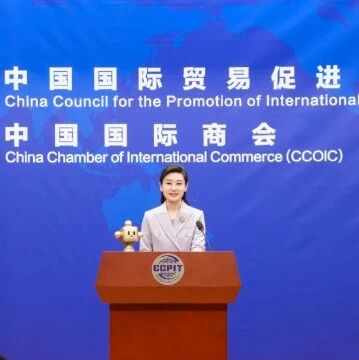
贸促会发布新一期全球经贸摩擦指数,欧盟升至榜首
Di Yi Cai Jing· 2026-01-28 08:19
Core Viewpoint - The European Union (EU) has increased unreasonable discriminatory measures against Chinese enterprises, exacerbating global trade frictions in a complex international trade environment [1][3]. Group 1: EU Measures Against Chinese Enterprises - The EU has intensified its anti-subsidy and anti-dumping investigations, surpassing the US in the amount of trade friction measures, which now exceed the latter's for the first time in 16 months [1]. - The trade friction index related to China reached 101 in January, indicating a high level of tension, with the EU having the highest index among 19 countries [1]. - The EU's carbon border adjustment mechanism (CBAM) has set significantly high default values for carbon emissions from Chinese products, disregarding China's achievements in green and low-carbon development [3]. Group 2: Chinese Response and Investment Outlook - The Chinese Ministry of Commerce criticized the EU's use of non-technical standards to restrict Chinese enterprises, claiming it distorts the market and threatens supply chain security [3][4]. - Chinese enterprises are optimistic about "going global," with a projected 7.1% increase in foreign direct investment by 2025, maintaining a top-three position globally for nine consecutive years [5]. - A survey indicates that nearly 80% of Chinese enterprises intend to expand or maintain their foreign investment, with 90% showing an increased willingness to use RMB for overseas investments [5][6]. Group 3: Support for Chinese Enterprises - The China Council for the Promotion of International Trade (CCPIT) is enhancing services for enterprises going abroad, including organizing business negotiations and improving the overseas service system [5][6]. - The CCPIT aims to create a comprehensive digital service ecosystem for enterprises, leveraging big data and artificial intelligence to support their international expansion [6].
中方回应欧盟:坚决反对
Xin Lang Cai Jing· 2026-01-22 09:56
Core Viewpoint - The Chinese government expresses serious concerns over the EU's recent decision to classify certain Chinese companies as "high-risk suppliers," which restricts their participation in critical sectors like 5G construction [1] Group 1: EU's Actions - The EU has mandated member states to exclude "high-risk suppliers" in 18 key industries, including energy, transportation, and ICT services [1] - This classification is seen as discriminatory against Chinese companies, which have been operating in Europe legally and providing quality products and services [1] Group 2: China's Response - The Chinese government firmly opposes the EU's actions, viewing them as an attempt to politicize economic issues and generalize security concerns [1] - The Chinese stance emphasizes the contribution of Chinese enterprises to the development of Europe's telecommunications and digital industries [1]
商务部:坚决反对欧盟将部分中国企业列为高风险供应商
21世纪经济报道· 2026-01-22 08:21
Core Viewpoint - The Chinese government expresses serious concerns over the EU's recent decision to classify certain Chinese companies as "high-risk suppliers," which restricts their participation in 5G infrastructure development [1]. Group 1: EU's Actions - The EU has mandated member states to exclude "high-risk suppliers" in 18 critical sectors, including energy, transportation, and ICT services [1]. - The classification of Chinese companies as high-risk suppliers is seen as discriminatory and politically motivated by the Chinese government [1]. Group 2: China's Response - Chinese enterprises have been operating in Europe in compliance with local laws, providing quality products and services that contribute to the development of the European telecommunications and digital industries [1]. - The Chinese government firmly opposes the EU's actions, viewing them as an unjustified politicization and securitization of economic issues [1].
商务部:坚决反对欧盟将部分中国企业列为高风险供应商
第一财经· 2026-01-22 07:36
Group 1 - The European Union has recently issued a document requiring member states to exclude "high-risk suppliers" in 18 critical industries, including energy, transportation, and ICT services [1] - China expresses serious concerns regarding the EU's classification of certain Chinese companies as high-risk suppliers without factual basis, which restricts their participation in 5G construction [1] - The Chinese government opposes the EU's discriminatory actions against Chinese companies and the politicization and securitization of economic issues [1]

商务部:坚决反对欧盟将部分中国企业列为高风险供应商
Xin Hua She· 2026-01-22 07:14
Core Viewpoint - The Chinese government expresses serious concerns over the EU's recent decision to classify certain Chinese companies as "high-risk suppliers" in 18 critical sectors, including energy, transportation, and ICT services, which restricts their participation in 5G infrastructure development [1]. Group 1: EU's Actions - The EU has mandated member states to exclude "high-risk suppliers" from key industries, impacting Chinese companies [1]. - The classification of Chinese firms as high-risk is made without factual basis, according to the Chinese government [1]. Group 2: China's Response - China emphasizes that its companies have been operating in Europe in compliance with local laws, providing quality products and services that contribute to the development of the European telecommunications and digital industries [1]. - The Chinese government firmly opposes the EU's discriminatory practices and the politicization of economic issues [1].