
Soft Drinks

Search documents
Ford to recall over 254,600 U.S. vehicles over issues with assistance features, NHTSA says
Reuters· 2026-03-24 07:18
Group 1 - Ford Motor is recalling 254,640 vehicles in the U.S. due to issues that may lead to the loss of rearview camera images and some advanced driver assistance features [1] Group 2 - S4 Capital projects a marginal drop in 2026 like-for-like net revenue, which is expected to be below last year's levels, aligning with analysts' forecasts due to cost-cutting measures [2]



Berkshire CEO Greg Abel vows to keep Buffett's culture of disciplined investing in first annual letter
CNBC· 2026-02-28 14:30
Core Viewpoint - Berkshire Hathaway's new CEO Greg Abel emphasizes continuity in the company's financial conservatism and disciplined investing culture established by Warren Buffett, aiming to maintain these principles indefinitely [1] Financial Strength and Strategy - The company maintains a "fortress-like" balance sheet with a cash pile of $373.3 billion at the end of 2025, which is viewed as strategic dry powder for seizing opportunities without compromising financial resilience [2] - Abel asserts that Berkshire will continue its long-standing policy of not paying dividends as long as retained earnings can create more market value for shareholders [3] Investment Approach - The company applies a disciplined framework for all investment activities, whether acquiring entire businesses, buying shares, or repurchasing stock, with a focus on long-term value [4] - Berkshire's equity portfolio remains concentrated in a small group of American companies, including Apple, American Express, Coca-Cola, and Moody's, with limited trading activity [5] Leadership and Commitment - Abel will directly oversee the equity portfolio, with Ted Weschler managing about 6% of it, ensuring that equity investments are fundamental to capital allocation [6] - Abel views his role as a long-term commitment, aiming to strengthen the company over decades, even if he cannot match Buffett's tenure [8]

5 Soft Drinks Stocks Set to Gain as Innovation Offsets Cost Pressures
ZACKS· 2026-02-19 16:36
Industry Overview - The Zacks Beverages – Soft Drinks industry is experiencing growth driven by health-focused innovation and digital transformation, with rising demand for natural, low-sugar, and functional beverages [1] - Companies are expanding into adjacent categories like ready-to-drink (RTD) alcoholic drinks, leveraging AI-driven insights, e-commerce, and smart supply chains to enhance consumer engagement and operational efficiency [1] Challenges - The industry faces pressures from elevated input costs and tariff uncertainties, which are squeezing margins and complicating production planning [2] - Volatility in sugar, packaging, and freight expenses is prompting companies to adjust pricing strategies and reconfigure supply chains [2][7] - Ongoing tariff volatility adds unpredictability around key ingredients and equipment, particularly affecting price-sensitive markets [2][7] Key Players - Industry leaders such as The Coca-Cola Company, PepsiCo Inc., Monster Beverage Corporation, Keurig Dr Pepper Inc., and Vita Coco are well-positioned to advance through innovation and digital capabilities despite cost pressures [3] Consumer Trends - There is a significant shift in consumer preferences towards health and wellness, with increasing demand for beverages made from natural ingredients and reduced sugar [5] - Functional beverages that support hydration, energy, and mood are gaining market share, while plant-based and botanical-infused drinks are also becoming popular [5] Digital Transformation - Digital growth and innovation are reshaping the industry, with brands utilizing technology for consumer engagement and operational streamlining [6] - Advanced data analytics and AI-driven insights are helping companies personalize marketing and optimize product development, while e-commerce continues to expand [6] Financial Performance - The Zacks Beverages – Soft Drinks industry has outperformed the Consumer Staples sector and the S&P 500 Index over the past year, with a collective gain of 15.3% compared to the sector's 8.3% and the S&P 500's 14.3% [12] - The industry is currently trading at a forward 12-month price-to-earnings (P/E) ratio of 20.1X, which is lower than the S&P 500's 22.48X and the sector's 18.06X [15] Stock Performance - Keurig Dr Pepper is expected to benefit from growth in the Refreshment Beverages segment, with a Zacks Consensus Estimate suggesting 5.3% sales growth and 6.7% earnings growth for 2026 [20] - Coca-Cola is positioned for long-term growth through strategic transformation and digital investments, with a projected 5% sales growth and 7.7% earnings growth for 2026 [24] - PepsiCo anticipates strong growth in its beverage business, with a Zacks Consensus Estimate indicating 4.5% sales growth and 5.4% earnings growth for 2026 [27] - Monster Beverage is experiencing strength in its energy drinks category, with a projected 9.5% sales growth and 15.2% earnings growth for 2026 [31] - Vita Coco is benefiting from its focus on expanding the coconut water category, with a projected 13.7% sales growth and 28.7% earnings growth for 2025 [33]



Warren Buffett dumps $1.7 billion of Amazon stock
Finbold· 2026-02-18 15:58
Core Insights - Berkshire Hathaway has significantly reduced its stake in Amazon by 77%, selling 7.7 million shares valued at nearly $1.7 billion, indicating a strategic shift in investment focus [1][4] - The company has opened a new position in the New York Times, purchasing 5 million shares for approximately $352 million, which positively impacted the publisher's stock price by around 10% [2] - Berkshire's portfolio adjustments suggest a return to traditional investments, with increased stakes in companies like Chubb and Chevron, indicating a preference for businesses resilient to economic fluctuations [5][6] Portfolio Changes - The top holdings in Berkshire's portfolio as of Q4 2025 include: - Apple Inc. with a value of approximately $61.96 billion, representing 23% of the portfolio [3] - American Express Co. valued at about $56.09 billion, making up 21% [3] - Bank of America Corp. at $28.45 billion, accounting for 10% [3] - Coca-Cola Co. valued at $27.96 billion, also 10% [3] - Chevron Corp. at $19.84 billion, representing 7.2% [3] Strategic Adjustments - Berkshire has reduced its holdings in major technology companies, including a decrease in Apple to a 1.5% position, reflecting a broader retreat from large tech investments [4] - The acquisition of Occidental Petroleum's petrochemical business for $9.7 billion and a $5.6 billion position in Google further illustrate Berkshire's strategic pivot towards sectors perceived as stable amid potential economic downturns [6]

Stock market today: Dow leads S&P 500, Nasdaq higher as earnings roll in, Wall Street braces for data deluge
Yahoo Finance· 2026-02-10 14:34
Corporate Performance - The Dow Jones Industrial Average increased by approximately 0.7%, while the S&P 500 gained roughly 0.2%, indicating a positive trend in blue-chip stocks [2] - Investors are analyzing quarterly earnings reports from companies such as Coca-Cola and CVS Health, with Ford being a notable focus after market close [4] Economic Indicators - December's retail sales data showed that retail spending remained "virtually unchanged" from the previous month, signaling a slowdown in consumer spending compared to November's month-on-month growth of 0.6% [3] - The upcoming January jobs report is highly anticipated, especially following recent signs of softening in the labor market, with the Consumer Price Index due on Friday to assess inflation pressures [4] Market Trends - Gold and bitcoin are under investor scrutiny as they attempt to stabilize after a significant pullback last week, with gold slightly declining after starting the week above $5,000, while bitcoin traded below $69,000 before a minor recovery [5]
Dow Jones Futures Rise Amid Market Shift Out Of Tech; AMD, Lumentum Are Earnings Movers
Investors· 2026-02-04 10:47
Group 1 - Dow Jones futures rose slightly, along with S&P 500 futures, while Nasdaq futures edged higher [1] - Advanced Micro Devices (AMD) and Lumentum Holdings (LITE) were highlighted as key earnings movers after the market close [1] - The stock market rally saw major indexes retreat, with the Nasdaq breaking below key support levels [1] Group 2 - The Nasdaq experienced its fourth distribution day in five trading sessions, indicating a sell-off in software stocks [1] - Despite a beat-and-raise earnings report, AMD's stock dropped [1] - Lumentum reported strong earnings and revenue, exceeding expectations [1]


Why I Choose Coca-Cola over PepsiCo
Yahoo Finance· 2026-02-03 20:49
Core Insights - PepsiCo offers a higher dividend yield of 3.8% compared to Coca-Cola's 2.8%, and has increased its dividend by 39% since 2021, while Coca-Cola's growth is at 21% [1] - However, Coca-Cola outperforms PepsiCo in earnings growth, profit margins, and perceived dividend safety, making it a more attractive investment [2] Earnings Growth - Coca-Cola reported adjusted earnings growth of 30% last quarter, while PepsiCo experienced an 11% decline in adjusted earnings [2] - Over the past year, Coca-Cola's adjusted earnings growth has been nearly double digits, contrasting with PepsiCo's significant shrinkage [3] Profit Margins - Coca-Cola's profit margin stands at 27.3%, significantly higher than the industry average of 13.4% and PepsiCo's 7.8% [4] - Coca-Cola's profit margin has been increasing, while PepsiCo's has been declining, indicating better pricing power and operational efficiency for Coca-Cola [4] Dividend Safety - Both companies are classified as Dividend Kings, but Coca-Cola's dividend is perceived as safer due to its stronger financial performance [5]
Dow Gains 100 Points; PepsiCo Posts Upbeat Earnings - Fatpipe (NASDAQ:FATN), FuboTV (NYSE:FUBO)
Benzinga· 2026-02-03 14:39
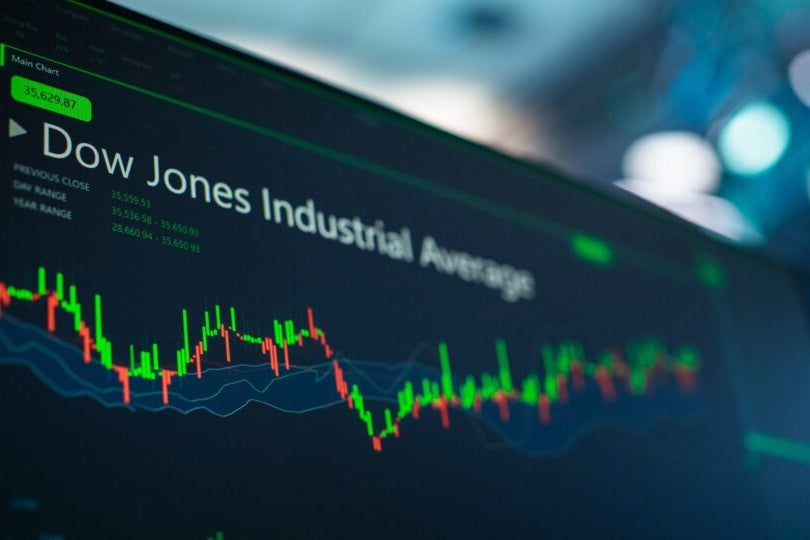
U.S. Stock Market - U.S. stocks traded higher, with the Dow Jones index gaining around 100 points, up 0.20% to 49,508.59 [1] - NASDAQ increased by 0.26% to 23,654.18, and the S&P 500 rose 0.09% to 6,984.74 [1] - Materials shares gained by 1.1%, while financial stocks fell by 0.5% [1] PepsiCo Financial Results - PepsiCo, Inc. reported fourth-quarter adjusted earnings per share of $2.26, exceeding the analyst consensus estimate of $2.24 [2] - Quarterly sales reached $29.34 billion, reflecting a 5.6% year-over-year increase, surpassing the expected $28.972 billion [2] Commodity Market - Oil prices increased by 1.1% to $62.83 [3] - Gold rose by 6.1% to $4,936.80, silver surged 13.1% to $87.060, and copper climbed 3.9% to $6.0545 [3] European Market Performance - European shares declined, with the eurozone's STOXX 600 falling 0.3% and Spain's IBEX 35 Index down 0.4% [4] - London's FTSE 100 dipped 1%, Germany's DAX slipped 0.2%, and France's CAC 40 fell 0.5% [4] Asian Market Performance - Asian markets closed higher, with Japan's Nikkei surging 3.92%, Hong Kong's Hang Seng Index gaining 0.22%, China's Shanghai Composite rising 1.29%, and India's BSE Sensex increasing by 2.54% [5] Economic Indicators - The Logistics Manager's Index surged to 59.6 in January, the highest level in seven months, compared to 54.2 in December [6]
Dow Gains 100 Points; PepsiCo Posts Upbeat Earnings
Benzinga· 2026-02-03 14:39
U.S. Stock Market - U.S. stocks traded higher, with the Dow Jones index gaining around 100 points, up 0.20% to 49,508.59 [1] - NASDAQ increased by 0.26% to 23,654.18, while the S&P 500 rose 0.09% to 6,984.74 [1] - Materials shares gained by 1.1%, while financial stocks fell by 0.5% [1] PepsiCo Financial Results - PepsiCo, Inc. reported fourth-quarter adjusted earnings per share of $2.26, exceeding the analyst consensus estimate of $2.24 [2] - Quarterly sales reached $29.34 billion, reflecting a year-over-year increase of 5.6%, surpassing the expected $28.972 billion [2] Commodity Market - Oil prices increased by 1.1% to $62.83 [3] - Gold rose by 6.1% to $4,936.80, silver surged 13.1% to $87.060, and copper increased by 3.9% to $6.0545 [3] European Market Performance - European shares declined, with the eurozone's STOXX 600 falling by 0.3% [4] - Spain's IBEX 35 Index decreased by 0.4%, London's FTSE 100 dipped 1%, Germany's DAX slipped 0.2%, and France's CAC 40 fell by 0.5% [4] Asia Pacific Market Performance - Asian markets closed higher, with Japan's Nikkei surging 3.92% [5] - Hong Kong's Hang Seng Index gained 0.22%, China's Shanghai Composite rose 1.29%, and India's BSE Sensex increased by 2.54% [5] Economic Indicators - The Logistics Manager's Index surged to 59.6 in January, the highest level in seven months, compared to 54.2 in December [6]
AG Barr strikes M&A one-two in “adult” soft drinks
Yahoo Finance· 2026-02-03 14:08
Group 1 - AG Barr has acquired Fentimans and Frobishers Juices to enter the adult soft drinks market, which is experiencing a trend of reduced alcohol consumption among consumers [1][2] - The total acquisition cost was £51 million ($70 million), with £38 million ($52 million) paid for Fentimans and £13 million for Frobishers [2] - Fentimans reported a turnover of £35.7 million in 2024, down from £39 million the previous year, and made a profit of £1 million compared to a loss of £514,000 in 2023 [3] Group 2 - AG Barr's revenue grew by approximately 4% to £437 million for the financial year ending January [4] - The company's adjusted operating margin increased to 14.7%, up 110 basis points from the previous year, attributed to efficiency initiatives and supply chain investments [4] - CEO Euan Sutherland indicated that the company has established strong foundations for future growth and has good momentum entering FY26/27 [5]