Television Manufacturing

Search documents
X @Bloomberg
Bloomberg· 2026-04-13 07:34
China's TCL is considering selling a stake in its Indian television manufacturing unit to local buyers https://t.co/MPfrCS0UTX ...
Panasonic Unveils 2026 Range Of OLED And LCD TVs
Forbes· 2026-02-25 21:51
Core Insights - Panasonic has announced a partnership with Chinese brand Skyworth for its TV business starting April 1, 2026, and has introduced a new extensive TV range for 2026 [1][25] Product Range Overview - The premium models in Panasonic's 2026 lineup include the Z85C/Z86C OLED series, available in 55 and 65-inch sizes, featuring native 120Hz refresh rates, Filmmaker Modes, and support for Dolby Vision and HDR10+ [2][5] - The Z85C/Z86C series aims to be Panasonic's most affordable OLED TVs, competing with LG's B Series models [5][7] - The new OLED SE panel technology is key to achieving lower pricing, although it may result in reduced brightness and potential reflection issues [6] LCD TV Offerings - Panasonic's LCD TV lineup includes the W97C/W95C Mini-LED series, which features Mini-LED lighting, over 1000 local dimming zones, and peak brightness of around 1,500 nits [8][9] - The W94C Mini-LED series, available in the U.K. and Europe, offers similar features to the W97C/W95C but is positioned just below them in terms of premium quality [11][13] - The W92C and W91C Mini-LED series also include features like Quantum Dot color and support for VRR and 144Hz refresh rates, with the W91C being a U.K. exclusive [14][16] Additional Models - The W90C Mini-LED series is the most affordable in Panasonic's new range, while the W83C/W80C series represents the high end of regular LED models for 2026 [18][19] - The W60C series features native 4K screens but lacks Quantum Dot colors, while the S65C series offers full HD resolution with Quantum Dot color [22][23] - The S45C/S40C series represents the entry-level offerings with HD Ready resolution and basic Dolby audio support [24]



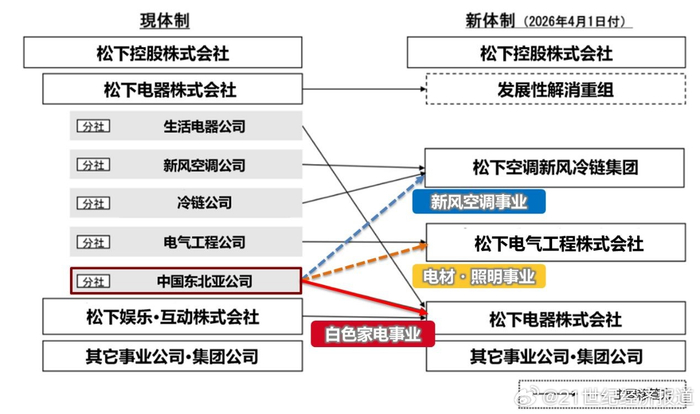
松下4月将欧美电视销售移交创维,专注日本本土市场
2 1 Shi Ji Jing Ji Bao Dao· 2026-02-24 08:51
Core Viewpoint - Panasonic is transferring its television sales business in North America and Europe to Skyworth Group, focusing instead on the Japanese domestic market and high-end model production to reduce costs related to personnel and logistics [1] Group 1 - The business adjustment is part of Panasonic's strategy to establish the most suitable operational model for its television business in different regions [1] - Alongside the announcement of the transfer, Panasonic is set to launch a new television product line for the North American and European markets in 2026 [1]

松下将欧美电视销售业务移交创维,黑电市场面临新一轮洗牌
2 1 Shi Ji Jing Ji Bao Dao· 2026-02-24 08:32
Core Viewpoint - Panasonic is transferring its television sales business in North America and Europe to Skyworth Group, focusing on the Japanese domestic market and high-end model production to reduce costs in personnel and logistics [1][5]. Group 1: Business Strategy - Panasonic has signed a comprehensive cooperation agreement with Skyworth, which includes the transfer of sales operations and increased collaboration in product development and manufacturing [1][2]. - The partnership is based on the belief that Skyworth is the best partner to achieve the necessary quality and competitiveness in the European and North American markets, leveraging shared brand and quality philosophies [1][2]. Group 2: Product Development - Panasonic announced a new television product line for the European and North American markets, including the flagship Z95B and Z90B OLED models, and an entry-level OLED model Z86C supporting 4K 120Hz resolution [3]. - The new product line also features miniLED flagship models W97C and W95C, as well as lower-tier models W94C and W91C, indicating a strategic shift towards a broader price range following the partnership with Skyworth [3]. Group 3: Market Position and Competition - Panasonic's significant business changes were anticipated, with previous announcements indicating a restructuring to focus on smart living, components, and solutions [4]. - Despite attempts to re-enter the U.S. market, Panasonic's television business has not achieved desired results, leading to the decision to transfer operations [5]. - In the OLED high-end segment, Panasonic maintains competitive strength, ranking third with a 25.7% market share, following Sharp and Toshiba [6].
集邦咨询:存储器、面板、贵金属同步涨价 预计电视生产成本承压
智通财经网· 2026-01-29 09:19
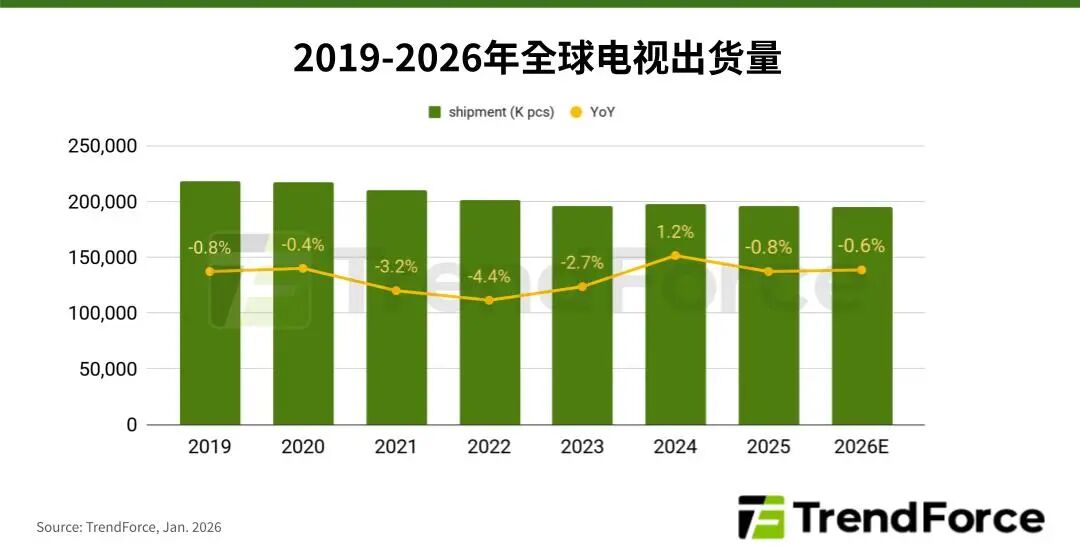
Core Insights - The television industry is facing rising costs due to increases in memory, panel, and precious metal prices, leading to a downward revision of the expected annual shipment volume for 2026 from a decrease of 0.3% to 0.6%, totaling approximately 194.81 million units [1] Group 1: Market Trends - From early 2025, television brands began stockpiling inventory due to uncertainties in international conditions, followed by inventory adjustments in the second quarter, resulting in a third-quarter shipment drop below 50 million units for the first time [3] - Despite promotional events in early 2026, such as the Super Bowl and FIFA World Cup, brands are accelerating inventory preparation due to rising prices of memory and panels, leading to a projected 2% year-on-year increase in first-quarter shipments to 46.51 million units [3] Group 2: Cost Analysis - The cost of panels constitutes approximately 40-50% of the total cost of a television, with prices starting to rise in January 2026. The supply of memory for televisions is being squeezed by demand from other applications, causing prices to increase significantly [3] - The proportion of DRAM in the bill of materials (BOM) for televisions has risen from 2.5-3% to 6-7% due to recent price adjustments, putting pressure on brand profitability, particularly for smaller players [4] Group 3: Product Development and Market Position - In 2026, favorable subsidy policies in the Chinese market will benefit Mini LED products, with major brands showcasing RGB television technology at CES 2026 and targeting more affordable sizes between 55-75 inches [4] - TrendForce has revised its forecast for Mini LED television penetration in 2026 to 10%, with shipments expected to approach 20 million units, while TCL is positioned to lead the Mini LED market with a market share exceeding 30% [4]
How to disable ACR on your TV (and why doing so makes such a big difference)
ZDNET· 2026-01-26 02:00
Core Insights - The article discusses the use of Automatic Content Recognition (ACR) technology in smart TVs, which tracks viewing habits and collects data for targeted advertising [3][12][17] - In 2022, advertisers spent approximately $18.6 billion on smart TV ads, with expectations for continued growth in this area [4] - ACR technology captures up to 7,200 images per hour, providing detailed insights into viewer preferences and personal information [6][17] Group 1: ACR Technology Overview - ACR operates in the background, identifying content displayed on screens by capturing screenshots and cross-referencing them with a media database [5] - This technology allows marketers to tailor content recommendations and track the effectiveness of advertisements [7] - The data collected includes sensitive personal information, raising concerns about potential misuse and privacy risks [8][18] Group 2: Privacy Concerns and User Control - Many users are unaware of ACR's presence and find it challenging to opt out due to complex settings [9][12] - The article provides instructions for disabling ACR on various smart TV brands, emphasizing the effort required to protect privacy [10][16][20] - Disabling ACR may limit some smart features of the TV, but it is recommended for those concerned about data privacy [16][18]
押注游戏电视,海信、索尼们正试图吸引更多年轻人
2 1 Shi Ji Jing Ji Bao Dao· 2026-01-20 11:44
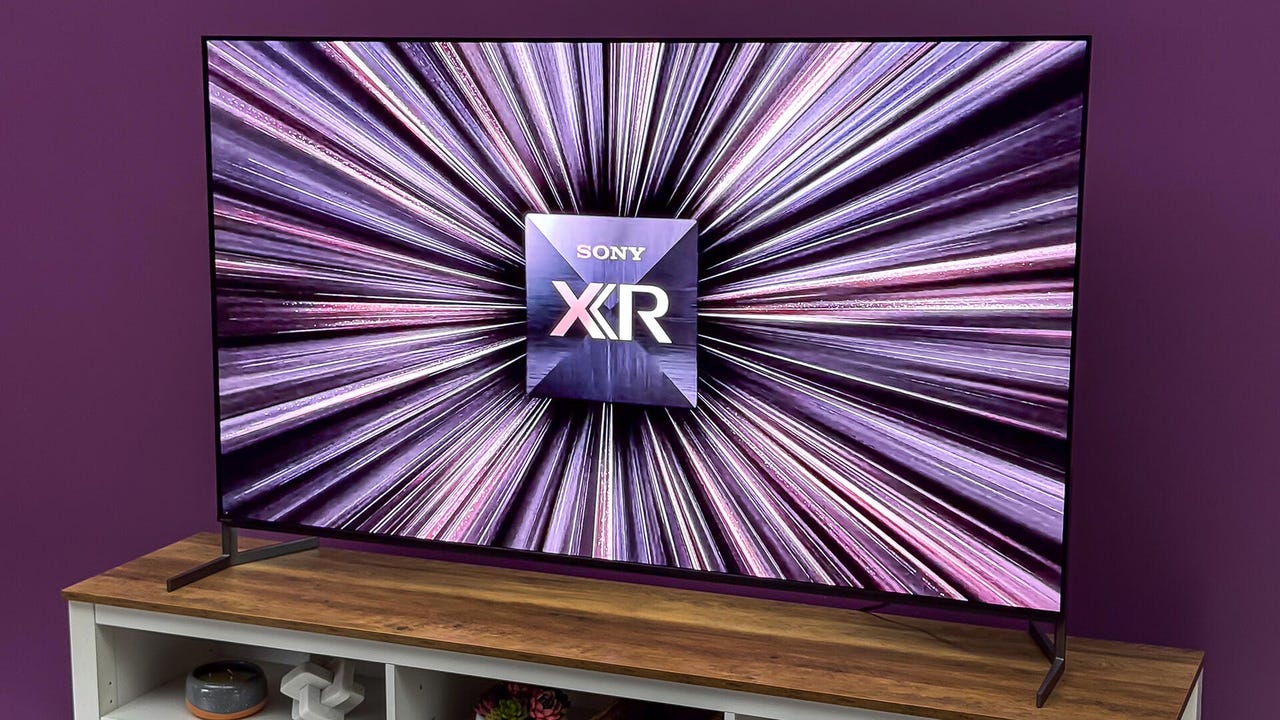
Core Insights - The black electronics industry is facing a significant market contraction, with China's TV market expected to see a shipment volume of 32.895 million units in 2025, a year-on-year decline of 8.5%, marking a 16-year low since 2010 [1] - The implementation of the new national subsidy policy in 2026, which operates on a "first come, first served" basis, is crucial for revitalizing consumer confidence and stimulating demand for upgrades in the black electronics sector [1] - Game-oriented TVs are emerging as a key strategy for manufacturers to attract younger consumers and drive demand for larger screens [1][2] Market Trends - The rise of console gaming and the emergence of domestic AAA games are driving the demand for high-refresh-rate, high-quality large-screen TVs, which are becoming central to home entertainment [2][3] - A recent report indicates that 45.3% of console gamers primarily use TVs as their display devices, significantly higher than monitors (16.5%) and projectors (15.0%) [3] - 77.3% of gamers are willing to consider dedicated gaming TVs to enhance their gaming experience, with 35.2% of heavy gamers prioritizing sound quality and immersion [3] Product Development - Major brands like Sony and Hisense are focusing on game-oriented products, with Sony launching the X90L gaming TV featuring PS5-specific functions, and Hisense releasing a custom TV linked to the game "Black Myth: Wukong" [5][6] - The anticipated release of several high-profile games in 2026 is expected to further boost market demand for gaming TVs [5] Consumer Preferences - Players prioritize features such as input lag, picture quality, and compatibility when selecting gaming TVs, with 41.3% emphasizing clarity and detail in visuals [8][9] - The trend towards larger screen sizes is evident, with average shipment sizes projected to approach 65 inches by 2025, and retail shares for ultra-large sizes (85, 98, and 100 inches) increasing [7][8] Technological Advancements - The competition in the display industry is shifting from mere specifications to user value, with advancements in technology such as variable refresh rates and low-latency modes becoming standard in gaming TVs [9] - Innovations in picture quality control and color calibration are critical, with companies like Sony and Hisense integrating advanced chips to enhance the gaming experience [9]

TCL雷鸟鹏6 65英寸电视钜惠
Xin Lang Cai Jing· 2026-01-13 06:28
Core Viewpoint - TCL's new Thunderbird Peng 6 65-inch 4K ultra HD television offers high performance features such as a 144Hz refresh rate and high color gamut technology, providing an immersive visual experience for various entertainment activities [2] Product Features - The television is equipped with 3GB of RAM and 64GB of storage, ensuring smooth operation and the ability to install more applications without lag [2] - It includes smart voice control for convenient operation, catering to the entertainment needs of the entire family [2] Pricing and Promotion - Originally priced at 4799 yuan, the television is currently available on Tmall for a limited-time discount of 2973 yuan, bringing the final price down to 1826 yuan, highlighting its high cost-performance ratio [2] - The promotion is time-sensitive and stock is limited, encouraging quick purchases before the offer ends [2]
How to disable ACR on your TV (and why you should do it ASAP)
ZDNET· 2025-12-19 19:02
Core Insights - The article discusses the use of Automatic Content Recognition (ACR) technology in smart TVs, which tracks viewing habits and collects data for targeted advertising [3][12][17] - In 2022, advertisers spent approximately $18.6 billion on smart TV ads, with expectations for continued growth in this area [4] - ACR technology captures up to 7,200 images per hour, providing detailed insights into viewer preferences and personal information [6][17] Group 1: ACR Technology Overview - ACR operates in the background, identifying content displayed on screens by capturing screenshots and cross-referencing them with a media database [5][12] - The technology allows marketers to tailor content recommendations and track the effectiveness of advertisements [7][12] Group 2: Privacy Concerns - There are significant privacy risks associated with ACR, including potential exploitation of sensitive information, which could lead to identity theft [8][18] - Many users are unaware of ACR's presence and find it challenging to opt out due to complex settings [9][12] Group 3: Disabling ACR - The article provides detailed instructions on how to disable ACR on various smart TV brands, including Samsung, LG, Sony, Hisense, and TCL [10][11][20] - Disabling ACR may limit some smart features but enhances user privacy [16][18]
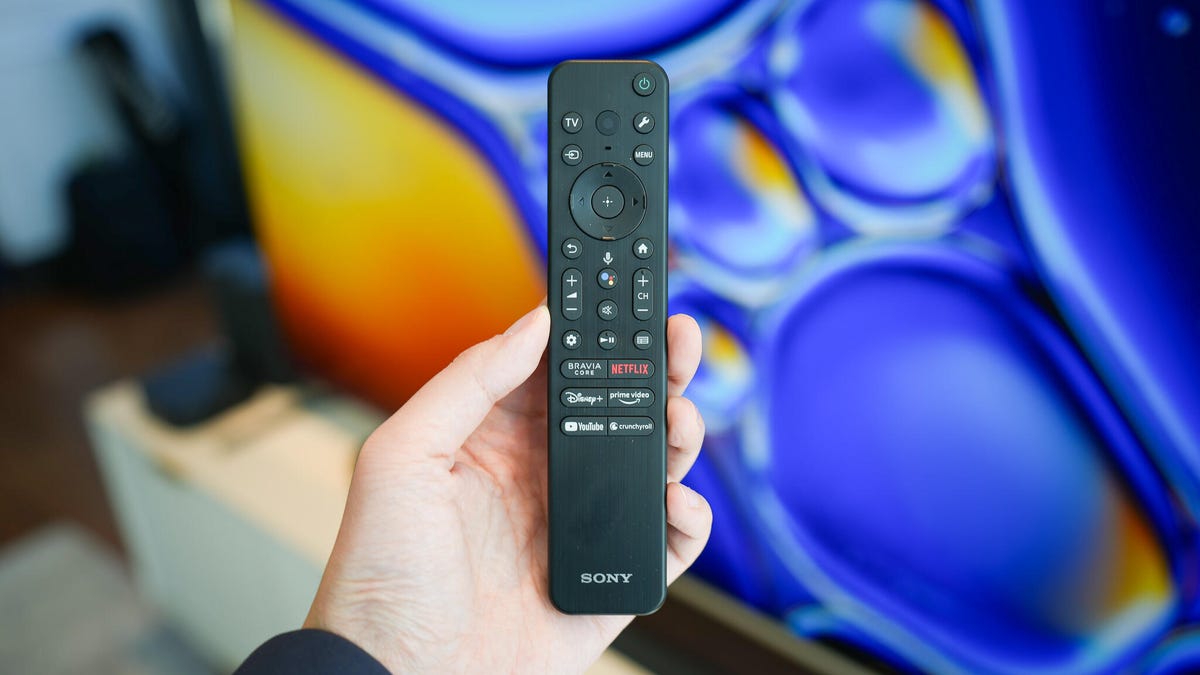
美国起诉索尼、三星、海信等公司,指控其“为中国从事间谍活动”
Xin Lang Cai Jing· 2025-12-16 21:28
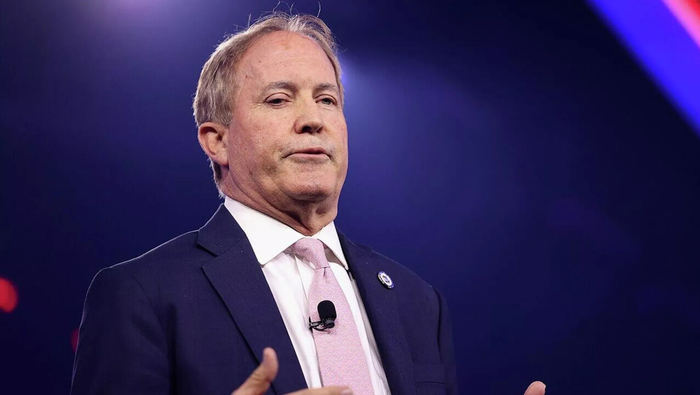
Core Viewpoint - The Texas Attorney General Ken Paxton has filed a lawsuit against several major television manufacturers, including Sony, Samsung, LG, Hisense, and TCL, accusing them of engaging in espionage activities for China by monitoring American citizens without their knowledge [1]. Group 1: Lawsuit Details - The lawsuit claims that these companies secretly recorded content viewed by consumers in Texas without their consent [1]. - The companies are accused of illegally using Automatic Content Recognition (ACR) technology to collect personal data, which poses risks to user privacy and sensitive information [1]. Group 2: Legal Implications - The lawsuit seeks a fine of $10,000 for each of the five companies for violating the Unfair Trade Practices Act [1]. - If the victims of the alleged espionage activities are over the age of 65, the fines could increase to $250,000 [1].