
游戏电视

Search documents
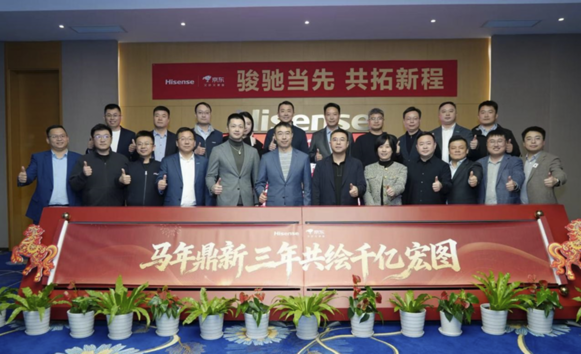
三年全渠道销售目标1000亿元 京东与海信达成战略合作协议
Sou Hu Wang· 2026-02-14 07:36
Group 1 - JD and Hisense have signed a strategic cooperation agreement with a target of achieving 100 billion yuan in sales over the next three years through online and offline channels [1] - JD's extensive online and offline channel resources are crucial for Hisense's performance growth, with plans to establish over 100 "JD-Hisense co-branded stores" and conduct more than 8,300 joint exhibitions nationwide by 2025 [3] - Hisense is expected to maintain strong growth across multiple product categories, leading the market in 100-inch TVs and enhancing its brand presence through collaborative marketing efforts with JD [5] Group 2 - The partnership will focus on high-end product offerings, marketing collaboration, and channel integration, aiming to accelerate the development of high-end RGB-MiniLED TVs, laser TVs, and gaming TVs [5] - Both companies will leverage immersive experiences and integrated services to enhance consumer engagement and brand recognition for Hisense products [5] - The goal is to steadily progress towards the 100 billion yuan target over the next three years by solidifying their competitive advantages [5]



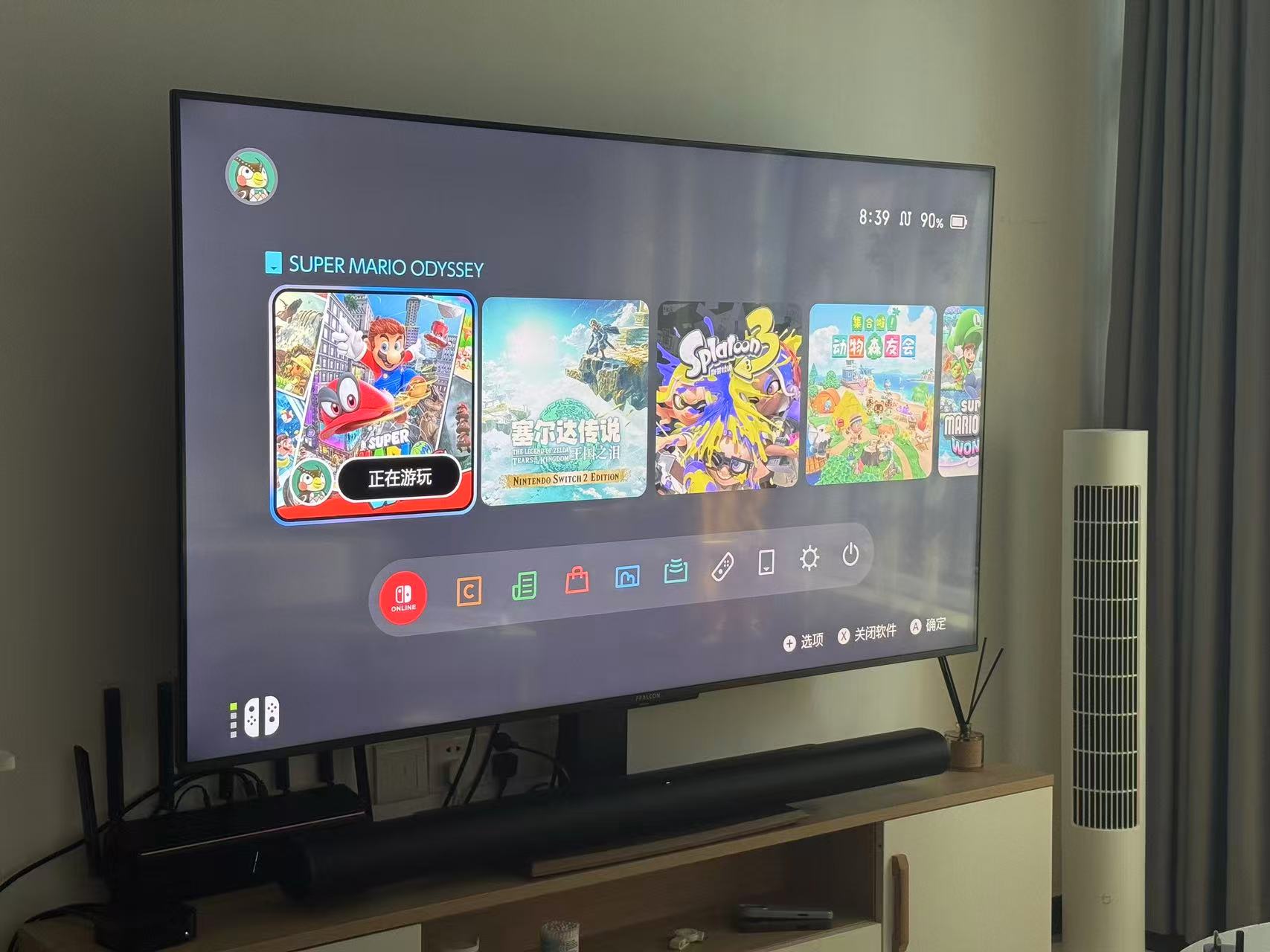
押注游戏电视,海信、索尼们正试图吸引更多年轻人
2 1 Shi Ji Jing Ji Bao Dao· 2026-01-20 11:44
Core Insights - The black electronics industry is facing a significant market contraction, with China's TV market expected to see a shipment volume of 32.895 million units in 2025, a year-on-year decline of 8.5%, marking a 16-year low since 2010 [1] - The implementation of the new national subsidy policy in 2026, which operates on a "first come, first served" basis, is crucial for revitalizing consumer confidence and stimulating demand for upgrades in the black electronics sector [1] - Game-oriented TVs are emerging as a key strategy for manufacturers to attract younger consumers and drive demand for larger screens [1][2] Market Trends - The rise of console gaming and the emergence of domestic AAA games are driving the demand for high-refresh-rate, high-quality large-screen TVs, which are becoming central to home entertainment [2][3] - A recent report indicates that 45.3% of console gamers primarily use TVs as their display devices, significantly higher than monitors (16.5%) and projectors (15.0%) [3] - 77.3% of gamers are willing to consider dedicated gaming TVs to enhance their gaming experience, with 35.2% of heavy gamers prioritizing sound quality and immersion [3] Product Development - Major brands like Sony and Hisense are focusing on game-oriented products, with Sony launching the X90L gaming TV featuring PS5-specific functions, and Hisense releasing a custom TV linked to the game "Black Myth: Wukong" [5][6] - The anticipated release of several high-profile games in 2026 is expected to further boost market demand for gaming TVs [5] Consumer Preferences - Players prioritize features such as input lag, picture quality, and compatibility when selecting gaming TVs, with 41.3% emphasizing clarity and detail in visuals [8][9] - The trend towards larger screen sizes is evident, with average shipment sizes projected to approach 65 inches by 2025, and retail shares for ultra-large sizes (85, 98, and 100 inches) increasing [7][8] Technological Advancements - The competition in the display industry is shifting from mere specifications to user value, with advancements in technology such as variable refresh rates and low-latency modes becoming standard in gaming TVs [9] - Innovations in picture quality control and color calibration are critical, with companies like Sony and Hisense integrating advanced chips to enhance the gaming experience [9]

10万家庭认证!苏宁易购加码企业版“真惠补”
Zhong Jin Zai Xian· 2025-12-18 07:32
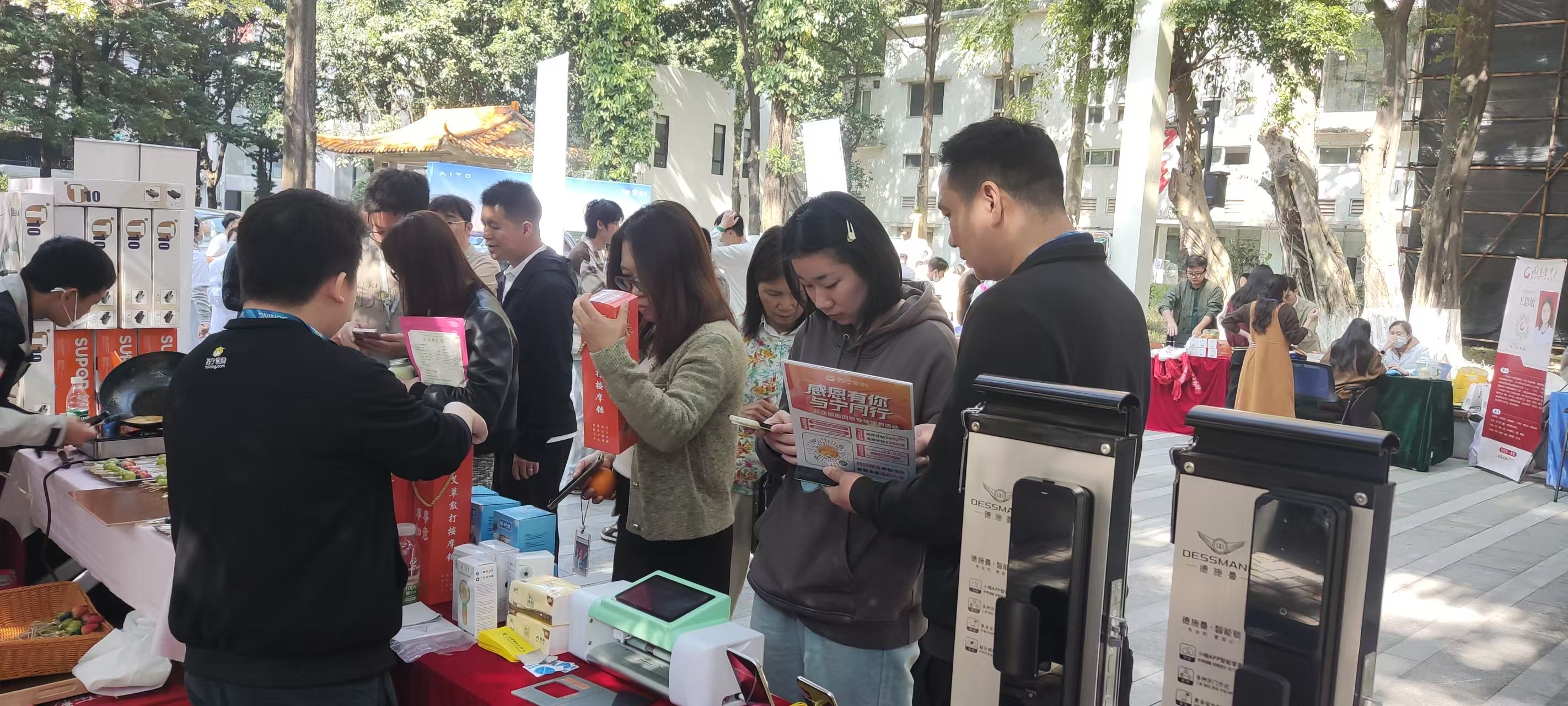
Core Insights - Su Ning Yi Gou is enhancing consumer engagement through a government-enterprise group purchase day, aiming to stimulate year-end consumption by offering customized product solutions and immersive home experience services [1] Group 1: Consumer Engagement Strategies - The government-enterprise group purchase day is an extension of Su Ning Yi Gou's home appliance initiative, aiming to combine products, scenarios, and services to address consumer pain points and integrate cutting-edge technology [1] - The initiative has reached over 1,000 enterprises and served more than 100,000 household consumers this year [1] Group 2: Target Consumer Preferences - Traditional manufacturing employees prefer practical appliances like large-capacity refrigerators and energy-efficient air conditioners, while tech company consumers, mainly younger individuals, favor trendy products such as gaming TVs and coffee machines [3] - Employees from state-owned enterprises tend to favor high-end appliances that offer comprehensive functionality and experience, such as multi-tub washing machines and smart kitchen sets [3] Group 3: On-Site Experience and Services - The group purchase events feature on-site demonstrations and temporary showrooms, allowing consumers to experience various home appliances firsthand, with professional guidance and assistance in calculating discounts [5] - Additional localized services are provided, including free safety checks for old appliances, clothing care, appliance cleaning, and food tasting, enhancing convenience for consumers [5] Group 4: Future Plans and Policy Alignment - Throughout December, Su Ning Yi Gou plans to conduct more group purchase events in numerous enterprises, aligning with national policies to promote consumption and expand domestic demand [5] - The initiative aims to create a "green channel" for appliance upgrades within companies, facilitating easy access to smart products and real discounts for consumers [5]

彩电零售市场的下一步困惑且无助!
Sou Hu Cai Jing· 2025-11-23 05:06
Core Insights - The Chinese television market is facing significant challenges, with declining sales and a shift in consumer preferences away from traditional TV viewing [3][5][6] Group 1: Market Performance - In Q3 2025, the retail volume of the Chinese TV market is projected to be 6.15 million units, a year-on-year decline of 12.1%, while retail revenue is expected to be 25.2 billion yuan, down 8.1% [3] - For the first three quarters of this year, retail volume and revenue were 19.91 million units and 81.4 billion yuan, respectively, showing a year-on-year decline of 2.9% in volume but a growth of 2.1% in revenue [3] - The overall retail revenue for the Chinese TV market is forecasted to reach 120.8 billion yuan in 2025, a decrease of 5% year-on-year, with retail volume expected to be 28.92 million units, down 6% [3] Group 2: Consumer Behavior - The TV usage rate has significantly dropped from 70% in 2016 to below 30% in 2022, with recent reports indicating it may fall below 25% [4] - A survey shows that 25.57% of users watch TV once a week or less, while only 15.27% watch it six times or more per week [4] - Many consumers express dissatisfaction with TV complexity, advertising, and content accessibility, leading to a decline in TV usage among younger generations [4][5] Group 3: Industry Challenges - The decline in TV sales is not just a problem for individual companies like Hisense, TCL, Sony, and Samsung, but reflects a broader industry crisis [5] - Despite efforts to innovate with smart TVs and diverse applications, the market has not met expectations, as consumers find larger screens and additional features impractical [5][6] - The industry is experiencing a "distorted" evolution in its supply chain, with a concentration of sales channels and a lack of effective user engagement strategies [6]

今年双11,消费者在线下门店找回“安全感”
Sou Hu Cai Jing· 2025-11-11 03:17
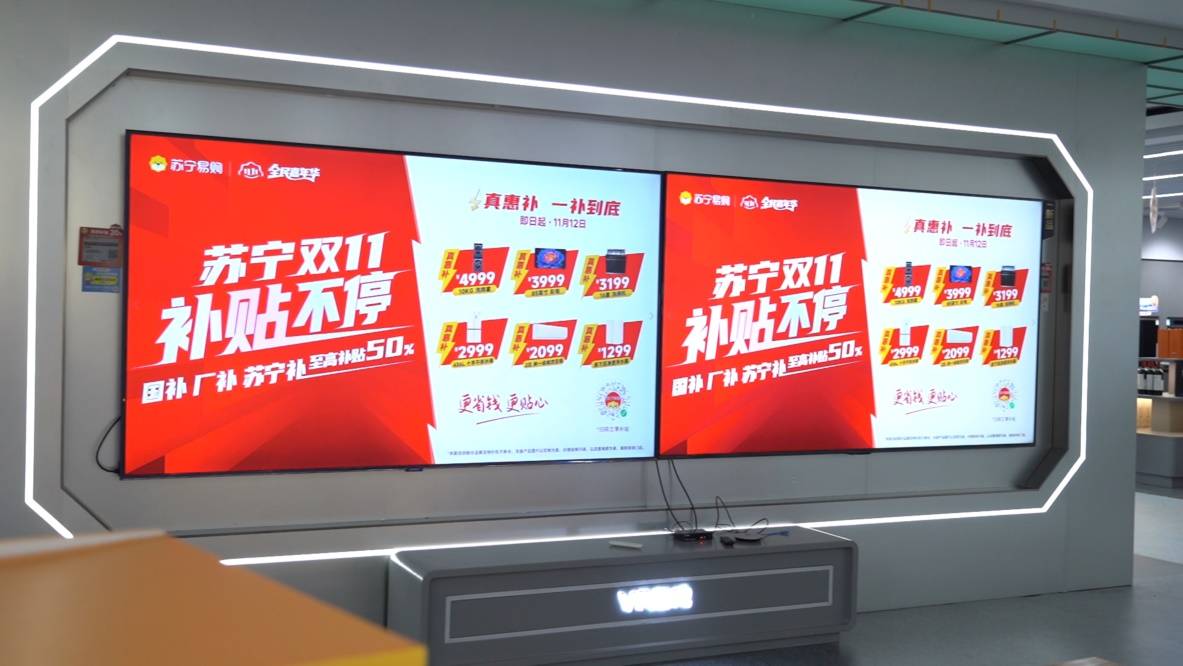
Core Insights - The article highlights a significant shift in consumer behavior during the Double 11 shopping festival, with a notable return to offline shopping due to a "trust crisis" in online pricing and promotions [1][2][8] - Suning.com is leading this trend by offering price guarantees and a more tangible shopping experience, which has resonated with consumers seeking certainty in their purchases [2][6] Group 1: Consumer Behavior - Many consumers are frustrated with online shopping experiences, citing instances of price discrepancies and feeling misled by promotional tactics [1] - A growing number of consumers prefer the immediacy and reliability of physical stores, where they can see and touch products before making a purchase [4][8] Group 2: Suning.com Strategies - Suning.com has implemented a strategy of "true benefits with fixed prices," ensuring that prices remain stable throughout the Double 11 period, which alleviates consumer anxiety regarding price fluctuations [2][6] - The company has reported that over 55% of its sales during this period are from AI-integrated home appliances, indicating a strong consumer interest in advanced technology [6] Group 3: Role of Offline Experience - The tactile experience of shopping in-store is becoming increasingly important as consumers seek to understand complex product features that are difficult to convey online [4][6] - Sales staff, now referred to as "home appliance stewards," are playing a crucial role in providing expert advice and building trust with consumers, enhancing the overall shopping experience [6][8] Group 4: Market Trends - The shift back to offline shopping is not a rejection of online retail but rather a maturation of consumer behavior, where online platforms are better suited for standard and fast-moving consumer goods [8] - High-value and experience-driven products are increasingly being purchased in physical stores, where consumers feel they receive more reliable information and assurance [8]
AI渗透率超55%,苏宁易购引领双11趋势家电消费
Zhong Jin Zai Xian· 2025-11-03 10:50
Core Insights - This year's Double 11 shopping festival has seen a significant shift in consumer behavior, with many opting to return to physical stores due to a growing distrust in online pricing and promotions [1][9] - Complaints related to price fraud and discrepancies between pre-sale and actual prices have surged, leading consumers to feel misled by online platforms [1][2] Group 1: Consumer Behavior - Consumers are increasingly frustrated with online shopping experiences, feeling that the promised deals often do not materialize, as evidenced by a consumer's experience where an appliance was cheaper in-store than online during Double 11 [1] - The trend of returning to physical stores is driven by a desire for price certainty and transparency, as seen in strategies employed by retailers like Suning, which offers price guarantees [2][6] Group 2: Retail Strategies - Physical stores are focusing on providing a sense of certainty and reliability in pricing, with Suning's "one price, one guarantee" strategy effectively addressing consumer anxieties about price fluctuations [2][6] - The role of in-store sales associates is evolving, as they are now seen as knowledgeable experts who can provide personalized service and product demonstrations, enhancing consumer trust [6][9] Group 3: Product Trends - There is a noticeable shift towards high-tech appliances with AI and health features, with over 55% of sales in physical stores comprising such products, indicating a preference for experiential shopping [6][9] - The sales of larger screen televisions and advanced home appliances are significantly outpacing overall category growth, reflecting a consumer trend towards premium products [6][9]
游戏电视爆发,低延迟和游戏模式是体验关键,将成行业增长引擎?
3 6 Ke· 2025-08-27 06:19
Group 1 - The core viewpoint of the article emphasizes the growing importance of gaming TVs in the market, driven by advancements in technology and increasing consumer demand for high-performance displays [19][23] - The article outlines the key features to consider when purchasing a gaming TV in 2025, including panel type, HDMI capabilities, and system optimization [3][4][9] Group 2 - The main types of panels discussed are OLED and Mini LED, with OLED offering superior response times and contrast, while Mini LED provides higher brightness levels [4][6][8] - HDMI 2.1 is highlighted as a critical feature for gaming TVs, with a focus on ensuring true 48Gbps bandwidth to support 4K 120Hz gaming [9][12] - The importance of low latency and game mode features is stressed, as these are essential for a satisfactory gaming experience [16][18] Group 3 - The gaming TV segment is identified as a growth engine for the overall TV industry, contrasting with the stagnation seen in traditional TV markets [19][23] - Major brands, including both traditional and emerging companies, are increasingly incorporating gaming features into their product lines, indicating a shift towards mainstream acceptance of gaming TVs [23]
2025年两会专题系列报告之四:消费民生篇:精准施策“组合拳”,激活消费“主引擎”
Guoyuan Securities· 2025-03-20 12:06
Group 1 - The report emphasizes the importance of boosting consumption as a key driver for economic growth, highlighting the government's focus on policies aimed at enhancing consumer spending [7][11][16] - In 2024, the social retail sales total is projected to grow by 3.50%, while the Consumer Price Index (CPI) is expected to rise by only 0.20%, indicating a stable economic environment [7][9] - The report outlines major economic targets for 2025, including a GDP growth of around 5% and a focus on increasing residents' disposable income in line with economic growth [9][16] Group 2 - The report identifies key strategies for enhancing consumption, including improving consumer capacity, increasing quality supply, and optimizing the consumption environment [16][18] - Specific measures include the issuance of long-term special bonds worth 300 billion yuan to support the replacement of old consumer goods, and the promotion of diverse service offerings in health, elderly care, and childcare [16][18] - The report highlights the importance of digital, green, and intelligent consumption, as well as the need to enhance vacation policies to unlock potential in cultural, tourism, and sports consumption [16][23] Group 3 - The report outlines regional consumption policies focusing on stabilizing major commodity consumption, promoting innovation, enhancing services, and optimizing the consumption environment [17][18] - Various provinces are implementing specific actions such as expanding the "old for new" policy to cover more categories, supporting the promotion of new energy vehicles, and enhancing the digital economy [18][19] - The report emphasizes the development of new consumption models, including the "first launch economy" and the "silver economy," which target specific demographic needs [23][24] Group 4 - The report discusses the expansion of service consumption, particularly in health, elderly care, and childcare sectors, as well as the development of cultural tourism and sports events [25][26] - It highlights the need for improved logistics and supply chain efficiency to support service consumption growth [25][26] - The report also mentions the importance of creating a safe and reliable consumption environment through consumer rights protection initiatives [29][30] Group 5 - The report identifies unique regional strategies, such as Hainan's focus on becoming an international tourism consumption center and Tibet's promotion of rural e-commerce [37][38] - It emphasizes common strategies across regions, including increasing income and reducing burdens for low-income groups, and promoting digital transformation in retail [38]