Textiles and Apparel

Search documents
Xiuniang Silk — Chinese Intangible Cultural Heritage Suzhou Embroidery Stuns New York Fashion Week
Globenewswire· 2026-03-24 11:09
Core Viewpoint - Xiuniang Silk showcased its collections at New York Fashion Week, representing Chinese intangible cultural heritage and highlighting the brand's commitment to cultural craftsmanship and aesthetics [1][8][11]. Group 1: Event Highlights - Xiuniang Silk participated in New York Fashion Week on March 20, 2026, alongside international luxury brands, marking a significant representation of Chinese culture [1][2]. - The brand presented two major collections, "Royal Elegance" and "Orchid Embroidery of China," as the grand finale of the show [4]. Group 2: Collection Details - The "Royal Elegance" collection features opulent goose yellow and refined cyan colors, reimagining classic patterns to reflect Chinese royal aesthetics [5]. - The "Orchid Embroidery of China" collection draws on the cultural significance of orchids, using traditional colors and materials to embody feminine qualities [6]. Group 3: Cultural Significance - Xiuniang Silk merges traditional silk embroidery techniques with contemporary aesthetics, showcasing the innovative development of Chinese cultural heritage [8]. - The brand aims to transition from "style export" to "cultural export," receiving acclaim for its unique representation of Eastern aesthetics [8]. Group 4: Brand Identity - Originating from Suzhou, a city with a rich cultural history, Xiuniang Silk embodies the spirit of openness and innovation while preserving tradition [10]. - The brand is committed to three core values: culture, craftsmanship, and art, which strengthen its position as a representative of Chinese intangible cultural heritage [11]. Group 5: Future Outlook - Xiuniang Silk plans to continue using silk as a medium to further influence global fashion and promote Chinese intangible cultural heritage [12].
DeSL, TSG partner to enhance digital supply chain for textiles
Yahoo Finance· 2026-03-19 10:35
Core Insights - The agreement aims to enhance DeSL's capabilities in product development, sourcing, and supply chain operations while expanding its international presence in the textile and apparel markets [1] Company Overview - DeSL, founded in 2002, provides ISO 27001-certified SaaS platforms specifically designed for the fashion and textile industries, offering a PLM system that integrates people, processes, and product data for effective management [2] Strategic Developments - Following the agreement, DeSL will maintain its brand and leadership, with plans to invest in AI-driven PLM workflows, improve sourcing and supplier collaboration, and enhance cloud security and scalability [3] - The integration with Textile Solutions Group (TSG) is intended to ensure consistent operations across product development, sourcing, and production execution, while also expanding TSG's digital ecosystem by incorporating DeSL's PLM platform [5] Leadership Statements - DeSL's CEO, Colin Marks, emphasized the focus on delivering industry-specific digital solutions and highlighted that the strategic agreement with TSG will bolster innovation and integration across the supply chain [4] - TSG's CEO, Anton Hofmeier, expressed pride in welcoming DeSL's customers and team, viewing the agreement as a strategic move towards building a more connected digital foundation for the textile and apparel industry [6] Combined Strengths - The collaboration aims to merge DeSL's AI-powered PLM expertise with TSG's manufacturing and textile execution capabilities, enhancing the connection between product creation and industrial performance, ultimately aiding businesses in navigating complexity and improving efficiency, speed, and sustainability [7]
1月15日全球圈粉!广货何以行天下?
Sou Hu Cai Jing· 2026-01-13 15:29
Core Viewpoint - Guangdong products, known as "Guanghuo," have evolved from traditional goods to modern high-tech products like smartphones, drones, and electric vehicles, showcasing the region's manufacturing prowess and global reach [2][12]. Group 1: Market Expansion and Product Popularity - The cross-border e-commerce import and export scale has expanded 66 times over nine years, accounting for over one-third of the national total, making Guangdong the leader in this sector [6]. - Guangdong produces one out of every four express deliveries in China, indicating its significant role in the logistics and e-commerce landscape [6]. - Notable collaborations, such as Guangshi Pineapple Beer with trendy brands and LIGOMIN's youth-oriented clothing line, demonstrate how traditional brands are adapting to modern consumer preferences [6][8]. Group 2: Comprehensive Industrial Ecosystem - Guangdong's manufacturing ecosystem is characterized by a diverse range of products, from clothing to electronics, creating a robust industrial "full family bucket" that supports various consumer needs [12][13]. - The province boasts all 31 major manufacturing categories, with 15 of them ranking first nationally, and has established nine trillion-yuan industrial clusters in sectors like electronics, smart appliances, and new energy [12][13]. - The integration of upstream and downstream enterprises enhances efficiency, reduces costs, and accelerates response times, contributing to Guangdong's competitive edge [12][13]. Group 3: Intelligent Manufacturing and Innovation - Guangdong is transitioning from traditional manufacturing to intelligent manufacturing, with significant improvements in production efficiency, such as a 200% increase in automation at Gree's smart factory [15]. - The adoption of AI and biotechnology in food production has led to stable flavors, reduced energy consumption, and upgraded quality, showcasing the region's commitment to innovation [15]. - Government policies and market dynamics are aligned to support technological advancements, with initiatives aimed at fostering key technology breakthroughs and promoting local standards to international levels [15].





水洗标写的100%羊毛,不是真羊毛?
虎嗅APP· 2025-12-26 00:44
Core Viewpoint - The article discusses the misleading labeling of wool products, highlighting that many items labeled as "100% wool" may not actually contain genuine wool, leading to consumer confusion and potential financial loss [5][9]. Group 1: Misleading Labels - Various labels such as "100% high-grade wool," "cotton wool 100%," and "100% Australian fine wool" are identified as potentially misleading, as none of them are genuine wool [6][8]. - The article emphasizes that many consumers are concerned about the authenticity of their wool products, as natural fibers have become increasingly popular and expensive [11][14]. Group 2: Standards and Regulations - The article explains that the correct labeling format for wool should adhere to national standards, which include specific phrases like "100% sheep wool" or "pure sheep wool" [20][21]. - It is noted that terms like "high-grade wool" and "superfine wool" are not recognized by national standards, indicating a lack of regulatory compliance [24]. Group 3: Challenges in Verification - The article points out that while consumers can learn to read labels, the effectiveness of such knowledge is limited due to the non-mandatory nature of washing labels, allowing for significant leeway in what manufacturers can write [31][32]. - The cost of producing fake labels is low, making it easy for sellers to misrepresent their products without significant risk [36][37]. Group 4: Expert Insights - Experts suggest that while washing labels can help avoid low-quality products, they do not guarantee high-quality clothing, and consumers should look for brands that consistently follow labeling standards [39][40]. - The article mentions that visual inspection and touch are often insufficient for determining the authenticity of wool, and professional methods like burning tests or chemical tests are recommended for accurate identification [43][44]. Group 5: Industry Practices - The article reveals that many manufacturers rely on fabric suppliers for material composition information without conducting their own tests, leading to widespread inaccuracies in labeling [46][48]. - It highlights that legitimate companies typically obtain testing reports from suppliers to ensure compliance with labeling standards [49].
别买那些防静电神器了,真正的克星只需要一面墙
虎嗅APP· 2025-12-16 13:38
Core Viewpoint - The article discusses the common issue of static electricity during winter, highlighting its causes and various methods to mitigate its effects on daily life. Group 1: Causes of Static Electricity - Static electricity is primarily caused by friction, where electrons are transferred between materials, leading to an accumulation of electric charge on the body [28][29]. - The dry air in winter prevents the dissipation of electric charges, making static shocks more frequent compared to humid summer conditions [31][32]. Group 2: Materials and Static Electricity - The type of clothing material significantly affects static electricity; polyester fibers tend to accumulate more static charge compared to cotton, which is more neutral [34][40]. - The triboelectric series ranks materials based on their tendency to gain or lose electrons, influencing the intensity of static electricity generated [35][38]. Group 3: Solutions to Combat Static Electricity - Wearing cotton clothing can reduce static electricity due to its moisture-absorbing properties and neutral charge [43][44]. - Using fabric softeners and anti-static sprays can provide temporary relief by creating a conductive layer on clothing [61][62]. - Maintaining indoor humidity levels between 40% to 60% can significantly reduce static charge accumulation [64][65]. Group 4: Physical Discharge Methods - Touching a wall or using a metal object like a key to discharge static electricity can be effective methods to prevent shocks [72][75]. - Industrial anti-static wristbands are reliable for grounding static electricity but are impractical for everyday use [79][84]. Group 5: Individual Variability - The effectiveness of anti-static measures can vary greatly among individuals due to differences in body chemistry, clothing habits, and environmental conditions [93][94]. - A multi-faceted approach combining various methods is recommended for optimal results in reducing static electricity [95].

How will the India-UK trade deal impact the global fashion sector?
Yahoo Finance· 2025-09-26 10:58
Core Insights - The India-UK partnership is seen as an opportunity to expand beyond bilateral relations to a broader global market collaboration [1][2] - The Free Trade Agreement (FTA) signed in July is viewed as a significant opportunity for both countries, particularly in the textile and apparel sectors [4][12] Trade Agreement Impact - India's textile and apparel exports to the UK are expected to increase by at least 2.5 times within three years, positioning India as the UK's second-largest supplier [3] - The agreement is anticipated to be operational by the end of the financial year, pending approval from the UK Parliament [3] Market Potential - India's domestic textile market is projected to reach $250 billion by 2030, presenting a substantial opportunity for UK manufacturers [9] - The Indian fashion sector is characterized by a diverse product ecosystem that is unmatched globally, providing a competitive edge [5][6] Technological Advancements - India's textile industry is undergoing transformative growth driven by government initiatives and private sector innovation, focusing on sustainability and eco-friendly practices [12][13] - The Production Linked Incentives (PLI) Scheme and the PM-MITRA Scheme are key initiatives aimed at enhancing manufacturing capabilities and attracting investments [13][14] Sustainability and Innovation - India's advancements in sustainable materials and traceability, including a blockchain system for cotton, are highlighted as significant competitive advantages [15][16] - The use of intelligent forecasting tools like VisioNxt is being developed to predict fashion trends, enhancing India's ability to meet global market demands [17]
苏州老字号全球伙伴行动启动 赋能“苏州制造”出海
Sou Hu Cai Jing· 2025-07-10 17:09
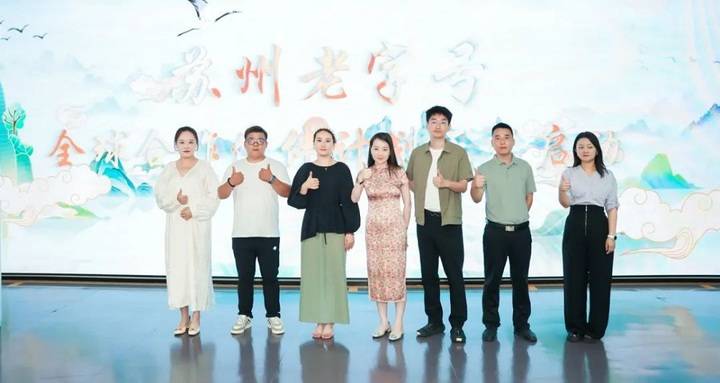
Group 1 - The Suzhou Old Brand Carnival was held on July 9, featuring nearly 30 Suzhou old brand companies, promoting consumer engagement through discounts and innovative initiatives [1][3] - The "Global Partner Action for Suzhou Old Brands" was launched, aiming to provide comprehensive services for old brands and facilitate international cooperation, enhancing the export capabilities of "Suzhou Manufacturing" [3][6] - The event utilized both online and offline strategies to activate new consumption scenarios, including a live streaming platform and various cultural performances to attract younger demographics [6][8] Group 2 - The Suzhou Manufacturing Brand Center serves as a comprehensive service platform integrating display, selection, and live streaming, supporting the transformation and upgrading of the manufacturing industry [8] - Since its opening in June last year, the center has attracted over a thousand enterprises through cross-border selection events and live streaming competitions, demonstrating effective online and offline promotional strategies [8] - The next steps for the Lion Mountain Business Innovation Zone include focusing on brand upgrades and market expansion for "Suzhou Manufacturing," providing more diverse platforms and support for enterprises [8]