
羊毛袜

Search documents
水洗标写的100%羊毛,不是真羊毛?
虎嗅APP· 2025-12-26 00:44
Core Viewpoint - The article discusses the misleading labeling of wool products, highlighting that many items labeled as "100% wool" may not actually contain genuine wool, leading to consumer confusion and potential financial loss [5][9]. Group 1: Misleading Labels - Various labels such as "100% high-grade wool," "cotton wool 100%," and "100% Australian fine wool" are identified as potentially misleading, as none of them are genuine wool [6][8]. - The article emphasizes that many consumers are concerned about the authenticity of their wool products, as natural fibers have become increasingly popular and expensive [11][14]. Group 2: Standards and Regulations - The article explains that the correct labeling format for wool should adhere to national standards, which include specific phrases like "100% sheep wool" or "pure sheep wool" [20][21]. - It is noted that terms like "high-grade wool" and "superfine wool" are not recognized by national standards, indicating a lack of regulatory compliance [24]. Group 3: Challenges in Verification - The article points out that while consumers can learn to read labels, the effectiveness of such knowledge is limited due to the non-mandatory nature of washing labels, allowing for significant leeway in what manufacturers can write [31][32]. - The cost of producing fake labels is low, making it easy for sellers to misrepresent their products without significant risk [36][37]. Group 4: Expert Insights - Experts suggest that while washing labels can help avoid low-quality products, they do not guarantee high-quality clothing, and consumers should look for brands that consistently follow labeling standards [39][40]. - The article mentions that visual inspection and touch are often insufficient for determining the authenticity of wool, and professional methods like burning tests or chemical tests are recommended for accurate identification [43][44]. Group 5: Industry Practices - The article reveals that many manufacturers rely on fabric suppliers for material composition information without conducting their own tests, leading to widespread inaccuracies in labeling [46][48]. - It highlights that legitimate companies typically obtain testing reports from suppliers to ensure compliance with labeling standards [49].

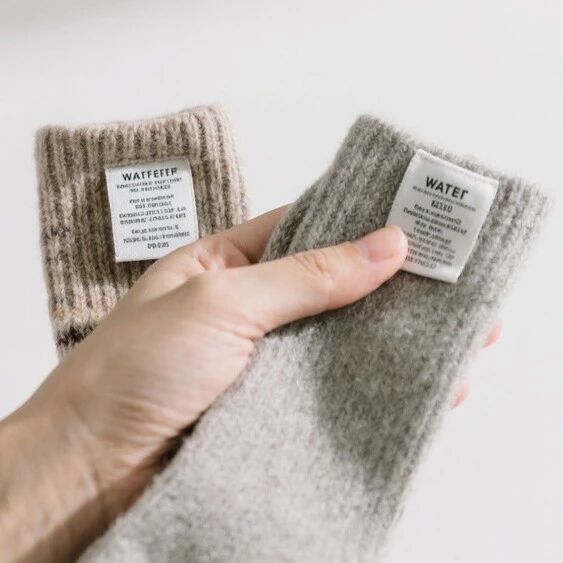
水洗标写的100%羊毛其实不是羊毛?怎么这年头要这么骗我
3 6 Ke· 2025-12-24 23:39
Core Viewpoint - The article discusses the confusion surrounding the labeling of wool products, particularly the misrepresentation of materials in the textile industry, leading to consumer concerns and the need for better understanding of fabric labels [1][3]. Group 1: Consumer Concerns - Many consumers are anxious about the authenticity of wool products, as evidenced by the popularity of online videos teaching how to identify genuine wool [3][5]. - The rising demand for natural fibers, such as wool, has led to increased prices, making consumers wary of being misled by false labeling [5][8]. Group 2: Labeling Standards - The article outlines the correct labeling standards for wool according to national regulations, emphasizing that only specific terms like "100% wool" or "pure wool" are acceptable [10][12]. - Misleading terms such as "high-grade wool" or "cotton wool" are not recognized by national standards and can lead to consumer deception [12][19]. Group 3: Market Practices - The prevalence of non-compliant labels in the market is highlighted, with many sellers taking advantage of the low cost of producing fake labels that appear to meet standards [21][29]. - The article notes that many manufacturers rely on fabric suppliers for material composition information without conducting their own testing, leading to potential inaccuracies in labeling [29][31]. Group 4: Detection Methods - While consumers can learn to read labels, the article suggests that this method has limitations, as labels can still be misleading [19][23]. - Professional methods, such as using microscopes or burning tests, can help identify genuine wool, but these methods may not be practical for everyday consumers [26][27].
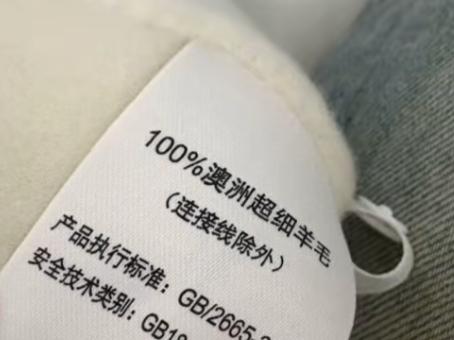
“羊毛”陷阱频现不止,监管标准亟需“硬核”升级
Sou Hu Cai Jing· 2025-12-11 09:38
Core Viewpoint - The wool product market is facing significant issues, with many businesses exploiting consumers through misleading marketing and substandard products [1][2] Group 1: Market Issues - The current wool product market is characterized by rampant irregularities, especially on e-commerce platforms, where products labeled as "wool" often contain minimal actual wool content [1] - Examples include socks with only 2% wool being marketed as "warm wool socks" and "pure wool blankets" containing only a thin layer of wool among synthetic fibers [1] - Misleading labeling practices allow businesses to use terms like "100% wool" on low-quality items, taking advantage of consumer trust [1] Group 2: Regulatory Challenges - The root cause of these market issues lies in the lagging and ineffective regulation, as existing standards for wool content are not mandatory, allowing businesses to exploit loopholes [2] - E-commerce platforms often have superficial review mechanisms that fail to verify the authenticity of product claims, enabling the sale of products with minimal wool content [2] - Regulatory bodies struggle to enforce standards effectively due to the vast and cross-regional nature of online transactions, leading to a lack of accountability for misleading practices [2] Group 3: Proposed Solutions - To address these issues, a collaborative approach is needed to create a transparent and regulated industry environment [2] - E-commerce platforms should be required to prominently display fiber content in product listings and establish efficient consumer protection and reporting channels [2] - Regulatory authorities should prioritize wool products for inspection, enhance technical measures for oversight, and push for mandatory standards to ensure product traceability and consumer transparency [2]
打假羊毛制品 不能只靠消费者“火眼金睛”
Bei Jing Qing Nian Bao· 2025-12-11 06:57
Core Viewpoint - The article highlights the prevalence of misleading marketing practices in the wool and cashmere product industry, where many products do not meet the claimed material standards, leading to consumer deception and market disorder [1][2][3] Group 1: Industry Issues - Many wool and cashmere products are falsely labeled, with some items containing as little as 2% wool, while others are marketed as "100% cashmere" despite being made from synthetic fibers [1][2] - The industry has seen a rise in deceptive practices, including the use of vague terms like "contains wool" or "wool blend" to mislead consumers, with some products completely lacking the claimed materials [2][3] Group 2: Consumer Challenges - Consumers face significant difficulties in protecting their rights, as distinguishing genuine products from counterfeit ones has become increasingly challenging due to advanced fabric technologies [2] - The costs and complexities associated with professional testing for product authenticity often deter consumers from pursuing claims, leading to a culture of silence that enables dishonest practices [2] Group 3: Regulatory Recommendations - To combat these issues, it is suggested that some recommended standards be converted into mandatory regulations, requiring clear labeling of actual wool content on product pages [3] - E-commerce platforms are urged to take responsibility by implementing keyword filters and conducting thorough checks on product information before listing [3] - Strict penalties for false labeling and a "blacklist" system for repeat offenders are recommended to enhance compliance and protect consumer trust [3]