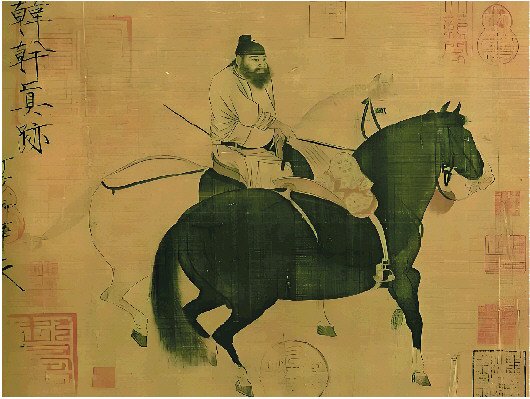
《五马图》

Search documents
从博物馆到美术馆 跃马扬鞭踏进马年
Xin Lang Cai Jing· 2026-02-25 17:54
Core Viewpoint - The article highlights the significance of horses in Chinese culture, history, and art, emphasizing their role as symbols of power, vitality, and cultural identity throughout various dynasties and eras [2][4][15]. Group 1: Historical Significance of Horses - Horses have been integral to human civilization since their domestication, serving as partners in hunting and migration, with archaeological evidence dating back 45,000 years [2]. - In ancient China, horses were considered vital for agriculture and warfare, being included in sacrificial rites and depicted in various historical artifacts [2][3]. - The importance of horses is reflected in historical texts, where they are described as essential to national strength and military capability [2][4]. Group 2: Cultural Representations of Horses - The artistic representation of horses spans from ancient rock paintings to modern artworks, showcasing their significance in various cultural contexts [9][12]. - Notable examples include the "Copper Galloping Horse" from the Han Dynasty, which exemplifies advanced bronze casting techniques and symbolizes the spirit of the era [3][4]. - The depiction of horses in literature and art reflects their multifaceted roles in society, from symbols of nobility to representations of everyday life [11][15]. Group 3: Horses in Folklore and Beliefs - Horses are deeply embedded in Chinese mythology and folklore, often associated with auspicious meanings and cultural practices, such as the zodiac [13][14]. - The concept of horses as protectors and symbols of good fortune is prevalent in various cultural artifacts, including decorations and games [14][15]. - The integration of horses into daily life and celebrations illustrates their enduring significance in Chinese culture, representing vitality and progress [15].
中国绘画“常青树”!马的艺术形象变化勾勒出深邃文化内涵
Xin Lang Cai Jing· 2026-02-16 22:32
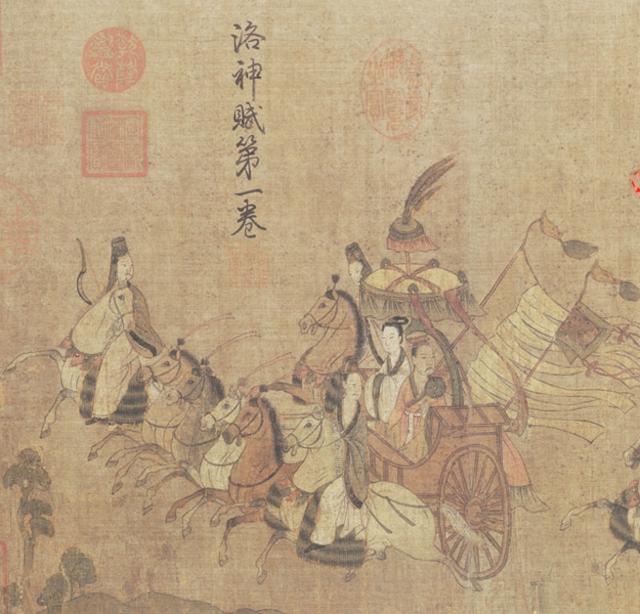
Core Perspective - The article explores the cultural significance of horses in Chinese art, illustrating how the representation of horses has evolved through different life stages and artistic expressions, reflecting deeper cultural values and human experiences [1][10][12]. Group 1: Historical and Cultural Significance - Horses have been a prominent symbol in Chinese art for over 15,000 years, representing identity, power, and spiritual values [1]. - The evolution of horse imagery in Chinese art mirrors the cultural memory and character of the Chinese people, transcending their biological attributes [1][9]. - Early artistic representations of horses, such as those in the Yinshan rock paintings, emphasize a raw, instinctual connection to nature, similar to children's imaginative depictions [8]. Group 2: Children's Perception of Horses - Children view horses as magical and pure beings, often depicted in vibrant colors and whimsical contexts, such as in fairy tales and games [6][7]. - Their artistic expressions of horses lack burdens and constraints, focusing instead on freedom and joy, reflecting their emotional projections [7][10]. Group 3: Horses in Different Life Stages - As individuals mature, their perception of horses shifts from whimsical companions to symbols of responsibility and ideals, embodying qualities like loyalty and perseverance [10][12]. - Artistic representations of horses in adulthood, such as in works by Han Gan and Li Gonglin, highlight their practical value and aesthetic beauty, reflecting the realities of life [10][11]. Group 4: Modern Interpretations - In modern times, the portrayal of horses has transitioned from practical utility to a representation of contemporary ideals, as seen in Xu Beihong's works, which combine Western techniques with traditional Chinese aesthetics [11][17]. - Xu Beihong's horse paintings serve as a spiritual symbol of resilience and hope during challenging times in Chinese history, reflecting the national spirit [18][19].

奔马迎春 骅骝奋跃
Xin Lang Cai Jing· 2026-02-15 01:08
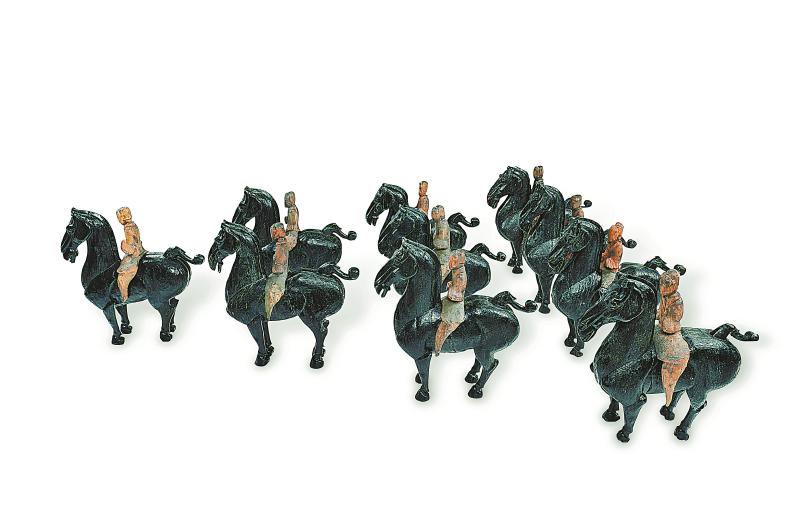
Group 1 - The article highlights the significance of the "Bronze Galloping Horse," a cultural relic from the Han Dynasty, symbolizing speed and artistry, and its connection to Gansu province's historical relationship with horses [1][2] - Gansu has been a crucial area for horse management during the Han and Tang dynasties, serving as a key location for military horse breeding and a vital segment of the Silk Road [2][3] - The article discusses the preservation of wooden horse artifacts in Gansu due to its dry climate, showcasing the region's unique craftsmanship and cultural heritage [2] Group 2 - The presence of horses in ancient Chinese art is emphasized, with various representations found in Dunhuang murals and Han dynasty artifacts, reflecting the cultural importance of horses in Chinese history [3] - The article mentions the influence of the Silk Road on horse culture, highlighting the interactions between different ethnic groups and the artistic depictions of horses in various historical periods [3] - It concludes by asserting that the legacy of horses in Chinese civilization should not be forgotten, as they represent a significant aspect of cultural and historical identity [3]
马留史迹 从古今文物到岁月驰骋
Xin Lang Cai Jing· 2026-02-12 22:40
Core Viewpoint - The article highlights the significance of horse-related artifacts in Chinese history, particularly in Sichuan, showcasing their cultural and historical value through various museums and archaeological findings [5][10]. Group 1: Historical Significance of Horse Artifacts - The horse symbolizes speed, strength, and progress in Chinese culture, with a rich history reflected in numerous artifacts from different dynasties [5]. - The large bronze horse from the Eastern Han dynasty, discovered in Mianyang, is a notable example, measuring 110 cm in length and 134 cm in height, showcasing the craftsmanship of the era [6]. - The bronze horse and accompanying figurines exemplify the importance of horses in ancient Chinese society, serving as symbols of status and power [9]. Group 2: Archaeological Discoveries - The bronze chariot and horse, unearthed in Ziyang, is recognized as the largest Western Han bronze chariot horse, measuring 1.84 meters in length, and is significant for understanding transportation in the Han dynasty [7][8]. - Numerous horse-related artifacts have been found in Sichuan, including a collection of 66 lacquered wooden horses from the Han tombs, emphasizing the region's rich archaeological heritage [9]. - The discovery of a three-wheeled bronze horse cart model in the Salt Source Old Dragon Head cemetery is noted as the earliest of its kind in China, contributing to the understanding of ancient transportation [12]. Group 3: Cultural Representation - Horse artifacts serve as keys to deciphering historical narratives, with items like the horse-drawn carriage depicted in the Eastern Han image brick reflecting the social status of officials [10][11]. - The artistic representation of horses in Chinese painting, from ancient to modern times, illustrates their cultural significance, with notable works by artists like Xu Beihong symbolizing strength and freedom [14][15].
笔墨为谁嘶鸣?马到自然成功!
Xin Lang Cai Jing· 2026-01-16 18:02
Core Perspective - The upcoming Year of the Horse in the Chinese lunar calendar highlights the deep cultural significance of horses in Chinese art and history, symbolizing strength, speed, freedom, and loyalty [2]. Group 1: Historical Significance of Horses - The relationship between humans and horses began with practical uses but evolved into a cultural and artistic phenomenon, with horses symbolizing power and dreams throughout Chinese history [3]. - Horses have been depicted in various historical contexts, from the mythological tales of the Zhou Dynasty to the grand terracotta army of the Qin Dynasty, reflecting their association with authority and ambition [3][4]. Group 2: Cultural Symbolism - In folk culture, horses represent auspiciousness and are associated with success and vitality, forming a strong cultural foundation for the emergence of horse paintings [4]. - The artistic representation of horses transcends mere animal depiction, embodying the aesthetic values, aspirations, and collective psyche of the era [4]. Group 3: Golden Age of Horse Paintings - The Tang Dynasty marked a flourishing period for horse paintings, characterized by a vibrant culture and the influx of exotic horses from the West, leading to a widespread appreciation for horses among all social classes [6]. - Two distinct aesthetic realms emerged during this period: one celebrating the wild essence of horses, represented by artists like Wei Yan and Han Huang, and the other reflecting courtly ideals, exemplified by artists like Cao Ba and Han Gan [6][7]. Group 4: Artistic Evolution in Song and Yuan Dynasties - The Song Dynasty brought a cultural shift towards introspection and subtlety, leading to a transformation in horse paintings that incorporated literati aesthetics and historical context [9]. - Artists like Li Gonglin introduced a new style of "fine outline" painting, emphasizing line quality and abstract beauty, which shifted the focus from opulence to elegance in horse art [9][10]. Group 5: Challenges and Innovations in Ming and Qing Dynasties - The Ming and Qing Dynasties saw a decline in the creative vigor of horse paintings, as the rise of literati painting and changing societal tastes diminished the genre's appeal [11]. - However, the Qing Dynasty also witnessed the introduction of Western artistic techniques by artists like Lang Shining, which revitalized horse paintings with new perspectives and dimensionality [11][12]. Group 6: Modern Transformation - In the 20th century, Xu Beihong revolutionized horse painting by integrating Western techniques with traditional Chinese aesthetics, using horses as symbols of resilience and national spirit [13]. - His works often depicted dynamic and powerful horses, reflecting the struggles and aspirations of the Chinese people during tumultuous times, thus elevating horse paintings to a modern symbol of national identity [13].