
《关山月》

Search documents
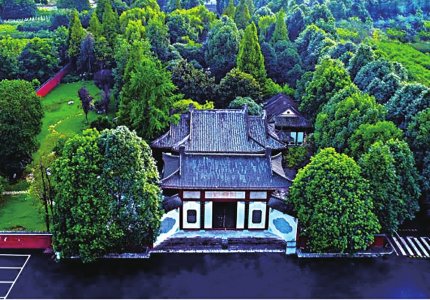
李白的精神原乡
Xin Lang Cai Jing· 2026-02-27 19:29
Core Viewpoint - The article explores the enduring influence of the poet Li Bai, particularly his connection to Emei Mountain, reflecting on his life journey and the evolution of his poetic expression over time [8][9][10]. Group 1: Li Bai's Life and Poetry - Li Bai, known for his various titles such as "Poet Immortal" and "Wine Immortal," is also referred to as "Li Emei," highlighting his lifelong connection to Emei Mountain [8]. - In his later years, particularly in the poem "Emei Mountain Moon Song Sending the Monk Yan to the Capital," Li Bai expresses a sense of nostalgia and reflection, contrasting his youthful ambitions with the realities of his later life [9][10]. - The poem serves as a farewell to a friend, encapsulating themes of memory, longing, and the enduring presence of Emei Mountain in his heart [9][11]. Group 2: Themes of Resilience and Reflection - Throughout his life, Li Bai's poetry reflects a journey from youthful ambition to a more profound understanding of life's challenges, showcasing a transformation in his perspective [10][11]. - The moon symbolizes a constant source of inspiration and comfort for Li Bai, representing his connection to his homeland and the romantic ideals he cherished despite life's adversities [11][12]. - The article emphasizes that Li Bai's experiences of struggle and resilience ultimately culminate in a spiritual and literary reconciliation with the moon, signifying a deeper philosophical understanding of his life's journey [12][13]. Group 3: Cultural Significance - The cultural legacy of Li Bai continues to resonate in Sichuan, where the spirit of resilience and optimism is reflected in the local populace, mirroring the poet's own characteristics [13]. - The article suggests that exploring Sichuan can provide insights into the enduring cultural and philosophical influences of Li Bai, encouraging a deeper appreciation for the region's heritage [13].

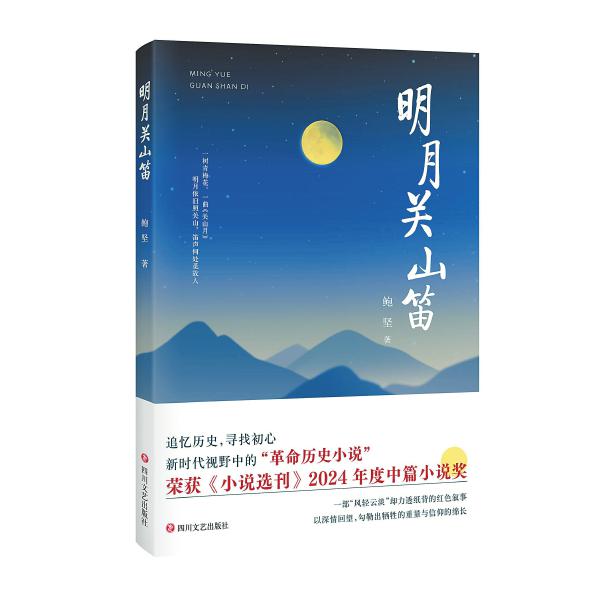
于家常叙说中打捞历史的温度
Xin Lang Cai Jing· 2026-02-19 21:59
Core Perspective - The article discusses the book "Mingyue Guanshan Di" by author A Lai, which presents a fresh approach to writing about revolutionary history by using personal narratives and cultural artifacts to make history relatable and alive [2][3][4]. Summary by Sections Historical Narrative - The book contrasts traditional grand narratives of revolution with intimate family dialogues, allowing readers to connect with history through personal stories rather than distant heroic figures [2][3]. - It emphasizes that revolutionary events are not just distant legends but are embedded in the lives and memories of ordinary people [4]. Cultural Artifacts - The use of old objects and the song "Guanshan Yue" serves as a backbone for the historical narrative, providing tangible evidence that grounds the stories in reality [4][5]. - The evolution of "Guanshan Yue" reflects the broader cultural history of China, linking past and present through its changing forms [5][6]. Heroism and Legacy - The book highlights that many unsung heroes contributed to revolutionary success, emphasizing that heroism can be found in the everyday lives of ordinary individuals [5][6]. - It argues that true understanding of heroism comes from recognizing the quiet strength of those who may not have achieved fame but whose contributions are invaluable [6]. Cultural Continuity - The narrative situates revolutionary history within the broader context of Chinese culture, illustrating how cultural continuity has shaped national identity and resilience [6]. - The book suggests that effective revolutionary narratives should not merely replicate history but should bring it to life through the memories of ordinary people and cultural heritage [6].
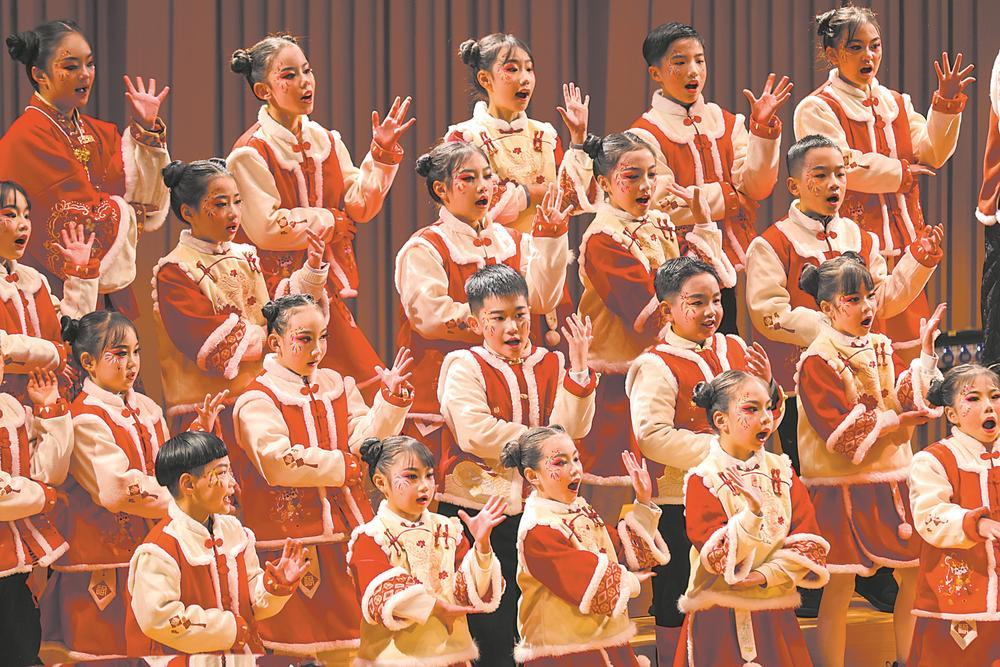
童声合唱 温暖迎新 童心飞扬 畅想未来
Xin Lang Cai Jing· 2026-01-23 18:53
Core Viewpoint - The "苗地" Children's Choir New Year Concert in Chengdu showcased the artistic achievements of students and emphasized the importance of music education in children's growth and collaboration [7][9]. Group 1: Event Overview - The concert took place on the afternoon of the 23rd at the Chengdu ASEAN Arts Center, which has a seating capacity of 397 [7]. - Nearly 500 students and teachers from Chengdu participated in the performance, with a simultaneous exhibition of artistic achievements from schools [7][9]. Group 2: Musical Performance - The concert featured three main sections: "苗地新声·美育初绽," "新岁启章·童音欢腾," and "乘歌展翼·音乐飞扬," presenting nearly 20 diverse musical pieces [8]. - The performances included classic songs and contemporary pieces, evoking emotional connections and cultural dialogues through music [8]. Group 3: Educational Impact - The concert was described as a profound practice of aesthetic education, highlighting the unique value of music in children's development, particularly in fostering cooperation and collective warmth [8][9]. - Teachers noted that the event significantly enhanced children's artistic expression and sense of collective honor, demonstrating the subtle yet powerful influence of aesthetic education [9]. Group 4: Art Exhibition - A concurrent exhibition showcased various artistic works, including calligraphy, painting, and handicrafts, created by participating students [9]. - The exhibition featured unique interdisciplinary projects, such as psychological picture books and cultural products, reflecting the creativity and talent of Chengdu's youth [9]. Group 5: Future Aspirations - The "苗地" brand, established over 40 years by Chengdu Daily, aims to continue developing the concert into a vibrant cultural exchange platform that nurtures children's artistic growth and connects families and schools [10].
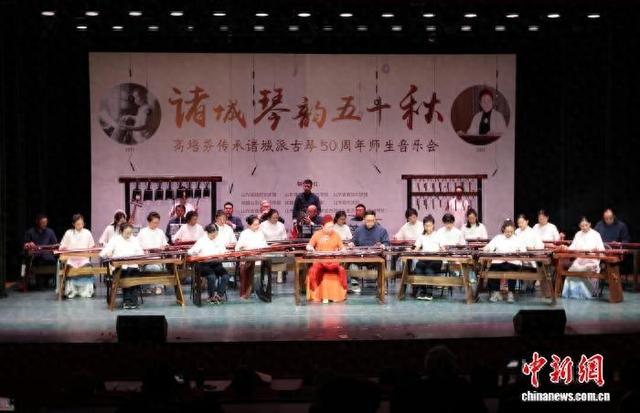
传承“声声”不息 诸城派古琴50周年师生音乐会奏响泉城
Xin Lang Cai Jing· 2025-12-28 01:56
Core Viewpoint - The concert "Zhucheng Qin Yun Fifty Autumns" marks the 50th anniversary of Gao Peifen's transmission of the Zhucheng school of Guqin, showcasing the continuation of this traditional Chinese art form in the modern era [1][4]. Group 1: Event Overview - The concert took place on December 27 at Shandong Normal University, featuring over 30 students performing alongside Gao Peifen [1]. - The program included traditional pieces such as "Changmen Yuan" and "Yangguan Sandie," as well as ancient songs revived by Gao Peifen and contemporary compositions [3][4]. - The event attracted a diverse audience, including seasoned enthusiasts and young students, highlighting the growing interest in Guqin music [3]. Group 2: Historical Context - The Zhucheng school of Guqin originated in Shandong and developed in the mid-19th century, characterized by its unique artistic style [3]. - The school faced near extinction in the 1970s due to historical factors, but Gao Peifen began her training in 1975, leading to a revival of the tradition [3][4]. Group 3: Educational Efforts - Gao Peifen has established public classes and courses in schools, organized concerts and lectures, and published materials to promote the Zhucheng school of Guqin [4]. - Over the past 50 years, she has trained nearly 1,000 students, many of whom have become sixth-generation inheritors of the tradition [6]. Group 4: Modern Adaptations - Younger disciples are utilizing modern technology and social media to spread Guqin music globally, adapting popular music into Guqin arrangements to engage younger audiences [6][9]. - The concert also featured performances that integrated poetry and music, aimed at fostering interest in traditional arts among different age groups [6]. Group 5: International Outreach - Gao Peifen and her students have been actively promoting the Zhucheng school of Guqin on international stages, performing in cities like New York, Washington, and Paris [7].
迪拜举办古琴雅集活动
人民网-国际频道 原创稿· 2025-10-28 00:59
Core Viewpoint - The event titled "Four Seas Qin Heart" serves as a cultural dialogue through music, commemorating the 130th anniversary of the birth of the guqin master Cha Fuxi and aiming to bridge the musical traditions of China and the Arab world [2]. Group 1 - The event took place on October 25 at the Arab Music Academy in Dubai, featuring performances by guqin players in traditional Chinese attire alongside Arab musicians [1]. - The performances included a blend of traditional Chinese and Arab music, showcasing instruments such as the guqin, oud, and darbuka, creating a rich cultural exchange [1][6]. - The event is part of a global initiative involving 62 guqin societies, highlighting the international interest in promoting cultural dialogue through music [7]. Group 2 - The program featured classical pieces such as "Xiaoxiang Water Clouds," "Fishing and Woodcutting Dialogue," and "Ospreys Forgetting Their Concerns," culminating in a collaborative performance of "Cang Hai Yi Sheng Xiao" that fused Chinese and Arab musical elements [6]. - The event also referenced historical cultural exchanges, noting that ancient Dunhuang murals depicted the musical interactions between Arab and Chinese cultures along the Silk Road [2].

后记:人的旅程,诗的朝圣,跨越千年的古今对话丨从长安到敦煌(11)
Jing Ji Guan Cha Bao· 2025-09-22 04:31
Group 1: Journey of Humanity - The journey from Chang'an to Dunhuang is a historical path that spans thousands of years, marked by the footprints of merchants, soldiers, poets, and monks [1][2] - The journey reveals the vibrant faces and broad hearts of individuals who contributed to the historical narrative [2] Group 2: Cultural and Historical Significance - The journey is not merely a trade route but a cultural river that has flowed since the dawn of civilization, embodying the open and inclusive nature of Chinese civilization [10] - Artifacts such as the Han Dynasty's "Wang Zhang Edict" and the bronze chariots from the Leitai Han Tomb illustrate the social fabric and historical figures of the time [3][4] Group 3: Poetry and Artistic Expression - The Silk Road is nourished by poetry, with Tang Dynasty frontier poems being a significant part of Chinese literature [7] - The act of reciting poetry at historical sites creates a direct dialogue with ancient poets, allowing for a deeper connection to their emotions and experiences [8] Group 4: Continuity of Civilization - The journey emphasizes the enduring legacy of Chinese civilization, with historical artifacts serving as both witnesses to the past and beacons for the future [15] - The cultural and historical imprints on the land are integral to understanding the continuous flow of civilization, which remains vibrant and relevant today [15]