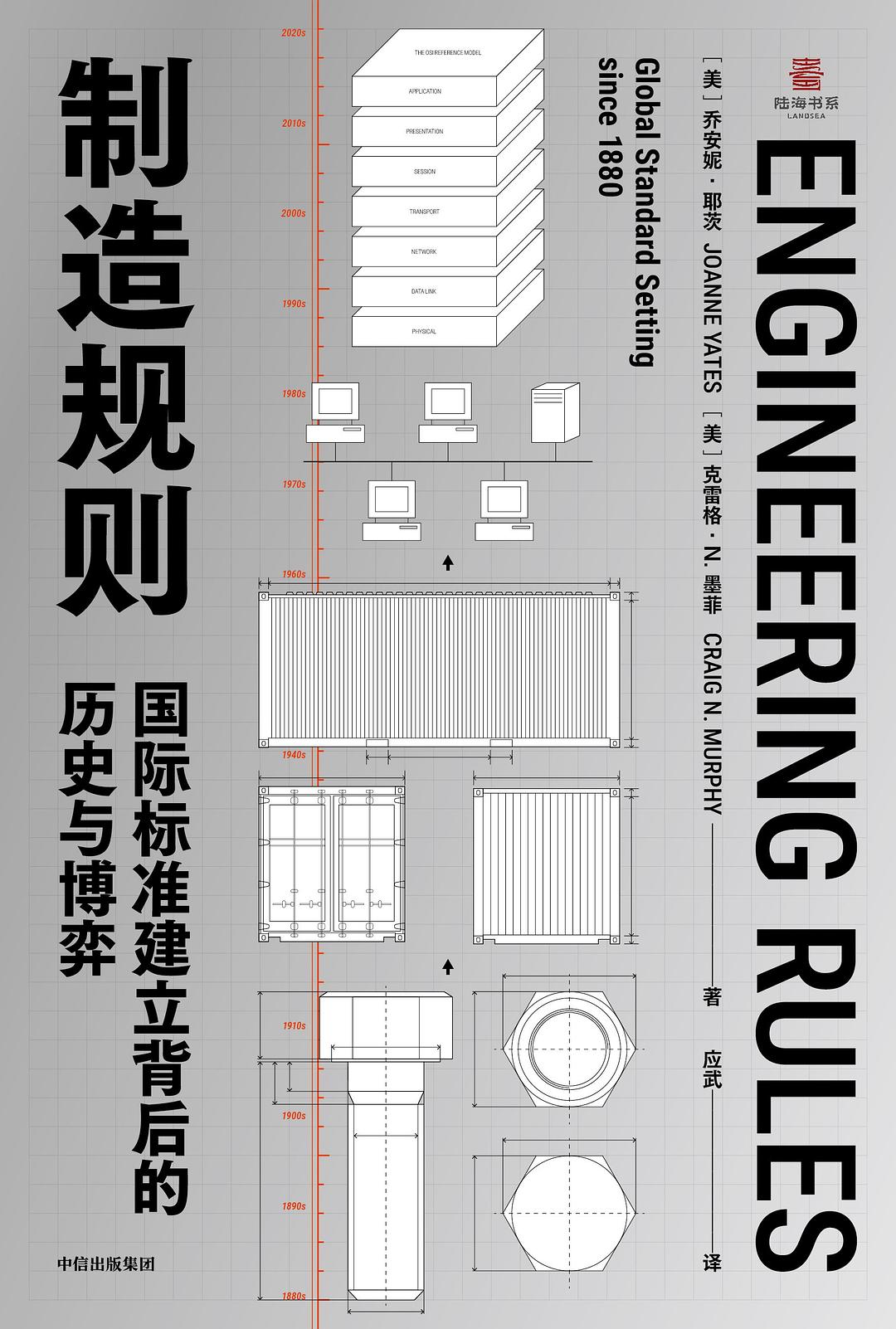
《制造规则:国际标准建立背后的历史与博弈》

Search documents
从船级社到ISO9004,这些标准如何走向全球化应用
Di Yi Cai Jing· 2025-11-21 08:16
Core Points - The formation of standards is determined by a triangular relationship among engineers, the market, and the government [2] - The evolution of international standards can be divided into three main waves: the first wave focused on standards for manufacturers, the second wave on container standardization to enhance global trade, and the third wave on information technology standards for social health and environmental protection [2][3] - Historical examples of standardization include steam boilers, threaded standards, and rail tracks, which were established to address safety and efficiency in industrial production [3][4] Group 1 - The ISO9000 series of quality management standards emerged in the 1980s, emphasizing goal setting and independent third-party supervision of quality management systems [5][6] - ISO9001, a specific quality management requirement, has become widely adopted globally, with over 200 million companies certified [6][7] - The certification process for ISO9001 is particularly prevalent among manufacturers of metals, electrical equipment, and construction companies, serving as a quality benchmark for entering global markets [7][8] Group 2 - China's efforts in standardization include leading the development of 1,079 international standards during the 14th Five-Year Plan period, promoting mutual recognition of over 500 standards [7] - The internationalization of standards is a strategic choice for China to enhance its global influence and competitiveness, facilitating deeper integration with partners in technology, industry, and markets [7][8]

新凉卷中生,这份夏季书单值得一看
21世纪经济报道· 2025-07-26 13:41
Group 1 - The article discusses the impact of current global challenges such as tariff shocks, wildfires in Southern Europe, and the ongoing competition in artificial intelligence on the capital markets, likening it to a relentless heatwave [2] - It introduces a curated summer reading list for 2025, featuring ten books across various fields including economics, business, and culture, aimed at providing readers with "cool reflections" during the hot summer [2] - The book "Deep Reform: China's Economic Dilemmas and Breakthroughs" by Yin Yanlin focuses on the key contradictions in China's economic operation and seeks pathways for high-quality development through a problem-oriented approach [4] Group 2 - "The Big Cycle: Why Nations Go Bankrupt" by Ray Dalio addresses the imminent debt issues and potential collapse of the monetary system, summarizing the "big debt cycle" and its five stages based on a century of research on 35 currency markets [7] - "Money and Government: A Challenge to Mainstream Economics" by Robert Skidelsky emphasizes the unpredictability of economic activities and critiques the new classical economics, advocating for a better understanding of the roles of money and government in economic order [10] - "The Shadow of the Sun" by Ryszard Kapuściński provides a unique perspective on Africa, showcasing the continent's beauty and the struggles of its people through the eyes of a journalist who reported from various conflict zones [26]