《开心农场》

Search documents
8090后的养老游戏回来了
3 6 Ke· 2026-01-23 03:59
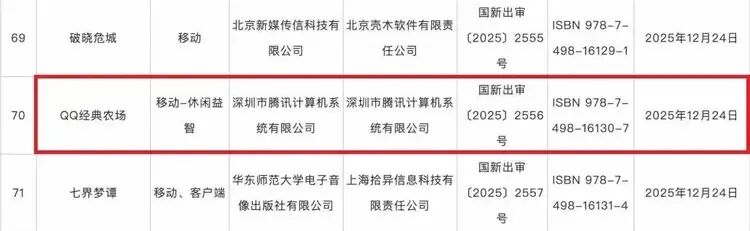
Core Viewpoint - QQ is reviving its classic game "QQ Farm" by applying for a mobile version license in 2025, driven by competition from new platforms like Douyin and the need to rejuvenate its user ecosystem [1][28]. Group 1: Historical Context - "QQ Farm" has been a staple in QQ's ecosystem since its launch in 2009, maintaining a presence in users' QQ spaces for 16 years [1]. - The game was inspired by "Happy Farm," which became a massive hit in 2008, leading to a surge in similar games and establishing a new genre in social gaming [2][4]. - Tencent acquired "Happy Farm" and rebranded it as "QQ Farm," integrating it into the QQ social network, which significantly boosted user engagement [11][13]. Group 2: Current Challenges - QQ's monthly active users have been declining, with 5.32 billion users reported in June 2025, while WeChat's user base continues to grow, reaching 1.41 billion [20]. - Douyin has emerged as a formidable competitor, boasting 1 billion monthly active users and developing its own social gaming features to attract younger audiences [21][26]. Group 3: Strategic Response - The re-launch of "QQ Farm" aims to leverage nostalgia to attract both old and new users, with plans to introduce new features and integrate AI technology [28][29]. - QQ is focusing on enhancing its user experience by revamping its classic products and introducing personalized features to compete effectively against Douyin [26][28].


Google报告揭密:出海第一的品类,到底怎么在赚轻度玩家的钱?
3 6 Ke· 2025-11-06 11:15
Core Insights - The gaming industry is facing challenges in generating revenue, with traditional genres like SLG (Simulation and Strategy Games) struggling to attract new users and maintain profitability [2][4] - Google has released a report titled "Lightweight SLG Player Insights," which provides data and interviews from players in the US and South Korea, highlighting how SLG games can break through existing limitations and tap into new user bases [2][6] Group 1: Incremental Growth - To attract players outside the traditional SLG demographic, the visual style of games has shifted towards bright, colorful, and cartoonish designs, making them more approachable for casual users [6][10] - The thematic design of lightweight SLGs focuses on personal growth experiences rather than competitive elements, which resonates more with casual players [6][7] - There are notable differences between US and South Korean players, with US players placing higher importance on art style and character design compared to their South Korean counterparts [8][10] Group 2: Player Engagement Strategies - Lightweight SLGs utilize mini-games and narrative-driven introductions to guide players through the game mechanics, ensuring that each action has a clear objective [10][20] - Players appreciate the ability to progress in short play sessions, which enhances their engagement and satisfaction [20][25] - The design of social features in lightweight SLGs is more flexible, allowing players to join alliances without mandatory requirements, thus reducing the pressure to participate [22][25] Group 3: Monetization and Player Retention - The monetization strategy for lightweight SLGs includes offering smaller, customizable in-game purchases, catering to players' specific interests [25][39] - Both US and South Korean players prioritize multiplayer PVP experiences as a key driver for in-game purchases, indicating a strong preference for competitive gameplay [41][42] - The report suggests that there is still significant room for improvement in SLG games regarding playability, guidance efficiency, and overall enjoyment [44]