《荒野大镖客 2》

Search documents
英伟达抛弃+谷歌降维打击,游戏业黄昏将至?
美股研究社· 2026-02-11 11:06
Core Viewpoint - Nvidia's indefinite postponement of new gaming GPU development due to memory supply constraints has triggered an unprecedented crisis in the global gaming industry, which is now facing dual threats from both hardware limitations and the rapid rise of generative AI technology [6][8][10]. Group 1: Nvidia's Shift in Focus - Nvidia has shifted its focus away from gaming GPUs, with data center business contributing 90% of its revenue in Q3 2026, while gaming only accounted for 7.5% [14][15]. - The RTX 50 series has been indefinitely shelved, and the RTX 60 series production has been delayed until 2028, leading to a technology vacuum for gamers [11][12]. - The gaming business has become a marginal segment for Nvidia, which is now prioritizing data center profits over gaming hardware [17][20]. Group 2: Memory Supply Crisis - The memory supply crisis is exacerbated by TSMC's tight wafer capacity and major memory manufacturers shifting focus to data centers, causing memory prices to soar [19][24]. - Nvidia's need for high-bandwidth memory (HBM) is critical, as it requires three times the silicon of traditional DRAM, further complicating supply issues [22]. - The overall supply chain is experiencing a shift, with major players like Micron and Samsung prioritizing data center orders, leading to a significant increase in DRAM prices [25][26]. Group 3: Impact of Generative AI - The rise of generative AI poses a significant threat to traditional game development, as AI can rapidly generate game assets and content, leading to fears of obsolescence among game developers [8][34]. - The launch of Google's Project Genie, which can create interactive 3D worlds in minutes, caused a significant drop in stock prices for major gaming companies, highlighting the market's anxiety over AI's capabilities [37][38]. - AI is already transforming various aspects of game development, including art asset generation, NPC dialogue, level design, and sound production, which could drastically reduce development costs and time [40][49]. Group 4: The Uniqueness of Human Creativity - Despite the advancements in AI, the gaming industry's true value lies in elements that AI cannot replicate, such as IP value, narrative depth, gameplay innovation, and cultural significance [51][55]. - The emotional connection players have with established IPs, like Nintendo's Mario, cannot be generated by AI, emphasizing the importance of human creativity in game development [53][54]. - The gaming industry is at a crossroads, where the integration of AI as a tool alongside human creativity is essential for producing meaningful and impactful games [69][70].




Genie 3 引发游戏股暴跌,但游戏的真正灵魂 AI 永远得不到
3 6 Ke· 2026-02-04 03:55
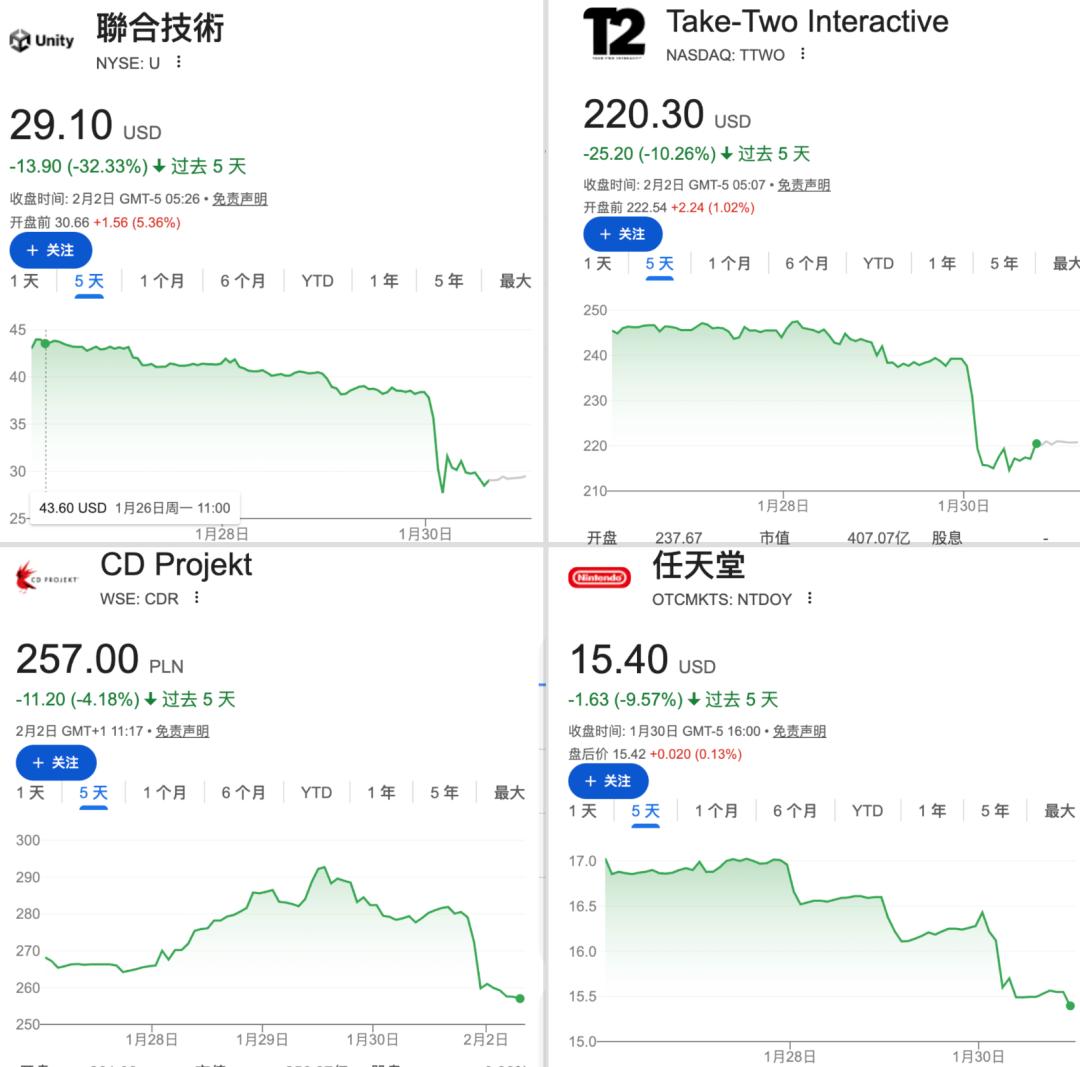
Core Viewpoint - The release of Google DeepMind's third-generation visual language model, Genie 3, has led to a significant drop in the stock prices of major gaming companies, raising concerns about the future of AAA game development [1][3]. Group 1: Market Reaction - Following the announcement of Genie 3, Unity's stock plummeted by over 24%, with other major companies like Take-Two, Nintendo, and CD Projekt Red also experiencing declines [1]. - The market's reaction is driven by the perception that Genie 3 can generate high-quality 3D game worlds quickly, potentially threatening traditional game development practices [3]. Group 2: Misconceptions about Game Development - The belief that visual detail generation equates to complete world-building is a misunderstanding; creating immersive game worlds requires more than just visual fidelity [4]. - Game development involves intricate world-building that cannot be replicated solely through AI-generated visuals, as the essence of a game's "life" comes from its depth and complexity [4][12]. Group 3: Limitations of Genie 3 - Genie 3 operates on a frame generation model that lacks the logical consistency and long-term memory required for a cohesive gaming experience, with a memory window of only one minute [8][10]. - The model's probabilistic nature means it cannot maintain the structured, deterministic environments that traditional game engines provide, leading to potential immersion-breaking inconsistencies [11][10]. Group 4: The Importance of IP and Emotional Connection - Players often value the emotional connection to game IPs, which cannot be generated by AI; successful IPs require time, consistency, and creator investment [22][26]. - The long-term development of iconic IPs, such as Mario and GTA, illustrates that emotional resonance and narrative depth are crucial for player engagement, which AI cannot replicate [22][23][27]. Group 5: Future of AI in Game Development - While AI tools like Genie 3 can enhance efficiency in game development, the creative direction and integration of AI-generated content will still rely on human designers [29][30]. - AI is positioned as a powerful tool for game developers, but the true artistry and cultural significance of games will continue to depend on human creativity and oversight [31].