
《金陵十三钗》

Search documents
专访演员倪妮:这部戏太“神奇”,它改变了我的人生态度
Xin Lang Cai Jing· 2026-01-29 22:57
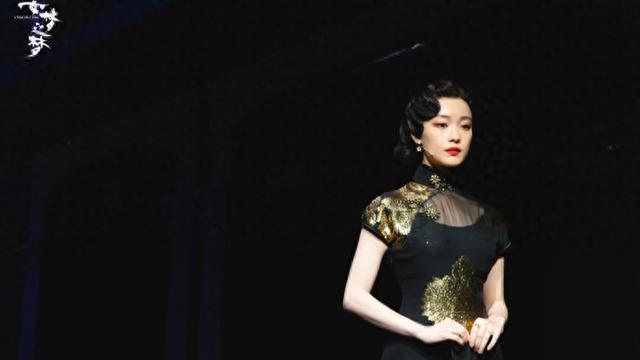
Core Viewpoint - The interview with actress Ni Ni highlights her journey in theater, particularly her roles in "The Dream Like Dream" and "The Little Red Book," showcasing her growth as an actress and her evolving understanding of performance and life [4][22][30]. Group 1: Career Development - Ni Ni made her stage debut in 2019 with the play "The Little Red Book," where she played two roles, marking a significant shift in her acting career [4][14]. - Her portrayal of Gu Xianglan in "The Dream Like Dream" has been transformative, allowing her to embrace imperfection and focus on the present [4][11]. - The collaboration with director Lai Shengchuan has been pivotal, as he helps actors discover and amplify their strengths while providing encouragement [19][30]. Group 2: Performance Insights - Ni Ni emphasizes the importance of understanding the complex life circumstances of her characters to deliver authentic performances [10][22]. - She believes that acting in theater requires maintaining a fresh and lively state for each performance, contrasting with the more fixed nature of film acting [22][28]. - The experience of performing has led her to a more relaxed approach to life, reducing self-imposed pressure and allowing for a more natural existence [11][24]. Group 3: Personal Philosophy - Ni Ni reflects on the idea that life is akin to building a house, where one should accept imperfections and strive for improvement in future endeavors [24][30]. - She advocates for focusing on the present and not being overly concerned with external judgments, which can lead to a more fulfilling career and life [23][30]. - The actress expresses a desire to break free from the constraints of beauty standards, willing to take on roles that showcase her versatility beyond her physical appearance [26][30].

【文艺作品中的二战故事】二战文学的跨世代回响
Huan Qiu Shi Bao· 2025-09-02 22:12
Core Insights - The article discusses the significance of World War II literature through the perspectives of various authors and scholars, highlighting how these works reflect on war, peace, humanity, and fate [1][2][4][7]. Group 1: Perspectives on WWII Literature - Andrew Buchanan, a British historian, emphasizes the importance of David Cesarani's "Final Solution: The Fate of the Jews," which provides a comprehensive account of the tragic experiences of European Jews during WWII, integrating new findings from Soviet archives and personal accounts [2][3]. - Buchanan also recommends David Downing's "Station Series," which offers a unique narrative perspective by allowing readers to experience historical events through the eyes of characters, thus enriching the understanding of history [3][4]. - The article mentions the impact of Yu Hua's novel "To Live," which, while not strictly WWII literature, provides insights into the effects of war on ordinary Chinese citizens, enhancing the understanding of historical experiences [4][5]. Group 2: Notable Works and Their Themes - Xu Zechen, a Chinese author, highlights "The Tin Drum" by Günter Grass, which tells the story of a boy named Oscar who stops growing to protest the absurdity of the adult world during WWII, symbolizing the suffering caused by war [5][6]. - Xu also discusses "The Reader" by Bernhard Schlink, which explores the moral complexities faced by individuals during and after the war, particularly through the lens of a relationship between a young boy and an older woman who becomes a war criminal [6][7]. - The article notes that both authors believe that literature should intertwine historical events with personal narratives to create meaningful connections between characters and their historical contexts [6][7]. Group 3: Insights from Young Readers - Vietnamese students, Wu Xiangmei and Chen Guangyu, express how WWII literature, such as Yan Ge's "The Flowers of War," helps them understand the brutal realities of war and its impact on ordinary people [7][8]. - They emphasize that reading such literature allows contemporary youth to appreciate the value of peace and recognize the ongoing relevance of historical lessons in today's world [8]. - The students suggest that future WWII literature should focus on the stories of ordinary people suffering during the war, and explore innovative narrative techniques that connect historical events with contemporary issues [8].
走进莫斯科孔子学院,对话俄罗斯青年
Huan Qiu Shi Bao· 2025-05-11 21:59
Core Viewpoint - The article discusses the understanding of historical events, particularly the Nanjing Massacre and the contributions of China and Russia during World War II, among Russian youth, emphasizing the importance of preserving historical truth and cultural exchange between China and Russia [1][2][3][4]. Group 1: Historical Awareness - Many students at the Confucius Institute in Moscow are aware of the Nanjing Massacre, with estimates of around 300,000 deaths during the six-week period following the Japanese invasion [2]. - Students also recognize other historical atrocities, such as the actions of Unit 731 and the "comfort women" issue, indicating a broader understanding of Japan's wartime conduct [3]. - There is concern among students regarding the distortion of historical facts and the denial of contributions made by China and Russia during World War II, with many actively countering such narratives [3][4]. Group 2: Cultural Influence - The Confucius Institute serves as a significant platform for Russian youth to engage with Chinese culture, with students expressing fascination with various aspects, including calligraphy and tea culture [5]. - Chinese pop culture, including music and films, has gained popularity among Russian youth, with artists like Jay Chou and films like "The Battle at Lake Changjin" being particularly well-received [6]. - Social media and video platforms are crucial for Russian youth to explore Chinese culture, with many expressing a desire to study in China, driven by positive perceptions of Sino-Russian relations [7].