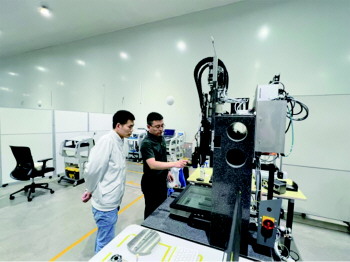
三坐标测量机

Search documents
国产领跑,遥遥领先,3.26亿三坐标测量仪年度中标盘点
仪器信息网· 2026-01-13 09:07
Core Insights - The total number of coordinate measuring machines (CMMs) awarded in 2025 reached 359 units, with a total value of 326 million yuan, involving 26 brands including Hexagon, Carl Zeiss, and Qingdao Leyton [1][3]. Market Overview - In 2025, 302 bids related to CMMs were published, with a total awarded amount of 326 million yuan and 359 units awarded [3]. - The demand for CMMs is driven by the aerospace, defense, automotive, medical, electronics, energy, and heavy machinery industries, reflecting their core position in high-end manufacturing [4]. Monthly Trends - The market activity increased in the second half of 2025, with November and December being peak months for procurement, accounting for a significant portion of the total annual figures [5]. - In December alone, 68 units were awarded, with a peak amount of 69.2 million yuan [5]. Quarterly Distribution - The fourth quarter contributed nearly half of the total awarded amount for the year, with approximately 146 million yuan awarded in that quarter [8]. Brand Landscape - Hexagon led the market with over 120 units awarded, followed by Carl Zeiss. Domestic brands like Xi'an Edward and Zhongtu Instrument form a significant second tier, collectively capturing about 25% of the market [11][13]. - Domestic brands are increasingly recognized for their improved measurement accuracy and service levels, with around 65% of mid-to-low-end market sales attributed to them [11]. Procurement Dynamics - The primary demand for CMMs comes from industrial enterprises (39%) and universities (34%), together accounting for over 70% of the market [16][17]. - The dual driving force of industrial applications and research education ensures stable and advanced market demand [17]. Industry Applications - The automotive (38%) and aerospace (26%) sectors dominate the demand for CMMs, together representing 64% of the market, highlighting the technology's critical role in high-end manufacturing [19]. - The increasing precision requirements in the automotive industry, especially for electric vehicles, and the stringent safety standards in aerospace are key factors driving demand [19]. Regional Insights - Regions such as Sichuan, Chongqing, Tianjin, and Jiangsu show strong market activity, driven by their roles in aerospace and heavy machinery [21]. - The Yangtze River Delta region has shifted from large-scale purchases to upgrading existing production lines, reflecting a demand for more intelligent and automated detection solutions [21]. Future Outlook - The CMM market is expected to continue evolving towards automation, intelligence, and 3D measurement capabilities, enhancing measurement precision and exploring various measurement methods [22].


国产超三成:2025Q3三坐标测量仪中标103台
仪器信息网· 2025-12-10 09:08
Core Viewpoint - The total bid amount for coordinate measuring machines in Q3 2025 reached 68.8365 million yuan, with a total of 103 units awarded, indicating a significant dominance of imported brands, particularly Hexagon, which won 40 units, showcasing a clear head effect in the market [1][3][8]. Summary by Sections Bidding Information - In Q3 2025 (July 1 to September 30), 87 bids related to coordinate measuring machines were published, with a total bid amount of 68.8365 million yuan [3]. - The monthly breakdown shows that 32, 39, and 32 units were awarded in July, August, and September respectively, with August having the highest total bid amount of 30.0199 million yuan [4]. Brand Distribution - The bidding results reveal a significant concentration among leading brands, with Hexagon leading by a wide margin with 40 units, followed by Carl Zeiss with 8 units. Other brands like Xi'an Edward, APEI, and others averaged around 3 units each [8]. - The market remains dominated by imported brands, while domestic brands like Xi'an Edward and others have a smaller market share, indicating a diverse but less competitive local presence [10]. Market Share - In terms of bid quantity and amount, domestic and imported brands have an equal share of 38% and 62% respectively. Despite the lower number of bids from domestic brands, they have shown a diversified presence in the market [10]. - The primary purchasers of these measuring instruments are universities and industrial enterprises, accounting for over 75% of the market demand, highlighting a strong investment in educational and industrial upgrades [12]. Industry Demand - The automotive and parts sector represents 43% of the industrial enterprise purchases, indicating a robust demand for measurement and testing equipment in this field. Strategic emerging industries like semiconductors and aerospace account for 29% of the demand [15]. - The purchasing trends reflect a clear direction in China's manufacturing upgrade, focusing on high-end automotive production, expansion in strategic industries, and automation in basic equipment manufacturing [15].


三坐标中标盘点:海克斯康领跑,国产品牌仅占1/4
仪器信息网· 2025-12-06 09:06
Core Insights - The total bid amount for coordinate measuring machines (CMM) in November 2025 reached 56.495 million yuan, with Hexagon leading the market, and over 60% of purchases coming from universities, indicating a strong demand in the aerospace sector as the main driver in industrial procurement [1][3]. Market Overview - In November 2025, there were 51 published bid announcements related to CMMs, with a total bid amount of 56.495 million yuan and 56 units of CMMs awarded [3]. - Hexagon dominated the market with a significant lead in the number of bids, reflecting its strong recognition and stable demand in the domestic measurement market [3]. - Other brands like Zeiss, Skan, Zhongtu Instruments, and Xi'an Edwards showed a more balanced distribution of bid numbers, indicating a diverse and active market [3]. Brand Competition - Imported brands accounted for 63% of the bid numbers, while domestic brands made up 37%, showcasing the competitive presence of domestic brands, especially in small to medium-sized projects [5]. - In terms of bid amounts, imported brands dominated with a 75% share, totaling 28.498 million yuan, while domestic brands accounted for 25%, totaling 9.4228 million yuan [7]. Procurement Analysis - Universities represented the largest share of procurement at 60%, highlighting their ongoing investment in precision measurement talent and research platforms [9]. - Industrial enterprises accounted for 24% of the procurement, primarily in the automotive, aerospace, and precision manufacturing sectors, where CMMs play a critical role in quality control and smart manufacturing [9]. Industrial Application Distribution - The aerospace sector was the leading application area, accounting for 65% of the procurement, reflecting stringent requirements for measurement accuracy and equipment reliability [12]. - The automotive industry followed with a 25% share, emphasizing the importance of high-precision measurement in vehicle and component manufacturing [12]. - The machinery and equipment manufacturing sector accounted for 10%, demonstrating the broad applicability of CMMs in enhancing quality and efficiency in traditional industries [12]. Notable Models - Hexagon's Innova S 08.10.06 model led with 10 units awarded at an average price of 1.061 million yuan, while Zeiss's models had higher average prices, indicating a premium positioning in the market [14].

中国几何量精密仪器市场现状研究分析与发展前景预测报告
QYResearch· 2025-09-10 06:15
Core Viewpoint - The Chinese geometric precision instrument market is experiencing steady growth, driven by the demand for high-end manufacturing, smart manufacturing, and quality control, with a projected market size of 10.53 billion yuan by 2031, growing at a CAGR of 7.3% from 2025 to 2031 [2][6]. Market Overview - The market for geometric precision instruments in China is expected to reach 6.67 billion yuan in sales by 2024, with a total sales volume of 12,541 units, including 4,548 coordinate measuring machines and 1,594 laser interferometers [2][5]. - The market share of coordinate measuring machines is projected to increase from 36.27% in 2024 to 39.69% by 2031 [5]. Key Players - Major manufacturers in the domestic market include Hexagon, ZEISS, Mitutoyo, AMETEK, Nikon, Topcon, and others, with the top ten companies holding approximately 56.37% of the market share in 2024 [5][6]. Application Areas - The industrial machinery sector dominates the application of geometric precision instruments, with sales expected to grow from 3,989 units in 2024 to 4,992 units by 2031, reflecting a CAGR of 3.32% from 2025 to 2031 [5]. Market Drivers - The upgrade and precision demand in manufacturing are driving the rigid demand for geometric precision instruments, particularly in sectors like new energy vehicles and semiconductor manufacturing, which require high precision measurements [8]. - AI-driven intelligent detection technologies are enhancing measurement efficiency and accuracy, with systems achieving error rates as low as 0.05% [8]. - Policy support, such as the "Made in China 2025" initiative, is accelerating the development of domestic alternatives to imported equipment, with significant government funding allocated for research and development [9]. Market Challenges - The reliance on imported key components remains a significant challenge, as core components are dominated by foreign companies, leading to a technology gap in high-end applications [10]. - Material and process bottlenecks, such as restrictions on critical materials, hinder the development of domestic instruments [10]. - The lack of a comprehensive talent training system for interdisciplinary skills in optical design, mechanical precision processing, and software algorithms poses a challenge for the industry [11].

大工匠封善斋:为高端制造“铸尺”
Qi Lu Wan Bao· 2025-08-04 21:33
Core Viewpoint - The article highlights the achievements of Feng Shanzhai, a key figure in China's high-precision measurement technology, emphasizing his contributions to breaking foreign monopolies and advancing domestic manufacturing capabilities [2][3][5]. Group 1: Achievements and Innovations - Feng Shanzhai has led the development of high-precision coordinate measuring machines (CMM) in China, improving measurement accuracy from 0.9 microns to 0.28 microns over 21 years [3][5]. - Under his leadership, the team has solved over 500 technical challenges and optimized nearly 700 product characteristics and process parameters, significantly enhancing product precision [3][5]. - The introduction of international project management processes has increased cross-departmental collaboration efficiency by 40% [4]. Group 2: Industry Impact - Feng's work has supported the self-innovation and quality improvement of strategic industries such as high-end chips, precision optics, and aerospace engines [3][5]. - He has contributed to the establishment of national standards for coordinate measuring machines and participated in international discussions on digital transformation in high-end equipment manufacturing [5][6]. - The advancements in measurement technology have enabled precise applications in robotics, mobile devices, and medical instruments, showcasing the importance of "Chinese precision" on a global scale [6]. Group 3: Legacy and Future Vision - Feng Shanzhai has trained over 30 technical backbones in the industry, emphasizing the importance of knowledge transfer and the continuation of craftsmanship spirit [5]. - He envisions a future focused on intelligent and sustainable measurement technologies, aiming to contribute to a more precise and efficient world [6].