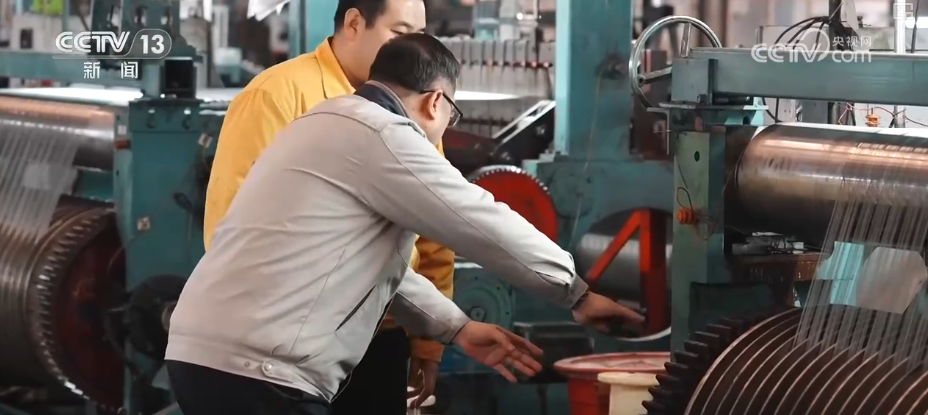
不锈钢微丝

Search documents
创新创造 推动转型升级——因地制宜发展新质生产力一线故事(下)
Ren Min Ri Bao· 2026-02-14 08:59
Group 1: Humanoid Robotics in Shenzhen - Shenzhen is aiming to become the "first city of humanoid robots," with advancements showcased by a humanoid robot capable of serving popcorn in cinemas, working 14 hours a day and completing over 1,000 servings without errors [2][3] - The robot's development faced challenges in coordination of vision, decision-making, and precise manipulation, which were overcome through extensive testing and algorithm improvements [2] - The company, Yuejiang Technology, has achieved a self-research component rate of over 90% and a localization rate of 100%, reflecting the growth of the humanoid robotics industry in Shenzhen [3] Group 2: Green Chemistry in Shanghai - Shanghai's chemical industry is transitioning towards high-end, green, and digital production, exemplified by the recycling of wind turbine blades into reusable materials by Kubei Chemical [4][5] - Kubei Chemical has developed a recyclable epoxy resin that meets international standards, addressing the environmental issues associated with traditional disposal methods [5] - The transformation of Shanghai's chemical industry highlights the importance of innovation and green technology in creating new business models and enhancing productivity [5] Group 3: AI in Manufacturing in Suzhou - Suzhou's Hengtong Fiber Technology has implemented AI and digital technologies in its manufacturing processes, significantly reducing the need for manual labor while increasing efficiency [6][7] - The factory utilizes a smart control center to manage the entire production process, ensuring quality control and adaptability to environmental changes [7] - By 2025, Suzhou's industrial output is projected to reach 4.9 trillion yuan, showcasing the city's commitment to integrating AI into its manufacturing sector [7] Group 4: Metal Wire Innovation in Hebei - Hebei's Anping County is advancing its metal wire industry by developing ultra-fine stainless steel wires previously reliant on imports, addressing supply chain vulnerabilities [8][9] - Collaborative efforts among local enterprises and government support have led to the establishment of a shared innovation base, focusing on high-end material development [9] - The initiative reflects a broader trend of traditional industries embracing innovation to enhance competitiveness and productivity [9] Group 5: Biopharmaceutical Development in Chengdu - Chengdu's Baiyu Pharmaceutical has invested over 150 million yuan annually in R&D, leading to the development of innovative drugs for cardiovascular diseases [10][11] - The company has established a robust research team and incentivized talent retention through equity sharing, enhancing its innovation capabilities [10] - Chengdu's supportive policies and ecosystem have facilitated the growth of over 650 biopharmaceutical companies, contributing to the region's industrial advancement [11] Group 6: Green Steel Production in Rizhao - Rizhao Steel has adopted advanced ESP technology, significantly reducing energy consumption and carbon emissions in steel production [12][13] - The company has established multiple innovation centers to overcome technological challenges and enhance production efficiency [13] - The shift towards green and intelligent manufacturing in the steel industry is seen as a key driver for high-quality economic development in Rizhao [14] Group 7: Data Center Development in Ningxia - Ningxia's Zhongwei has become a hub for data centers, leveraging its favorable climate for energy-efficient operations [15][16] - The region has attracted significant investments, with a projected growth in the information technology sector, including a 14.9% increase in value-added services by 2025 [15] - Zhongwei's transformation from a desert city to a center for digital innovation illustrates the potential of new industries in driving regional development [16] Group 8: Intelligent Manufacturing in Shanxi - Shanxi's Dingxiang County is enhancing its flange manufacturing industry through digital and intelligent technologies, improving production efficiency and safety [17][18] - The integration of smart systems allows for real-time monitoring and control of production processes, significantly reducing labor requirements [18] - The county's focus on innovation and collaboration among enterprises is aimed at transforming traditional manufacturing into a more competitive and sustainable sector [19]

创新创造 推动转型升级——因地制宜发展新质生产力一线故事(下)
Xin Lang Cai Jing· 2026-02-14 05:04
Group 1: Humanoid Robots in Shenzhen - Shenzhen-based company, Yuejiang Technology, has developed a humanoid robot capable of serving popcorn in cinemas, working up to 14 hours a day and selling over 1,000 cups daily without errors [1][2] - The robot's development faced challenges in coordination of its "eyes, brain, and hands," requiring precise environmental recognition and decision-making [1][2] - Yuejiang Technology has achieved a 90% self-research rate for key components and a 100% localization rate, marking a significant milestone in the humanoid robot industry in Shenzhen [2] Group 2: Green Chemical Innovations in Shanghai - Shanghai-based Kubei Chemical has developed a method to recycle waste wind turbine blades, turning epoxy resin into renewable materials and separating carbon fibers [3][4] - The company’s innovative approach addresses the global issue of wind turbine waste, which has traditionally been managed through environmentally harmful methods [3][4] - Kubei's recyclable epoxy resin has been recognized by the Ministry of Industry and Information Technology and has led to the production of the world's first recyclable carbon fiber blades [4] Group 3: Intelligent Manufacturing in Suzhou - Hengtong Optical Technology in Suzhou has implemented a digital factory utilizing AI and 5G technology, significantly reducing the need for manual labor in fiber production [5][6] - The factory's intelligent manufacturing control center manages the entire production process, ensuring efficiency and adaptability to environmental changes [6] - By 2025, Suzhou aims to achieve an industrial output value of 4.9 trillion yuan, with Hengtong exemplifying the city's embrace of AI in manufacturing [6] Group 4: Steel Industry Transformation in Rizhao - Rizhao Steel has adopted advanced ESP technology, reducing energy consumption by over 70% and CO2 emissions by 80% in steel production [12][13] - The company has established multiple innovation centers to overcome technological monopolies and enhance production efficiency [12][13] - AI technology has been integrated into the steel manufacturing process, improving operational efficiency and reducing human error [13] Group 5: Data Center Development in Ningxia - Ningxia Zhongwei has become a hub for data centers, with significant investments leading to the establishment of a robust infrastructure capable of handling massive data processing tasks [14][15] - The region's favorable climate allows for energy-efficient cooling solutions, reducing energy consumption by over 60% compared to traditional methods [14][15] - By 2025, the data center cluster in Zhongwei is expected to support a substantial increase in the information technology service industry [15] Group 6: Smart Manufacturing in Shanxi - Tianbao Technology in Shanxi has modernized its flange manufacturing process through digital and intelligent systems, significantly increasing production efficiency [17][18] - The company has achieved an 80% rate of CNC equipment utilization, enhancing the precision and monitoring of production processes [18] - The local government supports innovation and collaboration among enterprises to foster a new quality of production in traditional industries [18] Group 7: Intelligent Mining in Guizhou - The mining industry in Guizhou is undergoing a transformation with the introduction of intelligent machinery, improving safety and efficiency in coal extraction [19] - The implementation of smart monitoring systems allows for real-time data analysis and remote control of mining operations, enhancing operational safety [19] - Guizhou's initiative to upgrade coal mining technology aims to shift the industry's perception from hazardous to innovative and efficient [19]

“织”就千亿级大产业 创新突破数字化“黑马”企业稳稳拿下全球订单
Yang Shi Wang· 2026-02-07 04:08
Core Viewpoint - The transformation of traditional industries, particularly in Anping's wire mesh sector, highlights the importance of upgrading equipment and fostering innovation to enhance competitiveness and capture high-end markets [1][19]. Group 1: Industry Overview - Traditional industries are crucial for the national economy, accounting for about 80% of the manufacturing value added [1]. - Anping, known for its wire mesh production, contributes over 80% of the country's wire mesh products, representing a billion-level industry [1][17]. Group 2: Challenges Faced - Anping's wire mesh enterprises faced significant challenges due to outdated machinery, leading to inefficiencies and reliance on imported high-end equipment [3][4]. - The industry was characterized by a "scattered, small, and weak" structure, resulting in a price war that hindered growth [4][6]. Group 3: Solutions Implemented - Anping adopted a self-reliant approach to upgrade machinery, resulting in over 10,000 equipment updates in just a few years [6][8]. - The introduction of smart manufacturing led to a 35% increase in efficiency and a 25% reduction in costs for companies [8]. Group 4: Collaborative Innovation - To address the high-end material supply issue, Anping initiated a "crowdsourced research" model, involving various stakeholders to tackle technical challenges collaboratively [12][14]. - This approach resulted in the successful production of high-precision stainless steel micro-wires, which were previously imported [14][17]. Group 5: Market Impact - The shift towards high-end products has increased their share from less than 10% to 30% in Anping's product structure [17]. - By 2025, Anping's wire mesh enterprises are expected to see over 20% growth in export performance, covering more than 190 countries and regions [17][19]. Group 6: Future Directions - Anping aims to enhance its industrial competitiveness through shared manufacturing, digital transformation, and quality improvement [19][20]. - The transformation serves as a model for understanding and developing new productive forces rooted in existing industrial foundations [20].