个人AI

Search documents
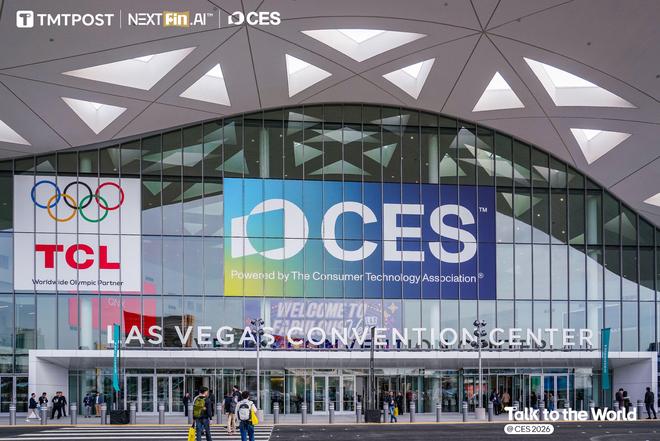
联想阿木:个人AI与企业AI融合重构AI生态
Tai Mei Ti A P P· 2026-01-09 10:37
Core Insights - The discussion at CES 2026 highlights a shift in the tech industry from viewing AI as a standalone technology to exploring its practical applications in various scenarios [2] - Lenovo's strategy in the AI era is outlined, emphasizing the transformation of the global AI industry from public services to personalized and enterprise-level applications [2] AI Computing Power and Model-Driven Terminal Ecosystem Reconstruction - The global AI computing market is projected to reach $115.2 billion by 2026, growing at a rate of 42.8%, significantly outpacing traditional computing markets [3] - The rapid development of model miniaturization technology is challenging the notion that performance is solely determined by parameter scale, enabling smaller models to achieve comparable capabilities to larger ones [3][4] Integration of AI and Terminals - The integration of AI with terminals is seen as a necessary solution to the core issues of public AI, such as insufficient personalization and the inability to process private data [4] - Future terminal ecosystems are expected to evolve into three main forms: upgraded existing terminals, new perception-focused terminals like AI glasses, and edge computing terminals for secure, private calculations [5][19] Rise of Personal AI - The emergence of personal AI signifies a paradigm shift from platform-centric to user-centric AI services [6] - Personal AI is characterized by four key features: synchronized perception, trusted computation, exclusive service connections, and continuous evolution [8][22] Challenges in Personal AI Implementation - Personal AI faces four major technical challenges: building heterogeneous computing platforms, managing multiple models and agent scheduling, long-term memory management, and core experience innovation [9][24] - Lenovo's "teammate" personal AI aims to enhance interaction logic through situational awareness, proactive service, and direct execution of tasks [9][37] Enterprise-Level AI Implementation Challenges - Successful enterprise-level AI deployment requires upgrading digital infrastructure, restructuring business processes, and cultivating AI talent [10][45] - Talent development is identified as the most critical challenge, with a focus on training middle management to lead AI integration efforts [10][46] Future Competitive Landscape in AI - The core competitiveness in the AI era will hinge on "integration and implementation," with a shift in focus from technical parameters to scenario value [11] - Companies that effectively grasp trends and deepen implementation will emerge as winners in the intelligent era [11]


联想阿木:个人AI是未来创新和普惠的关键方向
Zhong Guo Qing Nian Bao· 2025-12-27 11:27
Core Insights - The 2025 Lenovo Tianxi AI Ecosystem Partner Conference was held in Beijing, focusing on the theme "Empowering Intelligent Agents, Initiating a New Ecosystem" [1] - Lenovo's Vice President, Abulikemu Abulimit, emphasized that "personal AI is the key direction for future innovation and inclusivity" [1] Group 1: AI Integration and User Adoption - In the past year, AI agents have rapidly integrated into the daily lives of millions, with IDC reporting that by 2025, 24% of Chinese users will have knowledge of intelligent agents, and nearly 50% will have used them [3] - The public AI sector has seen explosive growth in 2023, with applications like ChatGPT and DeepSeek driving the inclusivity of public AI [3] Group 2: Characteristics of Personal AI - Personal AI is characterized by four main features: it is user-centered rather than platform-centered, employs a hybrid architecture to address trust and cost issues, enables cross-platform service delivery, and ensures data and algorithm sovereignty for users [3][4] - The rise of personal AI is reshaping industry structures into a three-layer architecture: integration layer, service layer, and capability layer [4] Group 3: Future of Personal AI - For personal AI to achieve scalability, trustworthiness, and sustainable evolution, collaboration across the entire industry chain is essential [4] - Abulikemu called for industry partners to build a new journey of inclusivity in personal AI based on the open and win-win Tianxi ecosystem [4]

首份个人AI产业发展白皮书发布 业内预判个人超级智能体规模化落地窗口期到来
Zheng Quan Shi Bao Wang· 2025-12-26 11:18
Core Insights - The white paper defines personal AI as a user-centered AI system that integrates software, hardware, and services, with data and algorithm sovereignty belonging to the user [1] - Personal AI is characterized by four main features: user-centric personal superintelligence, AI terminal plus personal cloud hybrid, cross-platform open ecosystem, and trusted security based on personal AI sovereignty [1] - The personal AI industry is distinct from traditional internet and software industries, changing the industry structure and placing personal superintelligence at the center of value [1] Industry Structure - The personal AI era will shift the industry center from OS and commercial platforms to personal superintelligence, breaking the single-axis structure centered around platforms [2] - The industry will be restructured into a multi-layered collaborative concentric circle system, making the structure flatter and the collaboration more open [2] - Companies like Lenovo, representing terminal manufacturers, will play a pivotal role in the industry chain transformation, acting as a hub for full-scene demands around personal superintelligence [2] Market Predictions - IDC predicts that 2026 will be the inaugural year for the personal AI industry, with the scale of personal superintelligence expected to materialize, and traditional AI terminal shipments in China to exceed 300 million units [2] - An open, trustworthy, and sustainable personal AI ecosystem is anticipated to develop alongside this growth [2]
首份个人AI产业发展白皮书发布,终端厂商将占据更有利的生态占位
Feng Huang Wang Cai Jing· 2025-12-26 10:35
Core Insights - The white paper released by Lenovo Group and IDC defines personal AI as a user-centered AI system that integrates software, hardware, and services, with data and algorithm sovereignty belonging to the user [1][2] - The personal AI era shifts the industry focus from operating systems and commercial platforms to personal superintelligence [1] Group 1: Definition and Characteristics of Personal AI - Personal AI is characterized by four main features: user-centricity, a hybrid of AI terminals and personal cloud, an open cross-platform ecosystem, and trustworthy security based on personal AI sovereignty [1] - Unlike public AI, personal AI addresses user demand challenges, allowing for collaborative AI twins that grow alongside users [1] Group 2: Industry Structure and Ecosystem Changes - The personal AI industry is distinct from traditional internet and software industries, placing personal superintelligence at the core of value creation [2] - The technology landscape is evolving towards an integrated system characterized by multi-end integration, cloud collaboration, and deep software-hardware fusion [2] - The industry structure is transitioning from a platform-centric model to a multi-layered collaborative ecosystem, making personal superintelligence the primary user interface [2] Group 3: Market Predictions and Future Outlook - IDC predicts that 2026 will mark the beginning of the personal AI industry, with traditional AI terminal shipments in China expected to exceed 300 million units [2] - A sustainable and trustworthy personal AI ecosystem is anticipated to gradually unfold with the participation of various industry stakeholders [2]
拉斯·特维德:未来5年最具前景的5大投资主题
首席商业评论· 2025-11-29 05:08
Group 1 - The core investment themes for the next five years include technology, metals and mining, passion investments, ASEAN and Chinese markets, and biotechnology [9][30][40] - The technology sector is expected to continue its growth, but current valuations are high [9] - The metals and mining industry may experience explosive growth due to potential metal shortages, particularly in uranium, silver, and platinum [30] - Passion investments, which are assets with limited supply that do not involve technological iteration, are likely to see increased demand during periods of innovation and wealth growth [33] - The ASEAN and Chinese markets are projected to prosper, with Chinese innovation capabilities rapidly advancing [36][38] Group 2 - Generative AI is anticipated to be a major source of profit in future society, with its effective compute power growing exponentially [10][19] - The effective compute power of AI has increased by 100,000 times from 2019 to 2023, and this growth is expected to continue [13] - The application of generative AI in various industries can create strong business moats, unlike large language models which lack brand loyalty and key technological barriers [20] Group 3 - Approximately 80% of jobs are expected to be completed by intelligent robots by 2050, with significant implications for labor markets [22][29] - The rise of reasoning AI and physical AI is expected to transform industries, with robots and intelligent systems taking over both physical and cognitive tasks [24][25] - The cost of producing robots is significantly lower than the cost of training human labor, leading to a potential shift in workforce dynamics [28] Group 4 - The biotechnology sector is currently undervalued compared to the AI sector, with a price-to-earnings ratio of around 10-11 times for international biotech ETFs [40] - AI is significantly reducing research and development costs in biotechnology, leading to a rapid increase in the number of new products [42] - The potential for breakthroughs in personalized medicine and advanced health monitoring technologies is high, making biotechnology a promising investment area [42]