中庚价值先锋

Search documents
规模骤降、业绩承压下离任,中庚基金陈涛能否打破低估值魔咒?
Xin Lang Cai Jing· 2026-01-30 07:52
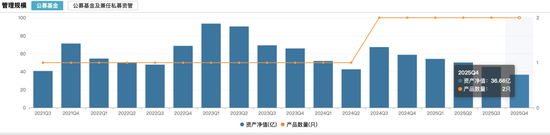
Group 1 - The core viewpoint of the article highlights the ongoing trend of scale decline and strategy adjustments in the management of funds by Chen Tao, leading to a significant management transition [1][21]. - As of the end of Q4 2025, the total scale of the two funds managed by Chen Tao was approximately 3.666 billion yuan, a decrease of nearly 900 million yuan from the end of Q3 2025 [2][22]. - This decline is not a one-time occurrence but has been a continuous trend since the second half of 2023, with the "Zhonggeng Value Pioneer" fund experiencing a peak scale of over 9 billion yuan in Q2 2023, followed by a significant drop in performance [3][23]. Group 2 - In Q4 2025, the "Zhonggeng Value Pioneer" fund saw a net redemption of approximately 490 million shares, reducing its scale from 3.2 billion yuan at the end of Q3 to 2.5 billion yuan [5][24]. - The "Zhonggeng Small Cap Value" fund also faced a decline, ending Q4 with a scale of about 1.1 billion yuan, down approximately 200 million yuan from Q3 [5][24]. - By the end of 2025, Chen Tao's management scale had significantly shrunk, indicating a clear reduction in management radius [6][24]. Group 3 - Despite maintaining a high stock position of over 90% in both funds, there was a notable shift in industry allocation, particularly a reduction in holdings in the liquor and aviation sectors due to weakening fundamentals [7][25]. - Chen Tao indicated that the decision to reduce exposure to liquor and aviation was driven by unexpected deterioration in industry fundamentals and increased uncertainty [27][28]. - The overall portfolio still reflects a bias towards "low valuation, low expectation" stocks, but the adjustments did not significantly alter this characteristic [28][29]. Group 4 - The top ten holdings of both funds showed a high degree of overlap, exceeding 90%, primarily in sectors such as pharmaceuticals, food, manufacturing, and certain technology sub-sectors [10][29]. - Despite the concentration in holdings, both funds underperformed their benchmarks, with "Zhonggeng Value Pioneer" achieving approximately 10% annual returns compared to over 27% for the benchmark [10][30]. - This suggests that the issues may lie more in stock selection and industry allocation effectiveness rather than a misalignment with index direction [12][30]. Group 5 - Chen Tao's investment framework remains focused on typical value investment logic, emphasizing low valuation, low expectations, and manageable fundamental risks while waiting for a reversal [13][31]. - However, the market's patience is waning as low valuations have not yet translated into profitability and stock performance, reflecting a broader challenge faced by many value-oriented funds in recent years [31][32]. - Following the quarterly report, Chen Tao was replaced as fund manager, with Han Yiping and Yin Le taking over the management of the "Zhonggeng Small Cap Value" fund [33][34].

中庚基金陈涛近年收益率低于同类均值 去年大幅跑输
Zhong Guo Jing Ji Wang· 2026-01-22 03:18
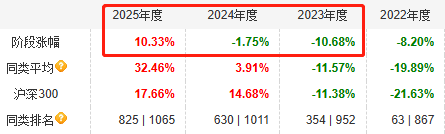
Group 1 - The article discusses the performance of funds managed by Chen Tao at Zhonggeng Fund, highlighting that both Zhonggeng Value Pioneer and Zhonggeng Small Cap Value have underperformed their respective benchmarks in 2025 [1][4] - In 2025, Zhonggeng Value Pioneer achieved a return of 10.33%, while its benchmark return was approximately 27.33%, resulting in a 17 percentage point underperformance [1] - Zhonggeng Small Cap Value recorded a return of 20.54% in 2025, compared to a benchmark return of about 24.83%, indicating a similar trend of underperformance [1] Group 2 - Chen Tao has been involved in securities research and investment management since July 2013, with previous roles at various financial institutions before joining Zhonggeng Fund in July 2018 [1] - Since taking over the management of Zhonggeng Value Pioneer on September 1, 2022, Chen Tao's performance has not shown significant improvement compared to his predecessor, Cao Qing [1] - The performance of Zhonggeng Value Pioneer under Chen Tao's management from 2023 to 2025 was -10.68%, -1.75%, and 10.33%, while the average returns of similar products were -11.57%, 3.91%, and 32.46%, respectively, indicating a notable lag [2] Group 3 - The annual reports for 2023 and 2024 show that Zhonggeng Value Pioneer did not meet its performance benchmark [4] - For Zhonggeng Small Cap Value, after Chen Tao took over management, the return was only 6.71% over 262 days, and subsequent management changes did not lead to improved performance [6] - In 2025, Zhonggeng Small Cap Value's return of 20.54% was significantly lower than the average return of similar products at 32.46% [8]
三季度超万只基金获“自己人”持有 部分产品斩获颇丰
Huan Qiu Wang· 2025-10-06 03:49
Group 1 - The equity market experienced a comprehensive rise in Q3 2025, benefiting both investors and fund companies as fund net values increased [1] - Employee holdings are primarily concentrated in stable products and those managed by star fund managers, with some equity funds showing significant returns in Q3 [1] Group 2 - As of mid-2025, there are 10,075 funds in the market with initial shares held by employees, with money market funds being the mainstay of employee holdings [3] - Among the top twenty funds, 16 are money market funds, with E Fund Cash Management holding 378 million shares, and other funds like Huatai-PB and CITIC Securities holding over 100 million shares each [3] - In the active equity category, Zhonggeng Value Pioneer leads with 197 million shares held by employees, followed by other funds with significant holdings [3] - Overall employee holdings slightly decreased to 6.029 billion shares by the end of Q2 compared to the end of the previous year due to profit-taking behavior [3] - Zhonggeng Value Pioneer heavily invested in Anjixin Food, achieving a net value increase of 13.31%, while Hengyue Advantage Selection's net value doubled [3]

涨超九成,这些“自己人”基金大赚
Zheng Quan Shi Bao· 2025-10-05 00:07
Core Insights - The third quarter saw a significant rise in equity markets, leading to an increase in fund net values, benefiting both investors and fund management employees [1] - Fund managers' internal holdings were concentrated in stable industry-focused funds, with some managers delivering exceptional performance, rewarding internal trust [1][6] - Notably, funds managed by Jin Zicai from Caitong Fund experienced approximately a 90% increase in the third quarter, indicating his strong influence within the company [1][6] Fund Holdings Overview - As of mid-2025, there are 10,075 fund products held by public fund employees, with a majority being stable money market funds [3] - Among the top twenty funds, sixteen are money market funds, with E Fund Cash Growth Money Fund having 378 million shares held by its employees [3] - Active equity products show that Zhonggeng Value Pioneer has the highest employee holdings at 197 million shares, followed by other notable funds [3][4] Performance of Active Equity Funds - The third quarter provided substantial returns for active equity funds, with Zhonggeng Value Pioneer seeing a net value increase of approximately 13.31% [6] - The fund's investment strategy focuses on low valuation and growth potential, aiming for long-term gains through careful stock selection [7] - Other funds, such as Hengyue Advantage Select, also achieved significant gains, with employee holdings reflecting confidence in these products [6][7] Employee Ownership Ratios - As of mid-2025, certain funds like Jinyuan Shun'an Xinyi and Dongfang Alpha Technology Select have over 99% of their shares held by employees, indicating strong internal support [8] - Newer funds with lower entry thresholds have seen high employee ownership ratios, reflecting confidence in their performance [8]
超80只权益基金年内业绩翻番,机构、基金公司员工“持基”全揭秘
2 1 Shi Ji Jing Ji Bao Dao· 2025-09-21 23:45
Core Insights - The recovery of market conditions and increased capital activity have led to significant profitability in equity funds, with over 97% achieving positive returns this year, and 81 funds doubling their performance [1] - Institutional investors are heavily investing in the CSI 300 ETF, while fund management companies are increasing their allocations to their own pension funds, indicating confidence in long-term strategies [2][4] Institutional Investor Holdings - As of mid-2025, institutional investors are primarily holding broad-based ETFs, with the top four funds tracking the CSI 300 index, each having over 160 billion yuan in holdings [4] - The central government-backed Central Huijin is a major buyer of CSI 300 ETFs, holding over 70% of the shares in the top funds [4][5] - The appeal of the CSI 300 ETF lies in its liquidity and broad coverage of large-cap stocks, making it suitable for large capital inflows [5] Fund Management Company Holdings - Fund management companies are significantly investing in their own pension funds, with several funds like E Fund's pension fund receiving substantial internal support [10] - The highest internal investment is in the E Fund MSCI China A50 ETF, which has seen a year-to-date return of 22.51%, outperforming its benchmark [10] Employee Holdings - Employees of fund management companies show diverse preferences in fund styles, with significant holdings in both value and growth strategies [15] - The top employee-held fund is Zhonggeng Value Pioneer, with a total holding of 191 million yuan, although it has underperformed its benchmark [15][16] - Employee holdings are concentrated in smaller funds, with a notable preference for balanced and growth-oriented strategies [17] Changes in Holdings - There has been a notable increase in employee holdings of ETF-linked funds, reflecting a trend towards lower investment thresholds and easier access for individual investors [19] - The most increased fund among employees is Xingquan Helun C, which focuses on materials and technology sectors, indicating a preference for high-quality assets [19][20]
“国家队”、私募、外资都在买!股票型基金规模再创新高
券商中国· 2025-04-04 06:55
Core Viewpoint - The public fund market in China has seen significant growth in 2024, with institutional investors increasing their holdings in equity funds, particularly through ETFs, while individual investors continue to dominate in money market funds [1][4][6]. Group 1: Institutional Investor Trends - Institutional investors increased their total holdings in public funds by 3.5 trillion units compared to the end of 2023, with over 40% of their holdings in equity funds, marking a nearly 12 percentage point increase from the end of 2022 [2][5]. - The total size of equity funds rose from 1.88 trillion units at the end of 2022 to 3.03 trillion units by the end of 2024, representing a growth rate of 61% [4]. - The share of equity funds held by institutional investors grew from 5.67 trillion units at the end of 2022 to 12.8 trillion units by the end of 2024, a 126% increase [4][5]. Group 2: ETF Investment - Institutional investors have significantly increased their equity fund holdings primarily through ETFs, participating in market dips and rebounds [6][7]. - In 2024, major ETFs such as Huatai-PB CSI 300 ETF and E Fund CSI 300 ETF saw net subscriptions exceeding 10 billion units, with institutional investors accounting for nearly 80% of the net inflows [8][10]. - The largest ETF, Huatai-PB CSI 300 ETF, had an institutional ownership increase from 66.04% at the end of 2023 to 83.58% by the end of 2024 [10][11]. Group 3: Shift from Active to Passive Funds - There has been a notable decline in institutional interest in actively managed equity funds, with 40 active funds experiencing net redemptions exceeding 1 billion units in 2024 [12]. - The shift towards passive investment strategies is evident, as passive funds surpassed active equity funds in A-share market capitalization for the first time in history [11]. - Only 11 actively managed funds received over 1 billion units in net subscriptions from institutional investors in 2024, indicating a preference for ETFs and a reduced reliance on actively managed funds [13].