中式礼服

Search documents
上海南外滩轻纺面料市场一派热闹:剪刀划过布料的簌簌声与多语种的交谈声交织 众多外籍顾客来沪“做件衣服”回去
Jie Fang Ri Bao· 2026-01-30 01:49
Core Viewpoint - The Shanghai South Bund Textile Market is experiencing a surge in popularity, particularly among foreign customers, driven by a combination of visa-free policies and a unique customization service that caters to individual preferences [1][5]. Group 1: Market Dynamics - The market is bustling with activity as foreign consumers flock to customize suits, qipaos, and traditional Chinese garments, with long queues forming for orders [1]. - Foreign customers now account for 50% to 60% of the market's clientele, with some shops reporting that foreign sales make up over 70% of their business [2]. - The market has transformed from a traditional textile hub to a vibrant destination for personalized fashion, attracting international visitors through platforms like Cat Travel and Xiaohongshu [2]. Group 2: Customization Trends - There is a growing trend for personalized and unique clothing, with customers often requesting specific designs and details that reflect their individual tastes [4]. - The "come with a picture" customization service is particularly popular, allowing customers to bring in images for tailored creations [4]. - The market's ability to fulfill urgent orders, with some items ready for pickup the next day, aligns well with the tight schedules of international tourists [6]. Group 3: Market Evolution - The South Bund Textile Market has evolved through proactive changes and upgrades, enhancing its appeal and service offerings [5]. - The market provides a cost-effective alternative to international brands, with custom suits priced at one-third or less than those of high-end overseas stores [6]. - Recent improvements include the establishment of a café, renovations to the building's interior, and training programs for merchants to enhance their online presence and marketing skills [6].
从“中国游”到“中国购”(市场漫步)
Ren Min Ri Bao· 2025-05-20 21:51
Group 1 - The "China Heat" phenomenon is emerging globally, focusing on cultural and tourism consumption rather than industrial investment [2][5] - International airlines are increasing flights to accommodate the surge in Chinese tourism, with 1.115 million foreign visitors entering and exiting China during the recent May Day holiday, a 43.1% increase year-on-year [1][3] - The number of international passenger flights operated by Chinese and foreign airlines reached an average of 6,428 per week in the first four months of the year, a 25.4% increase compared to the same period last year [1][3] Group 2 - China's recent open policies, including visa exemptions for five Latin American and Caribbean countries, have made it easier for foreign tourists to visit, boosting inbound tourism and shopping [3][4] - The Chinese government has optimized tax refund policies for foreign tourists, lowering the minimum purchase amount for tax refunds from 500 yuan to 200 yuan and increasing the cash refund limit from 10,000 yuan to 20,000 yuan [3][4] - The appeal of "Made in China" products is growing, with foreign tourists increasingly purchasing a wide range of items, from clothing and food to electronics and home appliances, due to their quality and affordability [4][5] Group 3 - The integration of Chinese culture and manufacturing is enhancing the allure of shopping in China, with many tourists buying culturally significant items like traditional clothing and crafts [4][5] - The current trend of "travel in China" and "shopping in China" reflects China's confidence and commitment as an open nation, presenting opportunities for both China and the world amid global challenges [5]
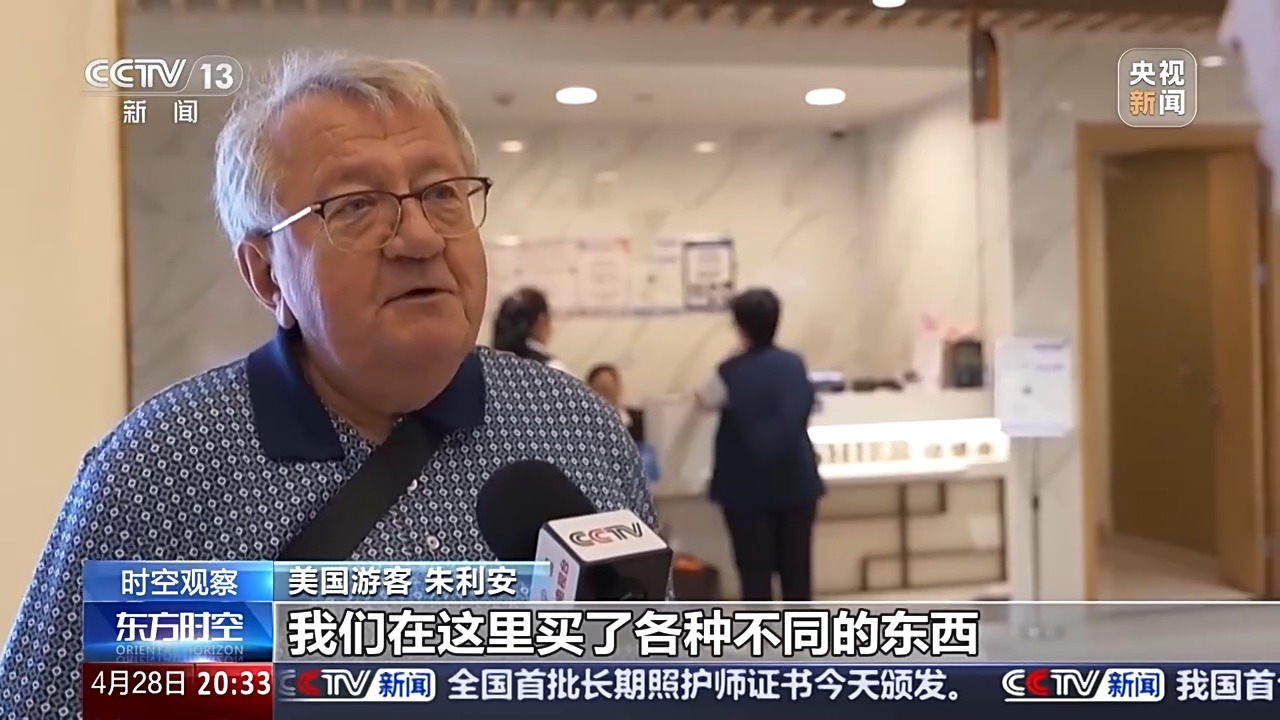
到底能退多少税?外国人为什么爱上来中国“扫货” ?
Yang Shi Xin Wen· 2025-04-28 22:59
Core Viewpoint - The article highlights a significant increase in inbound tourism and shopping in China, driven by new policies aimed at enhancing the shopping experience for foreign tourists, particularly the "immediate tax refund" service [1][10]. Group 1: Inbound Tourism Growth - Inbound travel orders have increased by 173% year-on-year, indicating a strong recovery in tourism [1]. - The total expenditure of inbound tourists in 2024 reached $94.2 billion, reflecting a growth of 77.8% [10]. Group 2: Tax Refund Policies - The "immediate tax refund" service allows foreign tourists to receive tax refunds on-site, with a refund rate of 11% on most goods [2][10]. - The minimum threshold for tax refunds has been lowered from 500 yuan to 200 yuan, and the cash refund limit has been raised from 10,000 yuan to 20,000 yuan [1]. Group 3: Impact of "Immediate Tax Refund" Service - The implementation of the "immediate tax refund" service has led to a 22-fold increase in tax refund processing in pilot areas like Shanghai and Beijing, significantly outpacing the national growth rate [3][10]. - In the first quarter, Shanghai's tax refund sales reached 760 million yuan, marking an 85% year-on-year increase [9]. Group 4: Changing Consumer Preferences - Foreign tourists are increasingly shifting from traditional souvenirs to a wider range of products, including customized clothing and local specialties [12][15]. - The trend of immersive experiences is growing, with tourists willing to spend more on unique local activities [15][19]. Group 5: Retail and Market Dynamics - The number of tax refund stores in Shanghai has reached 587, with 284 offering the "immediate tax refund" service [9]. - The sales of clothing and footwear have become popular among tourists from countries like Singapore, South Korea, and Malaysia [8].