
亚瑟士运动产品

Search documents
股价单日冲18%,Puma要易主?安踏、李宁、亚瑟士回应
Nan Fang Du Shi Bao· 2025-11-28 09:20
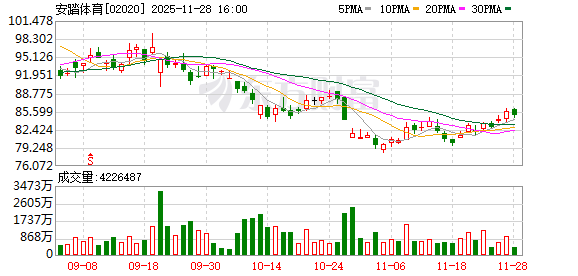
Core Viewpoint - Anta Sports is evaluating the possibility of acquiring the German sports brand Puma, which has led to a significant increase in Puma's stock price by over 18% in a single day, marking a recent high [1][3]. Group 1: Market Dynamics - The largest shareholder of Puma, the Artémis Group, has initiated a strategic review and is in preliminary discussions with several potential buyers, including Anta, Li Ning, and Asics [3][10]. - Asics has publicly denied any intention to acquire Puma, stating that there is no factual basis for such claims [3][12]. - Li Ning has also clarified that it has not engaged in any substantial negotiations regarding the acquisition of Puma [3][12]. Group 2: Puma's Financial Situation - Puma is facing operational challenges, with its Q3 2025 sales declining by 10.4% year-on-year to €1.956 billion, resulting in a net loss of €62.3 million [9]. - The company's gross margin has decreased by 260 basis points, and inventory has increased by 17.3% year-on-year [9]. - The Americas market experienced the largest sales decline at 15.2%, while the Asia-Pacific and Europe, Middle East, and Africa regions saw declines of 9.0% and 7.1%, respectively [9]. Group 3: Anta's Position - Anta is viewed as a strong contender for the acquisition due to its clear global strategy and successful past acquisitions, including the $5.2 billion purchase of Amer Sports in 2019 [11]. - The company has continued its global expansion, acquiring the German outdoor brand Jack Wolfskin for $290 million and investing in the South Korean fashion e-commerce platform Musinsa [11]. - Anta's financial health supports its potential acquisition activities, with a reported retail sales growth of 45%-50% across all brands [11].



日本消费股地震:资生堂暴跌11%,旅游零售股集体重挫
Sou Hu Cai Jing· 2025-11-17 17:07
Group 1 - The Japanese stock market experienced a significant decline, with the Nikkei 225 index dropping over 1% and falling below 50,000 points, primarily affecting tourism and retail stocks [1][3] - Notable declines included Shiseido's stock, which fell 11%, and Pacific International Holdings, which saw an 8.9% drop, marking their largest single-day declines since April 2024 [1][3] - Major retail and tourism-related companies, such as Isetan Mitsukoshi and Uniqlo's parent company Fast Retailing, also faced substantial stock price drops, with declines exceeding 5% [3] Group 2 - The downturn in the stock market is attributed to deteriorating Sino-Japanese relations, with Chinese authorities issuing travel warnings to their citizens regarding travel to Japan [5][11] - Chinese tourists are crucial for Japan's tourism sector, accounting for nearly 20% of international visitors in 2024, with their spending representing 27% of total inbound consumption, amounting to approximately 2.1 trillion yen [7] - A significant reduction in Chinese tourists could lead to a GDP decrease of 0.36% for Japan, equating to an economic loss of about 2.2 trillion yen [7] Group 3 - Japan's economy is facing multiple challenges, including a 1.8% decline in real GDP for the third quarter, marking the first negative growth in six quarters, largely due to decreased exports and a sharp drop in private residential investment [9] - Analysts suggest that the recent travel warnings from China threaten Japan's retail sales growth, particularly for companies like Shiseido and Uniqlo, which rely heavily on Chinese consumers [11] - The Japanese government has set an ambitious target to increase annual inbound tourist numbers to 60 million by 2030, but this goal is now uncertain due to escalating political tensions with China [15]
