
亚马逊云(AWS)

Search documents
HALO交易席卷美股、港股
21世纪经济报道· 2026-03-06 15:59
Core Viewpoint - The recent outage of Anthropic's AI assistant Claude, which lasted nearly 15 hours, highlights the vulnerability of AI systems to physical disruptions, prompting a shift in investment focus towards "HALO" assets, characterized by heavy assets and low obsolescence [1][10][11]. Group 1: HALO Concept and Market Reaction - HALO stands for "Heavy Assets, Low Obsolescence," focusing on sectors that are difficult to disrupt by AI, such as large aircraft, oil refining equipment, and copper cables [1]. - The market consensus is shifting towards heavy asset sectors as software stocks face significant sell-offs due to fears of AI disruption, with Morgan Stanley's HALO basket rising 28% over the past year, while AI-affected stocks plummeted 43%, a difference of 71 percentage points [3][4]. - Goldman Sachs has redefined capital-intensive and light capital portfolios, indicating a growing preference for sectors with low obsolescence, including utilities and certain consumer goods [3][4]. Group 2: Performance of Related Sectors - In the Hong Kong market, sectors aligned with HALO logic, such as communication equipment, oil and gas, and railway transportation, have shown strong performance, with significant gains reported from January 1 to March 3, 2026 [5][6]. - The Hang Seng Technology Index has declined over 13% since the beginning of 2026, reflecting the pressure on internet companies perceived as vulnerable to AI disruption [5][11]. Group 3: Global Implications and Future Outlook - The HALO trading strategy is gaining traction globally, with similar trends observed in South Korea and Japan, where sectors with high barriers to AI replacement are attracting investment [6][11]. - Analysts suggest that HALO represents a long-term investment logic rather than a short-term speculative trend, as it reflects a revaluation of asset scarcity in the AI era [12][14]. - The ongoing geopolitical tensions, particularly in the Middle East, are reinforcing the appeal of HALO assets, which are seen as strategic and less susceptible to disruption [11][12]. Group 4: Investment Strategies and Market Sentiment - Investment strategies are evolving, with a focus on sectors that provide certainty and scarcity, as evidenced by the performance of traditional industries in the Hong Kong market [15][16]. - The sentiment around HALO trading remains high, with expectations that it will continue to influence market dynamics, particularly in the context of China's robust manufacturing capabilities [15][16].


甲骨文收跌近3%,启动500亿美元集资计划,高负债受关注
Ge Long Hui· 2026-02-03 01:32
Group 1 - Oracle has launched a fundraising plan of up to $50 billion, including an initial bond issuance of up to $25 billion, to support its aggressive cloud infrastructure expansion strategy [1][2] - The fundraising will consist of a combination of debt and equity, with the first bond issuance expected to be between $20 billion and $25 billion, planned for a single issuance within 2026 [1] - Oracle aims to transform from a traditional database software provider to a heavy asset cloud infrastructure giant to compete with Amazon Web Services (AWS) and Microsoft Azure [2] Group 2 - Concerns about Oracle's capital expenditure funding sources have been temporarily alleviated, but the company's balance sheet is under scrutiny due to approximately $95 billion in outstanding debt [2] - The large-scale debt expansion raises worries on Wall Street regarding the company's cash flow pressures and financial structure vulnerabilities, especially in a high-interest-rate environment [2] - Notable investor Michael Burry has disclosed a short position against Oracle, criticizing the company's unnecessary heavy asset expansion [2]
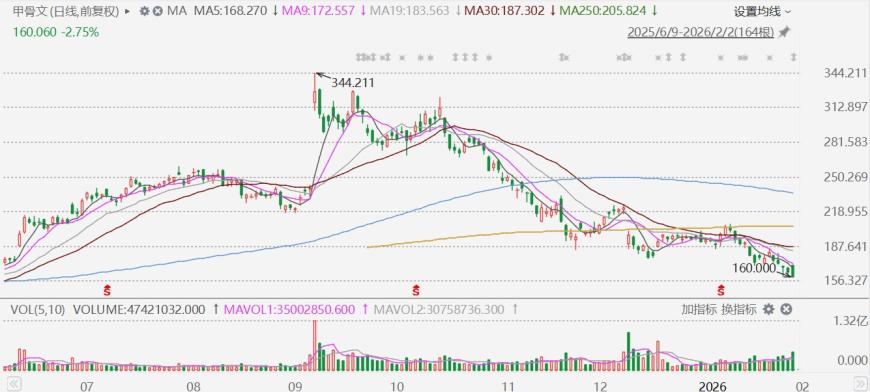
美股异动丨甲骨文收跌近3%,启动500亿美元集资计划,高负债受关注
Ge Long Hui· 2026-02-03 01:24
Group 1 - Oracle has officially launched a fundraising plan of up to $50 billion, including an initial bond issuance of up to $25 billion, to support its aggressive cloud infrastructure expansion strategy [1][2] - The fundraising plan aims to position Oracle as a major player in the cloud infrastructure market, competing with Amazon Web Services (AWS) and Microsoft Azure [2] - Oracle's current outstanding debt is approximately $95 billion, raising concerns about its financial structure and cash flow amid high interest rates [2] Group 2 - The initial bond issuance will be divided into eight parts, expected to be issued within 2026, with the remaining funding gap to be filled through equity-related instruments and common stock issuance [1] - Market concerns regarding Oracle's capital expenditure funding sources have been temporarily alleviated, but skepticism remains about the company's heavy asset expansion strategy [2] - Notably, hedge fund manager Michael Burry has disclosed a short position on Oracle, criticizing its unnecessary heavy asset expansion [2]