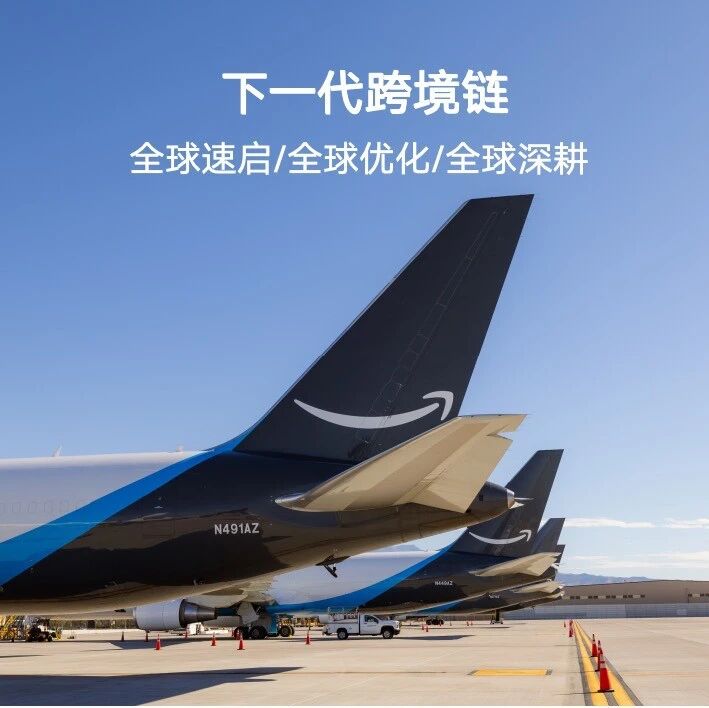
亚马逊供应链整体解决方案(SCA)

Search documents
《生而全球 · 闪耀世界》卖家全球拓展案例集-亚马逊全球开店
Sou Hu Cai Jing· 2025-12-23 18:10
Core Insights - The report highlights Amazon's "Born Global" vision, focusing on how sellers can efficiently expand into global markets through a comprehensive approach that includes product export, brand development, supply chain management, and service integration [1][5][7] Group 1: Seller Success Stories - The "Pioneer" section showcases successful case studies of companies like GaiShi XiaoJi and XiHao, which have leveraged Amazon's full-chain solutions to achieve global expansion, breaking the stereotype of "Made in China" [1][2] - These companies have either tapped into emerging markets or iterated their products based on user feedback, providing replicable paths for others [1][2] Group 2: Efficient Market Entry - The "Easy to Start" section emphasizes simplifying the startup phase for sellers, utilizing tools like Amazon's product selection compass and opportunity detector, combined with AI to drive data-driven product selection [1][2] - The North America Remote Fulfillment (NARF) program allows sellers to launch products with zero inventory costs, significantly reducing market entry risks, as demonstrated by KUAILU's 10x growth in the Canadian market [1][2] Group 3: Logistics as a Key Support - The "Easy to Ship" section underscores the importance of logistics in global expansion, with Amazon's Supply Chain Solutions (SCA) integrating services like AGL, FBA, and AWD to help sellers reduce costs and improve efficiency [2][38] - Companies like Juxing Technology and Beisiqi have optimized last-mile delivery through FBA and inventory management via AWD, achieving productivity increases of over 200% and significant reductions in warehousing costs [2][38] Group 4: Long-term Brand Growth - The "Easy to Grow" section focuses on long-term brand development, where sellers utilize Amazon's brand flagship stores and advertising systems to build brand awareness and customer loyalty [2][38] - Successful strategies include leveraging promotional events and external marketing to drive traffic and sales, as seen with KingPavonini's 1100% sales growth over two years [2][38] Group 5: Overall Value Proposition - The overall narrative illustrates how Amazon provides a "light startup, rapid coverage, and stable growth" global expansion strategy through its comprehensive tools, logistics systems, and brand services [2][5] - The core value lies in demonstrating that Chinese sellers can effectively tap into global markets by combining "Chinese intelligence and global pathways" through precise product selection, compliant operations, intelligent logistics, and brand building [2][5]


电商下半场,下一代跨境链的「韧性战争」怎么打?
3 6 Ke· 2025-12-05 10:37
Core Insights - The article discusses the challenges and transformations in cross-border e-commerce logistics, highlighting the need for improved supply chain efficiency and resilience in response to global economic fluctuations [4][13]. Group 1: Challenges in Cross-Border Logistics - Founders like Zhou Ge of ZAPT faced significant logistical challenges, including unreliable shipping companies and unexpected cost increases, which reflect broader issues in global supply chains [3][4]. - Companies like Juxing Technology also experience complex cross-border logistics, with delays caused by various factors such as port strikes and customs clearance [3][4]. - The global retail e-commerce market, excluding China, is projected to reach $3.15 trillion by 2025, indicating that any supply chain disruptions can lead to substantial opportunities or losses [4]. Group 2: Evolving Supply Chain Strategies - The article emphasizes a shift in focus from traditional logistics to global supply chain capabilities, as new markets emerge in regions like the Middle East, Latin America, and India [4][8]. - Sellers are increasingly adopting Amazon's Fulfillment by Amazon (FBA) to enhance logistics efficiency, with Zhou Ge's team reporting a 1.5 times increase in sales after switching to FBA [7][8]. - Amazon's introduction of the Global Warehouse Distribution (GWD) system aims to simplify cross-border logistics for sellers, reducing storage costs by 20-40% and allowing for more flexible inventory management [10][12]. Group 3: Technological Innovations in Logistics - The integration of AI and data analytics is transforming logistics decision-making, allowing companies to optimize inventory management based on predictive analytics [16][21]. - Amazon's new operational technologies, including robotic systems and AI-driven solutions, are enhancing efficiency in warehouses, achieving a 25% improvement in processing times [20][21]. - The article highlights the importance of transitioning supply chain competitiveness from fixed assets to the quality of data and algorithms, particularly benefiting small and medium-sized enterprises [22][24]. Group 4: Open Supply Chain Infrastructure - Amazon's Supply Chain by Amazon (SCA) initiative modularizes logistics services, enabling sellers to utilize Amazon's infrastructure for various sales channels, thus enhancing operational flexibility [28][29]. - The use of Multi-Channel Fulfillment (MCF) has led to a 19% reduction in stockout rates and a 12% increase in inventory turnover for sellers [29]. - The article concludes that resilient supply chains are essential for navigating global trade uncertainties, allowing for quick adaptations to disruptions and maintaining consistent sales [32].
电商下半场,下一代跨境链的「韧性战争」怎么打?
36氪· 2025-12-05 10:28
Core Insights - The article emphasizes the transformation of supply chains from cost centers to value centers, highlighting the need for companies to rethink their supply chain strategies in the face of global economic fluctuations and consumer demands for faster delivery [2][18]. Group 1: Challenges in Cross-Border E-commerce - Cross-border e-commerce sellers face significant logistical challenges, including delays and increased costs due to complex shipping processes and unreliable logistics partners [4][5]. - The global retail e-commerce market, excluding China, is projected to reach $3.15 trillion by 2025, indicating that any fluctuations in supply chains can lead to substantial opportunities or losses for businesses [5]. Group 2: New Market Dynamics - Emerging markets such as the Middle East, Latin America, Japan, South Korea, India, and Australia are becoming new hotspots for cross-border e-commerce, shifting the focus from traffic and pricing to global supply chain capabilities [6][7]. Group 3: Innovations in Supply Chain Management - Amazon's introduction of the Global Warehouse Distribution (GWD) system aims to simplify cross-border logistics for sellers, allowing them to send products to a single warehouse and letting Amazon handle the rest, thus reducing storage costs by 20-40% [15][31]. - The use of data and algorithms for inventory decisions is becoming crucial, enabling sellers to optimize their logistics strategies based on sales trends and customer expectations [22][25]. Group 4: Technological Advancements - Automation and AI are revolutionizing warehouse operations, improving efficiency and reducing processing times by up to 25% through coordinated robotic systems and predictive analytics [27][28]. - The integration of AI in supply chain management allows sellers to proactively manage inventory and optimize operations, enhancing their competitiveness [29][30]. Group 5: Strategic Shifts in Branding and Supply Chain - Companies are transitioning from OEM to brand-focused strategies, emphasizing the importance of brand trust and flexibility in supply chain management during market fluctuations [36][37]. - Amazon's Supply Chain by Amazon (SCA) initiative modularizes logistics and warehousing services, enabling sellers to utilize Amazon's infrastructure for various sales channels, thus enhancing operational efficiency [38][39]. Group 6: Future Trends in Supply Chain Resilience - The article predicts that the evolution of supply chains will become more systematic, focusing on global network integration, regional operational grids, and full-chain digitization, ultimately shifting supply chains from cost centers to value centers [42].