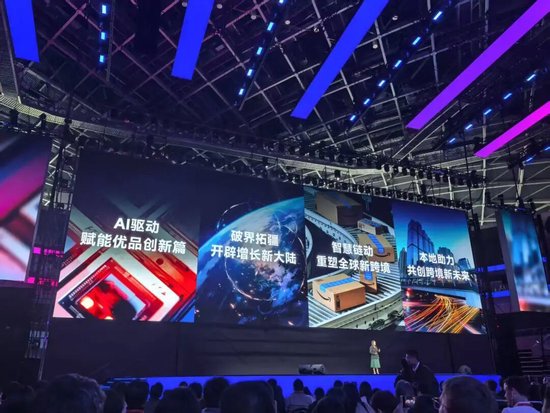
亚马逊全球智能枢纽仓(GWD)

Search documents
深圳拿下亚马逊全球首发项目!本地入仓卖全球,明年3月开放
Nan Fang Du Shi Bao· 2025-12-09 02:13
Core Insights - Amazon announced the establishment of its first Global Warehousing and Distribution (GWD) hub in Shenzhen during the 2025 Global Selling Cross-Border Summit, aiming to enhance logistics for Chinese sellers and facilitate their transition from "Made in China" to "Global Brands" [1][6] - The GWD is expected to reduce storage costs by 20% to 40% compared to traditional Amazon Warehousing and Distribution (AWD) methods, addressing challenges such as high overseas storage costs and complex logistics management [2][3] Group 1: GWD Overview - The GWD will allow sellers to store products locally and distribute them globally, simplifying supply chain management and reducing upfront inventory costs [2][3] - The GWD is part of Amazon's Next Generation Global Selling strategy, which aims to empower cross-border e-commerce businesses with advanced technology and operational capabilities [2][3] Group 2: Logistics and Supply Chain Enhancements - Amazon is expanding its global logistics network, including new shipping routes from China to the US, Europe, and the UK, and plans to add more shipping services by 2026 [3][4] - The company has invested over $100 billion in its global logistics network, which now covers over 200 countries and regions, with more than 800 billion items delivered through its Fulfillment by Amazon (FBA) service [4] Group 3: AI and Market Trends - Amazon is heavily investing in AI technology to enhance seller efficiency in product development, content creation, and advertising, with tools like the "Seller Assistant" [6] - The online retail sector is growing rapidly, with Chinese sellers experiencing a 15% sales increase in mature markets and 30% in emerging markets, indicating significant opportunities for growth [6][7] Group 4: Challenges and Opportunities for Chinese Sellers - Chinese sellers face challenges such as high overseas storage costs and complex logistics, particularly when entering emerging markets [7] - The introduction of GWD is seen as a systematic solution to these challenges, enabling sellers to leverage Amazon's global resources for brand development and market competitiveness [7]

从线性出海到网格化布局:亚马逊“下一代跨境链”如何重构中国卖家全球化逻辑
Huan Qiu Wang· 2025-12-08 09:30
Core Insights - The core viewpoint of the article emphasizes that globalization has shifted from a choice to a necessity for Chinese cross-border sellers, who are now focused on how to effectively implement global strategies rather than whether to pursue them [1] Group 1: Seller Concerns - Sellers face three main anxieties: the challenge of assessing new markets, compliance issues, and difficulties in product selection [2] - The "evaluation dilemma" arises from the inability to replicate consumer trends and competitive landscapes from mature markets to emerging ones, leading to uncertainty in investment returns [2] - The "compliance confusion" reflects a shift from unregulated growth to a focus on compliance as a core asset for building long-term trust and competitive advantage [2] - The "product selection difficulty" indicates that simply copying successful products from mature markets to emerging ones is no longer effective; sellers must understand local consumer needs [2] Group 2: Strategic Growth Engine - Globalization must be viewed as a systematic "strategic growth engine" rather than a series of isolated experiments [3] Group 3: Next Generation Global Selling - Amazon's "Next Generation Global Selling" (NGGS) aims to restructure traditional cross-border supply chains, allowing sellers to achieve "one listing, one warehousing, global sales" [4] - The establishment of the first Amazon Global Smart Hub Warehouse (GWD) in Shenzhen symbolizes a significant step in addressing sellers' core pain points, such as high overseas warehousing costs and complex logistics [4][6] - The GWD model enables sellers to store products in a centralized location, reducing inventory risks and allowing for simultaneous testing in multiple markets [6] Group 4: Market Opportunities - Emerging markets like Latin America, Australia, the Middle East, and India present unique opportunities for Chinese sellers, with tailored strategies being implemented to facilitate entry [7][8][9] - Latin America is highlighted as a rapidly growing region for Chinese sellers, with Amazon simplifying compliance processes to enhance market access [7] - Australia offers low complexity and high similarity to Western consumer behavior, making it an attractive market for expansion [8] - The Middle East's demand for diverse products and India's projected growth to a $100 billion e-commerce market present significant opportunities for Chinese sellers [8][9] Group 5: Capability Reconstruction - Sellers are encouraged to view global expansion as a "capability reconstruction" process, shifting from experience-driven to data and AI-driven decision-making [10] - Collaboration is emphasized, with successful sellers leveraging Amazon's logistics and compliance solutions to focus on product innovation and brand building [10] - A strategic mindset is crucial, as sellers must treat globalization as a long-term commitment rather than a short-term profit opportunity [10] Group 6: Industry Trends - Data indicates a significant increase in the number of new Chinese sellers on Amazon's European platform, with a projected growth of over 25% by 2025 [11] - The compound annual growth rate of products sold by Chinese sellers on Amazon's emerging platforms has exceeded 50% over the past three years [11] - The competitive landscape of cross-border e-commerce is evolving, focusing on global supply chain collaboration and agile market response capabilities [11]


亚马逊发布“下一代跨境链” 跨境电商走向“上线即售全球”时代
Huan Qiu Wang· 2025-12-05 14:10
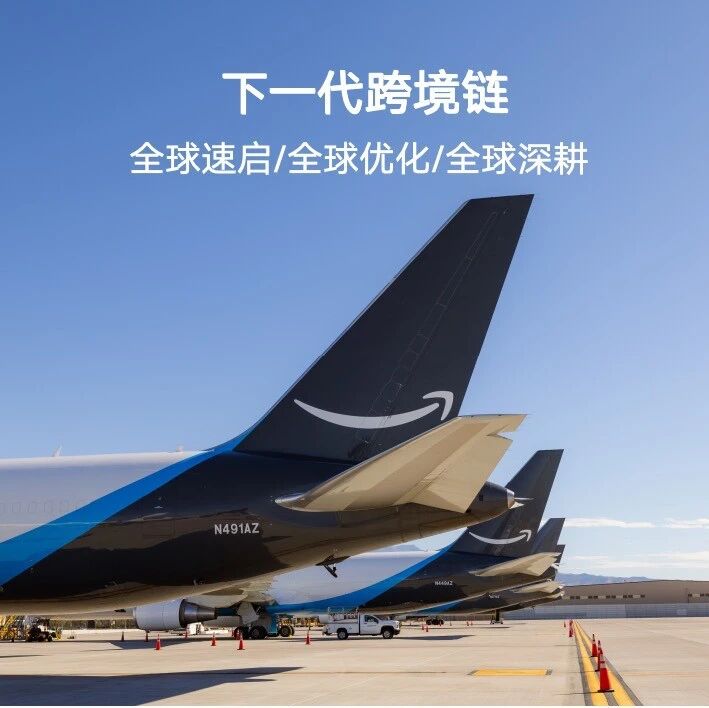
Core Insights - Amazon is launching the "Next Generation Global Selling" initiative to help sellers achieve a "global launch" strategy, fundamentally restructuring the approach for Chinese companies to enter international markets [1][3] - The initiative aims to simplify cross-border supply chain management and reduce costs associated with market entry, allowing sellers to test products in multiple markets simultaneously [3][5] Group 1: Global Expansion Strategy - The "Next Generation Global Selling" divides global expansion into three phases: Global Quick Start, Global Optimization, and Global Deepening, focusing on a lightweight and fast testing model for sellers [5][7] - The Global Smart Hub Warehouse (GWD) will serve as a key infrastructure to support these phases, allowing sellers to keep inventory in China and distribute based on real-time demand, significantly lowering overseas storage costs [7][14] Group 2: AI Integration - AI is being integrated into Amazon's operations, evolving from a tool for efficiency to an intelligent agent that assists sellers in inventory optimization, advertising, and compliance monitoring [8][17] - The upgraded Seller Assistant will have reasoning and planning capabilities, allowing it to actively manage tasks and support sellers in focusing on product innovation and brand strategy [8][9] Group 3: Market Opportunities - Despite the growth of leading Chinese sellers, there remains significant potential for expansion in global markets, particularly as online retail continues to grow [10][14] - Amazon's global footprint has expanded significantly, providing more opportunities for Chinese sellers to access new markets, with emerging markets showing substantial growth [10][14] Group 4: B2B Market Potential - The B2B market is identified as a new growth area, with the number of global buyers on Amazon increasing from 6 million to 8 million, and B2B advertising showing a higher return on investment compared to B2C [15] Group 5: Regional Development - Amazon is focusing on expanding its presence in inland regions of China, promoting local industries to go global through targeted initiatives [16] - The strategy aims to assist traditional manufacturing companies in transitioning to digital platforms, with tailored solutions for different product categories [16] Group 6: Compliance and Long-term Strategy - Amazon is addressing rising compliance costs by reducing fees and simplifying processes for sellers, while encouraging them to consider global compliance from the outset [16][17] - The overarching goal is to empower Chinese companies to become global brands with lower initial costs and more flexible, intelligent operations [17]

跨境电商新十年:AI助力全球铺货,内陆产业带突围
2 1 Shi Ji Jing Ji Bao Dao· 2025-12-05 13:45
Core Insights - The 2025 Amazon Global Store Cross-Border Summit was held in Hangzhou, highlighting the growth of cross-border e-commerce in China, with a total import and export value of 1.37 trillion yuan in the first half of the year, a 10.3% increase compared to the same period in 2024 [3][4] Group 1: Cross-Border E-Commerce Trends - Cross-border e-commerce is expanding globally, with platforms providing enhanced services for sellers to access international markets [3][4] - Amazon introduced the "Next Generation Cross-Border Chain," allowing sellers to list products once and manage inventory from a single location for global sales [4] Group 2: AI Integration in E-Commerce - AI tools are becoming essential for improving efficiency across all processes in cross-border e-commerce, with Amazon launching innovative AI solutions to streamline operations [5] - The introduction of generative AI allows sellers to create product listings more efficiently, with over 1.3 million sellers already utilizing the new AI tools [5] Group 3: Emerging Markets in Inland Regions - Inland cities in China, particularly in Central and Western regions, are emerging as new hubs for cross-border e-commerce, with significant growth observed in these areas [6][7] - Hubei province has seen a remarkable increase in cross-border e-commerce, with a 124% year-on-year growth in export value in 2024, reaching 67.97 billion yuan [7]
电商下半场,下一代跨境链的「韧性战争」怎么打?
3 6 Ke· 2025-12-05 10:37
Core Insights - The article discusses the challenges and transformations in cross-border e-commerce logistics, highlighting the need for improved supply chain efficiency and resilience in response to global economic fluctuations [4][13]. Group 1: Challenges in Cross-Border Logistics - Founders like Zhou Ge of ZAPT faced significant logistical challenges, including unreliable shipping companies and unexpected cost increases, which reflect broader issues in global supply chains [3][4]. - Companies like Juxing Technology also experience complex cross-border logistics, with delays caused by various factors such as port strikes and customs clearance [3][4]. - The global retail e-commerce market, excluding China, is projected to reach $3.15 trillion by 2025, indicating that any supply chain disruptions can lead to substantial opportunities or losses [4]. Group 2: Evolving Supply Chain Strategies - The article emphasizes a shift in focus from traditional logistics to global supply chain capabilities, as new markets emerge in regions like the Middle East, Latin America, and India [4][8]. - Sellers are increasingly adopting Amazon's Fulfillment by Amazon (FBA) to enhance logistics efficiency, with Zhou Ge's team reporting a 1.5 times increase in sales after switching to FBA [7][8]. - Amazon's introduction of the Global Warehouse Distribution (GWD) system aims to simplify cross-border logistics for sellers, reducing storage costs by 20-40% and allowing for more flexible inventory management [10][12]. Group 3: Technological Innovations in Logistics - The integration of AI and data analytics is transforming logistics decision-making, allowing companies to optimize inventory management based on predictive analytics [16][21]. - Amazon's new operational technologies, including robotic systems and AI-driven solutions, are enhancing efficiency in warehouses, achieving a 25% improvement in processing times [20][21]. - The article highlights the importance of transitioning supply chain competitiveness from fixed assets to the quality of data and algorithms, particularly benefiting small and medium-sized enterprises [22][24]. Group 4: Open Supply Chain Infrastructure - Amazon's Supply Chain by Amazon (SCA) initiative modularizes logistics services, enabling sellers to utilize Amazon's infrastructure for various sales channels, thus enhancing operational flexibility [28][29]. - The use of Multi-Channel Fulfillment (MCF) has led to a 19% reduction in stockout rates and a 12% increase in inventory turnover for sellers [29]. - The article concludes that resilient supply chains are essential for navigating global trade uncertainties, allowing for quick adaptations to disruptions and maintaining consistent sales [32].
电商下半场,下一代跨境链的「韧性战争」怎么打?
36氪· 2025-12-05 10:28
Core Insights - The article emphasizes the transformation of supply chains from cost centers to value centers, highlighting the need for companies to rethink their supply chain strategies in the face of global economic fluctuations and consumer demands for faster delivery [2][18]. Group 1: Challenges in Cross-Border E-commerce - Cross-border e-commerce sellers face significant logistical challenges, including delays and increased costs due to complex shipping processes and unreliable logistics partners [4][5]. - The global retail e-commerce market, excluding China, is projected to reach $3.15 trillion by 2025, indicating that any fluctuations in supply chains can lead to substantial opportunities or losses for businesses [5]. Group 2: New Market Dynamics - Emerging markets such as the Middle East, Latin America, Japan, South Korea, India, and Australia are becoming new hotspots for cross-border e-commerce, shifting the focus from traffic and pricing to global supply chain capabilities [6][7]. Group 3: Innovations in Supply Chain Management - Amazon's introduction of the Global Warehouse Distribution (GWD) system aims to simplify cross-border logistics for sellers, allowing them to send products to a single warehouse and letting Amazon handle the rest, thus reducing storage costs by 20-40% [15][31]. - The use of data and algorithms for inventory decisions is becoming crucial, enabling sellers to optimize their logistics strategies based on sales trends and customer expectations [22][25]. Group 4: Technological Advancements - Automation and AI are revolutionizing warehouse operations, improving efficiency and reducing processing times by up to 25% through coordinated robotic systems and predictive analytics [27][28]. - The integration of AI in supply chain management allows sellers to proactively manage inventory and optimize operations, enhancing their competitiveness [29][30]. Group 5: Strategic Shifts in Branding and Supply Chain - Companies are transitioning from OEM to brand-focused strategies, emphasizing the importance of brand trust and flexibility in supply chain management during market fluctuations [36][37]. - Amazon's Supply Chain by Amazon (SCA) initiative modularizes logistics and warehousing services, enabling sellers to utilize Amazon's infrastructure for various sales channels, thus enhancing operational efficiency [38][39]. Group 6: Future Trends in Supply Chain Resilience - The article predicts that the evolution of supply chains will become more systematic, focusing on global network integration, regional operational grids, and full-chain digitization, ultimately shifting supply chains from cost centers to value centers [42].
亚马逊,战略公布
Xin Lang Cai Jing· 2025-12-05 05:27
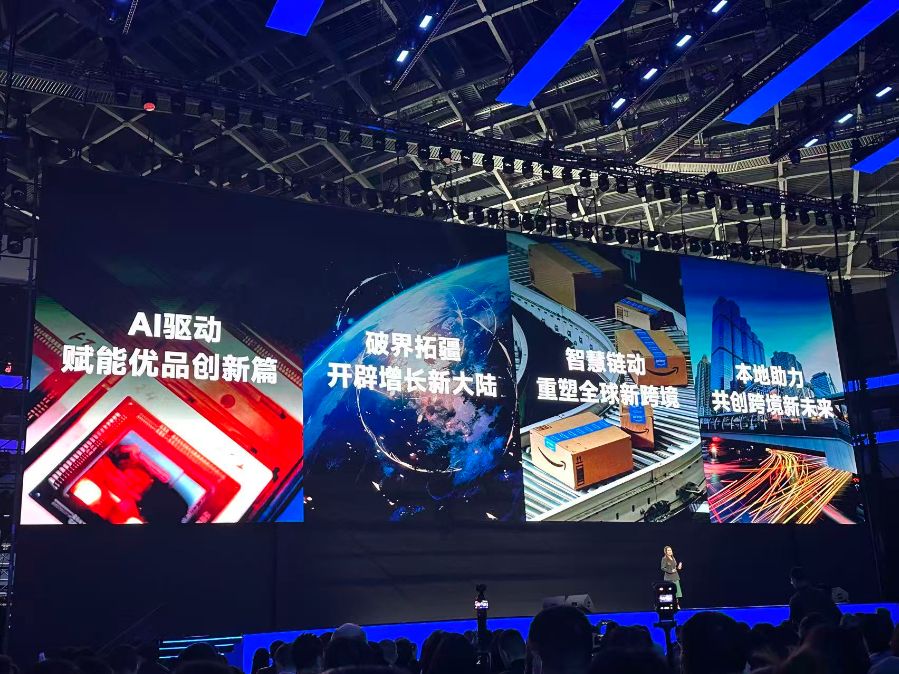
Core Insights - Amazon's Global Selling has launched the "Next Generation Global Selling" initiative to support Chinese export e-commerce businesses in achieving high-quality global expansion by 2026 [1][11] - The initiative focuses on four strategic areas: AI-driven product innovation, exploring new growth territories, reshaping global cross-border logistics, and local support for cross-border collaboration [1][11] Group 1: Value Transition in Cross-Border E-Commerce - Cross-border e-commerce is experiencing three significant value transitions: supply chain management is shifting from a cost center to a growth engine, competitive advantages are moving from sales-driven to value-driven, and sellers' organizational capabilities are evolving from regional specialists to global multi-specialists empowered by AI [3][13] Group 2: Next Generation Global Selling Framework - The "Next Generation Global Selling" framework allows export e-commerce businesses to list products once on Amazon and achieve global sales, covering stages from global launch to optimization and deepening logistics solutions [5][15] - The framework includes a global smart hub warehouse (GWD) launched in Shenzhen, set to open in March 2026, enhancing Amazon's supply chain solutions [5][16] Group 3: Logistics and Global Expansion - Amazon Global Logistics (AGL) is expanding its global shipping routes, adding Vietnam as a key hub for Southeast Asia, with plans to extend services to Canada and Australia by 2026 [7][18] - The launch of the "Next Generation Global Selling" coincides with the 25th anniversary of Amazon's third-party seller business and the 10th anniversary of its Global Selling operations in China, marking a new phase for sellers to achieve global sales upon listing [7][18] Group 4: AI Integration and Seller Support - Amazon introduced groundbreaking Agentic AI innovations and a new seller platform aimed at transforming how sellers manage their businesses on Amazon, simplifying tasks and predicting seller needs [8][19] - The Amazon Seller Assistant will integrate features to provide insights into business opportunities, customized suggestions, and an overview of seller performance across global sites [8][19] Group 5: Local Services and Market Growth - Amazon has opened over 20 international sites for Chinese sellers and announced new seller incentive programs in Mexico and Brazil, offering initial sales rewards and benefits for Prime member products [9][20] - Data indicates that by October 2025, sales from Chinese sellers on Amazon's mature sites will have grown over 15% year-on-year, with emerging sites seeing over 30% growth [9][20] Group 6: Performance Metrics - From early 2025 to September, the number of new product listings by Chinese sellers increased by nearly 25%, with significant growth in the number of sellers achieving sales milestones of $200 million, $500 million, and $800 million, all exceeding 20% year-on-year [10][21]