人工合成淀粉

Search documents
我国生物制造产业稳步壮大
Jing Ji Ri Bao· 2025-12-22 01:07
Core Insights - The biomanufacturing industry in China has grown significantly, with a total scale reaching 1.1 trillion yuan, and bioproducts accounting for over 70% of global production [1] - The industry is expected to be a core driver of the Fourth Industrial Revolution, emphasizing the importance of biomanufacturing in fostering new productive forces and advancing new industrialization [1] - The "14th Five-Year Plan" period is projected to see continued growth in biobased materials and chemicals, with bioproduct output increasing by approximately 20% compared to the end of the "13th Five-Year Plan" [1] Industry Growth and Innovation - Significant breakthroughs in technology and product innovation have been achieved, including high-throughput gene sequencers and AI protein design platforms, leading to the commercialization of various biomanufactured products [2] - The emergence of biomanufacturing clusters, such as in Shenzhen and Hainan, showcases localized development and the establishment of major technological infrastructures [2] - The Ministry of Industry and Information Technology has announced key lists related to high-performance bioreactor innovation and pilot capabilities, which are crucial for industry advancement [3] Policy and Strategic Development - The Ministry of Industry and Information Technology aims to create a complete industrial ecosystem that supports innovation, transformation, and high-quality development in biomanufacturing [3] - The upcoming "15th Five-Year Plan" will focus on establishing a framework for biomanufacturing, including the identification of flagship products and AI applications [3] - Emphasis will be placed on enhancing scientific research and innovation to address fundamental scientific issues and engineering bottlenecks in the biomanufacturing sector [3] Recommendations for High-Quality Development - The establishment of an innovation system, modern industrial system, and management service system is recommended to accelerate high-quality development in biomanufacturing [4] - Support for diverse development routes and the cultivation of flagship products is essential for the innovation ecosystem [4] - The integration of advanced biomanufacturing technologies with various industries is crucial for optimizing and upgrading industrial structures [5]
总规模达1.1万亿元 我国生物制造产业稳步壮大
Jing Ji Ri Bao· 2025-12-22 00:02
Core Insights - The biomanufacturing industry in China has grown significantly, with a total scale reaching 1.1 trillion yuan, and bioproducts accounting for over 70% of global production [1] - The industry is expected to be a core driver of the Fourth Industrial Revolution, emphasizing the importance of biomanufacturing in fostering new productive forces and advancing new industrialization [1] - The "14th Five-Year Plan" period is projected to see continued growth in biobased materials and chemicals, with bioproduct output increasing by approximately 20% compared to the end of the "13th Five-Year Plan" [1] Industry Growth and Innovation - Significant breakthroughs in technology and product innovation have been achieved, including high-throughput gene sequencers and AI protein design platforms, leading to the commercialization of various biomanufactured products [2] - The emergence of biomanufacturing clusters, such as in Shenzhen and Hainan, showcases localized development and the establishment of significant production capabilities in amino acids and marine biomanufacturing [2] - The Ministry of Industry and Information Technology has announced key lists related to high-performance bioreactor innovation and pilot capabilities, indicating a structured approach to industry advancement [3] Future Development Plans - The "15th Five-Year Plan" will focus on enhancing the biomanufacturing ecosystem, including the establishment of pilot platforms and the cultivation of composite talents in the sector [3] - Emphasis will be placed on addressing fundamental scientific issues and engineering bottlenecks in biomanufacturing, promoting deep integration of technological and industrial innovation [3] - The industry aims to expand applications in future food and healthcare sectors, leveraging advancements in biomanufacturing technologies [3] Recommendations for High-Quality Development - The establishment of a comprehensive innovation system, modern industrial system, and management service system is recommended to accelerate high-quality development in biomanufacturing [4] - Support for diverse development routes and the creation of significant biomanufactured products is essential, alongside the establishment of regional innovation platforms [4] - Financial services tailored to biomanufacturing enterprises should be developed to support market-oriented operations and the growth of specialized small and medium enterprises [5]
总规模达1.1万亿元—— 我国生物制造产业稳步壮大
Jing Ji Ri Bao· 2025-12-21 22:54
Core Insights - The biomanufacturing industry in China has grown significantly, with a total scale reaching 1.1 trillion yuan, and bioproducts accounting for over 70% of global production [1] - The industry is expected to be a core driver of the Fourth Industrial Revolution, emphasizing the importance of biomanufacturing in fostering new productive forces and advancing new industrialization [1] - The "14th Five-Year Plan" period is projected to see continued growth in biobased materials and chemicals, with bioproduct output increasing by approximately 20% compared to the end of the "13th Five-Year Plan" [1] Industry Growth and Innovation - Significant breakthroughs in technology and product innovation have been achieved, including high-throughput gene sequencers and AI protein design platforms, leading to the commercialization of various biomanufactured products [2] - The emergence of biomanufacturing clusters, such as in Shenzhen and Hainan, showcases localized development and the establishment of significant production capabilities in amino acids and marine biomanufacturing [2] - The Ministry of Industry and Information Technology has announced key lists related to high-performance bioreactor innovation and pilot capabilities, indicating a structured approach to industry advancement [3] Policy and Strategic Development - The Ministry of Industry and Information Technology aims to create a comprehensive ecosystem for biomanufacturing, focusing on innovation, transformation support, and product quality [3] - The upcoming "15th Five-Year Plan" will outline strategies for biomanufacturing, including the establishment of pilot platforms and the cultivation of composite talents in the sector [3] - Emphasis will be placed on addressing fundamental scientific issues and engineering bottlenecks, promoting deep integration of technological and industrial innovation [4] Recommendations for High-Quality Development - The establishment of an innovation system, modern industrial system, and management service system is recommended to accelerate high-quality development in biomanufacturing [4] - Support for diverse development routes and the creation of high-energy innovation platforms tailored to regional strategies is encouraged [5] - The focus will be on enhancing the evaluation mechanisms for original products and fostering specialized small and medium enterprises in the biomanufacturing sector [5]
【科技日报】人工合成淀粉技术再升级
Ke Ji Ri Bao· 2025-10-22 03:28
Core Insights - The development of artificial starch synthesis represents a significant milestone in synthetic biology, allowing for starch production in a bioreactor that is equivalent to the yield from 5 acres of corn cultivation [1] - The energy conversion efficiency of artificial starch synthesis has improved by 3.5 times compared to corn, with an 8.5 times increase in synthesis speed and a 136 times increase in yield from the initial version [1] - The integration of artificial intelligence technology has accelerated the rational design process in synthetic biology, expanding its applications to complex molecules such as sucrose, hexose, and biodegradable materials [2] Group 1 - The artificial synthesis of starch can be achieved through a non-natural carbon fixation pathway designed by the research team, which includes 11 reaction steps [1] - The latest version of the artificial starch synthesis pathway has been optimized, indicating a shift towards industrial-scale production of starch, moving away from traditional agricultural methods [1] - The advancements in synthetic biology are providing new solutions for various industries, including food, energy, and pharmaceuticals [2]
专家:未来淀粉生产可脱离农业种植,让人类有太空生存能力
Guan Cha Zhe Wang· 2025-09-21 07:50
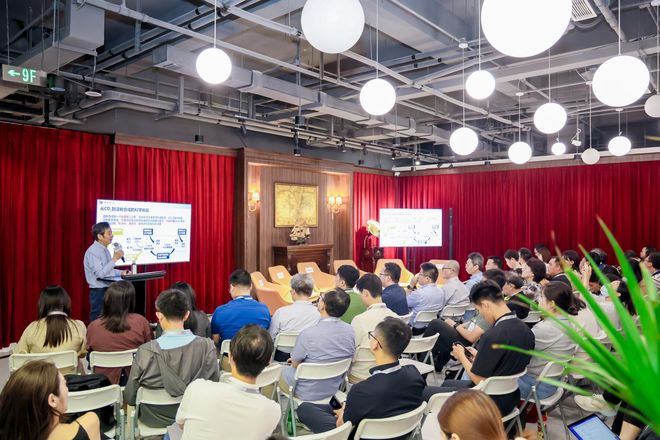
Core Insights - The breakthrough in artificial starch synthesis through synthetic biology allows for starch production without reliance on agricultural resources such as land and freshwater, potentially reshaping the landscape of biological manufacturing and agricultural production [1][3]. Group 1: Synthetic Biology Overview - Synthetic biology, originating from the term coined by French chemist Stéphane Leduc in 1911, is an interdisciplinary field that combines biology, genomics, engineering, and informatics to design biological systems and even create new life [3]. - The artificial synthesis of starch represents a milestone in synthetic biology, moving from natural photosynthesis processes to engineered methods that utilize carbon dioxide, water, and hydrogen as raw materials [3][4]. Group 2: Technological Advancements - The research team led by Ma Yanhe successfully identified the optimal pathway from 6,568 biochemical reactions, addressing challenges in thermodynamic matching and metabolic flow balance to synthesize starch [4]. - The latest version of the artificial starch synthesis pathway has improved energy conversion efficiency by 3.5 times and reduced synthesis time from 2-3 months to just a few days, indicating a significant advancement in industrial starch production capabilities [6]. Group 3: Market Potential - The global synthetic biology market has grown from $5.3 billion in 2018 to over $17 billion in 2023, with an average annual growth rate of 27%, and is projected to reach nearly $50 billion by 2028 [8]. - The integration of artificial intelligence in synthetic biology is enhancing the rational design process, expanding applications to complex molecules such as sucrose, hexose, and biodegradable materials, providing new solutions for the food, energy, and pharmaceutical industries [6]. Group 4: Event and Collaboration - The "Good Hope Science Salon" event, co-hosted by various organizations, aims to create a platform for impactful interdisciplinary collaboration and exchange in the field of synthetic biology [10]. - Over 100 experts, scholars, and industry leaders participated in discussions about technological advancements and commercialization prospects in synthetic biology [6].